




Pull to refresh
Logo
Daily Brief
Following
Why
Argentina and United States sign sweeping trade agreement

Argentina and United States sign sweeping trade agreement

Rule Changes
By Newzino Staff |

First bilateral deal between the countries marks Milei's turn from decades of protectionism

February 6th, 2026: Argentina Signs Trade Agreement with United States

Overview

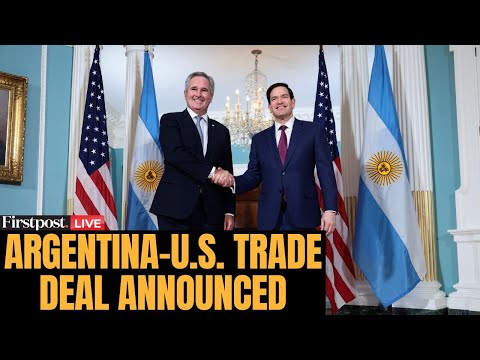
Argentina has protected its domestic industries with tariffs and import controls since the 1940s. On February 6, 2026, Buenos Aires signed its first bilateral trade agreement with the United States—eliminating barriers on over 200 categories of American goods and securing tariff relief on 1,675 Argentine products in return.

The deal quadruples Argentine beef imports to the United States at reduced rates, potentially doubling the $345 million in annual beef export revenue. For Washington, it opens a historically closed market to machinery, vehicles, and medical devices. The agreement marks the first of four Latin American trade frameworks the Trump administration announced in November 2025 to reach implementation.

Key Indicators

1,675
Argentine products with tariffs eliminated
The United States will remove reciprocal tariffs on these product categories, increasing Argentine export revenue by over $1 billion
221
US product categories gaining access
Argentina will reduce or eliminate tariffs on machinery, vehicles, medical supplies, and chemicals
100,000
Tons of beef at reduced tariff
Quadruples the previous quota of approximately 25,000 tons, up from 45,000 tons exported in 2025
50%
Steel and aluminum tariffs unchanged
Section 232 duties on Argentine metals remain under review, disappointing manufacturers

Interactive

Exploring all sides of a story is often best achieved with Play.

Dorothy Parker

Dorothy Parker

(1893-1967) · Jazz Age · wit

Fictional AI pastiche — not real quote.

"How charming—after eighty years of sulking behind tariffs, Argentina has discovered that beef pays better than pride. One can only admire a nation that finally grasps what any good butcher knew all along: the customer with the fattest wallet gets the tenderloin."

Ever wondered what historical figures would say about today's headlines?

Sign up to generate historical perspectives on this story.

Sign Up

Debate Arena

Two rounds, two personas, one winner. You set the crossfire.

People Involved

Javier Milei
Javier Milei
President of Argentina (In office since December 2023)
Pablo Quirno
Pablo Quirno
Foreign Minister of Argentina (Signed trade agreement in Washington)
Jamieson Greer
Jamieson Greer
United States Trade Representative (Signed trade agreement with Argentina)
Donald Trump
Donald Trump
President of the United States (Overseeing Latin America trade framework implementation)

Organizations Involved

Office of the United States Trade Representative
Federal Agency
Status: Negotiated and signed agreement

The executive agency responsible for developing and coordinating US international trade policy and negotiations.

Ministry of Foreign Affairs, International Trade and Worship
Government Ministry
Status: Led Argentine negotiations

Argentina's ministry responsible for foreign relations and international trade policy.

Timeline

  1. Argentina Signs Trade Agreement with United States

    Trade

    Foreign Minister Quirno and USTR Greer sign the Agreement on Reciprocal Trade and Investment in Washington, eliminating tariffs on over 1,800 products between the countries.

  2. US-El Salvador Agreement Signed

    Trade

    El Salvador becomes first country to sign an agreement under the November framework, removing non-tariff barriers for US agricultural products.

  3. Trump Announces Latin America Trade Frameworks

    Trade

    White House unveils bilateral trade frameworks with Argentina, Ecuador, El Salvador, and Guatemala, promising tariff relief in exchange for market access.

  4. Supreme Court Hears Challenge to IEEPA Tariff Authority

    Legal

    Justices hear oral arguments on whether the International Emergency Economic Powers Act authorizes presidential tariffs—the legal basis for Trump's trade frameworks.

  5. Milei Wins Midterm Elections in Landslide

    Election

    La Libertad Avanza strengthens its legislative position, validating Milei's economic reforms and enabling further liberalization.

  6. Pablo Quirno Named Argentine Foreign Minister

    Appointment

    Finance secretary promoted to lead foreign ministry with explicit mandate to secure US trade access and promote free-market ideology.

  7. US Treasury Provides $20 Billion Swap Line

    Finance

    Treasury Secretary Scott Bessent finalizes currency swap framework with Argentina—the first large-scale US rescue since the 1995 Mexico bailout.

  8. Argentina Secures $20 Billion IMF Program

    Finance

    International Monetary Fund finalizes four-year assistance program requiring Argentina to transition to a market-determined exchange rate.

  9. US Revokes Argentina Steel and Aluminum Exemptions

    Tariff

    Trump administration eliminates all country-level exemptions from Section 232 duties, subjecting Argentine steel and aluminum to 50% tariffs.

  10. Jamieson Greer Confirmed as US Trade Representative

    Appointment

    Senate confirms Greer 56-43 to lead trade negotiations, including new bilateral frameworks with Latin American allies.

  11. EU-Mercosur Partnership Agreement Reached

    Trade

    The European Union and Mercosur countries including Argentina finalize a political agreement on a comprehensive partnership, creating the world's largest free trade zone.

  12. Milei First Foreign Leader to Meet Trump Post-Election

    Diplomacy

    Milei travels to Mar-a-Lago for the Conservative Political Action Conference, meeting with President-elect Trump and discussing a potential free trade agreement.

  13. Milei Elected President of Argentina

    Election

    Javier Milei defeats economy minister Sergio Massa in runoff election, winning on a platform of radical economic liberalization and trade opening.

Scenarios

1

Supreme Court Upholds IEEPA Authority, Agreements Stand

Discussed by: Trade lawyers at Clark Hill, Greenberg Traurig, and the Council on Foreign Relations

The Supreme Court rules that IEEPA grants presidential authority to impose and reduce tariffs under declared emergencies. The Argentina agreement remains in force, and the Trump administration accelerates bilateral deals with Ecuador and Guatemala. This outcome would validate a new model for executive trade policy outside traditional congressional frameworks.

2

Supreme Court Strikes Down IEEPA Tariffs, Chaos Ensues

Discussed by: Peterson Institute for International Economics, SCOTUSblog, and the Cato Institute

The Court rules IEEPA does not authorize tariffs, potentially invalidating both the punitive tariffs (over $200 billion collected) and the bilateral relief agreements. Importers may be entitled to refunds while Argentina's preferential access evaporates. Congress would need to pass new legislation to preserve the frameworks.

3

Steel Tariff Relief Expands Argentina Benefits

Discussed by: Argentine manufacturing associations and trade analysts at Americas Quarterly

Following the trade agreement, the US reviews and reduces Section 232 duties on Argentine steel and aluminum, which currently face 50% tariffs. This would unlock Argentina's manufacturing exports and deepen the economic partnership, though it requires a separate determination by the Commerce Department.

4

Agreement Triggers Regional Trade Realignment

Discussed by: Atlantic Council, Council on Foreign Relations, and AS/COA analysts

Argentina's deal creates pressure on other Latin American countries to pursue similar bilateral agreements with Washington. Brazil, currently the largest Mercosur economy, faces a choice between deepening EU ties or pivoting toward US frameworks. The regional trading bloc's coherence weakens as members pursue separate arrangements.

Historical Context

US-Chile Free Trade Agreement (2003)

June 2003

What Happened

The United States signed its first free trade agreement with a South American country when President George W. Bush concluded a comprehensive deal with Chile. Negotiations began in 2000 and produced an agreement eliminating tariffs on 90% of bilateral trade immediately, with full implementation by 2015.

Outcome

Short Term

US-Chile trade more than tripled in the first decade, with Chile becoming a testing ground for labor and environmental provisions in trade deals.

Long Term

The agreement served as a template for subsequent US deals across Latin America, including agreements with Peru and Colombia, and influenced the structure of the Trans-Pacific Partnership negotiations.

Why It's Relevant Today

The Chile agreement proved bilateral deals with reformist Latin American governments could succeed—but it took three years of negotiations and congressional approval. The Argentina framework attempts similar outcomes through executive action alone.

Mexico Peso Crisis and US Bailout (1994-1995)

December 1994 - February 1995

What Happened

Mexico's peso collapsed after the government could no longer maintain its fixed exchange rate, triggering capital flight that threatened a sovereign default. President Bill Clinton bypassed a resistant Congress by using the Treasury's Exchange Stabilization Fund to provide $20 billion in emergency credit—the same mechanism used for Argentina in 2025.

Outcome

Short Term

Mexico avoided default and repaid the loans ahead of schedule with $600 million in profit to the US Treasury, though the economy contracted 6% in 1995.

Long Term

The rescue established a precedent for US-led financial interventions in allied economies and demonstrated the Exchange Stabilization Fund's utility as an executive tool for foreign financial support.

Why It's Relevant Today

The $20 billion swap line provided to Argentina in October 2025 explicitly mirrors the Mexico rescue—the first such intervention in 30 years. Both used presidential discretion to support ideologically aligned reformers facing market pressure.

Argentina's Import Substitution Era (1946-1976)

1946 - 1976

What Happened

Under Juan Perón and subsequent governments, Argentina pursued import substitution industrialization—raising tariffs above 100% on many goods, nationalizing industries, and restricting foreign investment. The policy aimed to build domestic manufacturing capacity but insulated Argentine industry from global competition.

Outcome

Short Term

Industrial employment expanded and domestic manufacturers grew behind protective barriers, though agricultural exports—Argentina's comparative advantage—declined.

Long Term

Decades of protection created an industrial base dependent on trade barriers. By the 1980s, Argentina's share of global exports had fallen from 3% to under 0.5%, and productivity lagged global competitors.

Why It's Relevant Today

The February 2026 agreement represents a structural break from 80 years of Argentine trade policy. Milei is dismantling the protectionist architecture that defined the country's economic identity since World War II.

10 Sources: