

Pull to refresh
Logo
Sri Lanka's largest mass grave uncovered in Jaffna

Sri Lanka's largest mass grave uncovered in Jaffna

Force in Play

Archaeologists exhumed 572 skeletons, including children and infants, from a former army-occupied zone; DNA identification has yet to begin

Yesterday: BBC publishes report on Sri Lanka's largest mass grave

Overview

Updated 1 hour ago

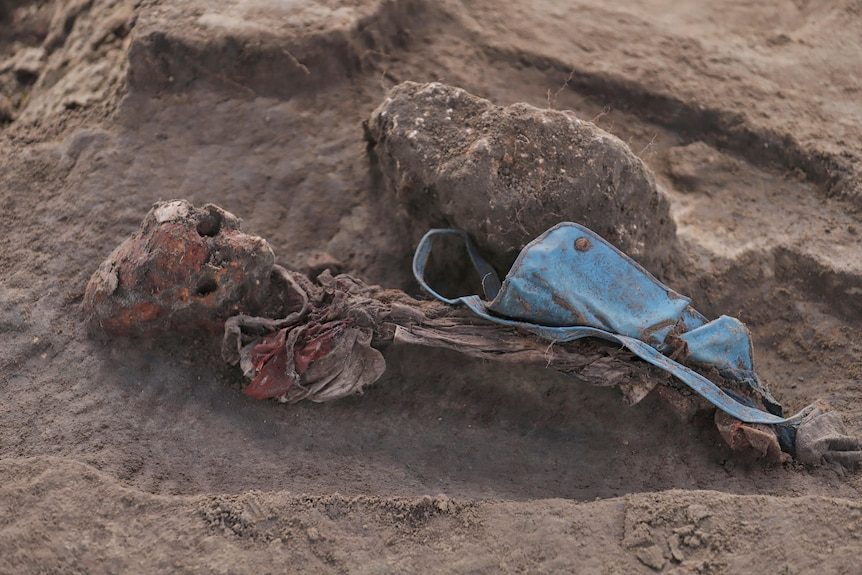
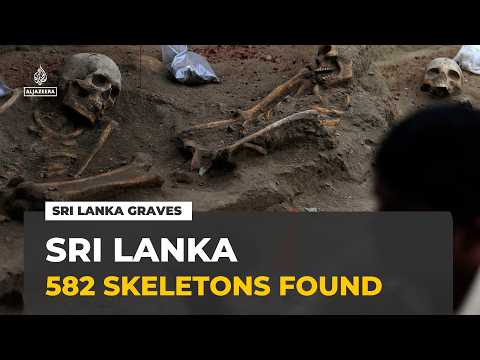
In February 2026, workers extending a cremation ground in Chemmani, in Sri Lanka's northern Jaffna region, hit human remains. By August, archaeologists had exhumed 572 skeletons, including children and infants. It is the largest mass grave ever found in Sri Lanka.

The grave is in a zone the Sri Lankan army controlled after capturing Jaffna from Tamil Tiger rebels in 1995. More than 20 mass graves have been found across Sri Lanka, and none has produced a prosecution. DNA testing of the Chemmani remains has not yet begun.

Why it matters

This could be Sri Lanka's first mass grave to yield identifications and prosecutions — or another that produced nothing.

Questions about this story

Free account needed to ask — your question is kept and asked for you right after sign-up. Answers are public.

No questions yet — be the first to ask.

Key Indicators

572
Skeletal remains recovered at Chemmani
Largest mass grave ever found in Sri Lanka; includes children and infants.
23,000
People missing from Sri Lanka's civil war
Mostly Tamils, disappeared during the 1983-2009 conflict.
100,000
Estimated deaths in the civil war
Across 26 years of conflict between government forces and Tamil Tiger rebels.
20
Mass graves found across Sri Lanka
None has led to a single prosecution.

Voices

Curated perspectives — historical figures and your fellow readers.

Ever wondered what historical figures would say about today's headlines?

Sign up to generate historical perspectives on this story.

People Involved

Organizations Involved

Timeline

December 1995 September 2026

8 events Latest: Yesterday
Tap a bar to jump to that date
  1. BBC publishes report on Sri Lanka's largest mass grave

    Latest Publication

    International coverage names Chemmani the largest grave site found in Sri Lanka.

  2. Excavation completed; 572 remains recovered

    Excavation

    Third phase ends; remains include children and infants, plus personal items.

  3. Court-ordered three-phase excavation begins

    Excavation

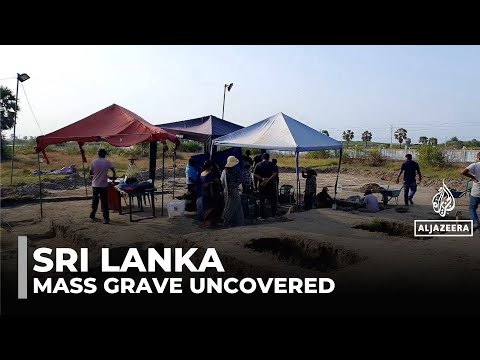
    Dig runs 92 days under judicial oversight with OMP observing.

  4. Workers hit human remains in Chemmani

    Discovery

    Crew extending a cremation ground uncover bones, prompting an investigation.

  5. Mannar mass grave discovered

    Discovery

    More than 350 remains found in Mannar; investigation later proved inconclusive.

  6. First excavation finds 15 remains

    Excavation

    Remains sent to University of Glasgow; two identifications made.

  7. Soldier testifies about mass burial

    Testimony

    A soldier reports 300-400 bodies buried near Chemmani.

  8. Army captures Jaffna from Tamil Tigers

    Conflict

    Sri Lankan forces take the Jaffna Peninsula from the LTTE after a bloody campaign.

Scenarios

1

International DNA labs identify Chemmani victims

Possible Resolves by End of 2027

Discussed by: Prof Raj Somadeva, M.A. Sumanthiran, UN OHCHR

Samples from Chemmani are sent to recognized international laboratories. A DNA bank is built, matches with waiting families begin, and at least some victims are identified and returned to relatives. This would be a first for Sri Lanka, where no mass grave has produced identifications or prosecutions.

2

Chemmani investigation stalls like Mannar

Likely Resolves by Q3 2027

Discussed by: BBC News, Tamil Guardian, families of the disappeared

Samples stay in Sri Lanka without adequate lab capacity. The interim report lands, but DNA testing never gets funded. Remains sit in storage, no one is charged, and the grave joins the list of more than 20 others that produced no accountability.

3

Sri Lanka referred to the International Criminal Court

Unlikely Resolves by Jan 1, 2028

Discussed by: Tamil diaspora groups, UN OHCHR

Families push for an ICC referral. It requires either Sri Lanka's acceptance of jurisdiction or a UN Security Council resolution, and neither appears imminent. The government insists it is cooperating with the domestic investigation, and no ICC action has followed previous graves.

Historical Context

3 moments from history that rhyme with this story — and how they unfolded.

1995-2003

Srebrenica DNA identification (1995-2003)

After the Srebrenica massacre killed about 8,000 Bosniak men and boys, the International Commission on Missing Persons used DNA matching to identify remains exhumed from mass graves. By 2003, thousands had been identified and returned to families.

Then

Identifications enabled prosecutions at the International Criminal Tribunal for the former Yugoslavia.

Now

The Commission's DNA process became the global standard for identifying mass grave victims.

Why this matters now

Shows what sustained international forensic cooperation can achieve, and the infrastructure Sri Lanka currently lacks.

April 2018

Mannar mass grave (2018)

Workers found more than 350 skeletal remains in Mannar, a former military zone in northwestern Sri Lanka. The grave was also in an area linked to army operations during the civil war.

Then

Investigations proved inconclusive and no one was charged.

Now

Families remain without answers, and the grave became a symbol of the state's failure to investigate.

Why this matters now

Chemmani sits in the same post-war accountability gap. Mannar shows the default trajectory: exhumation, then stalemate.

1990s-2000s

Guatemala Forensic Anthropology Foundation (1990s-2000s)

The Guatemalan Forensic Anthropology Foundation exhumed mass graves from the 36-year civil war, using DNA and dental records to identify victims and support prosecutions.

Then

Survivors gained identification of relatives; some exhumations fed court cases.

Now

Set a precedent that independent domestic forensic work can turn mass graves into evidence.

Why this matters now

Illustrates the two-track path Chemmani could take: independent forensic work enabling both identification and prosecution.

Sources

(7)