Anchor

Arm puts neural accelerators inside mobile GPU with CSS for Mobile 2
New CapabilitiesAI-native compute platform pairs neural-accelerated Mali GPU with C2 CPUs for agentic AI
Today: Arm launches CSS for Mobile 2New here? Follow stories to track developments over time. Create a free account to get updates when stories you care about change.
Overview
Updated 48 minutes agoArm's new mobile platform puts neural accelerators inside the GPU for the first time in its Mali graphics line. The Mali G2-Ultra NX pairs with a new C2 CPU cluster that doubles its AI processing units to keep on-device AI agents responsive.
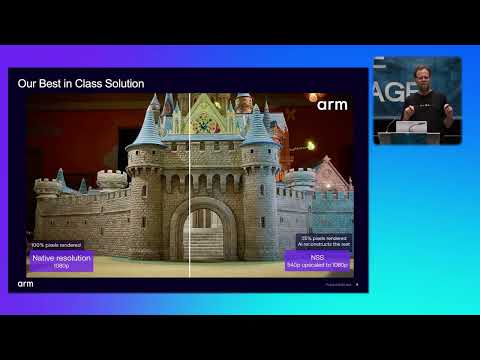
Arm says the combination runs neural graphics at up to four times the efficiency of standard rendering and cuts power by up to 38 percent at equal performance. If phone makers adopt it, flagship Android devices could get console-grade graphics and always-on AI on one chip.
Why it matters
On-device neural upscaling could bring console-quality mobile games and fast AI agents to phones without draining batteries.
Questions about this story
Free account needed to ask — your question is kept and asked for you right after sign-up. Answers are public.
No questions yet — be the first to ask.
Key Indicators
1.7x
AI performance gain over prior C1-Ultra CPU
C2-Ultra with doubled SME2 units delivers the gain.
70%
Small-language-model speedup
Two SME2 units per cluster accelerate on-device language models.
38%
Power reduction at equal performance
Claimed C2-Ultra efficiency versus the previous generation.
4x
Neural graphics efficiency gain
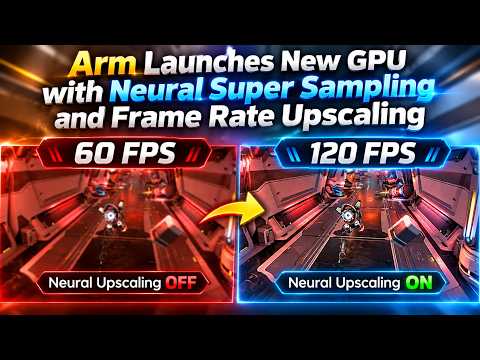
Neural Frame Rate Upscaling versus native rendering.
24%
Faster end-to-end agentic workflow
C2-Ultra completes agentic tasks 24% faster than prior gen.
120 FPS
Sustained mobile gaming frame rate
Neural frame rate upscaling enables longer sessions at high framerates.
Related Media
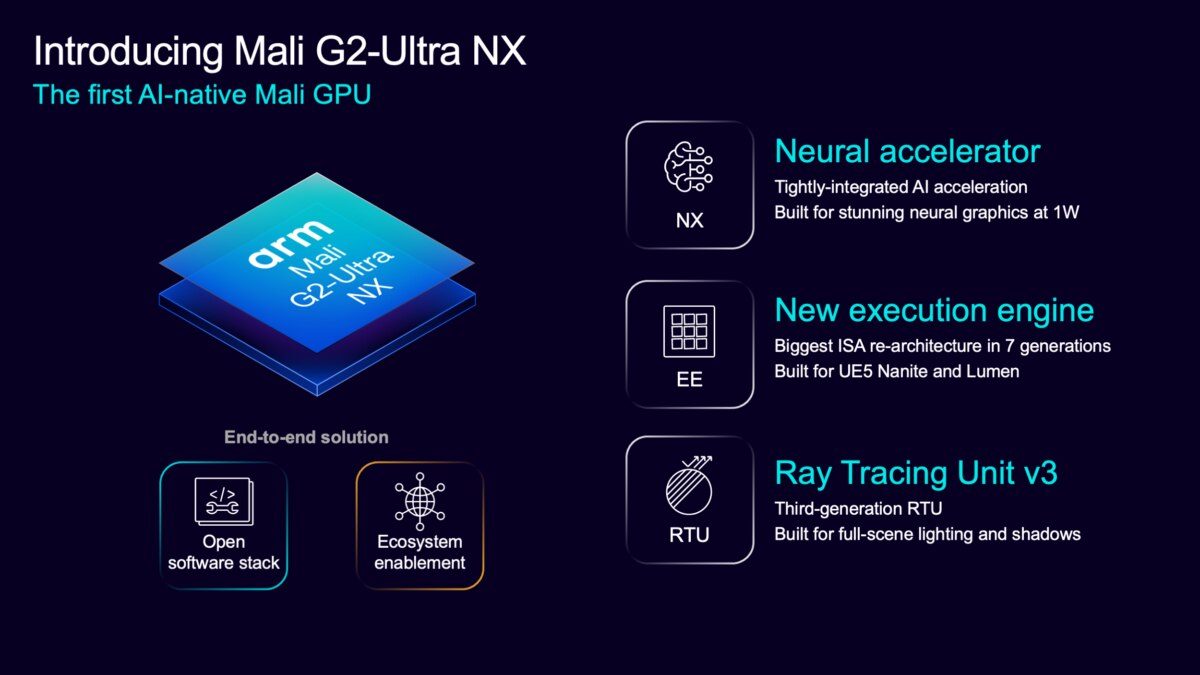
Inside the Arm Mali G2-Ultra NX GPU: Delivering desktop-class mobile gameplay with AI-native graphics - Arm Newsroom
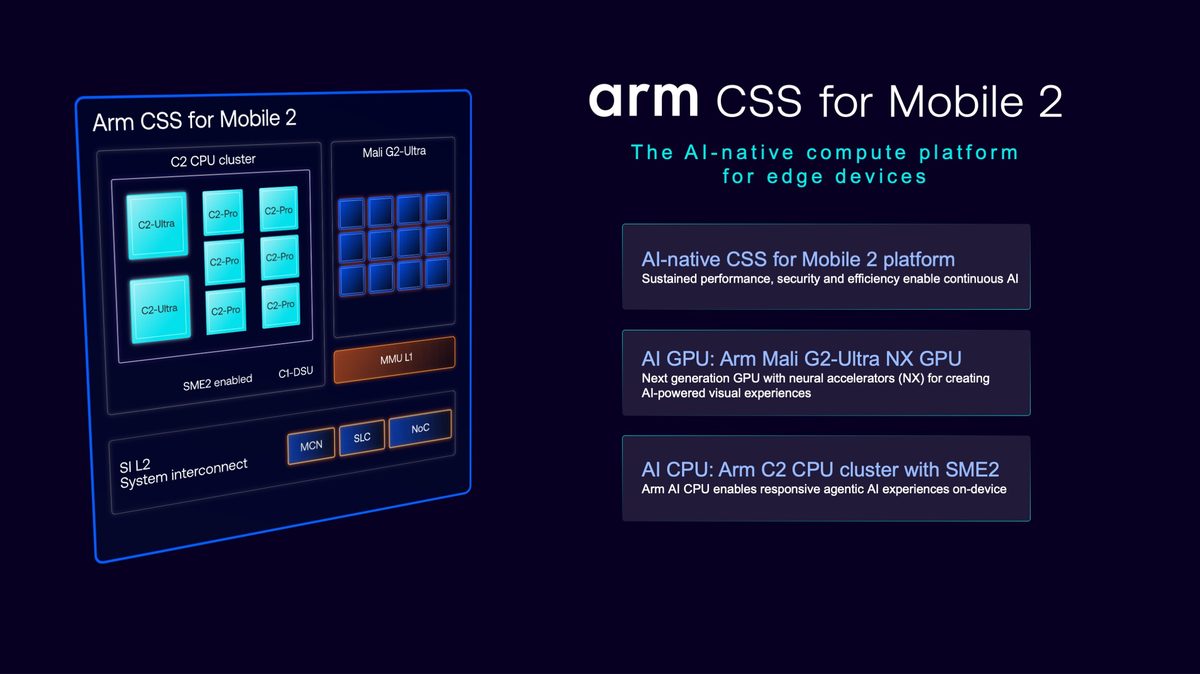
Inside Arm CSS for Mobile 2: The AI-native compute platform for mobile - Arm Newsroom
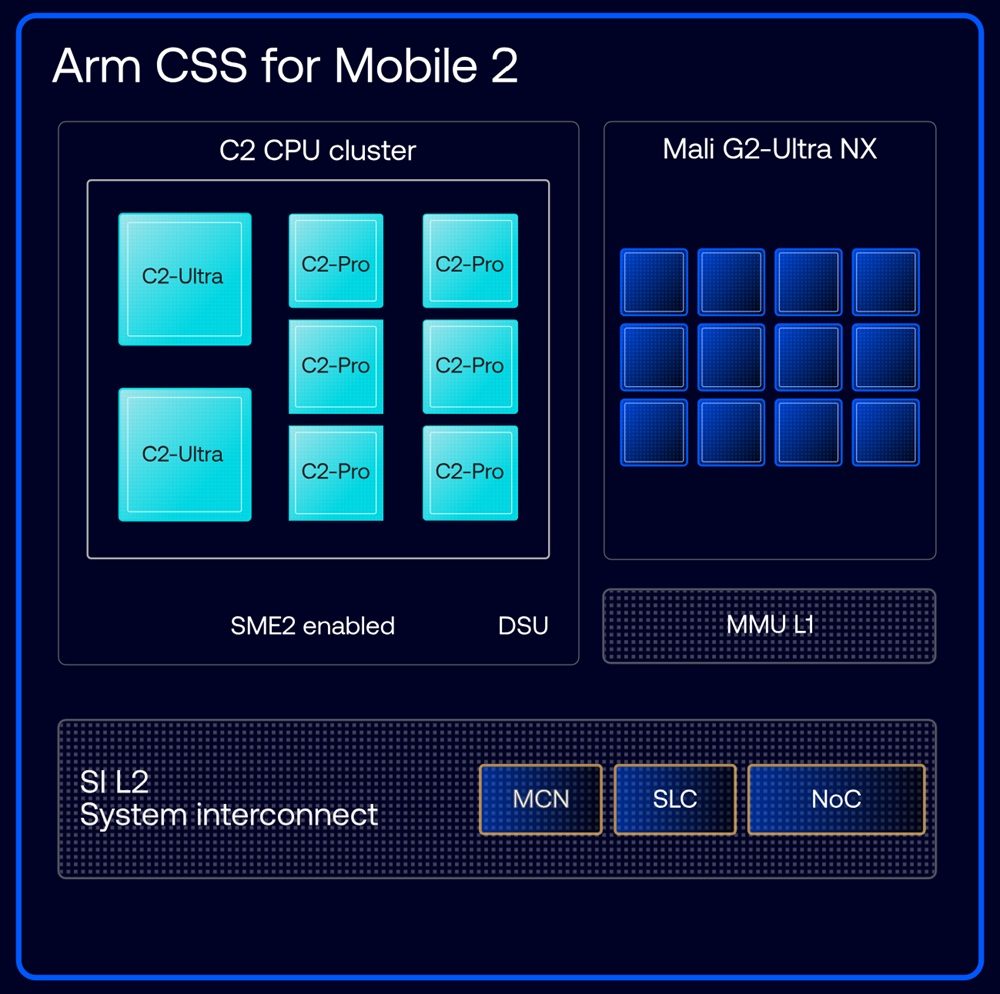
Arm CSS for Mobile 2 with C2 CPU, Mali G2-Ultra NX GPU for agentic AI and AI-native graphics announced
10.6K views
12:05
Arm Launches new GPU with Built-in Neural Accelerators
Gary Explains

17.7K views
18:48
New in-GPU Acceleration for Smartphone Graphics
TechTechPotato
688 views
15:28
Neural Networks for Real-Time Graphics | Arm + Unreal Engine ...
Arm Software Developers
Images from Openverse under Creative Commons licenses. Videos from YouTube.
Voices
Curated perspectives — historical figures and your fellow readers.
Play
Exploring all sides of a story is often best achieved with Play.
Most of these play right now — no account needed. Sign up to save scores, keep a streak, and unlock Debate and Predict.
Log in
Sign Up
Higher or Lower
A number from this story, against one from elsewhere in the news — guess which is bigger, then keep the chain going. 5 rounds, 3 strikes; a miss costs a strike and resets your streak.
Example
Anchor
EU tariff revenue
$52B
Big for this kind of number
Mystery
Pentagon AI contract
?
Round 1
Streak: 0
Mystery
?
Keyboard: ↓/L lower · ↑/H higher
0 pts
Best streak: 0 · Rounds: 0
0 points — sign up to put that on the leaderboard.
Now try on this story
Connections
Sixteen names from the news. Find the four hidden groups of four. Four mistakes max.
Loading today's puzzle…
0/4 groups
Mistakes
Sign up to keep a daily streak — a new puzzle lands every day.
Now try on this story
Exit debate?
Your progress in this debate will be lost.
How it works
- 1 Two AI personas square off on this story.
- 2 You predict who'll win each round — correct picks earn XP.
- 3 One crossfire question is yours to fire. Pick it carefully.
Couldn't generate a topic
Select Your Champions
Choose one persona for each side of the debate
DEBATE TOPIC
Choose personas with different perspectives for a more dynamic debate.
SIDE A (PRO)
Select debater for this side:
No debate personas available right now.
SIDE B (CON)
Select debater for this side:
No debate personas available right now.
VS
Get ready to make your prediction...
Round of
Claim
Evidence
Stakes
Crossfire Answer
Closing Statement
Claim
Evidence
Stakes
Crossfire Answer
Closing Statement
Your Crossfire Question
Generating arguments...
Who's Got This Round?
Make your prediction before the referee scores
The referee scores both sides on
Correct predictions earn +20 XP
· Press 1 or 2 to pick
Evidence
40%
Logic
30%
Detail
20%
Style
10%
Round Results
Your Pick
Not this time
(%)
Overall Score
/10
Your Pick
Not this time
(%)
Overall Score
/10
Set the Crossfire
Pick the question both personas must answer in the final round
Crafting crossfire questions...
Choosing a question earns +10 XP crossfire bonus
🏆
Total XP Earned
Cred Change
Predictions
Debate Oracle! You called every round!
Sharp Instincts! You know your debaters!
The Coin Flip Strategist! Perfectly balanced!
The Contrarian! Bold predictions!
Inverse Genius! Try betting the opposite next time!
XP Breakdown
Base completion
+20 XP
Rounds played ( rounds x 5 XP)
+ XP
Correct predictions ( correct x 20 XP)
+ XP
Crossfire bonus
+10 XP
Accuracy
%
Prediction History
Round
You picked:
✓
✗
Now try on this story
Keep debating to level up your credibility and unlock achievements
People Involved
Organizations Involved
Arm Holdings
Semiconductor design firm
Developer of CSS for Mobile 2
Licenses the processor and graphics blueprints that power most smartphones.
Sumo Digital
Game development studio
Co-developed Neural Dawn demo with Arm
British studio that built the Neural Dawn demo showing Arm's neural graphics pipeline.
Timeline
May 2024 September 2026
2 events
Latest: Today
-
Arm launches CSS for Mobile 2
Today Product LaunchArm launches CSS for Mobile 2 with neural-accelerated Mali GPU and C2 CPU cluster.
-
Arm unveils first Compute Subsystem
Product LaunchArm unveils its first Compute Subsystem, bundling CPU, GPU, and system IP into one platform.
Historical Context
2 moments from history that rhyme with this story — and how they unfolded.
September 2018
NVIDIA DLSS launches (2018)
NVIDIA shipped Deep Learning Super Sampling, using tensor cores to upscale lower-resolution frames in real time and cut the rendering load. It debuted as a flagship feature of its GeForce RTX GPUs.
Then
Neural upscaling became a headline PC graphics feature and reshaped player expectations for image quality.
Now
Rivals AMD and Intel shipped their own versions (FSR and XeSS); neural upscaling is now a standard PC graphics feature.
Why this matters now
Arm's Neural Super Sampling and Neural Frame Rate Upscaling are the same play moved to phones, where power and heat budgets are far tighter.
November 2020
Apple Silicon transition (2020)
Apple replaced Intel processors in its Macs with its own integrated chips combining CPU, GPU, and a Neural Engine on one die. The first M1 chip doubled battery life in entry-level laptops.
Then
The transition completed by 2023 and made integration the centerpiece of Apple's computing pitch.
Now
It proved tightly coupled, integrated platforms outperform modular component ecosystems for consumer devices.
Why this matters now
Arm's CSS bundles CPU, GPU, and system IP the same way, betting total integration beats stitching together separately licensed cores.