



Pull to refresh
Logo
80,000-year-old arrowheads found in Uzbekistan match French points from 25,000 years later

80,000-year-old arrowheads found in Uzbekistan match French points from 25,000 years later

New Capabilities

Tiny unretouched stone points at Obi-Rakhmat nearly identical to armatures from Mandrin cave, 6,000 km away

2 days ago: Findings gain broad public and professional discussion

Overview

Updated 2 hours ago

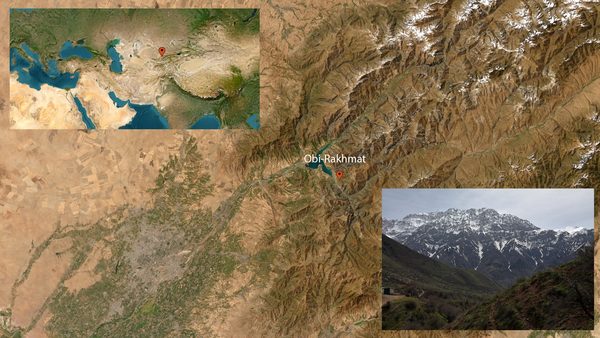
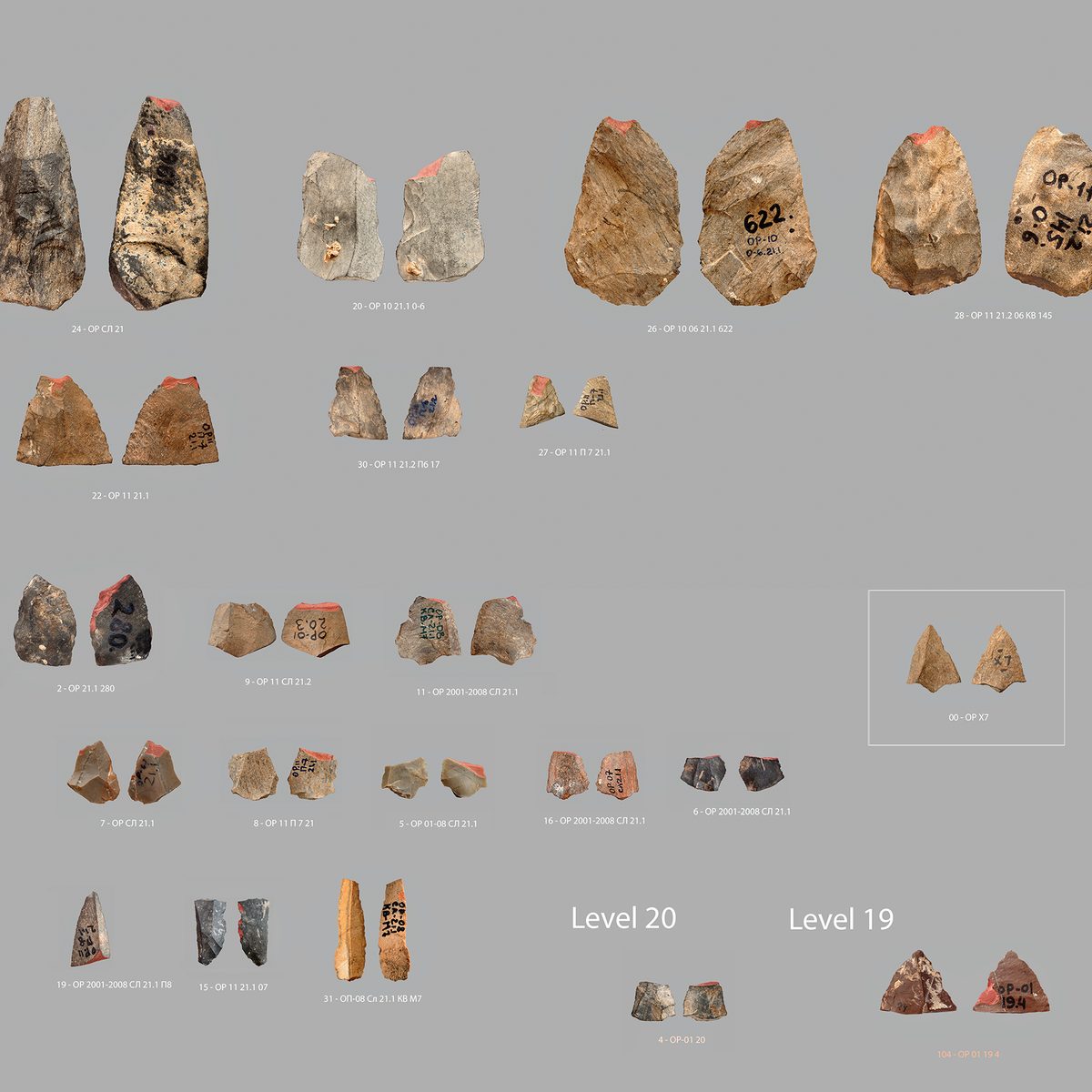
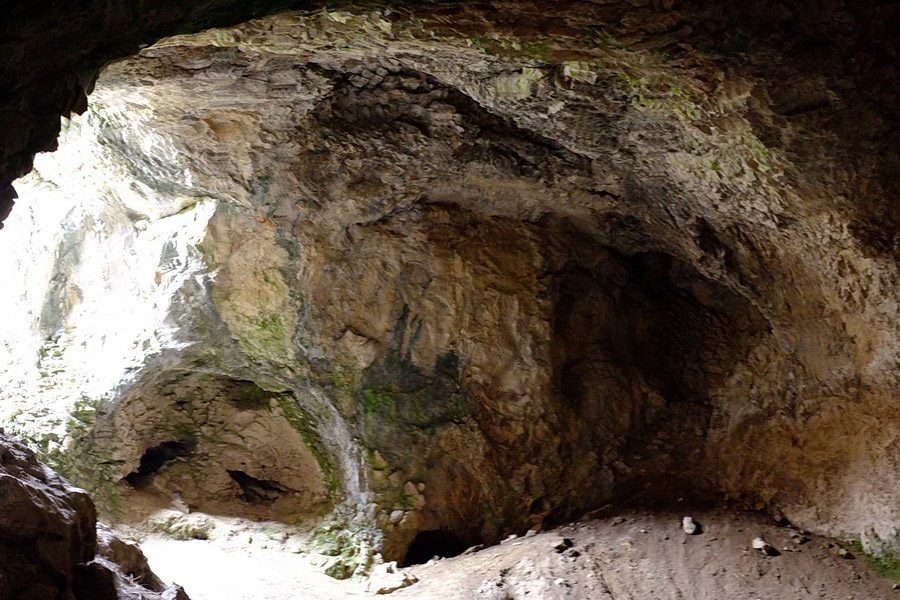
Tiny triangular stone points recovered from a rock shelter in the Tian Shan mountains of Uzbekistan carry impact traces consistent with arrowheads, and the occupation layer dates to roughly 80,000 years ago. They are small enough that they could only have tipped arrow-like shafts, not heavier thrusting or throwing weapons.

The points are nearly interchangeable with projectile armatures found at Mandrin cave in the Rhône Valley, France, which date to about 54,000 years ago and sit in a layer containing a Homo sapiens milk tooth. That 6,000-kilometer gap and 25,000-year span raise two competing explanations: a sophisticated hunting technology carried by modern humans as they crossed Eurasia, or the same design independently invented by separate populations.

Why it matters

Sophisticated arrow-point technology existed in Central Asia 80,000 years ago, challenging the accepted timeline for Homo sapiens' first expansion into Europe.

Questions about this story

Free account needed to ask — your question is kept and asked for you right after sign-up. Answers are public.

No questions yet — be the first to ask.

Key Indicators

80,000
Estimated age in years of the Obi-Rakhmat micro-points
Age of the oldest occupation layer where the projectile armatures were found.
6,000
Distance between Obi-Rakhmat and Mandrin cave
Straight-line separation between the two sites bearing nearly identical projectile points.
3
Projectile armature types identified
Retouched points, bladelets, and unretouched triangular micropoints among 20 analyzed pieces.
54,000
Age in years of the Mandrin cave points
Mandrin's layer also produced a Homo sapiens milk tooth, linking the technology to modern humans.

Voices

Curated perspectives — historical figures and your fellow readers.

Ever wondered what historical figures would say about today's headlines?

Sign up to generate historical perspectives on this story.

People Involved

Organizations Involved

Timeline

January 1962 September 2026

4 events Latest: 2 days ago
Tap a bar to jump to that date
  1. Findings gain broad public and professional discussion

    Latest Discussion

    The published research circulates widely in science media and public forums as archaeologists debate whether the technological similarity indicates population movement or independent invention.

  2. PLOS One publishes the peer-reviewed analysis

    Publication

    The journal releases 'Arrow heads at Obi-Rakhmat (Uzbekistan) 80 ka ago?' presenting the micro-points and their comparison with Mandrin cave armatures. The paper draws attention from multiple science media outlets.

  3. Preprint posted to bioRxiv

    Research

    Krivoshapkin's team posts the traceological analysis describing three projectile armature types, including previously unnoticed unretouched triangular micropoints.

  4. Obi-Rakhmat rock shelter discovered

    Discovery

    The cave site is found in the Talassky Alatau range of the western Tian Shan, northeastern Uzbekistan, at 1,250 meters elevation.

Scenarios

1

Hominin remains at Obi-Rakhmat confirm Homo sapiens occupation

Possible Resolves by End of 2028

Discussed by: Slimak, Vallini, Mazières, and archaeologists working within the early-dispersal framework

Future excavation or re-analysis of previously recovered faunal material could yield Homo sapiens fossils or ancient DNA from the 80,000-year-old layers. That would make Obi-Rakhmat the easternmost confirmed modern human site of that age, anchor the penetration of Central Asia tens of millennia before the European expansion, and give direct skeletal support to the argument that the micro-point technology traveled with our species.

2

Micro-points shown to be independent inventions at multiple sites

Unlikely Resolves by End of 2030

Discussed by: Archaeologists skeptical of attributing the Obi-Rakhmat points to Homo sapiens, noting the site's remains are limited

Comparative use-wear and technological studies could demonstrate that the Obi-Rakhmat points were manufactured using a distinct knapping tradition from the Mandrin armatures, despite their morphological similarity. That outcome would frame the resemblance as convergent evolution: populations facing similar hunting pressures arrived at the same lightweight projectile design independently. It would limit the dispersal narrative and keep the expansion timeline intact.

3

Similar micro-points found at intermediate Eurasian sites

Likely Resolves by End of 2030

Discussed by: Slimak and colleagues, who predict the recognition criteria will now identify more specimens at sites between Central Asia and the western Mediterranean

With the criteria for recognizing unretouched triangular micro-points now defined, archaeologists expect to locate similar armatures in collections from intervening regions such as Iran, Iraq, the Levant, and the Balkans. Each intermediate discovery would strengthen the case for a continuous technological tradition spanning more than 6,000 kilometers and 25,000 years, mapping the dispersal corridor of early modern humans across Eurasia.

Historical Context

3 moments from history that rhyme with this story — and how they unfolded.

2004-2022

Mandrin cave discoveries (2022)

Excavations at Mandrin cave in the Rhône Valley, France, recovered a Homo sapiens milk tooth in a layer dated to approximately 54,000 years ago, alongside projectile points that traceology identified as arrow armatures. The tooth pushed the earliest evidence of modern humans in Europe back several millennia before the previously accepted 45,000-year chronology.

Then

The findings were published in Science Advances and drew immediate controversy, with some researchers questioning the tooth's attribution or the layer's integrity.

Now

The Mandrin record established that Homo sapiens reached the western Mediterranean well before Neanderthal extinction, and that they carried a projectile technology unlike anything in Neanderthal toolkits.

Why this matters now

The Obi-Rakhmat micro-points are nearly identical to the Mandrin armatures, providing the only known parallel in the Eurasian Middle Paleolithic and anchoring the dispersal narrative.

2010-2019

Denisova Cave hominin discoveries (2010-2019)

DNA and fossil analysis from Denisova Cave in the Altai mountains, about 1,500 km northeast of Obi-Rakhmat, revealed a third hominin species, the Denisovans, coexisting with Neanderthals and possibly modern humans in Central Asia. The cave produced a Denisovan finger bone, teeth, and later a first-generation Neanderthal-Denisovan hybrid individual.

Then

The discoveries established Central Asia as a region of overlapping hominin populations, overturning the assumption that the region was a marginal Neanderthal territory.

Now

Central Asia is now understood as a corridor of interbreeding and cultural exchange, with genetic evidence showing Denisovan and Neanderthal contributions to modern human populations.

Why this matters now

Obi-Rakhmat sits within this same region of high hominin diversity, raising the question of which species produced the 80,000-year-old micro-points and whether the technology moved between populations.

2024-2025

Persian Plateau genetic hub (2024-2025)

Paleogeneticists Leonardo Vallini and Stéphane Mazières published evidence that the ancestors of all present-day non-Africans lived on the Persian Plateau, on the northeastern edge of which Obi-Rakhmat sits, between the early expansion out of Africa and the wider colonization of Eurasia. The region was a population hub where genetic diversity was regenerated after the bottleneck of the exit from Africa.

Then

The genetic work redefined the Persian Plateau as a staging area for human expansion, not merely a transit corridor.

Now

Combined with the lithic evidence, the genetic data sketches a scenario where Homo sapiens established in the heart of Eurasia long before the accepted 45,000-year expansion into Europe.

Why this matters now

Obi-Rakhmat's location on the plateau's northeastern edge is geographically consistent with the genetic picture of a long-term Homo sapiens population hub, lending independent support to the dispersal narrative.

Sources

(9)