Anchor

Study traces Devil's Arrows stones to Brimham Rocks, 11 miles away
New CapabilitiesNon-destructive mineral fingerprinting resolves a centuries-old mystery about Britain's tallest stone row
Today: Study traces Devil's Arrows stones to Brimham RocksNew here? Follow stories to track developments over time. Create a free account to get updates when stories you care about change.
Overview
Updated 1 hour agoBritain's tallest surviving stone row, the Devil's Arrows near Boroughbridge, has guarded its secret for 4,000 years: where did the three pillars come from? New research answers it. Builders hauled each 25-tonne stone 18 kilometers from Brimham Rocks, bypassing nearer sources.
Researchers at Curtin University and the University of York used adhesive tape to lift microscopic zircon and apatite grains from the stones without damage. Isotopic fingerprinting matched them to Brimham Rocks, ruling out glacial movement. The deliberate choice of a distant, rugged source suggests the landscape carried cultural or spiritual meaning for Neolithic builders.
Why it matters
A damage-free tape-lift technique can now trace standing stones to their sources, opening a new window into how prehistoric builders moved and raised megaliths.
Questions about this story
Free account needed to ask — your question is kept and asked for you right after sign-up. Answers are public.
No questions yet — be the first to ask.
Key Indicators
25 tonnes
Weight per stone
Each of the three surviving Devil's Arrows monoliths weighs more than 25 tonnes.
18 km
Hauling distance
Stones were transported from Brimham Rocks, bypassing gritstone outcrops just 5 km west of the site.
3
Surviving stones
Three pillars stand up to 7 meters tall; records indicate at least five once existed.
Related Media
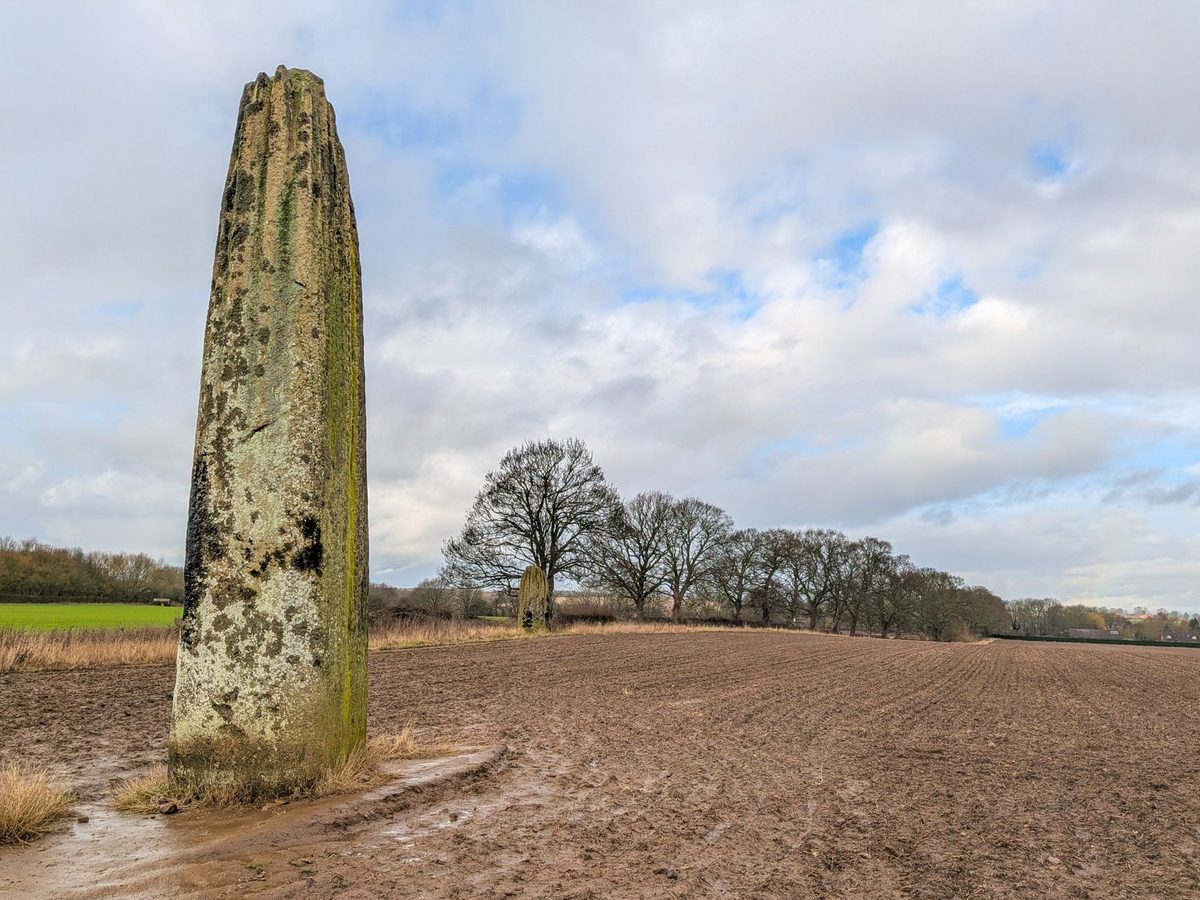
Neolithic standing stones in a rural field in Boroughbridge, England under a cloudy winter sky.
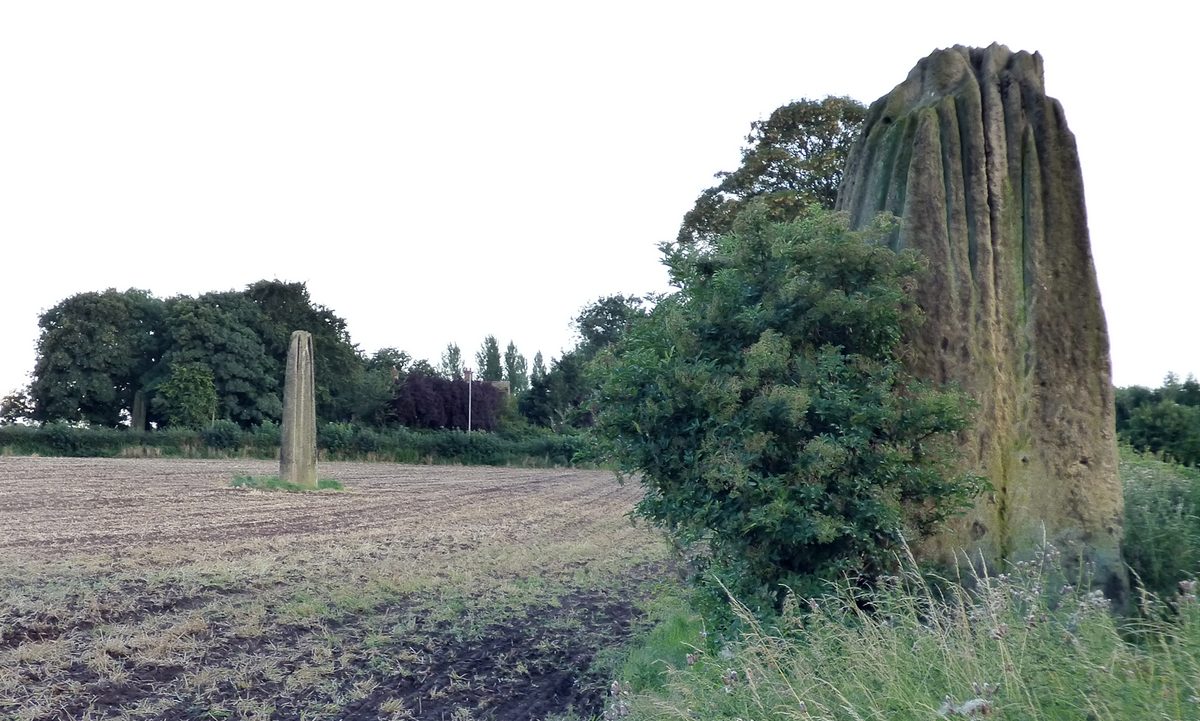
Devil's Arrows stone row - geograph.org.uk - 5681890
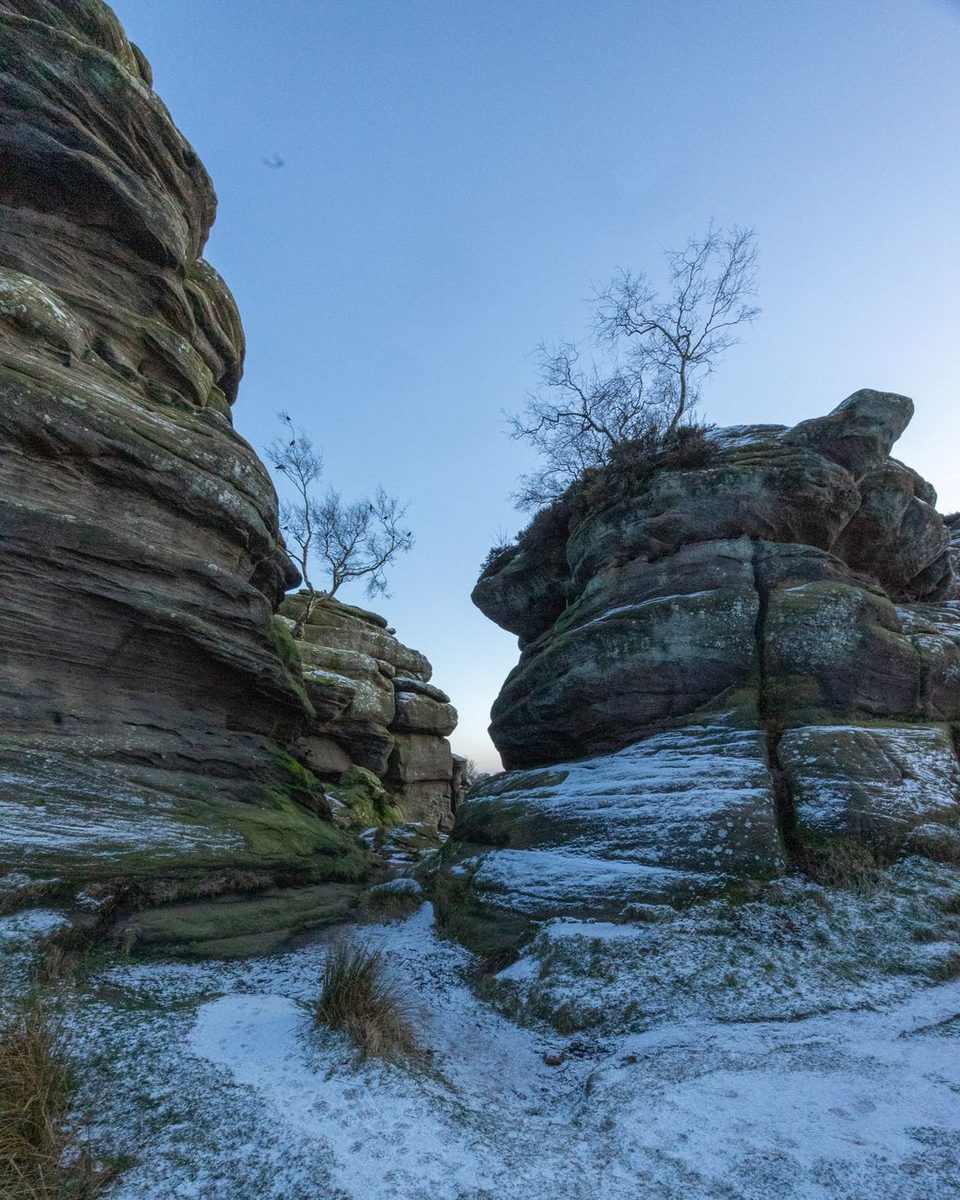
Captivating view of snow-dusted Brimham Rocks in winter, showcasing natural geology and landscape beauty.
Images from Openverse under Creative Commons licenses.
Voices
Curated perspectives — historical figures and your fellow readers.
Play
Exploring all sides of a story is often best achieved with Play.
Most of these play right now — no account needed. Sign up to save scores, keep a streak, and unlock Debate and Predict.
Log in
Sign Up
Higher or Lower
A number from this story, against one from elsewhere in the news — guess which is bigger, then keep the chain going. 5 rounds, 3 strikes; a miss costs a strike and resets your streak.
Example
Anchor
EU tariff revenue
$52B
Big for this kind of number
Mystery
Pentagon AI contract
?
Round 1
Streak: 0
Mystery
?
Keyboard: ↓/L lower · ↑/H higher
0 pts
Best streak: 0 · Rounds: 0
0 points — sign up to put that on the leaderboard.
Now try on this story
Connections
Sixteen names from the news. Find the four hidden groups of four. Four mistakes max.
Loading today's puzzle…
0/4 groups
Mistakes
Sign up to keep a daily streak — a new puzzle lands every day.
Now try on this story
Exit debate?
Your progress in this debate will be lost.
How it works
- 1 Two AI personas square off on this story.
- 2 You predict who'll win each round — correct picks earn XP.
- 3 One crossfire question is yours to fire. Pick it carefully.
Couldn't generate a topic
Select Your Champions
Choose one persona for each side of the debate
DEBATE TOPIC
Choose personas with different perspectives for a more dynamic debate.
SIDE A (PRO)
Select debater for this side:
No debate personas available right now.
SIDE B (CON)
Select debater for this side:
No debate personas available right now.
VS
Get ready to make your prediction...
Round of
Claim
Evidence
Stakes
Crossfire Answer
Closing Statement
Claim
Evidence
Stakes
Crossfire Answer
Closing Statement
Your Crossfire Question
Generating arguments...
Who's Got This Round?
Make your prediction before the referee scores
The referee scores both sides on
Correct predictions earn +20 XP
· Press 1 or 2 to pick
Evidence
40%
Logic
30%
Detail
20%
Style
10%
Round Results
Your Pick
Not this time
(%)
Overall Score
/10
Your Pick
Not this time
(%)
Overall Score
/10
Set the Crossfire
Pick the question both personas must answer in the final round
Crafting crossfire questions...
Choosing a question earns +10 XP crossfire bonus
🏆
Total XP Earned
Cred Change
Predictions
Debate Oracle! You called every round!
Sharp Instincts! You know your debaters!
The Coin Flip Strategist! Perfectly balanced!
The Contrarian! Bold predictions!
Inverse Genius! Try betting the opposite next time!
XP Breakdown
Base completion
+20 XP
Rounds played ( rounds x 5 XP)
+ XP
Correct predictions ( correct x 20 XP)
+ XP
Crossfire bonus
+10 XP
Accuracy
%
Prediction History
Round
You picked:
✓
✗
Now try on this story
Keep debating to level up your credibility and unlock achievements
People Involved
Organizations Involved
Curtin University
University
Lead research institution
Australian public research university in Perth whose Earth and Planetary Sciences school led the Devil's Arrows study.
University of York
University
Research collaborator
UK research university whose archaeologists and geologists contributed local expertise to the Devil's Arrows analysis.
Timeline
January 1550 September 2026
4 events
Latest: Today
Tap a bar to jump to that date
-
Study traces Devil's Arrows stones to Brimham Rocks
Today ResearchIsotopic fingerprinting identifies Brimham Rocks as source, confirms Battle Cross link, rules out glacial transport.
-
Walbran proposes the Battle Cross theory
Historical recordAntiquarian J.R. Walbran suggested a lost Arrow was carved into Aldborough's medieval cross. (19th century)
-
Local records note a broken-up fallen stone
Historical recordRecords say locals used part of a fallen stone for Peg Bridge and took the top to Aldborough manor.
-
Tudor antiquarian records a fourth standing stone
Historical recordJohn Leland recorded a fourth Devil's Arrow; later accounts say it went missing. (c. mid-16th century)
Historical Context
2 moments from history that rhyme with this story — and how they unfolded.
1923-2011
Stonehenge bluestone sourcing (1923-2011)
For nearly a century, geologists debated where Stonehenge's smaller bluestones came from. In 1923, H.H. Thomas traced them via petrography to the Preseli Hills in Pembrokeshire, Wales, over 240 kilometers away. Later geochemical work pinpointed specific outcrops, settling the source and reigniting debate over whether glaciers or humans moved them.
Then
The identification confirmed that prehistoric people transported stones over enormous distances.
Now
The sourcing debate became the template for how archaeologists resolve stone provenance, and it exposed how assumptions about what ancient people could do often underestimate them.
Why this matters now
The Devil's Arrows study uses the same logic on a smaller scale: geochemical fingerprinting to trace stones to a distant source, and to rule out glacial transport. Both cases show ancient builders chose specific, far-off landscapes rather than the nearest usable stone.
2019-2020
Stonehenge sarsen stone sourcing (2019-2020)
Researchers used portable X-ray fluorescence to analyze Stonehenge's massive sarsen stones non-destructively. They found most share a single geochemical signature matching West Woods in Wiltshire, about 25 kilometers from the monument, and that the stones likely came from one batch of quarried blocks.
Then
The study resolved where the largest sarsens came from and showed they were sourced from a specific landscape rather than gathered opportunistically.
Now
It demonstrated that modern non-destructive geochemistry can settle long-standing sourcing questions without harming protected monuments.
Why this matters now
Like the sarsen study, the Devil's Arrows analysis used non-destructive sampling to trace megaliths to a deliberate, distant source, strengthening the pattern that Neolithic builders chose stones for cultural reasons beyond mere convenience.
Sources
(7)Related Stories
80,000-year-old stone points may be the world's oldest arrowheads
New Capabilities
Updated 2 days ago
Ancient humans made fire on demand 400,000 years ago
New Capabilities
Updated May 19
Blood vessels preserved in a broken rib of the largest known T. rex show healing in progress
New Capabilities
Updated 8 hours ago
Scientists unlock 1.2 million years of climate history
New Capabilities
Updated May 19
New study traces specific disasters to individual fossil fuel companies' emissions
New Capabilities
Updated 5 days ago
Dormant breast cancer cells hide behind protective cellular shields
New Capabilities
Updated 2 days ago