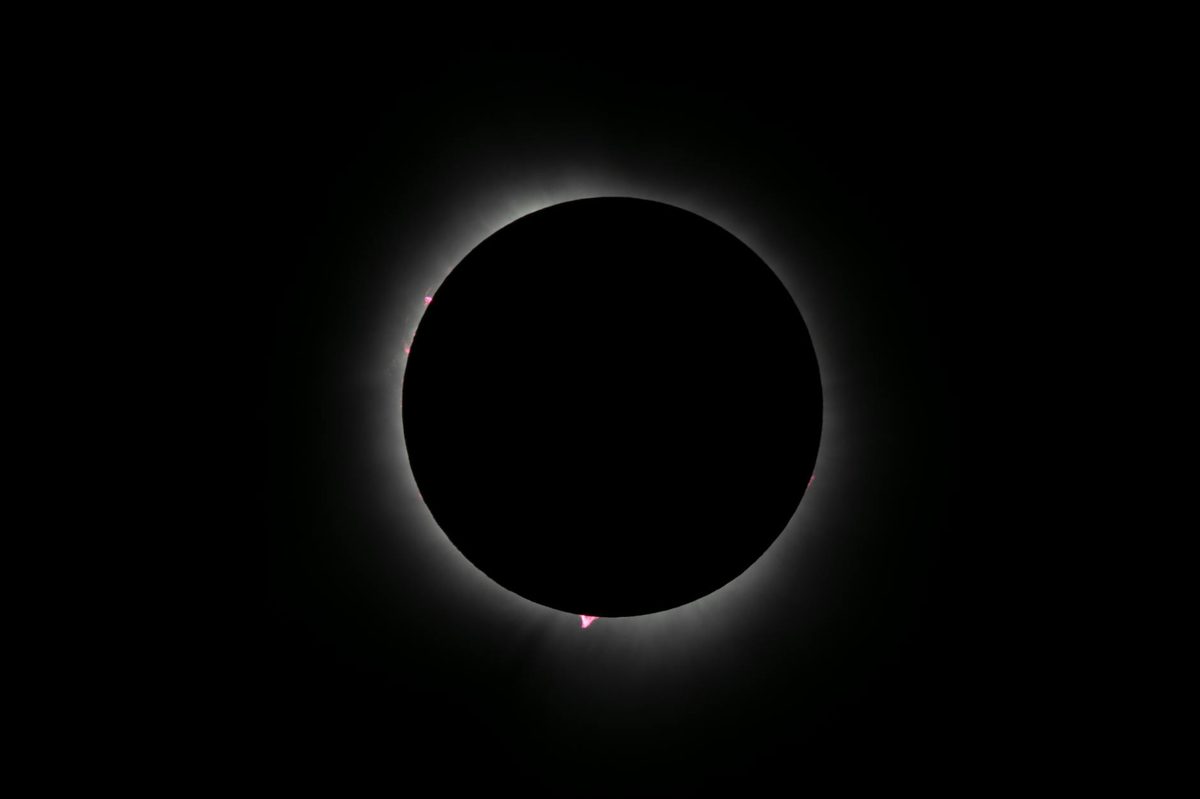
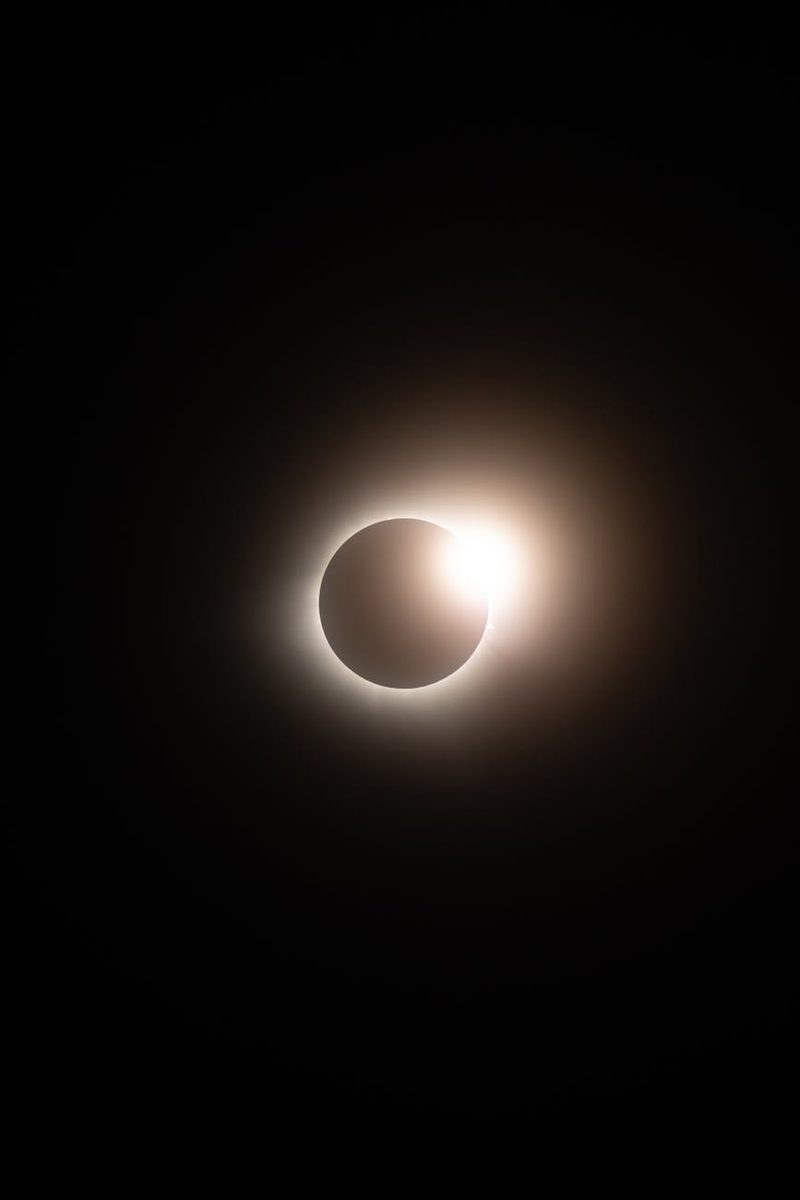
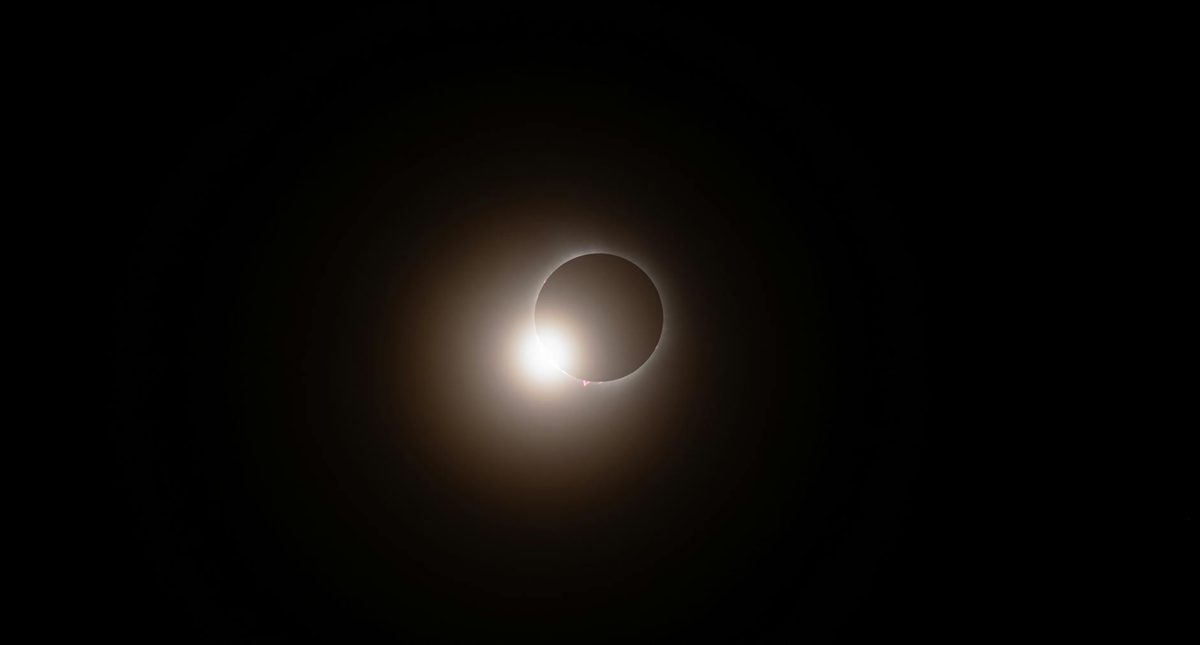
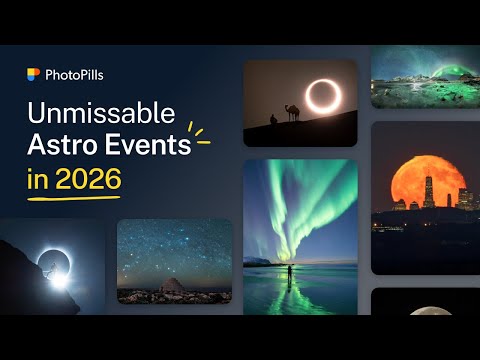
An annular solar eclipse swept across Antarctica on February 17, 2026, creating a 'ring of fire' visible for 2 minutes and 20 seconds when the Moon covered 96% of the Sun. Research stations including Concordia and Mirny were in the path of annularity, and satellites from ESA, NOAA, and Eumetsat captured the event from orbit.
The eclipse opened a two-part eclipse season that was scheduled to continue with a total lunar eclipse on March 3, the last until late 2028. A total solar eclipse was scheduled to cross Iceland and Spain on August 12. The year closes with the closest supermoon of 2026 on December 24.
Why it matters
Skywatchers who miss 2026's eclipses will wait years for the next ones, while scientists gather rare data on the Sun's corona.
Questions about this story
Free account needed to ask — your question is kept and asked for you right after sign-up. Answers are public.
No questions yet — be the first to ask.
Key Indicators
4
Total eclipses in 2026
Two solar (one annular, one total) and two lunar (one total, one partial)
96%
Sun coverage at maximum
Moon's coverage of the Sun during the February 17 annular eclipse over Antarctica
~100/hr
Expected Perseid meteor rate
Typical Perseid peak hourly rate under dark skies; the August 13 peak fell at new moon
12 events
Latest: October 4th, 2026 · 1 week ago
Showing 8 of 12
JK to step
Tap a bar to jump to that date
Jump to
December 2026
Year's Closest Supermoon
UpcomingLunar Event
The full moon approaches within 356,740 kilometers of Earth, the closest full moon of 2026.
October 2026
Saturn at Opposition
LatestPlanetary Event
Saturn reaches its closest approach to Earth, appearing at its brightest and most visible of the year.
August 2026
Partial Lunar Eclipse
Lunar Eclipse
A partial lunar eclipse visible from Europe, Asia, Africa, and the Americas completes the year's eclipse quartet.
Perseid Meteor Shower Peak
Meteor Shower
Under moonless skies, the Perseids reach peak activity, typically up to about 100 meteors per hour—rare optimal conditions for one of the year's best meteor showers.
New Moon Creates Ideal Perseid Conditions
Lunar Event
New moon timing ensures exceptionally dark skies for the Perseid meteor shower peak, which typically produces up to about 100 meteors per hour.
Total Solar Eclipse: Iceland, Spain, and Greenland
Solar Eclipse
Path of totality crosses eastern Greenland, western Iceland, and northern Spain including Valencia, Bilbao, and the Balearic Islands. Maximum totality: 2 minutes 18 seconds.
March 2026
Total Lunar Eclipse (Blood Moon)
Lunar Eclipse
The Moon turns deep red for 58 minutes during totality. Visible to about 2.5 billion people across Asia, Australia, the Pacific, and North America. Last total lunar eclipse until late 2028.
February 2026
Six-Planet Alignment Visible After Sunset
Planetary Event
Mercury, Venus, Jupiter, Saturn, Uranus, and Neptune align in the evening sky. Four visible to naked eye; two require binoculars.
Annular Solar Eclipse Over Antarctica
Solar Eclipse
The Moon covers 96% of the Sun, creating a 'ring of fire' visible for 2 minutes 20 seconds at maximum. Scientists at Concordia and Mirny stations observed the annular phase.
Satellites Track Eclipse Shadow Across Antarctica
Scientific Research
ESA's Proba-2, NOAA's GOES-19, Eumetsat, and South Korea's GEO-KOMPSAT-2A captured the eclipse from orbit, tracking the moon's shadow across the frozen continent.
January 2026
Jupiter at Opposition
Planetary Event
Jupiter reaches its closest approach to Earth, making it the brightest and most visible of the entire year.
First Supermoon of 2026
Lunar Event
The year's first supermoon occurs, appearing larger and brighter than typical full moons.
Scenarios
1
August Eclipse Tourism Breaks Records in Iceland and Spain
The August 12 total solar eclipse draws hundreds of thousands of visitors to Iceland's Westfjords and northern Spain. Both regions have been preparing infrastructure for years. Hotels in the path of totality are already fully booked, and temporary campsites are being organized. If weather cooperates, this could be the most-witnessed total solar eclipse in European history, generating significant economic impact for rural communities.
2
Antarctic Eclipse Yields Breakthrough Atmospheric Data
Possible
Discussed by: Climate scientists, Antarctic research programs, NASA heliophysics division
The February 17 annular eclipse over Antarctica provides researchers with rare data on atmospheric behavior in polar regions during sudden light changes. Temperature sensors, wildlife trackers, and ionospheric instruments at Concordia, Mirny, and other stations could capture effects that are impossible to study under normal conditions. If analysis reveals unexpected patterns, it may inform models of polar climate dynamics and solar influence on Earth's atmosphere.
Discussed by: Astronomy educators, planetarium directors, dark sky preservation advocates
The rare coincidence of a new moon during the Perseid peak on August 13 creates what astronomers call 'once-in-a-decade' viewing conditions. With up to about 100 meteors per hour visible under completely dark skies, public interest surges. National parks and designated dark sky areas report record attendance, potentially accelerating efforts to reduce light pollution in populated areas.
4
December Supermoon Triggers Coastal Flooding Concerns
The year's closest supermoon on December 24 amplifies tidal forces. If it coincides with winter storm systems in coastal regions, the combination could produce unusually high tides and localized flooding. Actual impact depends heavily on weather conditions at the time.
Historical Context
3 moments from history that rhyme with this story — and how they unfolded.
1 of 3
May 1919
The 1919 Eclipse That Proved Einstein Right
British astronomer Arthur Eddington led two expeditions—one to Príncipe Island off West Africa, another to Sobral, Brazil—to photograph stars near the Sun during a total solar eclipse. Einstein's general relativity predicted starlight would bend around the Sun's gravity by a specific amount, different from Newton's prediction. Eddington measured the deflection.
Then
Results announced in November 1919 matched Einstein's predictions. Headlines worldwide declared Newton overthrown. Einstein became an instant celebrity, the most famous scientist alive.
Now
Established solar eclipses as crucial tests of fundamental physics. General relativity became the foundation for modern cosmology, GPS satellite corrections, and gravitational wave detection a century later.
Why this matters now
Modern eclipse observations continue this tradition, using the brief darkness to study phenomena normally invisible—the Sun's corona, atmospheric effects, and radio signal propagation.
2 of 3
August 1868
Discovery of Helium During the 1868 Eclipse
French astronomer Pierre Jules César Janssen observed a total solar eclipse from India, pointing a spectroscope at the Sun's atmosphere. He detected a yellow spectral line that matched no known element on Earth. British astronomer Joseph Norman Lockyer independently observed the same line and named the mysterious element 'helium' after the Greek word for Sun.
Then
Scientists initially doubted that an element could exist only on the Sun. The finding challenged assumptions about the composition of celestial bodies.
Now
Helium was eventually discovered on Earth in 1895, trapped in uranium ore. It became essential for cryogenics, medical imaging, and aerospace. The discovery demonstrated that eclipses could reveal entirely new physics.
Why this matters now
The 2026 Antarctic eclipse continues the tradition of using rare observational windows to gather data impossible to obtain under normal conditions.
3 of 3
April 2024
2024 North American Eclipse Research Campaign
NASA coordinated its largest-ever eclipse research effort during the April 8, 2024, total solar eclipse crossing Mexico, the United States, and Canada. The Citizen CATE project deployed 35 teams capturing 47,000 polarized images of the corona. Over 800 students launched atmospheric research balloons. More than 6,350 amateur radio operators generated 52 million data points on ionospheric effects.
Then
Researchers confirmed that eclipses generate atmospheric gravity waves detectable across hundreds of kilometers. Radio signal propagation data revealed how rapidly the ionosphere responds to sudden darkness.
Now
The campaign demonstrated that citizen science networks can produce research-grade data at scale. Methodology developed for 2024 will inform future eclipse observations, including the 2026 events.
Why this matters now
The 2024 campaign established templates for coordinated multi-site eclipse observation that Antarctic researchers are adapting for the February 2026 event.