
Pull to refresh
Logo
Daily Brief
Following
Why
First radio telescope heads to Moon's far side

First radio telescope heads to Moon's far side

New Capabilities
By Newzino Staff | |

LuSEE-Night will attempt to detect signals from the cosmic Dark Ages—an era no instrument has ever observed

January 29th, 2026: LuSEE-Night Nears Completion

Overview

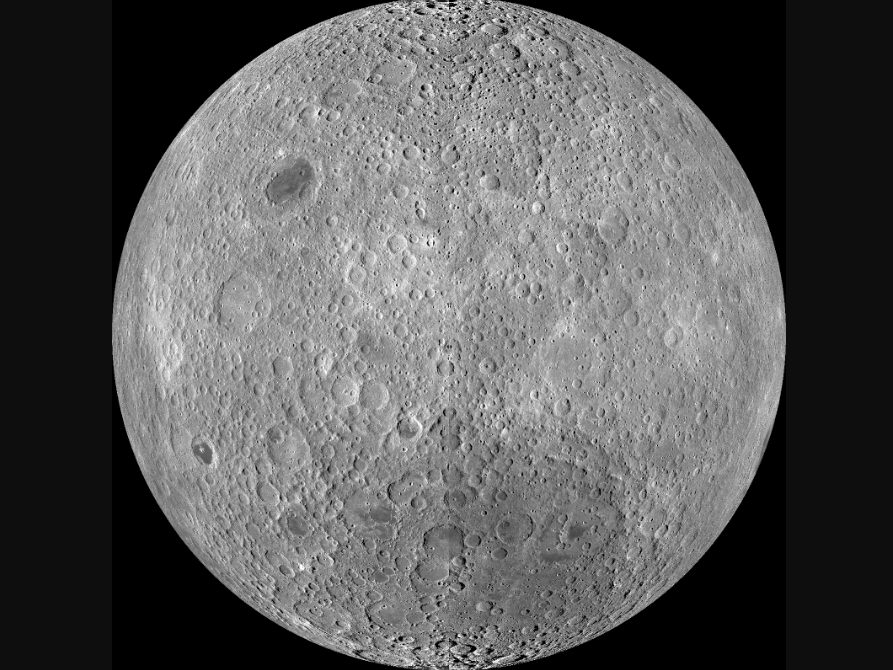
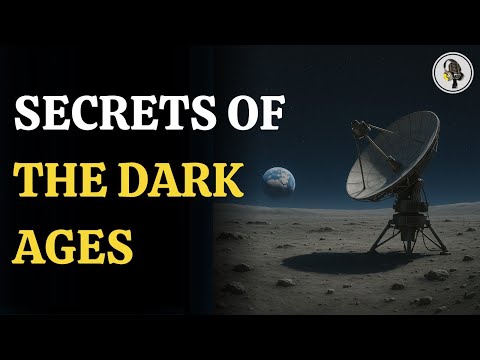
No instrument has ever detected light from the cosmic Dark Ages—the 200-million-year period after the Big Bang when the universe contained nothing but hydrogen gas, before the first stars ignited. Earth-based telescopes cannot observe this era: the atmosphere blocks the relevant radio frequencies, and human electronics drown out the faint signals. A radio telescope on the Moon's far side, shielded by 2,000 miles of rock from Earth's interference, could finally peer into this unexplored epoch.

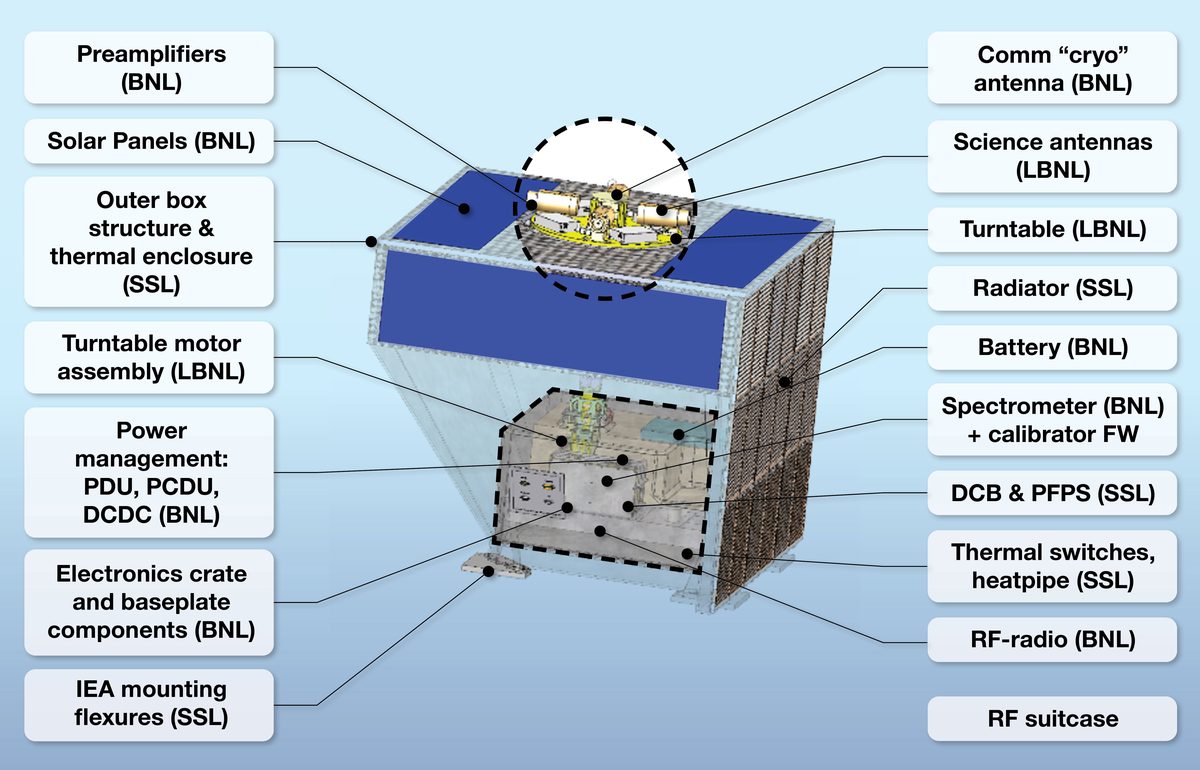
LuSEE-Night, a joint NASA and Department of Energy project, is now in final assembly for a late 2026 launch aboard Firefly Aerospace's Blue Ghost 2 lander. The 108-kilogram instrument—featuring four six-meter antennas on a rotating turntable—will spend two years collecting data during 14-day lunar nights, when the far side becomes the quietest radio environment in the inner solar system. Blue Ghost Mission 2 will carry six payloads from five countries to the lunar far side, including the United Arab Emirates' Rashid 2 rover and Australia's SPIDER plasma detector, demonstrating international collaboration in lunar science. If successful, LuSEE-Night will prove that larger lunar arrays can map the universe's first 400 million years.

Key Indicators

13.8 billion
Years ago
The cosmic Dark Ages began just 380,000 years after the Big Bang, lasting until the first stars formed
0.1–50 MHz
Frequency range
Radio frequencies blocked by Earth's ionosphere that LuSEE-Night will observe for the first time
$40M
Project budget
Combined NASA and DOE funding for the pathfinder mission
2 years
Planned operation
Target duration for data collection on the lunar far side

Interactive

Exploring all sides of a story is often best achieved with Play.

Ever wondered what historical figures would say about today's headlines?

Sign up to generate historical perspectives on this story.

Sign Up

Debate Arena

Two rounds, two personas, one winner. You set the crossfire.

People Involved

Jon Burns
Jon Burns
Scientific Investigator, University of Colorado Boulder (Leading scientific program for LuSEE-Night)
Stuart Bale
Stuart Bale
NASA Principal Investigator, UC Berkeley (Leading NASA's scientific and engineering effort)
Anže Slosar
Anže Slosar
DOE Science Lead, Brookhaven National Laboratory (Leading Department of Energy collaboration)

Organizations Involved

Brookhaven National Laboratory
DOE National Laboratory
Status: Lead DOE institution for LuSEE-Night

DOE research laboratory on Long Island, New York, with expertise in particle physics instrumentation and cosmology.

UC Berkeley Space Sciences Laboratory
University Research Center
Status: Lead NASA institution and integrator

University research laboratory responsible for overall LuSEE-Night integration and NASA science program.

Firefly Aerospace
Firefly Aerospace
Commercial Space Company
Status: Building and operating the Blue Ghost 2 lander

Texas-based aerospace company providing commercial lunar landing services under NASA's CLPS program.

NASA Commercial Lunar Payload Services
Government Program
Status: Funding and managing commercial lunar deliveries

NASA's $2.6 billion initiative hiring commercial companies to deliver payloads to the Moon.

Timeline

  1. LuSEE-Night Nears Completion

    Development

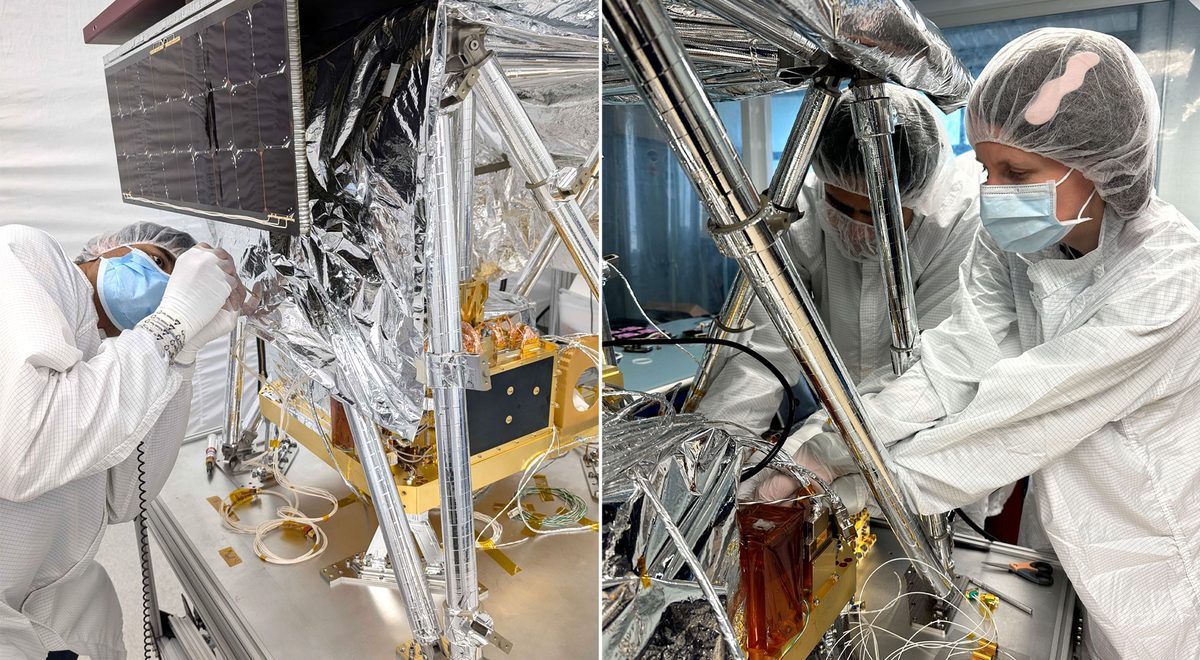
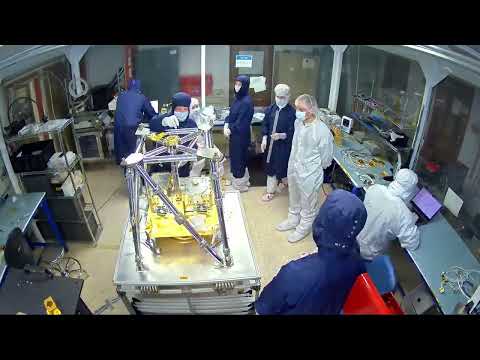
    The radio telescope is undergoing final assembly at UC Berkeley's Space Sciences Laboratory ahead of handoff to Firefly Aerospace for integration into Blue Ghost 2.

  2. Rashid 2 Rover Completes Testing

    Development

    UAE's Rashid 2 rover successfully completed performance checks in the United States, including deployment and drive-off tests in collaboration with Firefly Aerospace.

  3. Rashid 2 Construction Completed

    Development

    Mohammed Bin Rashid Space Centre announced completion of the Rashid 2 rover, marking a milestone toward the UAE's first far-side lunar landing.

  4. Blue Ghost 2 Environmental Testing

    Development

    NASA's Jet Propulsion Laboratory conducted vibration and acoustic testing on a full-scale model of Blue Ghost Mission 2 to validate the spacecraft design.

  5. Brookhaven Completes Major Equipment Phase

    Development

    Brookhaven National Laboratory finished construction of all major LuSEE-Night components, including the radio spectrometer capable of monitoring the entire frequency band continuously.

  6. UAE Rashid 2 Rover Added to Blue Ghost 2

    Development

    Firefly Aerospace announced an agreement with UAE's Mohammed Bin Rashid Space Centre to deliver the Rashid 2 rover to the Moon's far side aboard Blue Ghost Mission 2, expanding the mission to six payloads from five countries.

  7. Blue Ghost 1 Completes Successful Mission

    Mission

    Firefly Aerospace's Blue Ghost Mission 1 landed at Mare Crisium and operated for 14 days, demonstrating the lander platform that will carry LuSEE-Night.

  8. First NASA Radio Telescope Reaches Moon

    Mission

    ROLSES-1 arrived on the Moon aboard Intuitive Machines' Odysseus lander. Despite landing at a 30-degree angle with crushed antenna, the instrument collected limited data proving lunar radio astronomy is feasible.

  9. LuSEE-Night Concept Development Begins

    Development

    Scientists at UC Berkeley and Brookhaven began designing a lunar radio telescope to survive far-side conditions and detect Dark Ages signals.

  10. NASA Launches CLPS Program

    Policy

    NASA announced the Commercial Lunar Payload Services program, enabling commercial companies to bid for contracts delivering scientific instruments to the Moon.

  11. EDGES Claims Dark Ages Detection

    Scientific

    The EDGES experiment reported detecting a signal from the cosmic dawn at 78 MHz—a controversial finding that highlighted the difficulty of ground-based observations and the need for lunar instruments.

  12. Burns First Proposes Lunar Radio Telescope

    Proposal

    Astronomer Jack Burns presented on lunar observatory concepts at a conference, beginning four decades of advocacy for radio astronomy from the Moon.

  13. 21cm Hydrogen Line Predicted

    Scientific

    Dutch astronomer Hendrik van de Hulst predicted the existence of the 21-centimeter hydrogen spectral line, later confirmed experimentally in 1951.

Scenarios

1

LuSEE-Night Detects Dark Ages Signal, Opens New Field

Discussed by: Brookhaven cosmologists and the Astro2020 Decadal Survey, which identified Dark Ages observation as the discovery area for cosmology

The telescope successfully survives multiple lunar nights and detects the redshifted 21cm hydrogen signal from the Dark Ages. This would confirm that lunar far-side radio astronomy is viable and provide the first direct measurement of the universe between 380,000 years and 200 million years after the Big Bang. Such a detection would accelerate funding for larger arrays like FarView, potentially revealing information about dark matter, neutrino masses, and the initial conditions of the universe.

2

Technology Demonstration Succeeds, Science Inconclusive

Discussed by: Project scientists at UC Berkeley and Brookhaven, who describe LuSEE-Night primarily as a 'pathfinder' mission

LuSEE-Night survives the harsh lunar environment and operates as designed, proving that radio telescopes can function on the far side for extended periods. However, galactic foreground radiation proves too bright to isolate the Dark Ages signal with this single instrument. The mission is deemed a success for validating technology and calibration techniques, providing essential data for designing the larger arrays needed to actually detect cosmological signals.

3

Hardware Fails During Lunar Night, Mission Ends Early

Discussed by: NASA and DOE engineers who note the extreme temperature swings (from 250°F to -280°F) as the primary engineering challenge

The instrument does not survive its first 14-day lunar night, when temperatures plunge to -280°F and the solar-powered battery must sustain operations. Engineers would analyze whatever data was collected during the initial lunar day and descent, similar to the partial success of ROLSES-1. The failure would delay but not end lunar radio astronomy efforts, as follow-on missions ROLSES-2 and future arrays would incorporate lessons learned.

4

Landing Failure Destroys Instrument

Discussed by: Commercial lunar payload analysts noting that early CLPS missions had mixed success rates

Blue Ghost 2 fails to land safely on the lunar far side, destroying LuSEE-Night before it can collect any data. This would follow the pattern of Astrobotic's Peregrine Mission 1 (propellant leak) and Intuitive Machines' IM-2 (landed sideways). However, Firefly's successful Blue Ghost 1 mission suggests the platform is flight-proven, making this outcome less likely than on earlier CLPS attempts.

Historical Context

Hubble Space Telescope Launch (1990)

April 1990

What Happened

NASA launched the Hubble Space Telescope into Earth orbit to observe the universe above the distorting effects of the atmosphere. Initial images were blurry due to a flawed mirror—a $1.5 billion manufacturing error discovered only after launch. A 1993 servicing mission installed corrective optics.

Outcome

Short Term

The mirror flaw created a public relations disaster, with Congress questioning NASA's competence and oversight of contractors.

Long Term

After repairs, Hubble became one of the most productive scientific instruments ever built, transforming astronomy and demonstrating that orbital observatories could overcome Earth-based limitations.

Why It's Relevant Today

LuSEE-Night represents a similar bet: placing an observatory beyond Earth's interference to see what ground-based instruments cannot. Like Hubble, it addresses a fundamental limitation—the ionosphere blocking low-frequency radio waves—that no engineering on Earth can overcome.

Cosmic Background Explorer Detection (1989-1993)

November 1989 – December 1993

What Happened

NASA's COBE satellite measured tiny temperature variations in the cosmic microwave background radiation—the afterglow of the Big Bang. Project leaders John Mather and George Smoot detected fluctuations of just 30 millionths of a degree, requiring years of careful analysis to distinguish the signal from instrument noise and galactic foregrounds.

Outcome

Short Term

Stephen Hawking called COBE's results 'the most important discovery of the century, if not of all time.' Mather and Smoot later received the 2006 Nobel Prize in Physics.

Long Term

COBE opened the field of precision cosmology, leading to successor missions WMAP and Planck that mapped the early universe in increasing detail.

Why It's Relevant Today

LuSEE-Night faces the same fundamental challenge COBE confronted: detecting an extremely faint cosmological signal buried beneath much brighter foreground emission. The Dark Ages signal is roughly 100,000 times fainter than galactic radio noise, requiring similar methodical separation techniques.

LIGO Gravitational Wave Detection (2015)

September 2015

What Happened

The Laser Interferometer Gravitational-Wave Observatory detected gravitational waves from two colliding black holes 1.3 billion light-years away. The detection came after four decades of development and $1.1 billion in investment. The signal distorted LIGO's 4-kilometer arms by less than one ten-thousandth the width of a proton.

Outcome

Short Term

The discovery earned founders Kip Thorne, Rainer Weiss, and Barry Barish the 2017 Nobel Prize in Physics.

Long Term

Gravitational wave astronomy became a new field, with LIGO and partner observatories detecting dozens of merging black holes and neutron stars, opening a window on phenomena invisible to light-based telescopes.

Why It's Relevant Today

Like LIGO, LuSEE-Night seeks to open an entirely new observational window on the universe—radio frequencies below 50 MHz that have never been systematically studied. Both projects required decades of advocacy by persistent scientists (Jack Burns began his lunar campaign in 1984; LIGO's founders started in the 1960s) before technology and funding aligned.

13 Sources: