
Pull to refresh
Logo
Liver blood tests match biopsy for cirrhosis, fall short for early MASH in 1,590-patient study

Liver blood tests match biopsy for cirrhosis, fall short for early MASH in 1,590-patient study

New Capabilities

The LITMUS study tested 30 biomarkers against centrally scored biopsies across 13 countries.

Overview

Updated 2 hours ago

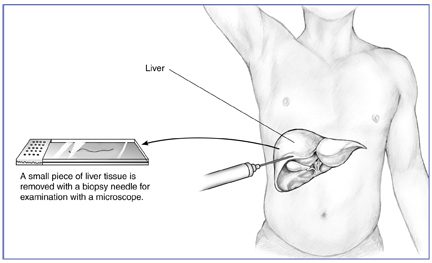
For years, the only dependable way to grade fatty liver disease has been a needle biopsy: a painful, costly procedure that samples a fraction of the organ. A study of 1,590 patients across 13 countries, published in The Lancet, tested 30 blood and imaging markers against that needle. For cirrhosis and advanced scarring, several matched it. For the earliest stage that drugmakers most want to treat, only one did.

The gap matters because regulators and trial sponsors still require biopsy confirmation of at-risk MASH before enrolling patients. If a blood test could replace that step, trials would get cheaper and faster, and patients in primary care could be sorted without a specialist procedure. The study suggests that future is close for fibrosis, and not yet here for early disease.

Why it matters

A validated blood test for liver scarring could spare many patients a biopsy, but the earliest, most-treated stage still has no replacement.

Questions about this story

Free account needed to ask — your question is kept and asked for you right after sign-up. Answers are public.

No questions yet — be the first to ask.

Key Indicators

1,590
Participants with centrally scored biopsies
Adults with biopsy-confirmed MASLD recruited across 13 countries.
30
Biomarkers tested
12 single markers and 18 multimarker panels compared against histology.
0.83
SomaSignal accuracy for at-risk MASH
Area under the curve; the only test to clear the study's 0.80 threshold for this target.
0.92
SomaSignal accuracy for advanced fibrosis
Highest of any test for scarring at stage F3 or worse.
0.80
Minimum acceptable accuracy threshold
The study's bar for a test that could potentially replace biopsy.
13
Countries represented
Recruitment spanned Europe and the United States at 37 liver centers.

Voices

Curated perspectives — historical figures and your fellow readers.

Sign up to generate historical perspectives on this story.

People Involved

Organizations Involved

Timeline

January 2018 October 2026

5 events Latest: 2 days ago
Tap a bar to jump to that date
  1. Lancet publishes LITMUS diagnostic accuracy study

    Latest Publication

    SomaSignal is the only test to clear the accuracy bar for at-risk MASH.

  2. Companion imaging study appears in Nature Medicine

    Publication

    MRI elastography and Agile scores clear the bar for cirrhosis in 357 patients.

  3. Newcastle University announces results

    Statement

    Press office says non-invasive tests can reduce the need for biopsy.

  4. Recruitment closes with 1,590 biopsied participants

    Study

    Final cohort includes 609 patients with at-risk MASH and 164 with cirrhosis.

  5. LITMUS begins recruiting patients

    Study

    Enrollment opens across Europe and the United States for a prospective diagnostic accuracy study.

Scenarios

1

A blood panel replaces biopsy for staging advanced fibrosis

Possible Resolves by End of 2027

Discussed by: LITMUS authors and Newcastle University

SomaSignal and FibroMeter-VCTE cleared the study's 0.80 accuracy bar for advanced fibrosis and cirrhosis. If a regulator or major guideline body accepts one, it could enter routine hepatology practice. The trigger is a formal recommendation or a drug-label change.

2

Biopsy stays mandatory for at-risk MASH trial enrollment

Likely Resolves by Q2 2027

Discussed by: LITMUS authors and Nature Medicine commentary

Only SomaSignal met the accuracy threshold for at-risk MASH, and the study did not report cut-offs or sensitivity. Regulators require biopsy confirmation for late-stage trial entry. Without a second validated test, that requirement is unlikely to change.

3

A GGT-first two-step pathway enters primary care guidance

Possible Resolves by End of 2027

Discussed by: LITMUS authors and Newcastle University

The study found sequential two-step approaches using gamma-glutamyl transferase as a first-line test met the accuracy bar for both advanced fibrosis and at-risk MASH. Newcastle described a simplified pathway: GGT first, then ELF or FibroScan, with imaging reserved for specialists.

Historical Context

2 moments from history that rhyme with this story — and how they unfolded.

2003

Transient elastography reaches liver clinics (2003)

Echosens introduced FibroScan, an ultrasound device that measures liver stiffness as a proxy for scarring. It offered the first widely used non-invasive alternative to biopsy for staging fibrosis.

Then

Hepatology societies began recommending elastography alongside biopsy.

Now

FibroScan became standard in liver clinics, but it performs poorly at distinguishing early inflammation.

Why this matters now

The LITMUS results repeat the pattern: elastography and composite scores are strong for advanced fibrosis and cirrhosis, weak for early disease.

2005

NASH Clinical Research Network scoring system (2005)

Pathologists published the NAFLD Activity Score, a standardized way to grade biopsy samples. It gave trials a common reference standard.

Then

The score became the benchmark for MASH trials.

Now

It remains the reference standard, though its reproducibility is debated.

Why this matters now

LITMUS used this centrally scored system as its gold standard, which is why its accuracy numbers are comparable across 30 tests.

Sources

(6)