


Millions of children lose SNAP benefits, putting free school meals at risk
Rule ChangesTighter food assistance rules are cascading into lunchrooms as districts end universal free meal programs
3 days ago: Reporting documents SNAP-to-lunchroom cascadeNew here? Follow stories to track developments over time. Create a free account to get updates when stories you care about change.
Overview
Updated 1 hour agoMiami-Dade, the third-largest school district in the country, stopped serving free breakfast and lunch to all of its 300,000 students this fall. Only 121 of its 500-plus schools still qualify for the federal program that pays for those meals.
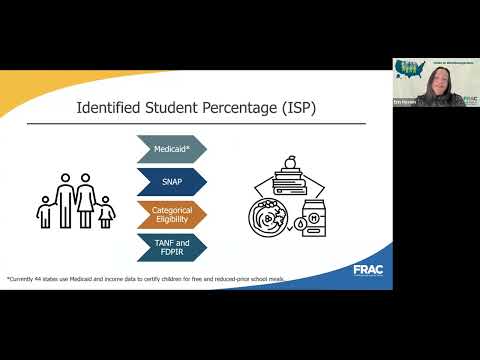
The cause runs through SNAP, the Supplemental Nutrition Assistance Program. SNAP enrollment automatically qualifies children for free school meals, and it determines which schools get federal funding for universal meals. When the One Big Beautiful Bill Act tightened SNAP rules in July 2025, more than a million children lost benefits — and the cuts are now reaching lunchrooms.
Why it matters
Falling SNAP enrollment is ending universal free meals at more schools, pushing meal costs onto families and district budgets already short on cash.
Questions about this story
Free account needed to ask — your question is kept and asked for you right after sign-up. Answers are public.
No questions yet — be the first to ask.
Key Indicators
Voices
Curated perspectives — historical figures and your fellow readers.
Play
Exploring all sides of a story is often best achieved with Play.
Higher or Lower
A number from this story, against one from elsewhere in the news — guess which is bigger, then keep the chain going. 5 rounds, 3 strikes; a miss costs a strike and resets your streak.
Keyboard: ↓/L lower · ↑/H higher
0 points — sign up to put that on the leaderboard.
Connections
Sixteen names from the news. Find the four hidden groups of four. Four mistakes max.
Sign up to keep a daily streak — a new puzzle lands every day.
Exit debate?
Your progress in this debate will be lost.
- 1 Two AI personas square off on this story.
- 2 You predict who'll win each round — correct picks earn XP.
- 3 One crossfire question is yours to fire. Pick it carefully.
Couldn't generate a topic
Select Your Champions
Choose one persona for each side of the debate
DEBATE TOPIC
Choose personas with different perspectives for a more dynamic debate.
Select debater for this side:
No debate personas available right now.
Select debater for this side:
No debate personas available right now.
Who's Got This Round?
Make your prediction before the referee scores
The referee scores both sides on
Round Results
Set the Crossfire
Pick the question both personas must answer in the final round
Debate Oracle! You called every round!
Sharp Instincts! You know your debaters!
The Coin Flip Strategist! Perfectly balanced!
The Contrarian! Bold predictions!
Inverse Genius! Try betting the opposite next time!
XP Breakdown
Prediction History
People Involved
Organizations Involved
Runs the Supplemental Nutrition Assistance Program and the national school breakfast and lunch programs.
Represents about 50,000 school nutrition professionals across the US.
Nonpartisan think tank that estimated over one million children lost food benefits since July 2025.
Timeline
July 2025 October 2026
-
States cover 75% of SNAP administrative costs
Upcoming PolicyThe federal share drops from 50%, squeezing state budgets that also fund school meals.
-
Reporting documents SNAP-to-lunchroom cascade
Latest ReportNational outlets detail how lost SNAP coverage cuts automatic school meal eligibility and CEP funding.
-
Districts end universal free meal programs
DecisionSchools in Miami-Dade, San Antonio, and Houston announce they no longer qualify for CEP funding.
-
SNAP enrollment declines accelerate
DataStricter eligibility rules and new administrative demands push families off food assistance.
-
One Big Beautiful Bill Act signed into law
PolicyThe budget reconciliation law tightens SNAP work requirements and immigrant eligibility restrictions.
Historical Context
3 moments from history that rhyme with this story — and how they unfolded.
Welfare reform law tightens food stamp eligibility (1996)
The Personal Responsibility and Work Opportunity Reconciliation Act restricted food stamp eligibility for immigrants and childless adults.
Food stamp enrollment fell sharply; many eligible families never re-enrolled because of paperwork and stigma.
Eligibility restrictions had lasting effects on programs that used food stamp data for automatic enrollment.
It's the precedent for how tightening one program quietly reduces participation in the linked programs that depend on its rolls.
California and Maine adopt universal school meals (2021-2022)
California and Maine became the first states to fund free breakfast and lunch for all students with state money, independent of federal income tests.
Both states removed the stigma and paperwork barriers that kept low-income students from eating.
They created a state-level model for universal meals that could absorb federal funding cuts.
Shows the counter-move available to states if SNAP-driven federal funding keeps falling.
COVID-era free meal waiver ends (2023)
Federal pandemic waivers had let every US student eat free through the 2022-23 school year. When they expired, districts suddenly had to recheck income eligibility for millions of children.
Districts reported meal debt as high as $1.7 million as families who never filed paperwork saw charges reappear.
The episode showed how quickly universal meal programs unravel when the eligibility mechanism beneath them shifts.
The current SNAP-driven cuts recreate the same financial shock, but through a slower, less visible channel.
