
Pull to refresh
Logo
Daily Brief
Following
Why
Australia's domestic gas paradox

Australia's domestic gas paradox

Built World
By Newzino Staff |

The World's Largest LNG Exporter Struggles to Keep the Lights On at Home

February 10th, 2026: Queensland Opens Taroom Trough Exploration

Overview

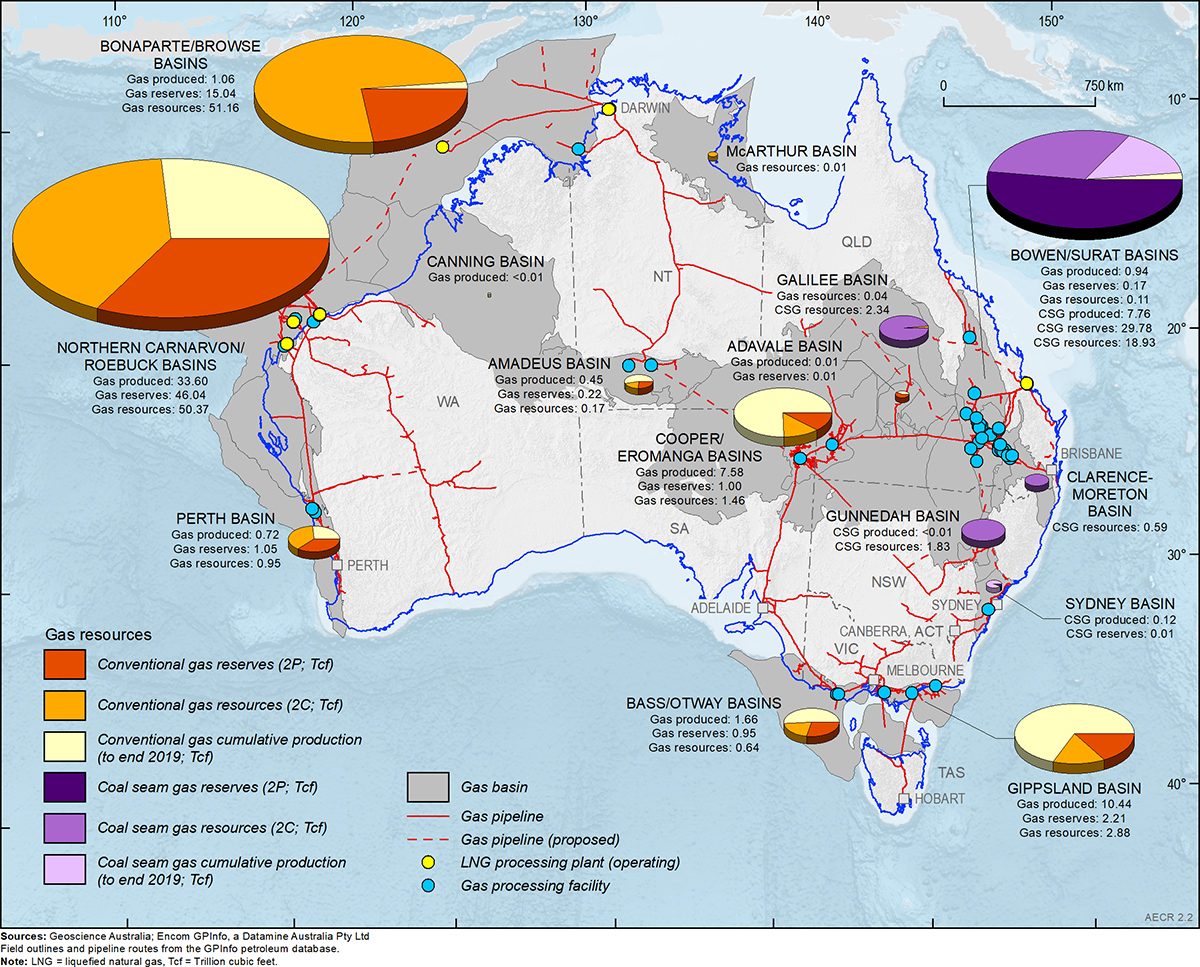
Australia exports more liquefied natural gas than any country except the United States and Qatar. Yet its own eastern states face recurring supply shortfalls because 70-80% of production flows to overseas buyers. Queensland, the source of most east coast gas, just opened the Taroom Trough—potentially the nation's first major new oil province in 50 years—with a mandate that any discoveries must serve Australian households first.

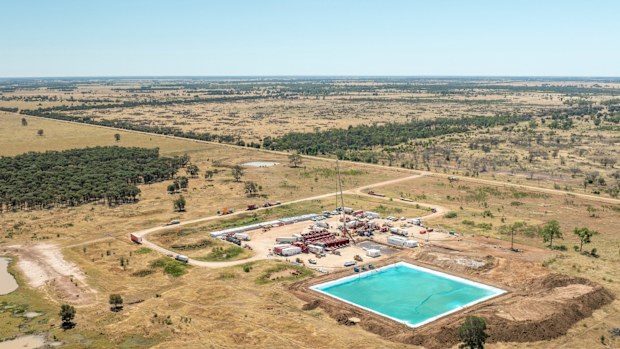
The February 2026 exploration award to Omega Oil & Gas, Tri-Star E&P, and Beach Energy represents the Crisafulli government's bet that new supply can solve what policy interventions have not: a structural gap projected to widen after 2028 unless production expands. The Australian Competition and Consumer Commission forecasts a possible 8 petajoule shortfall as early as the second quarter of 2026 if LNG exporters ship all their uncontracted gas overseas.

Key Indicators

70-80%
Gas exported
Share of Australian gas production sent to international markets rather than domestic consumers
8 PJ
Potential Q2 2026 shortfall
Projected domestic gas deficit if Queensland LNG producers export all uncontracted gas
750 km²
New exploration area
Size of the Taroom Trough block awarded—roughly equivalent to Singapore
50 years
Since last major oil province
Time since Australia opened a potential oil basin of this scale

Interactive

Exploring all sides of a story is often best achieved with Play.

Ever wondered what historical figures would say about today's headlines?

Sign up to generate historical perspectives on this story.

Sign Up

Debate Arena

Two rounds, two personas, one winner. You set the crossfire.

People Involved

Dale Last
Dale Last
Queensland Minister for Natural Resources and Mines (Announced Taroom Trough tender)
David Crisafulli
David Crisafulli
Premier of Queensland (Leading pro-resources state government)
Brett Woods
Brett Woods
Chief Executive Officer, Beach Energy (Leading Beach's Taroom Trough joint venture participation)

Organizations Involved

Omega Oil & Gas Ltd
Omega Oil & Gas Ltd
Exploration Company
Status: Operator of new Taroom Trough block

ASX-listed explorer focused on Queensland's Taroom Trough unconventional gas potential.

Beach Energy Ltd
Beach Energy Ltd
Oil and Gas Producer
Status: 25% partner in Taroom Trough exploration

Australia's largest onshore oil producer with operations across five producing basins.

Tri-Star E&P
Tri-Star E&P
Exploration Company
Status: 30% partner in Taroom Trough exploration

Family-owned petroleum, energy, and resource investment company operating across the US, Australia, and Germany.

Australian Competition and Consumer Commission
Federal Regulatory Agency
Status: Monitoring east coast gas supply forecasts

Australia's primary competition regulator, conducting ongoing gas market inquiries since 2017.

Timeline

  1. Queensland Opens Taroom Trough Exploration

    Tender

    Crisafulli government awards 750 km² exploration block to Omega Oil (45%), Tri-Star E&P (30%), and Beach Energy (25%). Any gas found must go to Australian market first under supply condition.

  2. ACCC Warns of Q2 2026 Shortfall Risk

    Forecast

    Competition regulator forecasts possible 8 petajoule domestic shortfall in second quarter 2026 if Queensland LNG producers export all uncontracted gas. Structural shortfalls projected from 2028.

  3. Port Kembla LNG Import Terminal Completes Construction

    Infrastructure

    Squadron Energy finishes building Australia's first LNG import terminal in New South Wales. The facility can supply 500 terajoules daily but won't operate until at least 2027 due to shifting demand forecasts.

  4. Crisafulli Government Elected in Queensland

    Political

    Liberal National Party wins Queensland state election. Premier David Crisafulli signals pro-resources energy policy, halting Pioneer-Burdekin pumped hydro and supporting coal industry reforms.

  5. Gas Market Code Introduced

    Policy

    Federal government establishes mandatory market conduct rules including a $12 per gigajoule reference price, good-faith negotiation requirements, and transparency obligations for producers.

  6. ADGSM Reforms Announced

    Policy

    Resources Minister Madeleine King announces quarterly activation capability for the ADGSM and requires LNG exporters to share equal responsibility for preventing shortfalls.

  7. Heads of Agreement with LNG Exporters Takes Effect

    Policy

    East coast LNG exporters commit to supply 'sufficient, competitively priced gas' to Australian users under agreement valid until January 2026, delivering an additional 157 petajoules in 2023.

  8. National Electricity Market Suspended

    Crisis

    Australian Energy Market Operator suspends national electricity market amid supply crisis. Gas Supply Guarantee activated, capping Victorian gas prices at A$40 per gigajoule.

  9. Australian Domestic Gas Security Mechanism Launched

    Policy

    Federal government establishes the ADGSM as a 'backstop' allowing ministers to limit LNG exports during domestic shortfalls. The mechanism has never been triggered.

  10. Curtis Island LNG Exports Begin

    Industry

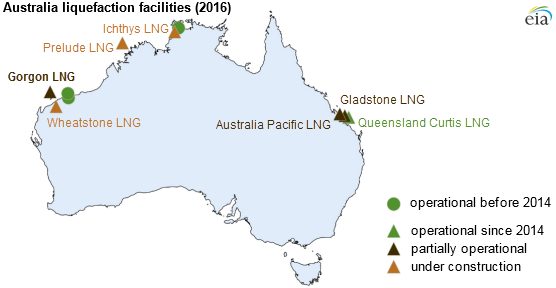
    Queensland Curtis LNG project starts shipping gas from Curtis Island, exposing the east coast market to international pricing for the first time and tripling gas demand.

  11. Western Australia Establishes 15% Gas Reservation

    Policy

    Western Australia formalizes policy requiring LNG projects to reserve 15% of production for domestic use—a model east coast states have debated but not replicated.

  12. Moonie Oil Discovery

    Discovery

    Australia's largest oil accumulation in the Bowen/Surat Basins discovered on the eastern margin of the Taroom Trough, triggering expanded exploration across Queensland.

Scenarios

1

Taroom Trough Delivers Commercial Gas by 2030

Discussed by: Omega Oil investor communications, Queensland government statements, industry analysts at Proactive Investors

Exploration drilling in 2026-27 confirms viable reserves in the Taroom Trough's unconventional gas play. Production begins by decade's end, with all output flowing to domestic buyers under the Australian Market Supply Condition. Combined with other Bowen Basin developments, this eases structural shortfall projections and reduces pressure on LNG import infrastructure.

2

Federal Government Triggers ADGSM for First Time

Discussed by: ACCC gas inquiry reports, Institute for Energy Economics and Financial Analysis

Queensland LNG exporters ship uncontracted gas overseas, domestic shortfall materializes in 2026, and the federal resources minister activates the Australian Domestic Gas Security Mechanism. LNG projects face export restrictions for the first time since the mechanism's 2017 creation, straining relationships with Asian buyers and potentially triggering force majeure disputes.

3

Port Kembla Terminal Begins LNG Imports

Discussed by: Squadron Energy, ACCC medium-term forecasts

Structural shortfalls persist through 2027-28, compelling Squadron Energy to activate its completed Port Kembla terminal. Australia—the world's third-largest LNG exporter—becomes a net importer on its east coast, purchasing overseas gas at international prices to meet domestic demand that local production cannot satisfy.

4

East Coast Adopts WA-Style Domestic Reservation

Discussed by: Federal Gas Market Review 2025, DomGas Alliance advocacy

Recurring supply crises prompt the federal government to implement the domestic reservation scheme recommended in the 2025 Gas Market Review. New east coast projects face mandatory requirements to supply a percentage of production domestically, replacing the expiring Heads of Agreement and patchwork of exemptions. LNG industry warns of reduced investment.

Historical Context

Western Australia's Gas Reservation Policy (2006)

October 2006 - Present

What Happened

Western Australia formalized a requirement that LNG export projects reserve 15% of production for domestic use. The policy gave the state government leverage over major projects like Gorgon and Wheatstone, requiring domestic supply commitments as a condition of state agreement approvals.

Outcome

Short Term

Producers complied, building domestic gas infrastructure alongside export terminals. WA maintained plentiful, relatively affordable gas.

Long Term

The state has avoided the shortfalls plaguing the east coast. However, enforcement proved difficult—by 2024, exporters were delivering only about 8% domestically, prompting reforms to strengthen the 15% requirement.

Why It's Relevant Today

East coast states never implemented equivalent reservation requirements before LNG exports began. The Taroom Trough's 'Australian Market Supply Condition' represents Queensland's attempt to secure domestic-first supply without a formal reservation policy.

Netherlands Natural Gas Production Decline (2012-2024)

2012 - 2024

What Happened

The Netherlands, once Europe's largest natural gas producer, began phasing out production from the massive Groningen field after earthquakes caused by extraction damaged thousands of homes. By 2024, Dutch production had collapsed, contributing to a 36% decline in EU domestic gas output over four years.

Outcome

Short Term

The Netherlands shifted from major exporter to net importer. Communities in Groningen received compensation for earthquake damage.

Long Term

Europe lost a key domestic supply source just as Russian gas became unreliable, forcing greater dependence on LNG imports and Norwegian pipeline gas. Energy costs spiked across the continent.

Why It's Relevant Today

Australia faces a different problem—ample production but insufficient domestic allocation. Yet both cases show how export-oriented gas industries can leave domestic markets vulnerable when supply assumptions change.

UK North Sea Gas Depletion (2000s-Present)

2004 - Present

What Happened

The United Kingdom, once self-sufficient in natural gas from North Sea fields, became a net importer in 2004 as production peaked and declined. By 2024, the UK imported 66% of its gas, with Norway supplying over half.

Outcome

Short Term

Gas prices became linked to international markets rather than domestic production costs. Energy bills rose for households and industry.

Long Term

The UK built interconnectors to Norwegian and European pipelines and approved LNG import terminals. Dependence on imports made British energy policy sensitive to continental European supply disruptions.

Why It's Relevant Today

Australia's east coast faces the inverse challenge: abundant production but contractual commitments to overseas buyers that leave domestic supply constrained. Both situations result in domestic consumers competing with international markets.

10 Sources: