
Pull to refresh
Logo
State turns on traffic and pedestrian lights at Roslindale intersection

State turns on traffic and pedestrian lights at Roslindale intersection

Built World Boston, MA local

Walter and Centre streets project took nearly six years of planning and two years of construction

Overview

Updated 1 hour ago

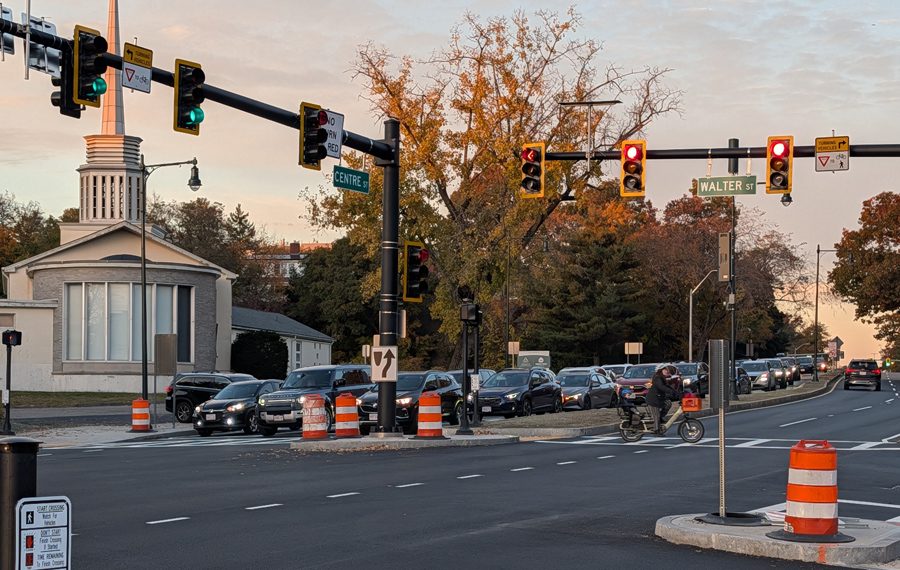
A woman and a child rode a bike across Centre Street in Roslindale this week, something that would have been reckless just two weeks ago. The state's Department of Conservation and Recreation (DCR) has turned on the new traffic and pedestrian crossing lights at the Walter and Centre streets intersection.

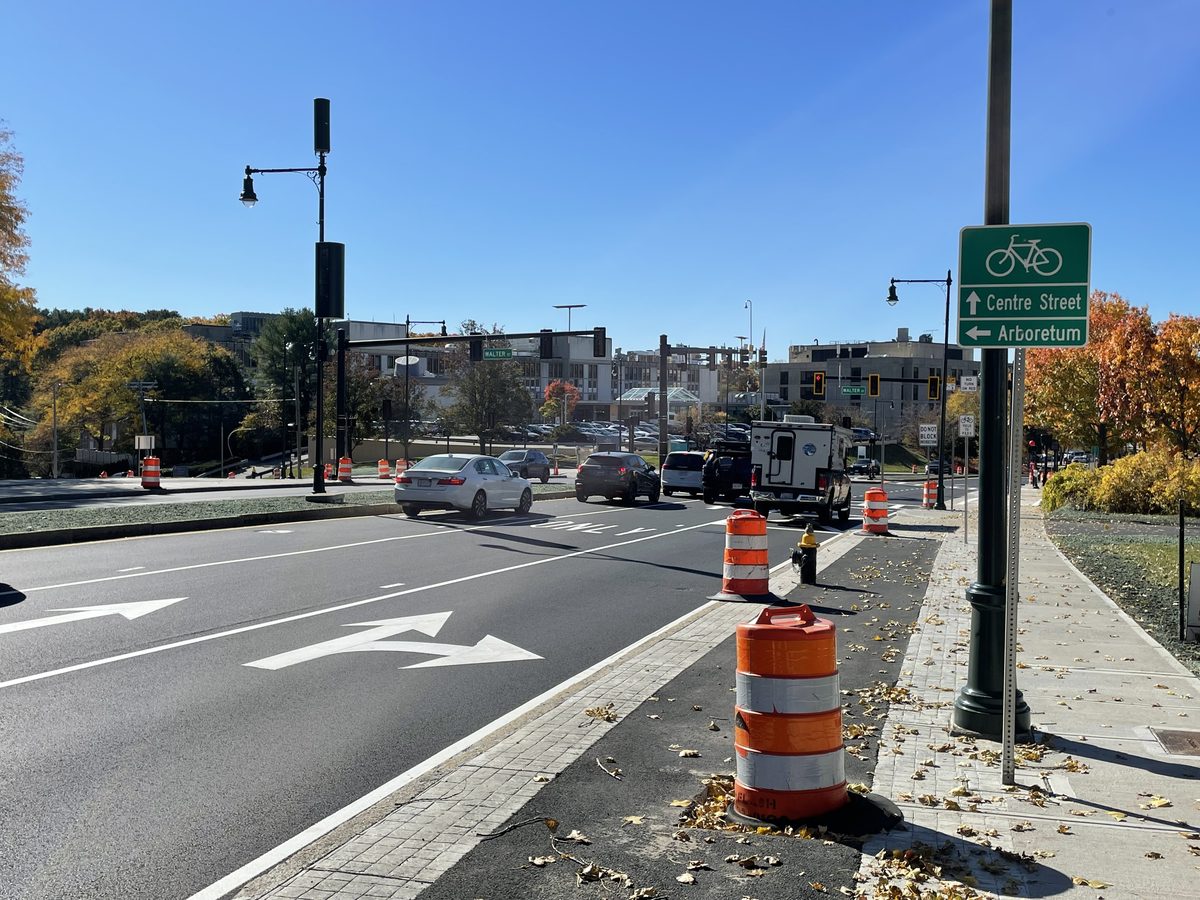
The project took nearly six years of planning and about two years of construction. Pedestrians can now cross using marked crosswalks with walk signals instead of risking death, and turning drivers face far less risk of being T-boned. Bike paths on the Arboretum side and bike traffic signals still need to be finished and activated.

Why it matters

After nearly six years of planning and two of construction, a dangerous Boston parkway intersection is now safe to cross on foot or by bike.

Monday: what changed in Boston, MA

One short email a week with the openings, closings, permits and council votes we covered. Free. Unsubscribe in one click.

Questions about this story

Free account needed to ask — your question is kept and asked for you right after sign-up. Answers are public.

No questions yet — be the first to ask.

Key Indicators

6
Years of DCR planning
DCR spent nearly six years designing the reconfiguration before construction began.
2
Years of construction
Work on the intersection layout took about two years.

Voices

Curated perspectives — historical figures and your fellow readers.

Sign up to generate historical perspectives on this story.

Organizations Involved

Timeline

2020 October 2026

4 events Latest: Yesterday
Tap a bar to jump to that date
  1. Traffic and pedestrian lights go live

    Latest Milestone

    DCR activates new signals and crosswalks at Walter and Centre streets, making the crossing far safer.

  2. Residents balk at traffic light plan

    Public Response

    Some neighbors tell WBZ the extra lights will worsen congestion at the already-clogged crossing.

  3. Construction begins on reconfiguration

    Construction

    Crews start rebuilding the intersection, about two years before signals go live.

  4. DCR starts designing intersection fix

    Planning

    Massachusetts DCR begins studying how to reconfigure the dangerous Walter and Centre streets crossing.

Scenarios

1

Bike signals activated, intersection project complete

Likely Resolves by Oct 28, 2027

Discussed by: The Universal Hub report describes the bike work as remaining without a timeline; project completion is the default expectation.

DCR finishes the new bike paths on the Arboretum side and activates the bike traffic signals. The intersection becomes fully functional for pedestrians, cyclists, and drivers. This completes the project's stated scope.

2

Bike path work drags into a second year

Possible Resolves by Oct 28, 2027

Discussed by: Not publicly predicted; the Universal Hub report leaves the timeline open.

The remaining bike path construction and signal activation hit delays from weather, contractor scheduling, or funding. Drivers and pedestrians get the new layout, but cyclists continue to lack a connected route through the intersection.

Historical Context

2 moments from history that rhyme with this story — and how they unfolded.

2013-2016

Longfellow Bridge reconstruction (2013-2016)

Massachusetts rebuilt the 1907 Longfellow Bridge, known as the 'Salt and Pepper' bridge, which carries the MBTA Red Line and Route 3 over the Charles River. The multi-year project was part of the state's accelerated bridge program. It brought years of lane closures and Red Line slowdowns, drawing complaints about the pace of work.

Then

The bridge reopened in 2016 with its historic profile restored, but commuters endured years of disruption.

Now

The project became shorthand for how long state-managed infrastructure work in the Boston area can take.

Why this matters now

Another state-managed Boston infrastructure project that stretched past its intended timeline, mirroring the roughly six years of design work before construction at Walter and Centre streets.

1878-1896

Design of the Emerald Necklace (1878-1896)

Frederick Law Olmsted designed Boston's Emerald Necklace, a chain of parks and connecting parkways stretching from Boston Common to Franklin Park. The Arnold Arboretum, established in 1872, sits at the southern end, and the Arborway was built as a scenic carriage road linking the parks.

Then

The park system transformed Boston's landscape and became a model for American city planning.

Now

DCR manages the Emerald Necklace parkways, including the Arborway, as historic landscapes requiring careful treatment in any infrastructure work.

Why this matters now

The Walter and Centre streets intersection sits on this Olmsted-designed parkway. DCR's stewardship of the historic corridor helps explain why reconfiguring a single intersection took six years of planning.

Sources

(2)