
Pull to refresh
Logo
Boston zoning board rejects final house in decade-long Dorchester infill project

Boston zoning board rejects final house in decade-long Dorchester infill project

Rule Changes Boston, MA local

David Higgins built six homes on a three-quarter-acre Plain Street parcel. His seventh and final proposal was unanimously rejected.

Today: ZBA rejects Higgins' seventh and final house proposal

Overview

Updated 1 hour ago

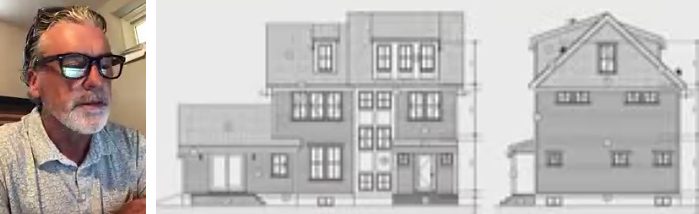
David Higgins has spent ten years building single-family homes on a three-quarter-acre lot in Dorchester. On September 9, the Boston Zoning Board of Appeal unanimously rejected his proposal for the seventh and final house.

The rejection without prejudice lets Higgins resubmit within a year. But the board wants him to meet with neighbors tired of a decade of construction, and to work with the Planning Department on a site review of parking, sidewalks, open space, and design.

Why it matters

Boston's zoning board just showed that a decade-long build-out can be stopped by neighborhood opposition and site review requirements.

Questions about this story

Free account needed to ask — your question is kept and asked for you right after sign-up. Answers are public.

No questions yet — be the first to ask.

Key Indicators

10 years
Construction duration on Plain Street parcel
Higgins has been building homes on the lot since about 2016.
6
Homes built so far
Single-family homes already constructed on the three-quarter-acre parcel.
7th
Proposed final house (rejected)
The seventh and final house Higgins proposed, unanimously rejected by the ZBA.
1 year
Window to resubmit revised plans
Higgins can submit revised plans within a year of the rejection.

Voices

Curated perspectives — historical figures and your fellow readers.

Ever wondered what historical figures would say about today's headlines?

Sign up to generate historical perspectives on this story.

Play

Exploring all sides of a story is often best achieved with Play.

Most of these play right now — no account needed. Sign up to save scores, keep a streak, and unlock Debate and Predict. Log in Sign Up
Predict 3 ways this could play out. Back the one you believe — contrarian picks score more when a scenario has a resolution date. Log in to play

People Involved

Organizations Involved

Timeline

September 2016 September 2026

3 events Latest: Today
  1. ZBA rejects Higgins' seventh and final house proposal

    Today Regulatory

    Boston Zoning Board of Appeal unanimously rejects Higgins' proposal for a seventh house without prejudice. Board requires him to meet with neighbors, Planning Department, and Fire Department.

  2. Gibson Street developer shows wrong house at abutter meeting

    Community Meeting

    A separate Dorchester developer, Tim Longden, presents plans for a 14-unit building but shows renderings of the wrong house due to an AI mapping error. Neighbors object to the project's size and lack of parking.

  3. Higgins begins building on Plain Street parcel

    Development

    David Higgins starts constructing single-family homes on his three-quarter-acre lot in Dorchester.

Historical Context

2 moments from history that rhyme with this story — and how they unfolded.

1890

Boston Spite House (1890)

A man returning from the Civil War found his brother had built a large house on their shared land. Out of spite, he built a narrow house on the remaining strip to block his brother's sunlight and harbor views.

Then

The spite house was built and still stands today at 44 Hull Street in the North End.

Now

It became a Boston landmark and sold for $1.25 million in 2021, showing the market value of unusual infill properties.

Why this matters now

Shows Boston's long history of contentious infill development and the city's tolerance for unusual building configurations on small parcels.

August 2026

Gibson Street Abutter Meeting (2026)

Developer Tim Longden presented plans for a 14-unit building at 59 Gibson Street in Dorchester but showed renderings of the wrong house due to an AI mapping error. Neighbors objected to the project's size and lack of parking.

Then

Longden said he'd come back with a smaller project with parking.

Now

The case shows the same neighborhood dynamics of developers pushing density and neighbors pushing back in Dorchester.

Why this matters now

Demonstrates that the Plain Street case is part of a broader pattern of development pressure and neighborhood resistance in Dorchester.

Sources

(2)