

Pull to refresh
Logo
Paradromics brain implant lets patient communicate in real time

Paradromics brain implant lets patient communicate in real time

New Capabilities

First human participant in FDA-approved trial generates her own words through neural signals

Today: Patient communicates in real time during phone call

Overview

Updated 59 minutes ago

A Michigan woman with motor neuron disease recently called her grandchildren. She didn't use her voice — a brain implant decoded her intended words and spoke them through a synthesizer. Her first freely chosen sentence: "Okay, I have a lot to say."

The call is the first time Paradromics' Connexus brain-computer interface has let a patient generate her own words in real time, rather than repeating researcher-selected phrases. If the device proves safe over the six-year study, it could give people with ALS and similar conditions a way to converse that doesn't exist today.

Why it matters

If Connexus proves safe, people with severe motor impairment could regain natural conversation — a capability no approved device offers today.

Questions about this story

Free account needed to ask — your question is kept and asked for you right after sign-up. Answers are public.

No questions yet — be the first to ask.

Key Indicators

421
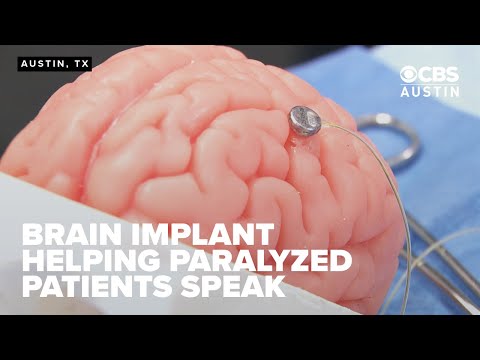
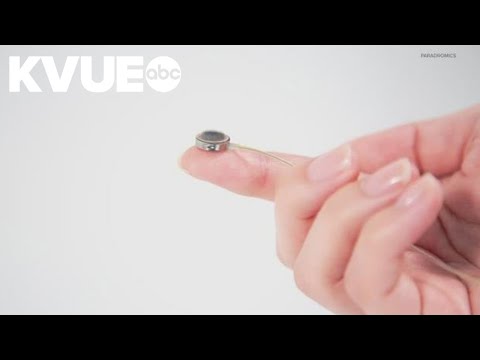
Microelectrodes in Connexus implant
Each electrode is smaller than a human hair and reaches 1.5mm below the brain's surface.
200 bps
Pre-clinical information transfer rate
20x faster than existing BCIs in pre-clinical testing, per Paradromics.
6 years
Follow-up period for first participant
The participant will be evaluated for safety and durability for six years after implantation.
1
Human participants implanted
First participant in the Connect-One early feasibility study, implanted June 2026.

Voices

Curated perspectives — historical figures and your fellow readers.

Ever wondered what historical figures would say about today's headlines?

Sign up to generate historical perspectives on this story.

People Involved

Organizations Involved

Timeline

November 2025 September 2026

4 events Latest: Today
Tap a bar to jump to that date
  1. Patient communicates in real time during phone call

    Today Milestone

    First participant generates her own words, answers open-ended questions, and speaks with grandchildren via synthesized voice and text.

  2. FDA expands BCI access to personal computing devices

    Regulatory

    FDA approval creates a pathway for Connexus to support personal, internet-connected devices through Paradromics' Convey software.

  3. First Connexus implant performed at University of Michigan

    Milestone

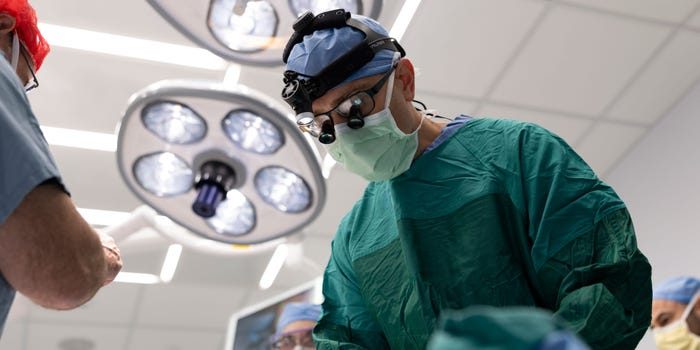
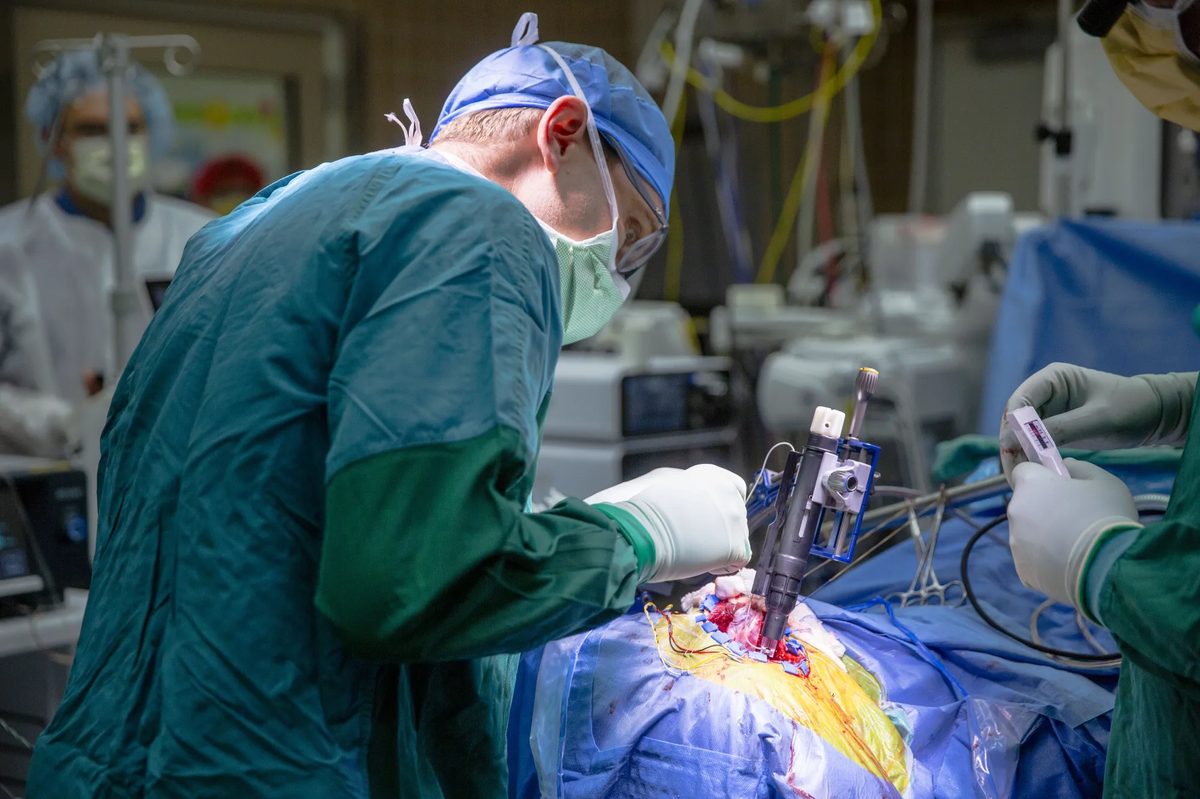
    Neurosurgeons Matthew Willsey and Aditya Pandey implanted the Connexus BCI in a Michigan woman with motor neuron disease.

  4. FDA approves Connect-One early feasibility study

    Regulatory

    FDA granted Paradromics an Investigational Device Exemption to begin the Connect-One study of the Connexus BCI.

Scenarios

1

Paradromics enrolls more participants in Connect-One trial

Likely Resolves by Q2 2027

Discussed by: Paradromics, University of Michigan Health, clinical trial monitors

The early feasibility study is designed to enroll multiple participants across three sites. If the first implant continues to work without safety issues, Paradromics will likely implant additional patients at UC Davis and Massachusetts General Hospital. Each new participant would test whether the system works across different types of motor impairment.

2

Connexus shows safety concerns, trial paused

Unlikely Resolves by End of 2027

Discussed by: FDA, clinical trial monitors

The study's primary goal is safety. If the implant causes infection, tissue damage, or device failure, the FDA could pause enrollment while investigators investigate. The six-year follow-up period is designed to catch long-term complications that don't appear in the first months.

3

Paradromics moves toward commercial approval

Possible Resolves by End of 2028

Discussed by: Paradromics, industry analysts

If the early feasibility study shows the device is safe and effective, Paradromics would need to run a larger pivotal trial before seeking FDA approval for commercial use. The company's August 2026 FDA approval to expand to personal computing devices suggests regulators are open to broadening the system's capabilities.

Historical Context

3 moments from history that rhyme with this story — and how they unfolded.

1972

First cochlear implant (1972)

The first cochlear implant was placed in a patient, converting sound into electrical signals sent directly to the auditory nerve. Early devices were crude, but they proved that a neural interface could restore a lost sense.

Then

The first recipients could perceive sound, though initially with limited clarity.

Now

Cochlear implants became the standard treatment for severe hearing loss, with hundreds of thousands of recipients worldwide.

Why this matters now

The cochlear implant shows the arc from first experimental neural implant to widespread clinical adoption — the path Paradromics hopes to follow with Connexus.

2004-2012

BrainGate trials (2004-2012)

Researchers at Brown University and partner institutions implanted Utah arrays in paralyzed patients, allowing them to control cursors and robotic arms with neural signals. The trials were the first to show that decoding intended movement from motor cortex activity could work in humans.

Then

Patients could move cursors, open email, and control simple robotic devices.

Now

The trials established the scientific foundation for modern BCIs but were limited by the Utah array's relatively low electrode count and wired connections.

Why this matters now

BrainGate showed that decoding intended speech and movement from brain signals is possible, paving the way for higher-bandwidth systems like Connexus.

January 2024

Neuralink's first human implant (2024)

Noland Arbaugh, paralyzed from the shoulders down after a diving accident, received a Neuralink implant and used it to control a computer cursor and play chess. The device, called N1, recorded neural signals from a small electrode array placed in his motor cortex.

Then

Arbaugh used the device to browse the internet, play video games, and control a computer cursor with his thoughts.

Now

The implant demonstrated that commercial BCIs could work in humans, but Neuralink later reported that some electrode threads retracted from Arbaugh's brain, reducing performance.

Why this matters now

Neuralink's first human implant proved the concept for commercial BCIs and set the stage for rivals like Paradromics to test their own devices.

Sources

(10)