
Development of fMRI (1990s)
Seiji Ogawa at Bell Labs discovered that blood oxygenation changes could be detected by MRI, and teams at Massachusetts General Hospital and the Medical College of Wisconsin demonstrated the technique could map brain activity. Functional MRI gave researchers their first noninvasive window into the working brain.
Neuroscience underwent a revolution. Researchers could finally see which brain regions activated during cognitive tasks without surgery.
fMRI became the dominant tool in cognitive neuroscience, generating thousands of studies. But it showed correlation only—researchers could see what regions lit up together, not which caused which.
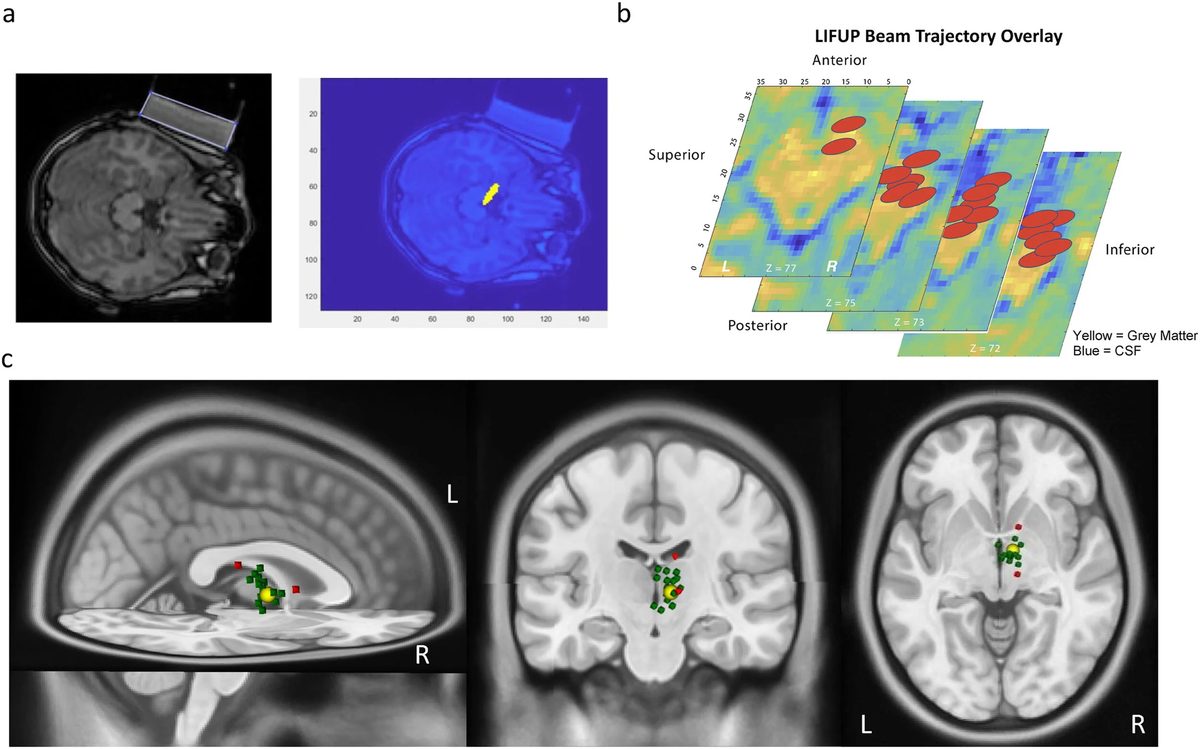
Transcranial focused ultrasound addresses fMRI's fundamental limitation: it can manipulate brain activity to establish causation, not just observe correlations. The MIT roadmap explicitly frames ultrasound as the tool to move consciousness research from 'what fires together' to 'what causes what.'