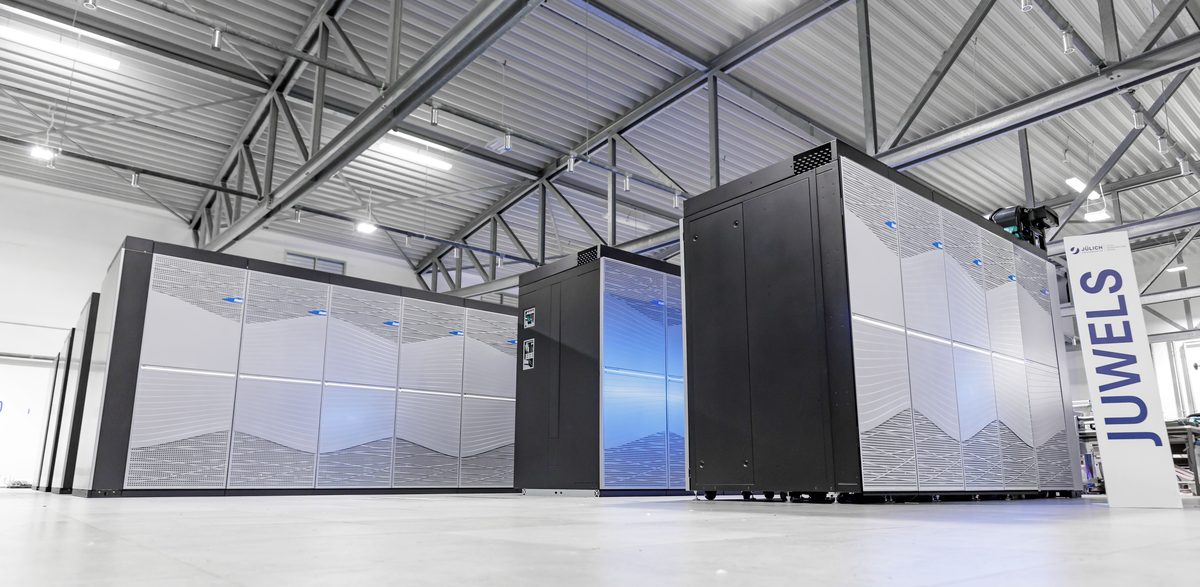
Scientists at Germany's Jülich Research Centre demonstrated in mid-January 2026 that Europe's most powerful supercomputer can simulate 20 billion spiking neurons—matching the scale of the human cerebral cortex. The team plans to combine this capability with anatomical brain data to run full-cortex simulations, a technical milestone that has eluded researchers since the field's founding in the 1980s.
The advance arrives amid a wave of large-scale brain simulations. Allen Institute researchers recreated a mouse cortex with 9 million neurons on Japan's Fugaku supercomputer in November 2025. Intel released its Loihi 3 neuromorphic chip in January 2026, packing 8 million neurons per chip with 100-fold power efficiency gains over traditional processors.
Yet even with exascale computing and neuromorphic hardware now available, a biologically realistic human whole-brain simulation remains beyond 2044. The gap between computational power and biological understanding remains vast.
Questions about this story
Free account needed to ask — your question is kept and asked for you right after sign-up. Answers are public.
No questions yet — be the first to ask.
Key Indicators
20B
Neurons simulated
The Jülich team matched the human cerebral cortex's neuron count on JUPITER supercomputer
86B
Human brain neurons
Total neurons in the adult human brain—the ultimate simulation target
32×
Slower than real-time
Current performance for detailed mouse cortex simulation on Fugaku supercomputer
>2044
Full human simulation
Projected earliest date for whole human brain simulation based on technology trends
16 events
Latest: January 19th, 2026 · 9 months ago
Showing 8 of 16
JK to step
Tap a bar to jump to that date
Jump to
January 2026
Intel Loihi 3 Neuromorphic Chip Released
LatestTechnical
Intel released Loihi 3, its third-generation neuromorphic processor fabricated on 4nm process. The chip delivers 8 million neurons and 64 billion synapses per chip—8× the capacity of Loihi 2—enabling brain-scale computing with 100× lower power consumption than traditional CPUs.
Jülich Team Prepares Human Cortex-Scale Simulation
Research
Researchers at Jülich announced they had demonstrated a 20 billion neuron spiking network on JUPITER, matching the human cerebral cortex, and plan to integrate anatomical brain data for full simulations.
November 2025
Most Detailed Virtual Mouse Brain Created
Research
Allen Institute and Japanese collaborators published a simulation of the entire mouse cortex with 9 million neurons and 26 billion synapses on Fugaku—the most biologically realistic brain simulation to date.
January 2025
Open Brain Institute Launches
Program
Henry Markram launched the Open Brain Institute as a nonprofit foundation, open-sourcing all Blue Brain Project algorithms and data for the global neuroscience community.
December 2024
Blue Brain Project Ends
Program
After 19 years, the Blue Brain Project concluded as Swiss federal funding ended. The project had produced 300 peer-reviewed papers and 18 million lines of simulation code.
November 2024
JUPITER Becomes Europe's First Exascale System
Technical
The JUPITER supercomputer at Jülich achieved exascale performance (1 quintillion operations per second), becoming the world's fourth most powerful computer.
April 2024
DeepSouth Goes Online
Technical
The DeepSouth neuromorphic supercomputer became operational at Western Sydney University, offering researchers a new platform for brain-scale spiking neural network simulations.
December 2023
DeepSouth Neuromorphic Supercomputer Announced
Technical
Western Sydney University announced DeepSouth, the first neuromorphic system capable of 228 trillion synaptic operations per second—matching estimated human brain operation rates.
April 2020
Human-Scale Cerebellar Simulation Achieved
Research
Japanese researchers simulated a cerebellar network with 68 billion neurons on the K supercomputer—matching the neuron count of the human cerebellum, which contains 80% of brain neurons.
March 2015
Human Brain Project Restructured
Governance
Following mediation, the HBP dropped its goal of complete brain simulation and reorganized management. Henry Markram stepped back from leadership.
August 2014
IBM Unveils TrueNorth Neuromorphic Chip
Technical
IBM published details of TrueNorth, a chip with 1 million programmable neurons using just 70 milliwatts—demonstrating brain-inspired hardware could achieve radical energy efficiency.
July 2014
Open Letter Demands HBP Reform
Controversy
Nearly 800 neuroscientists signed an open letter calling the Human Brain Project's approach "overly ambitious" and criticizing governance failures. The letter demanded restructuring.
January 2013
EU Awards $1.3 Billion for Human Brain Project
Funding
The European Commission selected the Human Brain Project as a flagship initiative, promising up to €1 billion over 10 years to simulate the human brain.
May 2005
Blue Brain Project Launches
Program
Henry Markram founded the Blue Brain Project at EPFL Switzerland with the goal of digitally reconstructing the brain. The project received CHF 300 million in Swiss federal funding.
January 1993
NEST Simulator Development Begins
Technical
Markus Diesmann and Marc-Oliver Gewaltig began developing the Neural Simulation Tool (NEST) at Ruhr University Bochum, creating the foundation for modern large-scale brain simulation.
1986
First Complete Brain Wiring Diagram Published
Research
Sydney Brenner's team at Cambridge published the C. elegans connectome—302 neurons and 7,000 connections—after 13 years of manual reconstruction from electron microscopy images.
Scenarios
1
Mouse Brain Fully Simulated in Real-Time by 2030
Likely
Discussed by: Allen Institute researchers, computational neuroscience community
Current mouse cortex simulations run 32× slower than real-time. Arkhipov's team believes improvements in algorithms and hardware could achieve real-time whole mouse brain simulation within five years. This would enable closed-loop experiments where virtual brains respond to simulated sensory input, a prerequisite for studying cognition computationally.
2
Full Human Brain Simulation Achieved Post-2044
Likely
Discussed by: Technology projections in computational neuroscience literature, ScienceDirect analysis
Trend analysis published in 2024 projects mouse whole-brain simulation by 2034, marmoset by 2044, and human "likely later than 2044." The timeline depends not just on computing power—which continues to grow—but on acquiring sufficient biological data about human neurons at cellular resolution, which remains a bottleneck.
3
Neuromorphic Hardware Enables New Simulation Paradigm
Possible
Discussed by: André van Schaik (Western Sydney), neuromorphic computing researchers
DeepSouth and similar neuromorphic systems process information fundamentally differently than traditional supercomputers, achieving brain-scale operations with a fraction of the power. If neuromorphic approaches prove more biologically faithful than conventional simulation, the field could shift away from traditional supercomputing entirely.
4
Brain Simulation Remains Useful but Never Reaches Consciousness
Likely
Discussed by: Thomas Nowotny (University of Sussex), Cambridge consciousness researchers
Critics note that even the most detailed simulations lack sensory input, plasticity, and embodiment. As Nowotny stated: "We can't actually build brains. Even if we can make simulations of the size of a brain, we can't make simulations of the brain." Brain simulation may yield valuable medical and AI insights without ever approaching a functional mind.
Historical Context
3 moments from history that rhyme with this story — and how they unfolded.
1 of 3
1973-1986
C. elegans Connectome (1986)
Sydney Brenner's team at Cambridge spent 13 years manually reconstructing every neuron and synapse in the roundworm C. elegans from electron microscopy images. The 1986 publication documented 302 neurons and approximately 7,000 synaptic connections—the first complete wiring diagram of any nervous system.
Then
Launched the field of connectomics and established C. elegans as the primary model organism for neural circuit research.
Now
Nearly 40 years later, scientists still cannot fully explain how these 302 neurons produce the worm's behaviors, illustrating that wiring diagrams alone do not explain brain function.
Why this matters now
The C. elegans precedent haunts current brain simulation efforts: scale alone does not equal understanding. As researchers note, knowing every connection does not reveal how the circuit computes.
2 of 3
January 2013 - March 2015
Human Brain Project Controversy (2014-2015)
The EU awarded €1 billion to Henry Markram's Human Brain Project based on his claim to simulate a human brain within 10 years. Within 18 months, 800 neuroscientists signed an open letter calling the approach premature and the governance flawed. A mediation committee agreed the project was "overly ambitious."
Then
Markram stepped back from leadership; the project dropped its brain simulation goal and reorganized around data infrastructure and computational tools.
Now
The episode established that computational power without sufficient biological data cannot replicate brain function, and that premature claims damage scientific credibility.
Why this matters now
Current researchers explicitly distance themselves from Markram's 10-year claims. Jülich's Diesmann and Allen's Arkhipov emphasize incremental progress and the gap between simulation scale and biological understanding.
3 of 3
2008-2014
IBM TrueNorth (2014)
IBM's DARPA-funded SyNAPSE program produced TrueNorth, a chip with 1 million programmable neurons and 256 million synapses using only 70 milliwatts—roughly 1/10,000 the power density of conventional processors. The chip demonstrated that brain-inspired hardware could achieve radical energy efficiency.
Then
Sparked interest in neuromorphic computing as an alternative to von Neumann architectures for neural simulation.
Now
Influenced the development of Intel's Loihi chip and Australia's DeepSouth, establishing neuromorphic computing as a parallel track to traditional supercomputing for brain research.
Why this matters now
DeepSouth explicitly acknowledges TrueNorth as inspiration. The neuromorphic approach offers a fundamentally different path to brain-scale simulation than the exascale computing pursued at Jülich.