
Pull to refresh
Logo
Bridge to Life's liver perfusion system reaches Canada as FDA fast-tracks intestinal use

Bridge to Life's liver perfusion system reaches Canada as FDA fast-tracks intestinal use

New Capabilities

Health Canada licensed VitaSmart for donor livers, and the FDA granted Breakthrough status for an investigational intestinal application nine months after U.S. clearance

Overview

Updated 1 hour ago

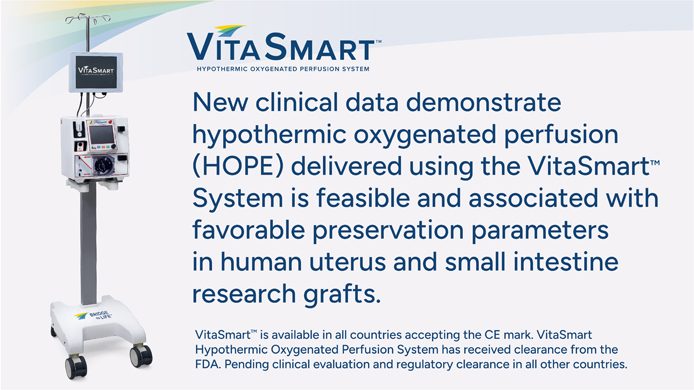
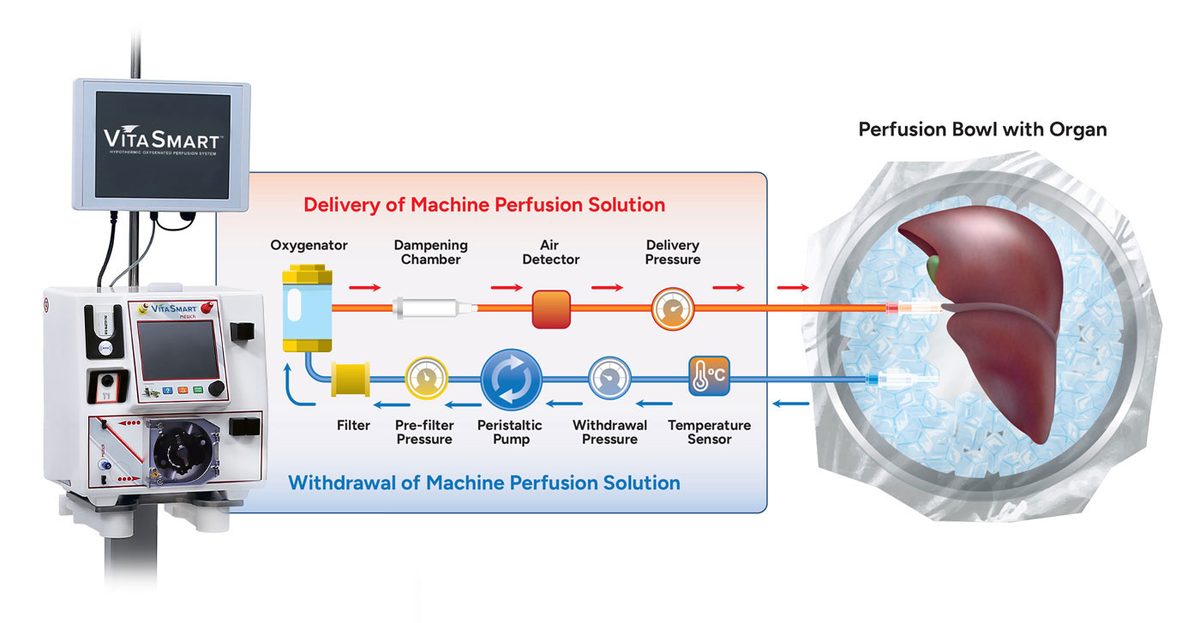
A donated liver starts dying the moment it stops receiving blood. On November 3, Health Canada licensed Bridge to Life's VitaSmart system, a machine that pumps cold, oxygenated fluid through a donor liver before transplant, making it available to Canadian transplant centers. The same announcement said the U.S. Food and Drug Administration granted Breakthrough Device Designation for the system's investigational use in donor intestines.

The Canadian licence is a commercial step: the machine can now be sold and used for livers north of the border. The intestinal designation is earlier-stage. It gives Bridge to Life more frequent FDA interaction and priority review, but authorizes no sales. More than 4,000 Canadians and over 100,000 Americans are on transplant waiting lists, and the company's case rests on helping surgeons use more of the organs already offered.

Why it matters

Donated livers are scarce and time-critical; a machine that keeps them functioning outside the body could let surgeons use more of them.

Questions about this story

Free account needed to ask — your question is kept and asked for you right after sign-up. Answers are public.

No questions yet — be the first to ask.

Key Indicators

219
Recipients in the Bridge to HOPE trial
The U.S. randomized controlled trial that supported the January 2026 FDA clearance.
15
U.S. transplant centers in the trial
The multicenter study enrolled donation-after-brain-death and donation-after-circulatory-death livers.
$110M
Series C and debt financing
Raised in August 2026 to fund the U.S. VitaSmart launch and a viability-assessment tool still in development.
100,000+
Americans on transplant waiting lists
Figure cited by Bridge to Life in its November 3 announcement.
4,000+
Canadians on transplant waiting lists
Figure cited by Bridge to Life in its November 3 announcement.

Voices

Curated perspectives — historical figures and your fellow readers.

Sign up to generate historical perspectives on this story.

People Involved

Organizations Involved

Timeline

January 2026 November 2026

5 events Latest: Today
Tap a bar to jump to that date
  1. Canada licenses VitaSmart; FDA fast-tracks intestines

    Today Regulatory

    Health Canada issued a Medical Device License for liver perfusion, and the FDA granted Breakthrough Device Designation for investigational intestinal perfusion.

  2. Company courts Canadian transplant surgeons

    Outreach

    Bridge to Life leaders attended the Canadian Society of Transplantation meeting in Montreal ahead of the Canadian launch.

  3. Bridge to Life raises $110 million

    Financing

    A Series C led by Soleus Capital, plus debt, funds the U.S. launch and a viability-assessment tool still under development.

  4. Duke performs first U.S. commercial case

    Adoption

    Duke University Hospital preserved a donation-after-circulatory-death liver with VitaSmart before transplant, the first commercial use after clearance.

  5. FDA clears cold machine perfusion for donor livers

    Regulatory

    De Novo clearance lets U.S. centers perfuse donor livers after static cold storage, for defined brain-death and circulatory-death donors. It is the first U.S. authorization for cold machine perfusion in liver transplant.

Scenarios

1

First Canadian VitaSmart liver case announced

Likely Resolves by Q2 2027

Discussed by: Bridge to Life's own launch statements and trade coverage of the Canadian authorization

With a Health Canada licence in hand, the company says it will introduce VitaSmart to Canadian liver transplant teams. The trigger is a signed hospital agreement plus a completed perfusion case. A first public case would show the licence converted into clinical use rather than sitting on a shelf.

2

FDA clears VitaSmart for donor intestines

Possible Resolves by End of 2028

Discussed by: Bridge to Life's pipeline statements; the FDA's Breakthrough Devices Program

Breakthrough status shortens the path to review, not the path to approval. The company must still run studies in intestinal perfusion, a field it describes as underserved because the intestine tolerates oxygen loss poorly. A clearance would turn the designation into a second sellable organ indication in the U.S.

3

Health Canada extends the licence to kidneys

Possible Resolves by Q2 2028

Discussed by: Bridge to Life, which markets VitaSmart for liver and kidney preservation in Europe

The Canadian licence covers livers only. The company already sells VitaSmart for kidney preservation in Europe and in countries accepting the CE mark, so a kidney submission would test whether the Canadian approval becomes a multi-organ platform rather than a single-indication sale.

Historical Context

2 moments from history that rhyme with this story — and how they unfolded.

1960s–2020s

Static cold storage becomes transplant's default (1960s onward)

For decades, surgeons have flushed donor organs with cold preservation solution and packed them in ice, slowing metabolism enough to buy transport time. Livers handled that way stay usable for well under a day. Every step from donor consent to implantation runs against that clock.

Then

Cold storage made sharing organs across cities and regions routine.

Now

It set the acceptance criteria surgeons still use, and made extended-criteria and donation-after-circulatory-death livers riskier to place.

Why this matters now

VitaSmart is designed to replace part of that cold, oxygen-starved window with oxygenated machine perfusion, which is what the Canadian licence now permits.

1997

FDA creates the De Novo pathway (1997)

Congress gave the Food and Drug Administration a route to place novel, lower-risk devices into new categories instead of sending every first-of-kind product through the longer premarket approval process. De Novo is for devices with no legally marketed predecessor.

Then

Device makers gained a faster path for products that fit no existing category.

Now

De Novo orders create the predicate devices that later products cite when seeking clearance.

Why this matters now

VitaSmart's liver indication cleared through De Novo in January 2026, creating a U.S. category for cold oxygenated liver perfusion. The intestinal application is earlier in the same sequence.

Sources

(4)