
Pull to refresh
Logo
FDA clears automated brain ultrasound for PFO screening

FDA clears automated brain ultrasound for PFO screening

New Capabilities

A whole-brain emboli test that one nurse can run moves stroke diagnostics toward the clinic

Overview

Updated 29 minutes ago

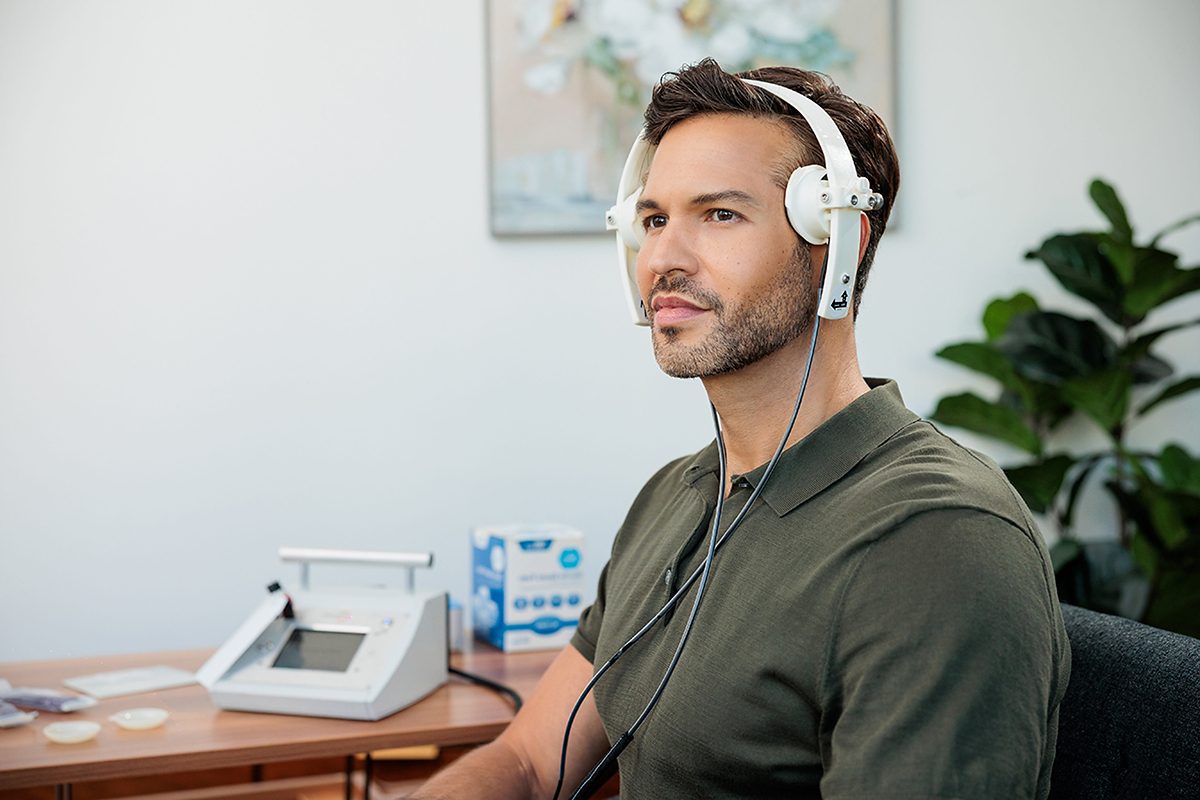
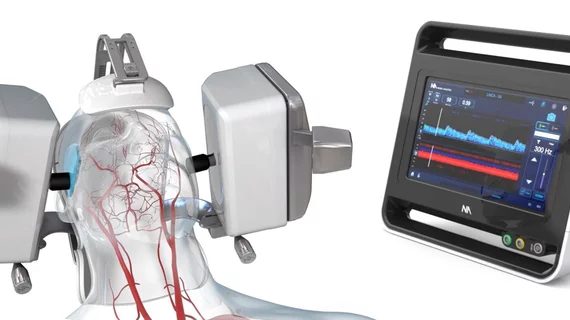
Finding the hole in a heart that may have caused a stroke usually takes a sedated transesophageal echocardiogram or a transcranial Doppler study run by a trained specialist. On November 19, BURL Concepts said the Food and Drug Administration (FDA) cleared a device that screens for the same shunt in about five minutes. One nurse can run it.

Between 40% and 50% of patients who have a cryptogenic stroke, meaning one with no identified cause, carry a patent foramen ovale (PFO). That is a flap-like opening between the heart's upper chambers that failed to close after birth. Closing it lowers the risk of a second stroke in selected patients, which is why finding it matters.

Why it matters

If the test spreads, stroke patients get an answer in minutes instead of a sedated procedure and a specialist waitlist.

Questions about this story

Free account needed to ask — your question is kept and asked for you right after sign-up. Answers are public.

No questions yet — be the first to ask.

Key Indicators

40 sec
Whole-brain scan time
Company-stated time to sweep the entire brain for embolic signals.
~5 min
Full bubble study
Company-stated length of a complete PFO test, including the intravenous bubble injection.
12
Patients per hour
The company says up to twelve patients can be tested in an hour, against one for conventional methods.
90%
Faster than traditional methods
BURL's stated speed advantage over standard transcranial Doppler bubble testing.
Early 2027
U.S. commercial launch target
The company's stated start for U.S. sales, focused on cardiology practices and outpatient centers.

Voices

Curated perspectives — historical figures and your fellow readers.

Sign up to generate historical perspectives on this story.

People Involved

Organizations Involved

Timeline

January 2026 November 2026

5 events Latest: 3 days ago
Tap a bar to jump to that date
  1. BURL announces clearance and 2027 U.S. launch

    Latest Announcement

    The company said commercial sales would begin in early 2027, aimed at cardiology practices and outpatient diagnostic centers.

  2. FDA grants substantial equivalence

    Regulatory

    The agency cleared the device for measuring transient embolic signals in the brain's bloodstream, following an eight-month review.

  3. Automated PFO screening presented at TCT 2026

    Conference

    Peter van der Sluis made the case for a widescale, low-cost automated screening system to an interventional cardiology audience.

  4. FDA receives 510(k) submission K260813

    Regulatory

    BURL filed for clearance of the FOQUS (SONAS-EMB) device under product code IYN, citing clinical trial NCT07414446.

  5. First human uses reported in the Netherlands and UK

    Milestone

    BURL Concepts announced its FOQUS system had been used on patients in both countries, including detection of embolic signals tied to right-to-left shunting.

Scenarios

1

FOQUS reaches U.S. customers in the first half of 2027

Likely Resolves by Q2 2027

Discussed by: BURL Concepts, in its November 19 clearance announcement

The company has already named a launch window and a customer segment: cardiology practices and outpatient diagnostic centers starting in early 2027. A launch needs more than a clearance. It needs a price, a service model for a portable ultrasound unit, and buyers willing to pay out of pocket before any reimbursement code exists. Watch for the first named customer sites.

2

Peer-reviewed study measures FOQUS accuracy against a reference standard

Possible Resolves by End of 2027

Discussed by: Clinical researchers running the U.S. and European trials the company says are underway

The FDA clearance rests on a filing and a registered trial, not on a published head-to-head comparison. Cardiologists deciding whether to trust a positive screen will want sensitivity and specificity against transesophageal echocardiography or transcranial Doppler. A strong result opens the door to guideline mention; a weak one confines the device to triage.

3

Payers create a billing path for automated shunt screening

Uncertain Resolves by End of 2027

Discussed by: Device and reimbursement analysts following outpatient diagnostics

Without a code, a five-minute test still competes against whatever a practice already bills for. A dedicated CPT code or a CMS payment rate would let clinics buy the device on the expectation of revenue. Absent that, adoption depends on hospitals absorbing the cost as part of a stroke workup.

Historical Context

2 moments from history that rhyme with this story — and how they unfolded.

2012-2017

PFO closure trials reverse course (2012-2017)

Randomized trials reported between 2012 and 2013 found no clear benefit from closing a patent foramen ovale after a stroke, and the procedure was used inconsistently. In September 2017, the New England Journal of Medicine published the CLOSE and REDUCE results along with long-term RESPECT data. Together they showed fewer recurrent strokes after closure in carefully selected patients.

Then

The FDA had approved the first closure device for reducing recurrent stroke in 2016, and a second followed in 2018.

Now

A 2020 American Academy of Neurology practice advisory said clinicians may recommend closure for selected patients under 60, after shared decision making.

Why this matters now

Closure is now an approved, guideline-endorsed option, which turns finding a PFO into a clinically useful step and puts pressure on the diagnostic bottleneck.

Prior decades

Transcranial Doppler bubble testing (decades before 2026)

Bubble studies using transcranial Doppler have been available for decades. Published comparisons found them sensitive for right-to-left shunt, but the test stayed in specialist hands because an operator must find the temporal bone window and identify a specific vessel segment. Many hospitals and most outpatient practices do not have those operators readily available.

Then

Shunt testing stayed inside hospital ultrasound labs and specialist referral paths.

Now

Transesophageal echocardiography remained the anatomical reference, and it requires sedation.

Why this matters now

FOQUS is aimed at exactly that constraint: remove the operator, and the test can happen wherever a nurse and a power outlet are.

Sources

(8)