

Pull to refresh
Logo
Work begins on the rock shed that restores Yosemite's Highway 140 after 20 years

Work begins on the rock shed that restores Yosemite's Highway 140 after 20 years

Built World

A 675-foot concrete shed will replace temporary one-lane bridges that have controlled Yosemite traffic since 2006.

3 days ago: California details $400M Highway 140 protective shield

Overview

Updated 1 hour ago

For two decades, drivers on Highway 140, the most direct western route into Yosemite, have crossed the Merced River on two stoplight-controlled one-lane bridges. Those bridges replaced a road that a December 2006 rockslide buried under roughly 800,000 cubic yards of rock.

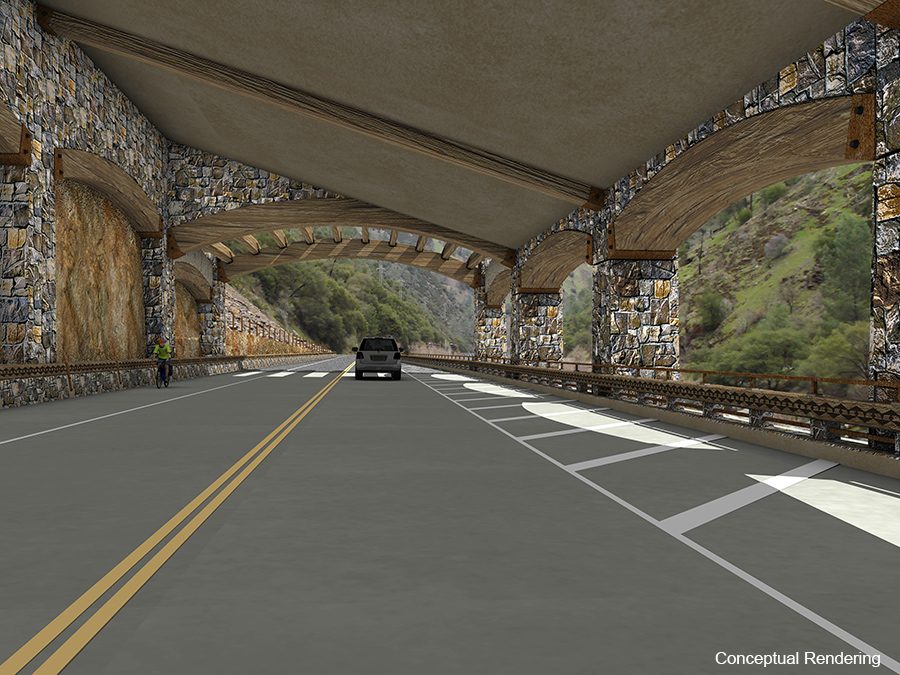
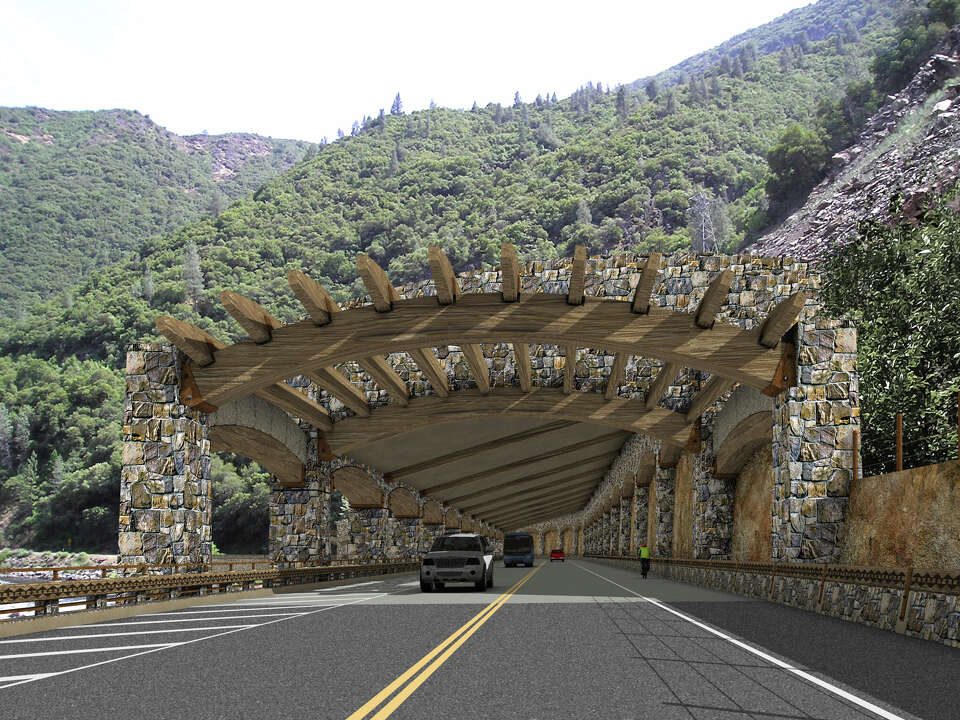
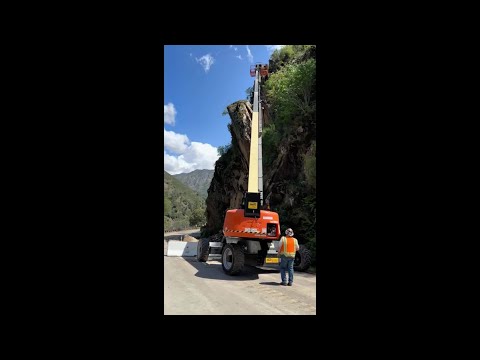
California is now building the permanent fix: a 675-foot concrete rock shed on the original alignment, anchored by 200 rock anchors and 400 micro piles. Construction started in summer 2026, is expected to finish around 2030, and will restore full two-lane traffic and remove the temporary bridges.

Why it matters

Yosemite's main western gateway has bottlenecked at one-lane bridges since 2006; the rock shed restores full two-lane access.

Questions about this story

Free account needed to ask — your question is kept and asked for you right after sign-up. Answers are public.

No questions yet — be the first to ask.

Key Indicators

$387.6M
Phase 2 rock shed funding
State allocation for the 675-foot protective shed on Highway 140.
675 ft
Rock shed length
11 pre-cast concrete segments jacked into place around a curve.
20
Years the one-lane detour has stood
Temporary bridges have controlled traffic since the 2006 slide.
$22.7M
Phase 1 stabilization cost
Blasting, talus removal, and cable netting work that ran from 2021-2024.

Voices

Curated perspectives — historical figures and your fellow readers.

Ever wondered what historical figures would say about today's headlines?

Sign up to generate historical perspectives on this story.

People Involved

Organizations Involved

Timeline

December 2006 October 2026

7 events Latest: 3 days ago
Tap a bar to jump to that date
  1. California details $400M Highway 140 protective shield

    Latest Report

    Reporting lays out the full plan: a 675-foot pre-cast concrete shed that restores two-lane traffic by 2030.

  2. Rock shed construction begins, funded at $387.6 million

    Funding

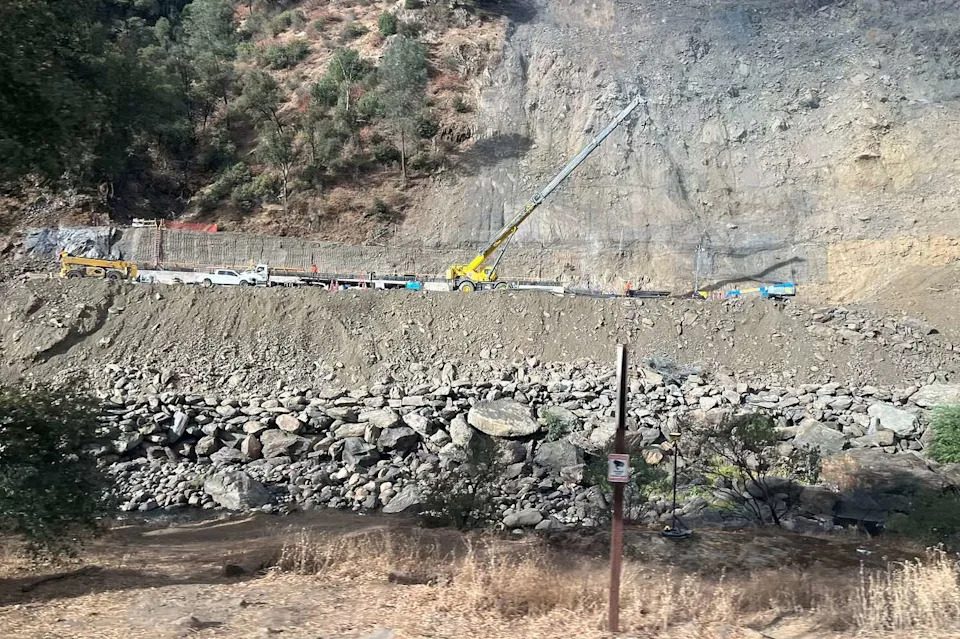
    The California Transportation Commission approves Phase 2 funding and crews start clearing rock for the shed.

  3. Phase 1 ends after 320,000 tons removed

    Construction

    Stabilization work wraps up with 22 rock drains installed; attention turns to the permanent rock shed.

  4. Phase 1 stabilization work begins

    Construction

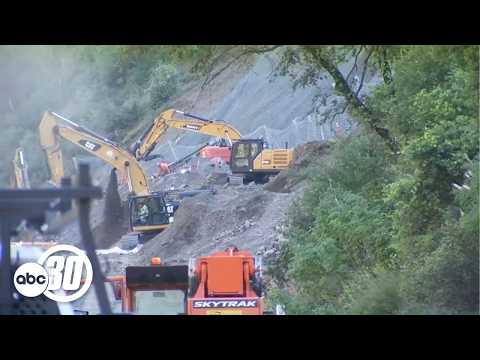
    Crews blast and remove loose rock with remote-controlled equipment, guided by real-time slide monitors.

  5. Caltrans awards Phase 1 stabilization contract

    Decision

    State awards a $22.7 million contract to a joint venture to stabilize the slide and remove loose talus.

  6. Second major slide hits the Ferguson slope

    Disaster

    Another large rockfall strikes the same slide area, locking in the closure and extending the use of temporary one-lane river crossings.

  7. Ferguson rockslide buries Highway 140

    Disaster

    A December rockslide from Ferguson Ridge buries the Yosemite access road under about 800,000 cubic yards of rock; the road was empty.

Scenarios

1

Highway 140 reopens to two lanes by 2030

Likely Resolves by End of 2031

Discussed by: Caltrans project timelines and ABC30 Fresno reporting

Phase 2 proceeds on its five-year schedule. The 11 pre-cast segments are jacked into place around the curve, the shed is completed, and the two temporary one-lane bridges are removed. Drivers return to continuous two-way traffic on the original alignment for the first time since 2006.

2

Active slide disrupts rock shed construction

Possible Resolves by End of 2028

Discussed by: Caltrans officials, who call the site an active rockslide area (ABC30 Fresno)

A large new rockfall during the multi-year build damages staged work, puts crews at risk, or forces a design change. Real-time monitoring provides some warning, but the slope has already produced two major slides. Any disruption lengthens the schedule and adds cost.

3

Final bill tops $410 million

Possible Resolves by End of 2031

Discussed by: Cost history: Phase 2 estimate rose from $175 million (2019) to $285 million to the $387.6 million allocated

Engineering overruns or slide-driven changes push the combined Phase 1 and Phase 2 spending past the roughly $410 million already committed. The Phase 2 estimate has already more than doubled since 2019.

Historical Context

2 moments from history that rhyme with this story — and how they unfolded.

January-October 2017

Pfeiffer Canyon Bridge collapse, Big Sur (2017)

A winter storm damaged the Pfeiffer Canyon Bridge on Highway 1, the only road into Big Sur, splitting the community. Caltrans demolished the cracked bridge and rebuilt a replacement over the canyon.

Then

Highway 1 reopened in late 2017, about nine months after the closure.

Now

Big Sur's dependence on a single road became a recurring problem, with repeated closures in following years.

Why this matters now

Like Highway 140, a single mountain road served as the only route into a region; recovery required an engineered fix lasting months and costing tens of millions.

January 2021-April 2022

Highway 1 Rat Creek washout (2021)

A January storm washed out a stretch of Highway 1 at Rat Creek, cutting off Big Sur again. Caltrans built a temporary bridge over the gap to reopen the road.

Then

Highway 1 reopened more than a year after the washout.

Now

The episode reinforced how often California's mountain corridors rely on single, vulnerable road links.

Why this matters now

Another sudden severing of a sole access road, fixed with a substantial engineered structure that took over a year to install.

Sources

(8)