

Pull to refresh
Logo
Cameroon secures $630m in loans for Douala transport corridors

Cameroon secures $630m in loans for Douala transport corridors

Money Moves

World Bank and Islamic Development Bank financing targets the Douala-Bangui corridor and the Douala-Bafoussam highway

3 days ago: Biya signs decrees approving $630M in loans

Overview

Updated 1 hour ago

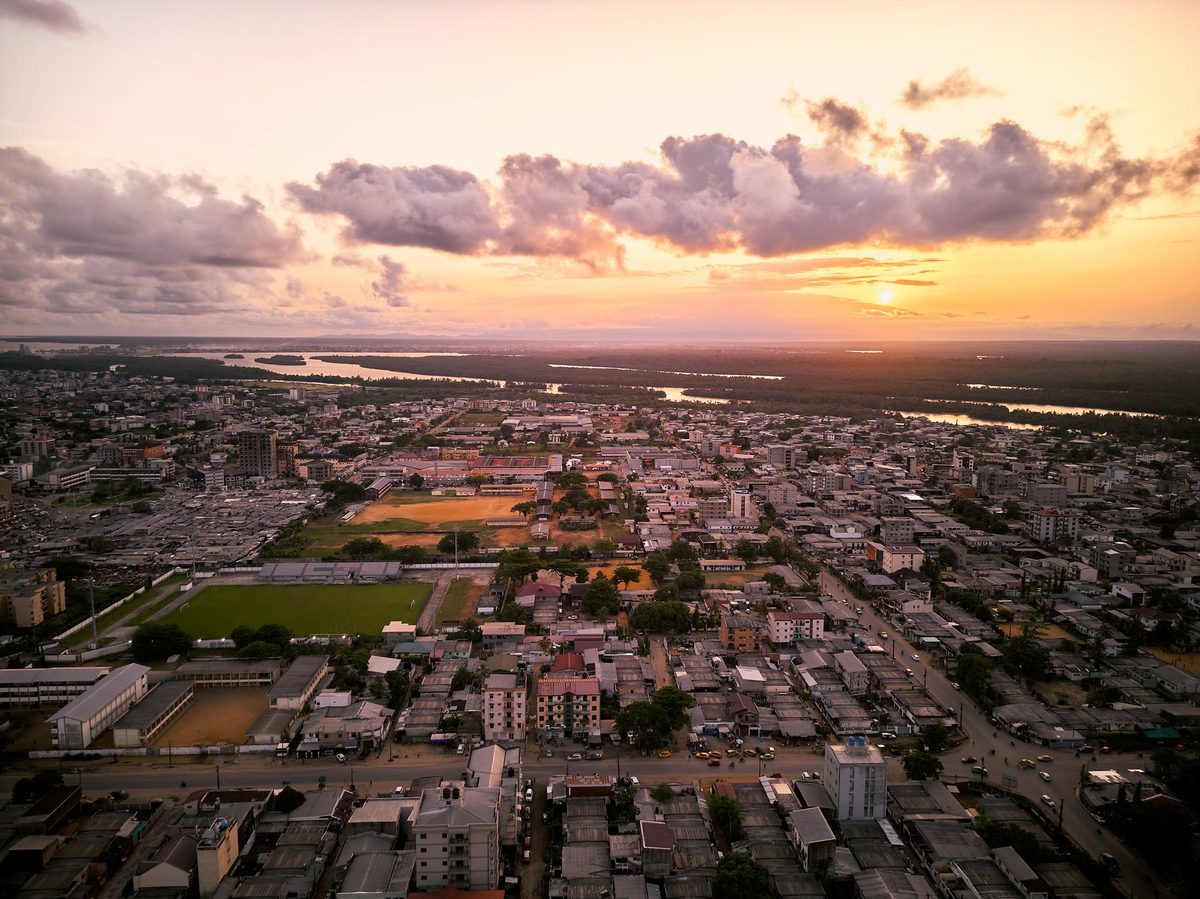
Cameroon's president signed off on $630 million in new loans on October 2, 2026. The money funds two transport projects centered on Douala, the country's port city and economic engine.

The larger loan, $390.9 million from the World Bank, targets the Douala-Bangui corridor, a 1,400-kilometer route that carries more than 80% of the Central African Republic's external trade. A second, $238.9 million from the Islamic Development Bank, will rehabilitate the Douala-Bafoussam highway.

Why it matters

Landlocked Central African Republic depends on this corridor for 80% of its trade. These loans decide whether that route gets rebuilt.

Questions about this story

Free account needed to ask — your question is kept and asked for you right after sign-up. Answers are public.

No questions yet — be the first to ask.

Key Indicators

$630M
Total approved infrastructure loans
Two loan agreements signed by presidential decree on October 2, 2026.
$390.9M
World Bank loan for Douala-Bangui corridor
€347.5 million from the International Bank for Reconstruction and Development.
$238.9M
Islamic Development Bank loan for Douala-Bafoussam highway
€212.35 million to rehabilitate the highway linking Douala to Bafoussam.
1,400 km
Length of Douala-Bangui corridor
The route runs from Douala through Cameroon to Bangui, capital of the Central African Republic.
80%
Share of CAR external trade using the corridor
The landlocked Central African Republic relies on Douala's port for most of its imports and exports.

Voices

Curated perspectives — historical figures and your fellow readers.

Ever wondered what historical figures would say about today's headlines?

Sign up to generate historical perspectives on this story.

People Involved

Organizations Involved

Timeline

June 2026 October 2026

3 events Latest: 3 days ago
  1. Biya signs decrees approving $630M in loans

    Latest Funding

    President Paul Biya authorized a €347.5 million World Bank loan for the Douala-Bangui corridor and a €212.35 million Islamic Development Bank loan for the Douala-Bafoussam highway.

  2. Cameroon authorizes $1.67B in borrowing for development projects

    Policy

    A presidential decree let the finance minister borrow up to 930 billion CFA francs through domestic and external loans to fund development projects and settle arrears.

  3. World Bank approves $1.12B program for Douala-Bangui corridor

    Funding

    The World Bank validated a program to modernize the corridor, with a first tranche of $525 million split between Cameroon, the Central African Republic, and regional institutions.

Scenarios

1

Construction begins on Douala-Bangui corridor

Likely Resolves by End of 2027

Discussed by: World Bank project documents, Cameroon's Ministry of Economy

The World Bank disburses the first tranche and contractors mobilize on the Douala-Yaoundé-Bertoua-Garoua-Boulaï sections. The June 2026 program already earmarked $525 million for the first phase, so the new loan is the second piece of that funding. A construction start would signal the corridor is moving from planning to execution.

2

Disbursement stalls amid Cameroon's fiscal pressures

Possible Resolves by End of 2027

Discussed by: Investing.com, African Economy Inc.

Cameroon is already borrowing heavily, with $1.67 billion authorized in August alone, and carries outstanding arrears. If the government misses loan conditions or prioritizes other spending, disbursement slows and the projects sit in planning. Cameroon's history of corridor projects dragging for years after decree signing is a known risk.

3

Douala-Bafoussam highway rehabilitation completes

Possible Resolves by End of 2028

Discussed by: Islamic Development Bank project reports

The €212.35 million loan funds rehabilitation of the highway linking Douala to Bafoussam in Cameroon's western region. If the Islamic Development Bank's project cycle runs on schedule, the road work could finish within a few years, improving domestic connectivity alongside the regional corridor.

Historical Context

2 moments from history that rhyme with this story — and how they unfolded.

1970s-present

Northern Corridor, East Africa (1970s-present)

The Northern Corridor links Kenya's Mombasa port to Uganda, Rwanda, Burundi and eastern Democratic Republic of Congo. It is East Africa's busiest trade route, carrying most of the imports and exports for several landlocked countries.

Then

Landlocked states in the region came to depend on Kenya's port and road infrastructure for access to world markets.

Now

The corridor became a model for how port-to-landlocked routes shape regional trade, with recurring investment to ease bottlenecks and cut transit times.

Why this matters now

The Douala-Bangui corridor plays the same role for the Central African Republic, which depends on Douala's port for most of its external trade.

2000s-2010s

Benguela Railway rehabilitation, Angola (2000s-2010s)

Angola rebuilt the Benguela Railway, which runs from the port of Lobito inland to the Democratic Republic of Congo and Zambia. The line had fallen into disrepair during decades of civil war.

Then

The rebuilt line gave landlocked copper producers in the DRC and Zambia a shorter route to the Atlantic.

Now

It showed how rehabilitating a single transport link can shift trade flows for an entire region.

Why this matters now

Cameroon's corridor investment aims for a similar effect, giving the Central African Republic a more reliable route to the sea through Douala.

Sources

(6)