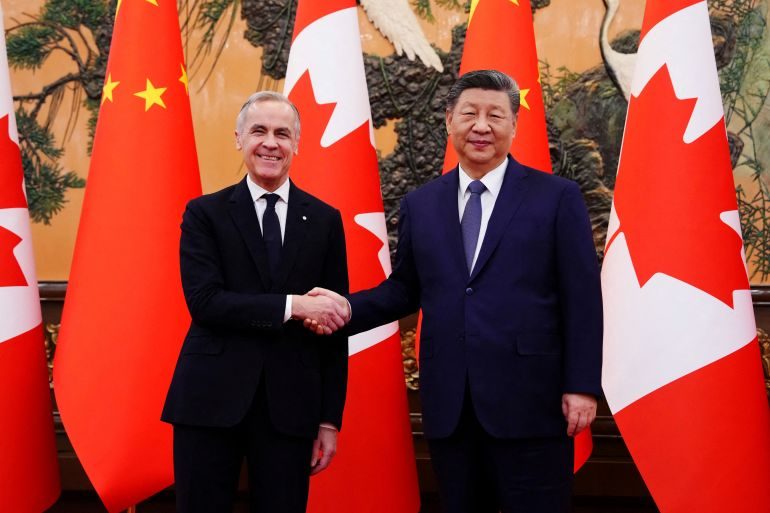
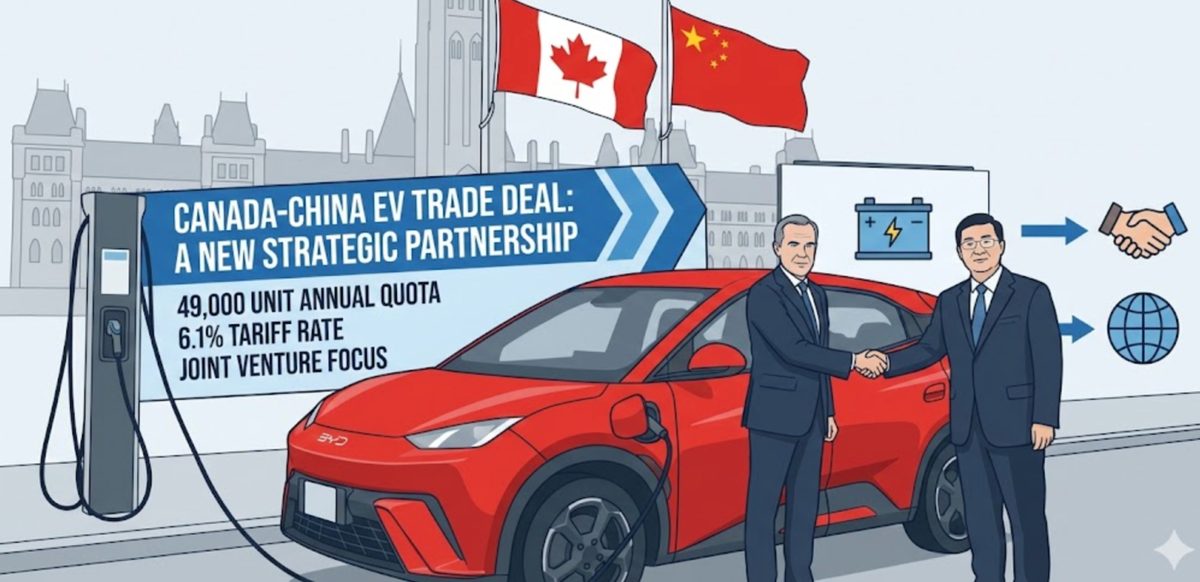
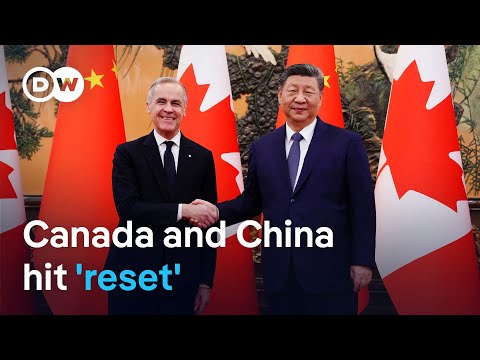
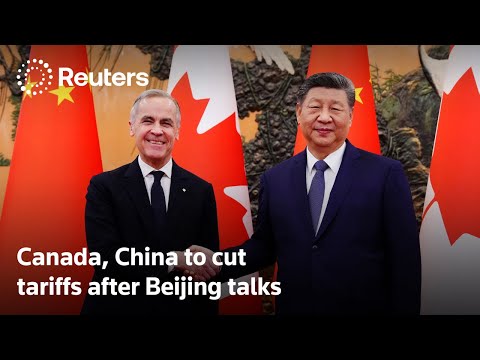
Canada followed the U.S. in imposing 100% tariffs on Chinese electric vehicles in October 2024. Seventeen months later, Prime Minister Mark Carney flew to Beijing and cut them to 6.1%—the first explicit break with American trade policy since Trump began his tariff offensive.
The deal allows 49,000 Chinese EVs into Canada annually in exchange for China slashing canola tariffs from 84% to 15%, unlocking $3 billion in agricultural exports. The quota rises to 70,000 vehicles over five years, with half reserved for models under $35,000 CAD by 2030. Chinese automakers BYD and Chery have already met with Canadian officials about building production facilities on Canadian soil.
The shift marks a structural change in North American trade alignment—and triggered an immediate backlash. Ontario Premier Doug Ford called for a consumer boycott of Chinese EVs, warning the deal threatens thousands of auto jobs.
Trump, who initially endorsed the agreement on January 16, reversed course eight days later. He threatened 100% tariffs on all Canadian goods if the deal proceeds, claiming Canada could become a 'drop-off port' for Chinese products entering the U.S. Carney responded by clarifying the agreement is not a free trade deal and remains compliant with USMCA rules.
For Canadian consumers, sub-$20,000 EVs could arrive as early as spring 2026. For the Canada-U.S. relationship, the deal has become a flashpoint ahead of the July 2026 USMCA review.
Questions about this story
Free account needed to ask — your question is kept and asked for you right after sign-up. Answers are public.
No questions yet — be the first to ask.
Key Indicators
49,000
Chinese EV quota (year one)
Initial annual cap on Chinese EVs at 6.1% tariff, rising to 70,000 over five years. Half must be under $35,000 CAD by 2030.
100% → 6.1%
EV tariff reduction
Canada's tariff on Chinese EVs dropped from 100% to most-favored-nation rate.
$3B
Agricultural exports unlocked
Value of new export orders for Canadian farmers, fish harvesters, and processors.
84% → 15%
Canola seed tariff cut
China's combined tariff rate on Canadian canola seed drops by March 1, 2026.
19 events
Latest: January 26th, 2026 · 9 months ago
Showing 8 of 19
JK to step
Tap a bar to jump to that date
Jump to
January 2026
LeBlanc reaffirms CUSMA compliance with U.S. Trade Representative
LatestDiplomatic
Canada-U.S. Trade Minister Dominic LeBlanc holds 'cordial and productive' call with U.S. Trade Representative Jamieson Greer. LeBlanc clarifies Canada will not pursue free trade agreement with China per CUSMA restrictions on non-market economies. Greer indicates understanding and desire to work on CUSMA review. Both commit to in-person meeting.
Carney clarifies China deal is CUSMA-compliant, not free trade agreement
Political
PM Carney states deal with China only 'rectified some issues that developed in the last couple of years' and is 'entirely consistent with CUSMA.' Confirms Canada respects USMCA obligations and will not pursue free trade agreement without notifying partner countries.
Trump reverses position, threatens 100% tariff on Canada over China deal
Political
President Trump posts on Truth Social: 'If Canada makes a deal with China, it will immediately be hit with a 100% Tariff against all Canadian goods.' Warns Carney against making Canada a 'drop-off port' for Chinese goods entering U.S. Reverses his January 16 endorsement of the deal.
Doug Ford calls for consumer boycott of Chinese EVs
Political
Ontario Premier appears with auto industry representatives and union leaders, calling on Canadians to boycott Chinese-made electric vehicles when they arrive under Carney's deal. Previously called Chinese EVs 'spy cars.' Warns deal threatens Ontario auto jobs and could close door to U.S. market.
Chinese automakers BYD and Chery express interest in Canadian production
Economic
Carney reveals several Chinese carmakers showing interest in building EVs on Canadian soil. BYD and Chery met with Industry Minister Mélanie Joly during her China trip with Carney. Chery laying groundwork to sell EVs in Canada.
U.S. officials warn Canada will 'regret' Chinese EV decision
Diplomatic
Transportation Secretary Sean Duffy says Canada will 'live to regret' bringing Chinese vehicles into market. Trade Representative Jamieson Greer calls deal 'problematic for Canada' but says limited quota won't impact U.S. auto exports to Canada.
Carney and Xi sign bilateral trade agreement
Trade
First Canadian PM visit to China since 2017. Deal cuts EV tariffs from 100% to 6.1% with 49,000 vehicle quota. China reduces canola tariffs from 84% to 15%. Leaders announce 'new strategic partnership.'
President Trump tells reporters 'If you can get a deal with China, you should do that. It's a good thing.' Contradicts his own Transportation Secretary and Trade Representative who criticized the agreement hours earlier.
Saskatchewan Premier Scott Moe hails deal as 'landmark agreement'
Political
Saskatchewan Premier praises canola tariff reduction as 'tremendous' for Prairie farmers. Saskatchewan ships $3 billion in canola to China annually and produces over half of Canada's canola crop.
Ford reveals federal government gave hours of notice on deal
Political
Ontario Premier Doug Ford says he and automakers learned about the China deal only hours before public announcement. Claims there was no consultation with provinces or industry.
August 2025
China adds 76% tariff on Canadian canola seed
Trade
Beijing escalates with additional duties on raw canola seed, effectively blocking Canada's largest agricultural export to China. Combined rate reaches 84%.
March 2025
China imposes 100% tariffs on Canadian canola oil and meal
Trade
Beijing announces retaliatory measures effective March 20. Adds 25% tariffs on pork, fish, and seafood. Canadian canola exports to China drop sharply.
Carney wins Liberal leadership
Political
Former central banker Mark Carney elected Liberal leader with 85.9% of vote, replacing outgoing PM Trudeau. Campaigns on trade diversification and reducing U.S. dependence.
February 2025
Trump imposes 25% tariffs on Canadian goods
Trade
President Trump signs executive orders under IEEPA placing 25% tariffs on most Canadian goods, 10% on energy. Breaks with USMCA free trade terms.
September 2024
China launches anti-dumping investigation on Canadian exports
Trade
Beijing announces investigation into Canadian canola, signaling retaliation for EV tariffs. Investigation expands to pork and seafood.
August 2024
Canada imposes 100% tariff on Chinese EVs
Trade
Prime Minister Trudeau announces punitive tariffs at cabinet retreat in Halifax, matching U.S. policy. Also adds 25% surtax on Chinese steel and aluminum. Cites state subsidies and overcapacity.
September 2021
'Two Michaels' released after 1,019 days
Diplomatic
Meng Wanzhou signs deferred prosecution agreement with U.S. DOJ and returns to China. Hours later, Kovrig and Spavor are released and fly home to Canada.
December 2018
Canada arrests Huawei CFO Meng Wanzhou
Legal
RCMP arrests Meng at Vancouver airport on U.S. extradition request for alleged bank fraud related to Iran sanctions. Nine days later, China detains Michael Kovrig and Michael Spavor on espionage charges.
December 2017
Trudeau's last China visit ends without trade deal
Diplomatic
Prime Minister Justin Trudeau concludes five-day visit to Beijing and Guangzhou. Fails to secure agreement for formal free trade negotiations. No Canadian PM would return for eight years.
Scenarios
1
Chinese EVs Gain Foothold, Canadian Auto Sector Contracts
Possible
Discussed by: Unifor, Ontario Premier Doug Ford, Global Automakers of Canada
BYD, SAIC, and other Chinese brands enter Canada with sub-$25,000 EVs, capturing price-sensitive buyers. Without matching investment commitments, Canadian auto plants lose market share. Layoffs accelerate beyond current levels. The 49,000 vehicle cap proves insufficient protection as Chinese manufacturers shift production to other countries to circumvent limits.
2
Quota System Attracts Chinese Manufacturing Investment
Uncertain
Discussed by: McMaster University researchers, Carney government officials
Like Japanese automakers in the 1980s, Chinese EV companies respond to quotas by building Canadian plants to access the North American market. BYD or another major manufacturer announces battery or assembly facility. Deal proves strategic success, creating jobs while delivering affordable EVs to consumers.
3
U.S. Retaliates, Closes Border to Canadian-Made Vehicles
Possible
Discussed by: U.S. Trade Representative Jamieson Greer, Senator Bernie Moreno
Washington treats Canadian allowance of Chinese EVs as security vulnerability. Cites connected vehicle cybersecurity rules to block or inspect Canadian auto exports. USMCA review in July 2026 becomes confrontational. Canada forced to choose between Chinese market access and American trade relationship.
4
Deal Expands, Becomes Template for Allied Diversification
Other U.S. allies facing Trump tariffs follow Canada's approach. European countries, Australia, or Japan pursue similar bilateral arrangements with China. A bloc of middle powers develops China trade relationships independent of U.S. policy, fundamentally reshaping post-war trade architecture.
5
U.S. Uses USMCA Review to Tighten Rules of Origin
Likely
Discussed by: U.S. Trade Representative Jamieson Greer, industry groups, trade policy analysts
During the July 2026 USMCA review, U.S. policymakers push for stricter rules of origin requirements to prevent Chinese content from entering the North American supply chain through Canada. Could include verification protocols for Chinese EV components or restrictions on cross-border movement of vehicles with significant Chinese content. Would force Canada to choose between Chinese market access and seamless North American integration.
6
Trump Implements 100% Tariff, Triggers Canada-U.S. Trade War
Possible
Discussed by: President Donald Trump, trade policy analysts
Trump follows through on his January 24 threat and imposes 100% tariffs on all Canadian goods in retaliation for the China EV deal. Canada responds with counter-tariffs. North American trade integration unravels ahead of the July 2026 USMCA review. Supply chains fracture, costs spike for consumers and manufacturers on both sides of the border. The dispute overshadows USMCA negotiations and potentially leads to the agreement's termination.
7
Consumer Boycott Succeeds, Chinese EVs Fail to Penetrate Market
Unlikely
Discussed by: Ontario Premier Doug Ford, Canadian auto industry advocates
Ford's boycott call resonates with consumers concerned about security, quality, or supporting domestic industry. Despite low prices, Chinese EVs capture minimal market share within the 49,000 quota. Deal delivers canola benefits but fails to provide affordable EV options for Canadians. Chinese manufacturers abandon plans for Canadian production facilities. Agreement proves politically costly for Carney with limited consumer benefit.
Historical Context
3 moments from history that rhyme with this story — and how they unfolded.
1 of 3
June 1981
Japan-Canada Auto Quota (1981)
After Japan agreed to cap auto exports to the U.S. at 1.68 million vehicles, Canada secured similar voluntary restraints limiting Japanese imports to 174,000 vehicles annually. Canadian officials feared a flood of diverted Japanese cars. The quota was a managed trade solution to protect a domestic industry facing foreign competition.
Then
Japanese manufacturers Honda and Toyota responded by building Canadian plants in Ontario during the 1980s, creating thousands of jobs.
Now
The quota system transitioned from protection to investment attraction. Japanese 'transplant' factories became pillars of Canadian auto manufacturing for decades.
Why this matters now
Carney's 49,000-vehicle quota mirrors this approach. The question is whether Chinese manufacturers will respond as Japanese did—by investing locally—or simply work around limits.
2 of 3
May 2020 - March 2024
Australia-China Trade War Resolution (2020-2024)
China imposed 80% tariffs on Australian barley and duties up to 218% on Australian wine after Canberra called for a COVID-19 origins investigation. Trade worth $2 billion annually was effectively blocked. Australia challenged both at the WTO.
Then
Australian exporters diversified to other markets. Many wine producers found buyers in the UK, U.S., and Southeast Asia.
Now
After the Albanese government took a softer diplomatic tone, China lifted barley tariffs in August 2023 and wine tariffs in March 2024. Trade recovered but Australia remained more diversified.
Why this matters now
Shows that China's retaliatory tariffs can be reversed through sustained diplomacy. Canada's faster resolution came with more explicit concessions—the EV tariff cut Australia never offered.
3 of 3
December 2018 - September 2021
Meng Wanzhou Affair (2018-2021)
Canada arrested Huawei CFO Meng Wanzhou at U.S. request. China detained Canadians Michael Kovrig and Michael Spavor on espionage charges nine days later. The 'hostage diplomacy' standoff lasted 1,019 days until a coordinated release.
Then
Canada-China relations hit their lowest point since diplomatic recognition in 1970. Trade talks froze. No Canadian PM visited China for eight years.
Now
The affair demonstrated Canada's vulnerability when caught between U.S. and Chinese interests. Carney's China visit explicitly aims to rebuild from this nadir.
Why this matters now
The Meng affair is the direct predecessor to today's rapprochement. Carney's visit marks Canada's attempt to move past the hostage crisis and establish a relationship independent of U.S. demands.