
Pull to refresh
Logo
Daily Brief
Following
Why
Canada and India rebuild trade ties after diplomatic collapse over assassination allegations

Canada and India rebuild trade ties after diplomatic collapse over assassination allegations

Money Moves
By Newzino Staff |

A $5.5 billion deal package and free trade talks mark the fastest diplomatic turnaround between two democracies in recent memory

Today: Canada and India sign $5.5 billion in deals, launch free trade talks

Overview

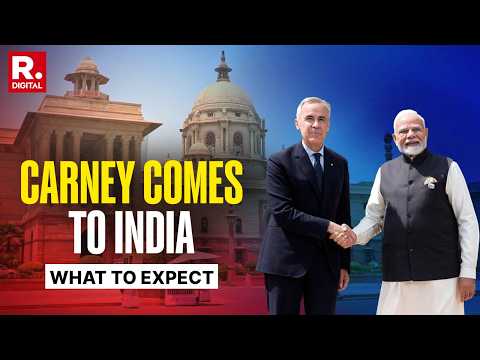
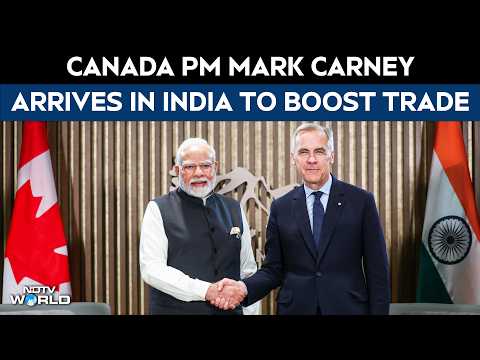
Sixteen months ago, Canada and India had no ambassadors in each other's capitals. Ottawa had accused New Delhi of orchestrating the assassination of a Canadian citizen on Canadian soil, and both countries expelled six of each other's diplomats in a single day. On March 2, 2026, Canadian Prime Minister Mark Carney and Indian Prime Minister Narendra Modi signed five agreements worth $5.5 billion, launched free trade negotiations, and set a target of increasing bilateral trade from $9 billion to $50 billion by 2030.

Key Indicators

$5.5B
Total deal value signed
Combined value of five memorandums of understanding spanning energy, minerals, technology, defense, and agriculture.
$2.6B
Cameco uranium contract
Nine-year agreement to supply 22 million pounds of uranium to India's nuclear program from 2027 through 2035.
~$9B → $50B
Trade target by 2030
Bilateral trade would need to grow roughly sixfold from current levels to hit the stated goal.
16 months
Duration without ambassadors
From October 2024 mutual diplomat expulsions to restoration of High Commissioners in mid-2025.

Interactive

Exploring all sides of a story is often best achieved with Play.

Ever wondered what historical figures would say about today's headlines?

Sign up to generate historical perspectives on this story.

Sign Up

Debate Arena

Two rounds, two personas, one winner. You set the crossfire.

People Involved

Mark Carney
Mark Carney
Prime Minister of Canada (Leading Canada's trade diversification strategy)
Narendra Modi
Narendra Modi
Prime Minister of India (Co-architect of Canada-India reset)
Justin Trudeau
Justin Trudeau
Former Prime Minister of Canada (Resigned as Liberal Party leader; no longer in office)
Hardeep Singh Nijjar
Sikh separatist leader and Canadian citizen (Deceased (killed June 18, 2023))
Subrahmanyam Jaishankar
India's External Affairs Minister (Active in diplomatic reset negotiations)

Organizations Involved

Cameco Corporation
Cameco Corporation
Publicly traded uranium producer
Status: Signed $2.6 billion uranium supply deal with India

The world's largest publicly traded uranium company, headquartered in Saskatoon, Saskatchewan, and the second-largest uranium producer globally.

Royal Canadian Mounted Police (RCMP)
Federal law enforcement agency
Status: Leading the Nijjar murder investigation

Canada's national police force, which has charged four suspects in the Nijjar killing and publicly alleged a broader Indian government campaign of violence against Sikh activists on Canadian soil.

Timeline

  1. Canada and India sign $5.5 billion in deals, launch free trade talks

    Trade

    Carney and Modi signed five MOUs at Hyderabad House covering energy, critical minerals, technology, defense, and agriculture. The centerpiece was a $2.6 billion Cameco uranium supply contract. Both leaders set a target of $50 billion in bilateral trade by 2030.

  2. Carney arrives in India for first bilateral visit by Canadian PM since 2018

    Diplomatic

    Carney began his visit in Mumbai with business engagements before traveling to New Delhi for government-level talks.

  3. India passes the SHANTI Act, opening nuclear sector to private investment

    Policy

    India's parliament replaced its 1962 Atomic Energy Act, for the first time allowing private companies to build and operate nuclear power plants. The law underpinned India's demand for imported uranium.

  4. Canada and India agree to relaunch CEPA negotiations

    Trade

    After a Trade and Investment Ministerial Dialogue, both countries committed to reviving the stalled free trade talks that had been dormant since 2017.

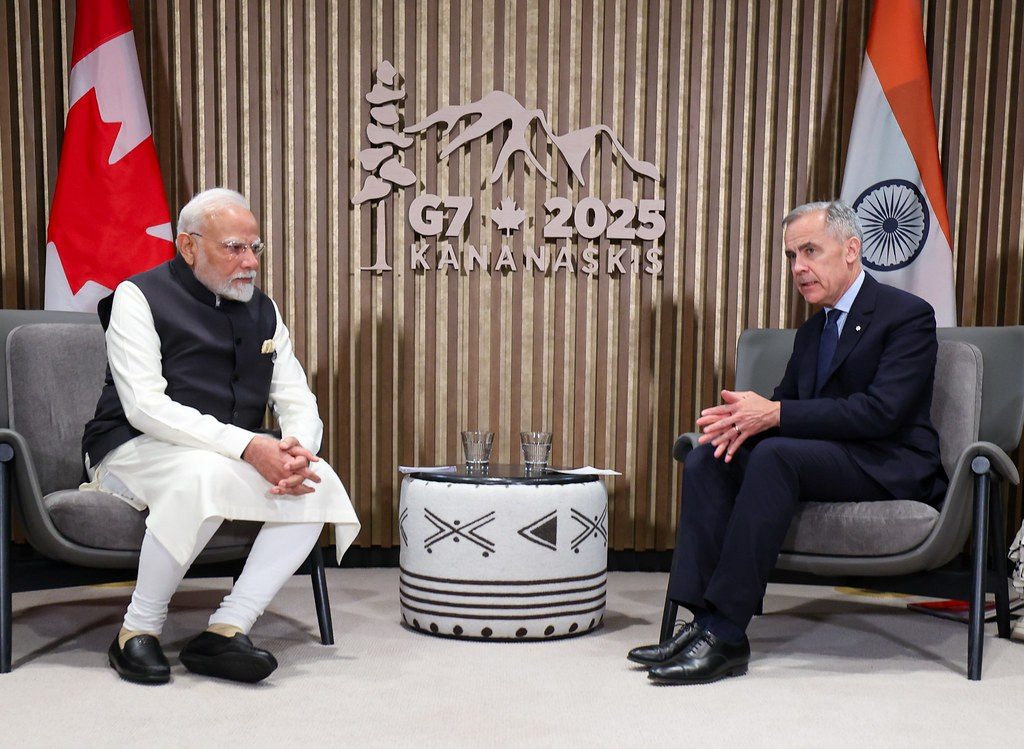
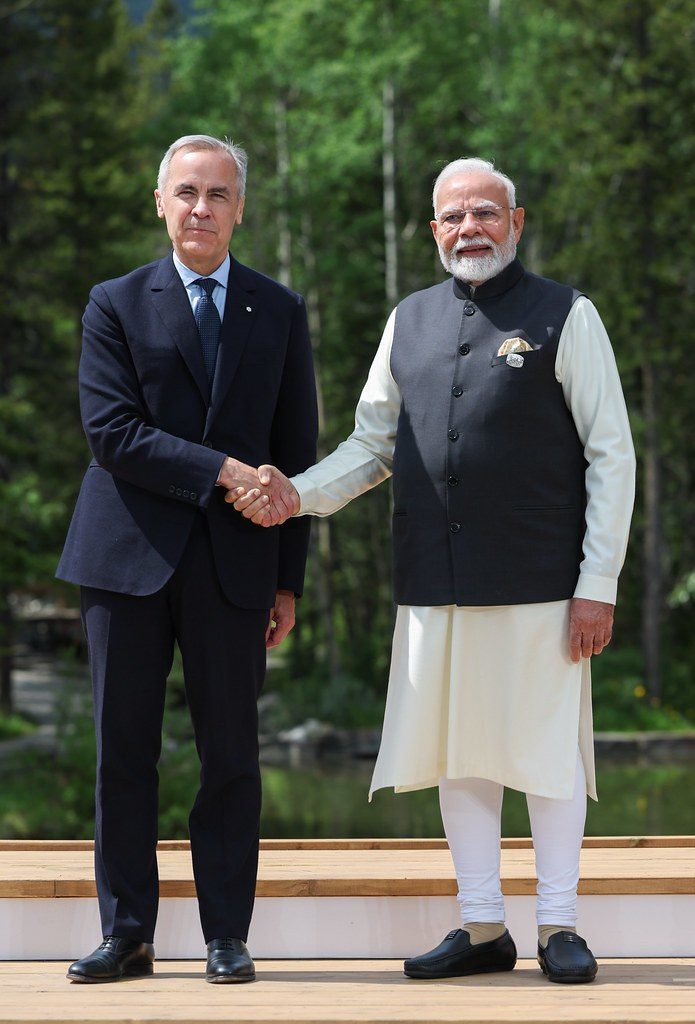
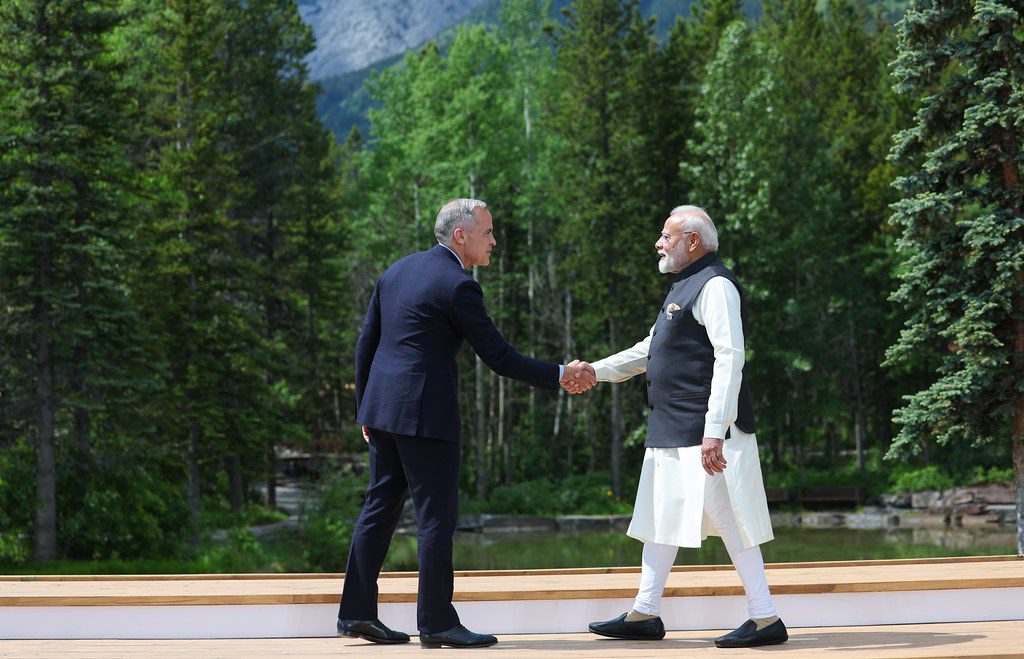
  5. Carney and Modi meet at G7 summit in Alberta

    Diplomatic

    The first bilateral meeting between the leaders took place at the G7 summit in Kananaskis. Both sides agreed to restore full diplomatic representation and resume dialogue.

  6. Mark Carney sworn in as Prime Minister of Canada

    Political

    The former central banker replaced Justin Trudeau, bringing a different approach to the India relationship: pragmatic compartmentalization rather than public confrontation.

  7. Trump imposes 25 percent tariffs on Canadian goods

    Trade

    The United States imposed sweeping tariffs on all Canadian imports, threatening an economy that sends roughly 75 percent of its exports south. The tariffs created urgent pressure for Canada to find alternative trade partners.

  8. Canada and India expel six diplomats each

    Diplomatic

    Canada expelled Indian High Commissioner Sanjay Kumar Verma and five other diplomats, declaring them persons of interest. India expelled six Canadian diplomats including the acting High Commissioner. Both countries were left without top-level representation.

  9. RCMP arrests three suspects in Nijjar murder

    Legal

    Karan Brar, Kamalpreet Singh, and Karanpreet Singh were arrested and charged with first-degree murder and conspiracy.

  10. Mutual diplomat expulsions begin

    Diplomatic

    Canada expelled one Indian diplomat; India expelled one Canadian diplomat in retaliation and suspended visa processing for Canadian nationals.

  11. Trudeau accuses India of links to Nijjar killing

    Diplomatic

    Prime Minister Trudeau told Parliament that Canadian intelligence had "credible allegations" linking Indian government agents to the assassination. India called the claims "absurd and motivated."

  12. Hardeep Singh Nijjar shot dead in Surrey, British Columbia

    Incident

    Nijjar, a Sikh separatist leader and Canadian citizen, was killed in the parking lot of the Guru Nanak Sikh Gurdwara. India had designated him a terrorist in 2020; Canada did not recognize that designation.

  13. Canada and India launch CEPA trade negotiations

    Trade

    Both countries formally begin negotiating a Comprehensive Economic Partnership Agreement in New Delhi. Ten rounds of talks follow through August 2017 before stalling.

Scenarios

1

Free trade agreement completed by year-end, trade surges toward $50 billion target

Discussed by: Bloomberg, the Globe and Mail, and India's Business Today have cited the mutual economic pressures (American tariffs on Canada, Chinese mineral dominance facing India) as strong incentives for a rapid deal

Both governments face external pressure that makes a deal urgent: Canada needs markets beyond the United States, and India needs secure uranium and critical mineral supplies outside Chinese influence. If negotiators can resolve longstanding disagreements over agricultural market access, dairy tariffs, and intellectual property protections, a Comprehensive Economic Partnership Agreement could be finalized by late 2026. The Cameco uranium contract and critical minerals MOU would then serve as anchors for a much larger trade expansion. This scenario requires sustained political will and the Nijjar trial not producing revelations that force either government's hand.

2

Nijjar trial evidence derails the diplomatic reset

Discussed by: Al Jazeera, Global News, and Canadian legal analysts have flagged the government's attempt to suppress evidence as a sign that intelligence material could implicate Indian officials more directly than public statements have acknowledged

Canada's Attorney General has already moved to suppress evidence from the Nijjar murder trial on national security grounds. If the court rejects that application, or if details leak, the proceedings could produce evidence directly linking senior Indian officials to the assassination. Sikh community organizations and opposition politicians are already pressing for accountability. A sufficiently damaging revelation could make the diplomatic reset politically untenable for Carney, forcing a reversal or pause in trade negotiations even as economic incentives push in the opposite direction.

3

CEPA talks stall on market access, deals remain limited to energy

Discussed by: Trade policy analysts at the Asia Pacific Foundation of Canada and India Briefing have noted that ten rounds of CEPA talks between 2010 and 2017 failed to produce an agreement, citing deep structural disagreements

Canada-India free trade negotiations have failed before. India's agricultural protections, dairy tariff regime, and pharmaceutical patent rules clashed with Canadian positions across a decade of prior talks. The year-end deadline is ambitious given that the terms of reference were only just signed. If negotiations bog down on the same issues that stalled them previously, the relationship may stabilize around energy deals and critical minerals cooperation without achieving the broader $50 billion trade target. This would still represent a significant improvement from the 2024 nadir but fall well short of the announced ambitions.

4

US tariff reduction removes Canada's urgency to diversify, India engagement slows

Discussed by: The Washington Post and The Conversation have framed Canada's India outreach as primarily a response to American tariffs, raising the question of what happens if that pressure eases

If the United States reduces or removes tariffs on Canadian goods, the economic urgency driving Canada's trade diversification would diminish significantly. With 75 percent of Canadian exports historically flowing south, the gravitational pull of the American market is strong. In this scenario, the political costs of managing the Nijjar fallout could outweigh the economic benefits of the India relationship, and the ambitious CEPA timeline could quietly slip without being formally abandoned.

Historical Context

Australia-China trade war and reset (2020-2024)

May 2020 - December 2024

What Happened

After Australia called for an investigation into COVID-19 origins, China imposed tariffs of up to 206 percent on Australian wine, 80 percent on barley, and unofficial bans on coal, beef, lobster, and other exports. The trade war cost Australia over AU$5 billion in lost revenue. Relations were frozen for roughly two years.

Outcome

Short Term

The election of Anthony Albanese in May 2022 created political space for re-engagement. China progressively lifted restrictions through 2023-2024 after high-level meetings resumed.

Long Term

Trade normalized, but Australia accelerated its own trade diversification and deepened security commitments through AUKUS. The episode became a template for how a change of government can enable a diplomatic reset.

Why It's Relevant Today

The mechanism is nearly identical: a new leader (Albanese/Carney) replaced the one who initiated the confrontation (Morrison/Trudeau), providing political cover to re-engage without appearing to capitulate. Both cases were also accelerated by external pressure from a third party.

Japan-South Korea trade dispute and reconciliation (2019-2023)

July 2019 - March 2023

What Happened

After South Korea's Supreme Court ordered Japanese companies to compensate wartime forced laborers, Japan restricted exports of three chemicals critical to South Korean semiconductor manufacturing and removed Seoul from its trusted trade partner list. The dispute threatened supply chains for Samsung and other major chipmakers.

Outcome

Short Term

South Korean President Yoon Suk-yeol, elected in 2022, proposed that a Korean foundation would compensate victims instead of Japanese companies, breaking the impasse. Japan restored trade preferences.

Long Term

The two countries resumed intelligence sharing, held their first summit in 12 years, and joined a trilateral summit with the United States at Camp David in August 2023.

Why It's Relevant Today

External security threats, including North Korea's missile tests and China's military expansion, made reconciliation strategically necessary despite unresolved historical grievances. For Canada and India, American tariffs and Chinese mineral dominance play an analogous role, pushing both countries to prioritize economic partnership over bilateral disputes.

US-Saudi Arabia tensions after the Khashoggi killing (2018-2025)

October 2018 - November 2025

What Happened

After journalist Jamal Khashoggi was murdered inside the Saudi consulate in Istanbul in October 2018, US intelligence concluded that Crown Prince Mohammed bin Salman ordered the killing. President Biden vowed to make Saudi Arabia a "pariah state" and released the intelligence assessment publicly upon taking office.

Outcome

Short Term

Biden visited Saudi Arabia in July 2022 after Russia's invasion of Ukraine made Saudi oil production capacity strategically critical, resulting in a widely criticized meeting with the Crown Prince.

Long Term

The relationship was fully restored under a subsequent administration, pivoting from oil-for-security to technology partnerships. The Khashoggi case was never resolved, only set aside.

Why It's Relevant Today

The closest parallel to Canada-India. In both cases, a killing attributed to a foreign government created a moral and diplomatic crisis. In both cases, strategic and economic imperatives eventually overrode demands for accountability. And in both cases, the underlying questions were compartmentalized rather than answered.

Sources

(11)