

Pull to refresh
Logo
Azerbaijan, Georgia, Türkiye and Bulgaria sign Caspian electricity corridor agreement

Azerbaijan, Georgia, Türkiye and Bulgaria sign Caspian electricity corridor agreement

Built World

The five-year deal routes clean power through existing grids and leaves construction to a future joint venture

Overview

Updated 53 minutes ago

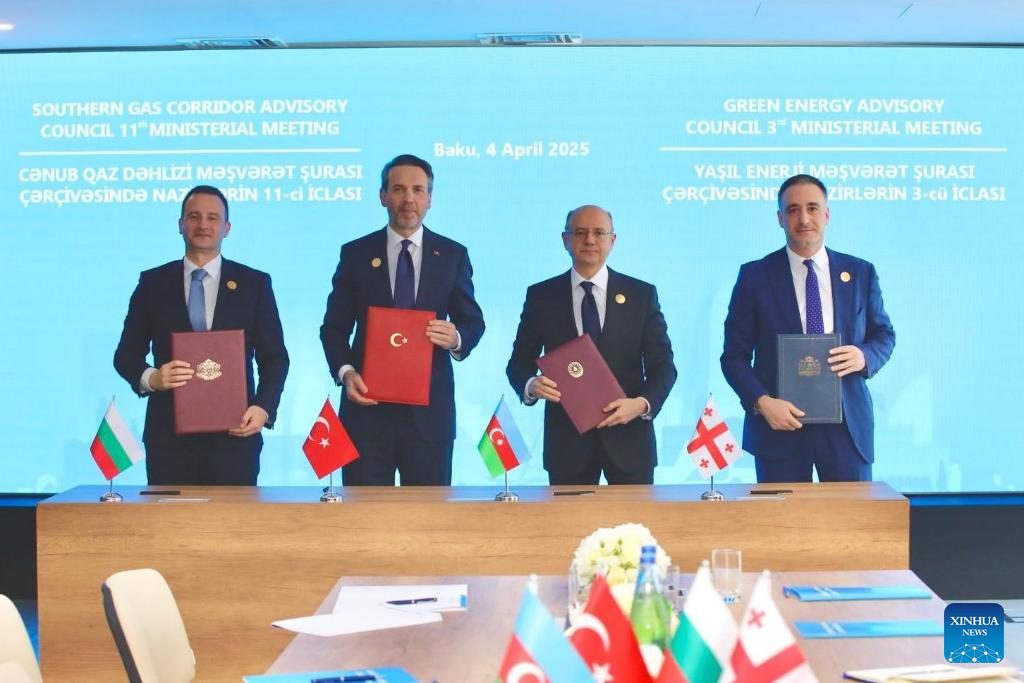
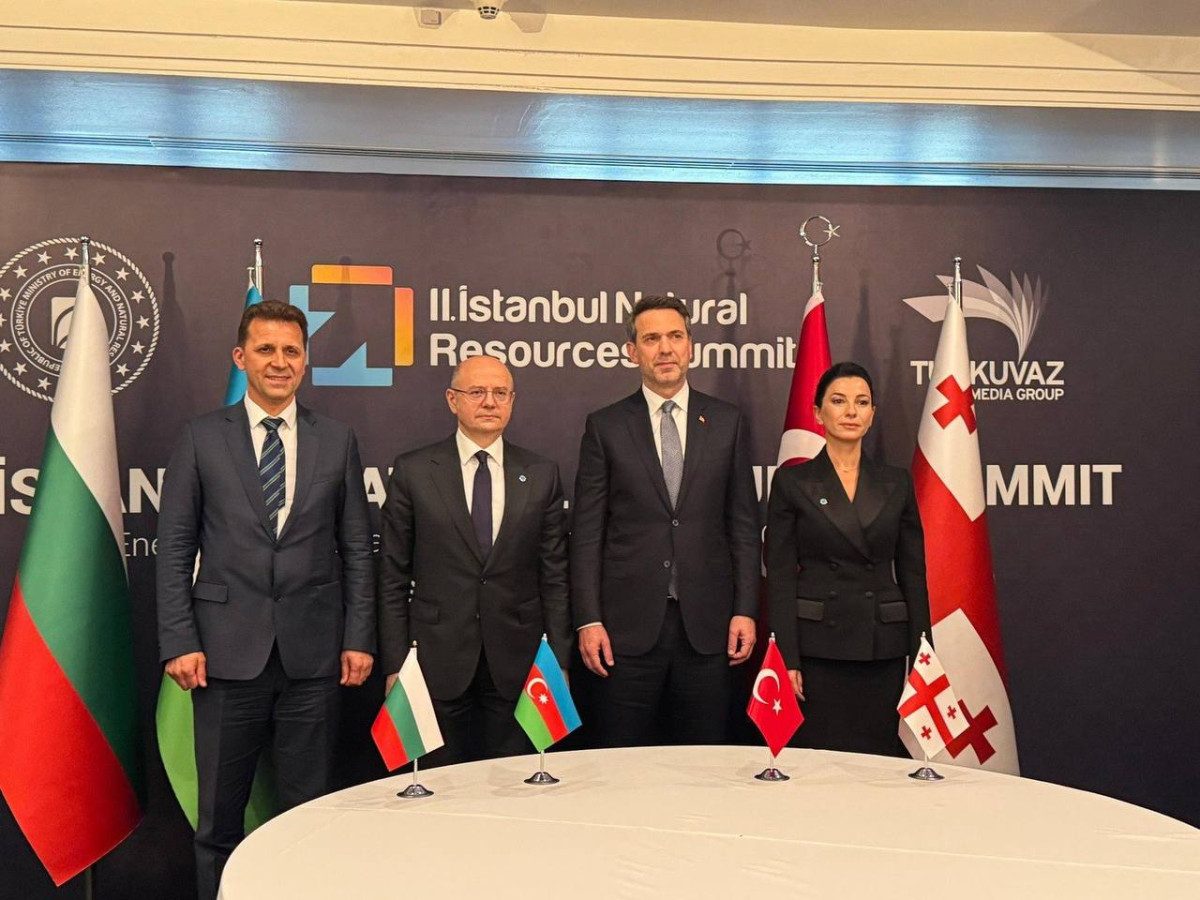
Four countries signed an agreement in Antalya on November 10 to move Caspian electricity into Europe along power lines that already exist. Azerbaijan, Georgia, Türkiye and Bulgaria will use the overland grids between them rather than wait for a new subsea cable.

What the ministers signed is a rulebook, not a construction contract. It commits the four governments to set technical, commercial and regulatory terms for cross-border power, and to name their grid operators as shareholders in a joint venture. The harder question sits upstream: whether the Caspian generation and cable capacity that would feed the corridor get built.

Why it matters

Europe wants non-Russian, non-fossil power. This deal tests whether four neighbouring grids can be made to trade it.

Questions about this story

Free account needed to ask — your question is kept and asked for you right after sign-up. Answers are public.

No questions yet — be the first to ask.

Key Indicators

4
Signatory countries
Azerbaijan, Georgia, Türkiye and Bulgaria signed in Antalya at COP31.
5 years
Agreement term
Extended automatically for one-year periods unless a party withdraws.
1 GW
Planned initial corridor capacity
Capacity described for the first phase of the corridor using existing lines.
2028–2029
Window for investment decision on the Caspian–Black Sea cable
A separate cable project that would feed larger volumes into the corridor.
1.3 GW
Capacity planned for the cable's first line
Azerbaijan's deputy energy minister said the first line is targeted for 2032.

Voices

Curated perspectives — historical figures and your fellow readers.

Sign up to generate historical perspectives on this story.

People Involved

Organizations Involved

Timeline

2024 November 2026

6 events Latest: Today
Tap a bar to jump to that date
  1. Four countries sign strategic partnership agreement

    Today Agreement

    Energy ministers of Azerbaijan, Georgia, Türkiye and Bulgaria sign the clean energy partnership in Antalya.

  2. Deputy minister sets cable timetable

    Today Statement

    Zeynalov says the Caspian–Black Sea cable study is done; investment decision due 2028–2029.

  3. COP31 opens in Antalya

    Summit

    The UN climate conference opens in Antalya, hosted by Türkiye.

  4. Bulgaria approves draft agreement

    Government

    Bulgaria's Council of Ministers clears the draft text for signature at COP31.

  5. Ministers sign Baku memorandum

    Agreement

    Energy ministers of the four countries sign a memorandum on green energy transmission and trade.

  6. Four states open talks on green power transmission

    Diplomacy

    Azerbaijan, Georgia, Türkiye and Bulgaria begin cooperation on transmitting renewable electricity westward.

Scenarios

1

Grid operators register the joint venture

Likely Resolves by End of 2027

Discussed by: The four energy ministries, whose agreement requires a joint venture of designated operators

The signed text says the four states will designate transmission system operators or state companies as shareholders in a joint venture to develop and implement the projects. Registration, with a board and a work plan, is the first test of whether the framework becomes an operating company rather than a communique. Watch for a joint announcement from the four ministries or a company registration filing.

2

Caspian–Black Sea cable clears investment decision by 2029

Possible Resolves by End of 2029

Discussed by: Azerbaijan's Deputy Energy Minister Orkhan Zeynalov, who gave the 2028–2029 window

Zeynalov said the separate Caspian–Black Sea–Europe cable has finished a feasibility study and should reach a final investment decision in 2028–2029, with a first 1.3 GW line targeted for 2032. That project, not this agreement, determines whether large volumes of Caspian power ever reach the corridor. The decision depends on buyers, financing and a subsea route under the Black Sea.

3

Corridor delivers its first contracted Azerbaijani power to Bulgaria

Uncertain Resolves by End of 2028

Discussed by: The four ministries, which describe exports to European markets as the agreement's purpose

With existing lines and a signed rulebook, commercial deliveries could start well before any new cable is built. Success means a named supplier, booked cross-border capacity across Georgia and Türkiye, and delivered volumes into Bulgaria. The agreement's technical and regulatory clauses exist to make that booking possible.

Historical Context

3 moments from history that rhyme with this story — and how they unfolded.

2012–2020

Trans-Anatolian Natural Gas Pipeline (2012–2020)

Azerbaijan, Türkiye and partners signed an intergovernmental agreement in 2012 to build a gas pipeline across Anatolia. Gas reached Türkiye in 2018 and, through the Trans Adriatic Pipeline, European markets at the end of 2020.

Then

Azerbaijani gas became a supply source for Türkiye and southeastern Europe.

Now

The route gave Europe a pipeline that bypasses Russia and gave Baku a long-term export market.

Why this matters now

Türkiye's energy minister calls the electricity corridor the 'TANAP of electricity'. The gas project took about eight years from signature to European deliveries, a benchmark for how long grid and cable work may take.

2009–2014

Desertec Industrial Initiative (2009–2014)

A group of European insurers, banks and utilities launched a plan to generate solar power in North Africa and the Middle East and transmit it to Europe. The consortium set targets for cable links under the Mediterranean.

Then

Most industrial partners withdrew by 2014, leaving the Desertec Foundation with a narrower advocacy role.

Now

The episode became the standard cautionary case for export-oriented desert solar, though smaller bilateral projects continued.

Why this matters now

Desertec failed on financing and coordination, not on generation technology. The Caspian corridor faces the same two tests, which is why the joint venture and the investment decision matter more than the signing.

February 2025

Baltic grids join continental Europe (2025)

Estonia, Latvia and Lithuania disconnected from the Russian-controlled grid and synchronized with the continental European system. The switch followed more than a decade of planning and EU funding for new lines and frequency converters.

Then

The three countries now operate under European grid rules and frequency control.

Now

It showed that politically driven grid mergers can be completed, at high cost and over many years.

Why this matters now

The corridor needs the same ingredients: shared technical rules, cross-border capacity and money. The agreement's regulatory clauses are the first version of that.

Sources

(8)