


Pull to refresh
Logo
Centrus ships first centrifuge for Piketon enrichment expansion

Centrus ships first centrifuge for Piketon enrichment expansion

Built World

First machine leaves Oak Ridge ahead of schedule, opening the push to replace Russian reactor fuel by 2028

Overview

Updated 1 hour ago

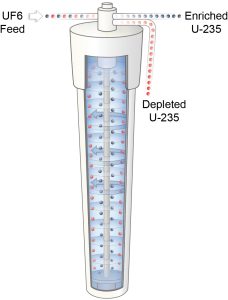
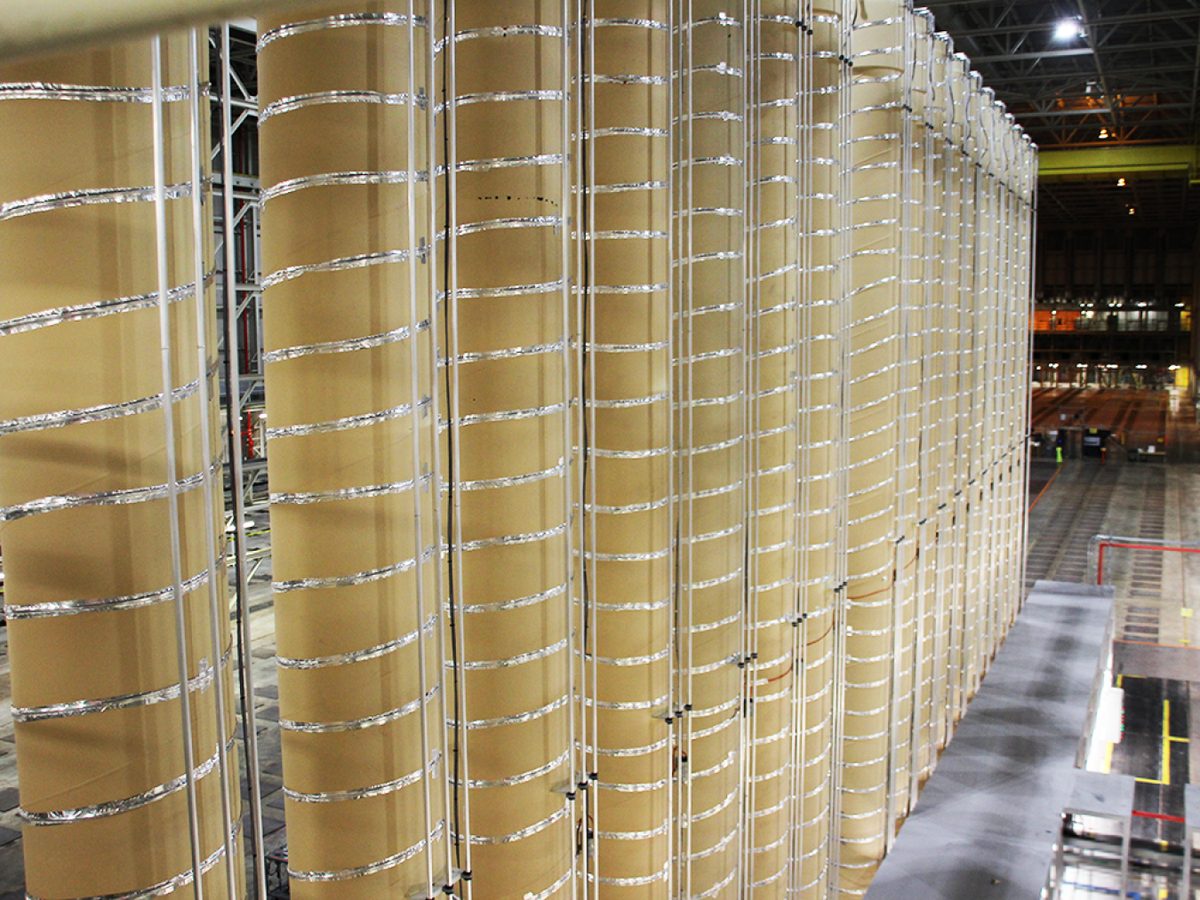
Centrus shipped its first completed centrifuge to Piketon, Ohio, on Thursday. It's the first machine to leave the Oak Ridge factory since production restarted in December, and the company beat its own year-end target. Thousands more will follow, grouped into cascades that enrich uranium.

The rebuild runs against a hard deadline. A 2024 law bans Russian enriched uranium imports, with waivers expiring in 2028. Centrus's first new capacity comes online in 2029, and until then its existing Piketon cascade — the only US centrifuge making high-assay fuel — runs commercially.

Why it matters

If Centrus's new cascades slip past 2029, US advanced-reactor builders have no domestic HALEU supply once Russian waivers expire in 2028.

Questions about this story

Free account needed to ask — your question is kept and asked for you right after sign-up. Answers are public.

No questions yet — be the first to ask.

Key Indicators

$560M
Oak Ridge expansion investment
Centrus plans to spend this to transition the Tennessee plant to high-rate centrifuge manufacturing.
$900M
DOE HALEU task order
Fixed-price order finalized June 30, 2026, with options lifting the value to $1.07B.
12 metric tons
Annual HALEU capacity targeted
Initial build-out at Piketon; the pace depends on customer demand and capital.
2028
Russian uranium waiver deadline
Import ban waivers must end no later than January 1, 2028.
430
New Oak Ridge jobs
Jobs tied to the centrifuge manufacturing expansion in Anderson County, Tennessee.

Voices

Curated perspectives — historical figures and your fellow readers.

Sign up to generate historical perspectives on this story.

People Involved

Organizations Involved

Timeline

2023 October 2026

10 events Latest: Today
Tap a bar to jump to that date
  1. First centrifuge shipped to Piketon

    Today Milestone

    Centrus ships its first completed centrifuge from Oak Ridge to Ohio for assembly, ahead of its year-end target.

  2. Centrus buys Westerman Holdings

    Acquisition

    The $116 million purchase of the casing maker secures a key supply chain component; $95 million in cash, $21 million in stock.

  3. General Matter files NRC license application

    Regulatory

    Rival enrichment holder submits a 1,000-plus page application for its Paducah, Kentucky plant covering conventional LEU.

  4. Centrus signs X-energy enrichment deal

    Contract

    Prepaid agreement covers LEU and HALEU for X-energy's Xe-100 reactors, with customer prepayments supporting the expansion.

  5. Centrus finalizes $900M DOE HALEU order

    Contract

    Fixed-price task order from DOE carries options lifting its value to $1.07 billion and requires one metric ton of HALEU by March 2032.

  6. Centrus announces $560M Oak Ridge expansion

    Investment

    The company plans 430 new jobs and a high-rate manufacturing plant capable of producing thousands of advanced centrifuges.

  7. DOE commits $2.7B to enrichment rebuild

    Funding

    Department of Energy splits funds among Centrus, General Matter, and Orano to rebuild domestic enrichment capacity.

  8. Centrus restarts Oak Ridge manufacturing

    Milestone

    Centrus resumes centrifuge production at its Oak Ridge, Tennessee plant to support the Ohio expansion.

  9. Piketon cascade begins producing HALEU

    Milestone

    Centrus's existing cascade at Piketon, Ohio starts high-assay fuel production and accumulates four million machine-hours of operation.

Scenarios

1

Centrus brings first new cascades online in 2029

Likely Resolves by End of 2029

Discussed by: DOE contract terms and Centrus public statements

Oak Ridge manufacturing ramps through 2027-2028, shipping thousands of machines to Piketon for cascade assembly. Centrus already runs a working cascade and holds committed federal and customer funding, including prepayments from X-energy, so the capital is in place. First new capacity arrives as announced in 2029.

2

Production slips past the 2029 target

Possible Resolves by End of 2029

Discussed by: Trade coverage of manufacturing and demand risks

The manufacturing rate stalls, and demand from advanced reactors — many still under construction — stays thin. Competitors Orano and Urenco expand low-enriched capacity while Centrus delays. A gap opens between the 2028 waiver expiry and the delayed first capacity.

3

General Matter opens a rival enrichment route

Possible Resolves by End of 2030

Discussed by: Company filings and NRC review

General Matter, holder of an equal $900 million DOE award, secures an NRC license for its Paducah, Kentucky plant and aims for commercial-scale enrichment by 2030. Its September 2026 application covers conventional LEU, with HALEU to follow by amendment next year.

Historical Context

2 moments from history that rhyme with this story — and how they unfolded.

2000s

USEC American Centrifuge Project (2009)

USEC, Centrus's predecessor, spent years developing gas-centrifuge enrichment at the same Piketon, Ohio site. DOE withdrew its support in 2009 after the company missed milestones and costs ballooned, halting the effort.

Then

The unfinished cascade sat idle for years, and US commercial enrichment remained dependent on imports.

Now

The shelved AC100 technology was later restarted on a small scale; Piketon's cascade began producing HALEU in late 2023.

Why this matters now

Today's shipment revives a commercialization effort that failed once at the same site, using the same centrifuge lineage.

1993-2013

Megatons to Megawatts (1993)

The US and Russia signed a 20-year deal to downblend 500 metric tons of Russian weapons-grade uranium into fuel for American reactors, supplying roughly half of US commercial fuel at its peak.

Then

American utilities got cheap, reliable fuel, and the domestic enrichment industry shrank as imports took over.

Now

When the agreement ended in 2013, the US had lost much of its enrichment ability, deepening the reliance that the 2024 import ban now targets.

Why this matters now

The 2024 ban reverses two decades of dependence, setting the hard deadline that Centrus's expansion must meet.

Sources

(9)