


Pull to refresh
Logo
CERN begins disconnecting Large Hadron Collider for high-luminosity upgrade

CERN begins disconnecting Large Hadron Collider for high-luminosity upgrade

New Capabilities

Stronger niobium-tin magnets will replace 28 units around ATLAS and CMS, boosting collision rates up to tenfold

Today: First magnet interconnection cut

Overview

Updated 1 hour ago

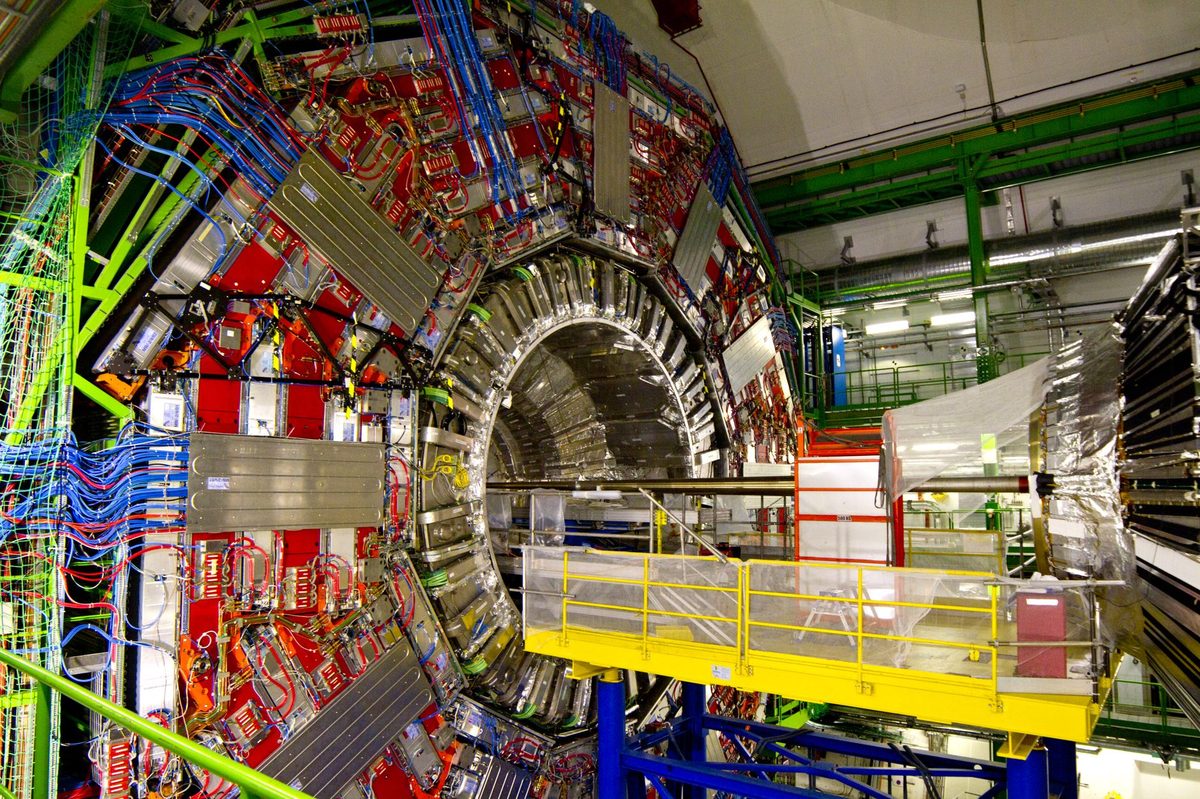
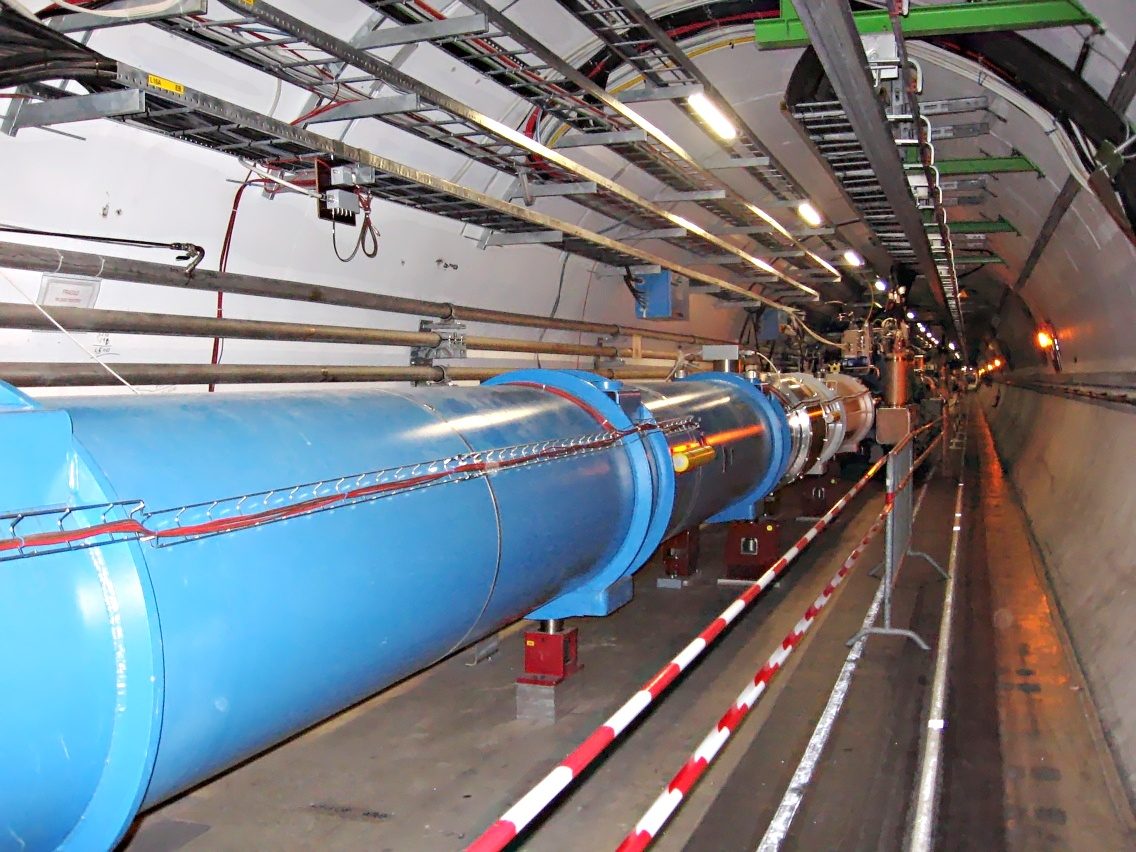
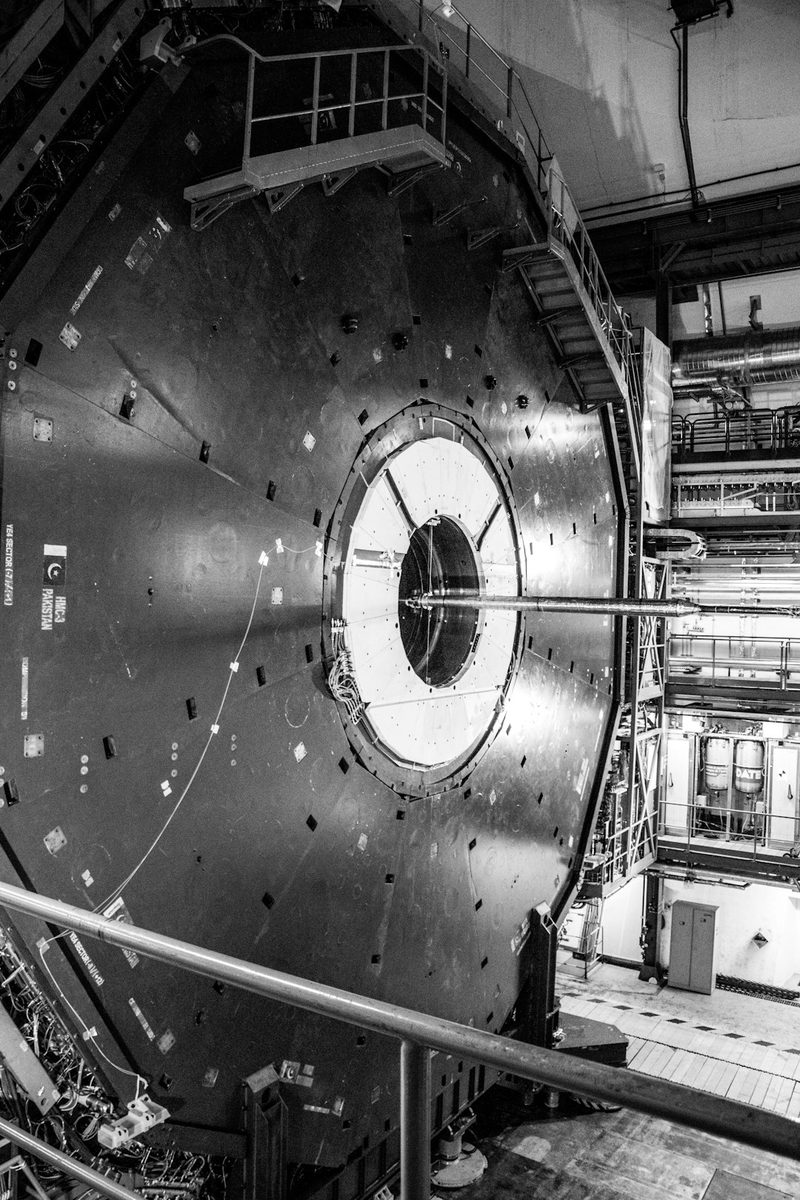
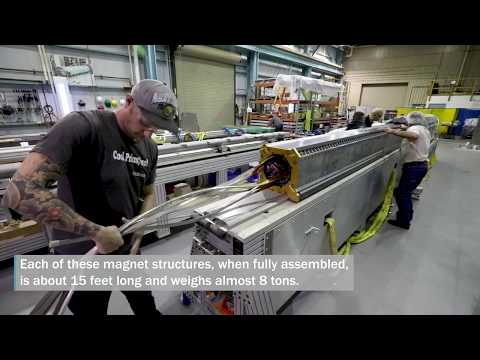
CERN crews cut the first magnet connection inside the Large Hadron Collider this week, formally beginning the machine's biggest overhaul since it was built. Around the ATLAS and CMS detectors, workers will pull 28 superconducting magnets and replace them with stronger versions that squeeze particle beams more tightly.

It is the opening move of the High-Luminosity LHC project, a four-year, $1.5 billion effort to raise collision rates up to tenfold. More collisions mean far more data for physicists hunting for particles and forces beyond the Standard Model — the only near-term route to discovering what lies beyond it.

Why it matters

If the upgrade works, the LHC gathers up to ten times more collision data — the main near-term route to physics beyond the Standard Model.

Questions about this story

Free account needed to ask — your question is kept and asked for you right after sign-up. Answers are public.

No questions yet — be the first to ask.

Key Indicators

28
Superconducting magnets being removed around ATLAS and CMS
Includes the inner triplets, sets of three quadrupoles that focus beams before collisions.
40%
Stronger magnetic field from new niobium-tin coils
New magnets reach 11.3 tesla versus roughly 8 tesla for the current niobium-titanium units.
$1.5B
Upgrade cost
Equivalent to 1.2 billion Swiss francs, covering magnets, infrastructure and injector upgrades.
1.2 km
Length of LHC tunnel being dismantled and replaced
Out of the collider's 27-kilometer circumference.
10x
Maximum luminosity increase over original design
Beams will be compressed tighter, yielding 140-200 collisions per bunch crossing, up from 60.

Voices

Curated perspectives — historical figures and your fellow readers.

Ever wondered what historical figures would say about today's headlines?

Sign up to generate historical perspectives on this story.

People Involved

Organizations Involved

Timeline

January 2005 June 2030

6 events Latest: Today
Tap a bar to jump to that date
  1. HL-LHC scheduled to restart with beam

    Upcoming Schedule

    The 47-month shutdown ends and the High-Luminosity LHC begins its first physics run, Run 4.

  2. First new quadrupole due in the tunnel

    Upcoming Schedule

    The first HiLumi inner triplet quadrupole is expected to arrive for installation in early 2029.

  3. First magnet interconnection cut

    Today Milestone

    CERN formally begins the inner triplet replacement; Director-General marks the start at LHC Point 1.

  4. Dismantling begins around ATLAS and CMS

    Construction

    Crews start dismantling machine sections, preparing to remove 28 superconducting magnets.

  5. LHC switched off for the final time in Run 3

    Operations

    The collider halted operations, ending its third run and entering Long Shutdown 3.

  6. Inner triplet magnets installed during construction

    Construction

    The niobium-titanium focusing magnets went into the LHC between 2005 and 2007.

Scenarios

1

HL-LHC restarts with beam in June 2030

Likely Resolves by Jul 1, 2030

Discussed by: CERN official schedule; Springer's EPJ Plus review of the HiLumi program

The 47-month shutdown proceeds as planned. Dismantling finishes by end of 2026, vertical core construction runs through 2027-2028, new beamline components go in from late 2028, and recommissioning starts mid-2029. First beam circulates in June 2030, with nominal luminosity reached by the end of the first run.

2

Niobium-tin magnets slip Run 4 into 2031

Possible Resolves by Q2 2031

Discussed by: EPJ Plus paper noting the technology is first-of-kind for accelerator magnets

The new coils use niobium-tin superconductor, never before used in accelerator magnets at this scale. If cooling or quench problems emerge during recommissioning — the 2008 LHC incident showed a single faulty connection can cost a year — the Run 4 physics start slips into 2031 or beyond.

3

Early Run 4 data reveals new physics

Uncertain Resolves by End of 2033

Discussed by: Broad particle physics community; experimental collaborations ATLAS and CMS

At ten times the collision rate, experiments can measure Higgs boson couplings precisely and search for rare decays that could reveal deviations from the Standard Model. Discovery requires the machine to reach near-design luminosity and any anomaly to survive scrutiny at the 5-sigma threshold.

Historical Context

2 moments from history that rhyme with this story — and how they unfolded.

September 2008

LHC magnet quench incident (2008)

Days after the LHC's first particle beams circulated, a faulty electrical connection between two superconducting dipole magnets caused a quench. The energy release vaporized helium, ruptured the vacuum, and damaged 53 magnets along a kilometer of tunnel.

Then

Repairs took over a year; the LHC restarted in November 2009 instead of September 2008.

Now

The incident forced CERN to install safety systems that now guard every magnet circuit.

Why this matters now

Superconducting systems fail fast and cost months. The new niobium-tin magnets carry the same class of risk.

September 2011

Fermilab Tevatron shutdown (2011)

The Tevatron collider at Fermilab, the world's highest-energy accelerator for 28 years, stopped operations after failing to find the Higgs boson. Its baton passed to the LHC, which had just begun running at higher energy.

Then

The US lost its last particle collider, concentrating the energy frontier in Europe.

Now

The Tevatron's data kept yielding results for years, but the frontier moved decisively to the LHC.

Why this matters now

Physics machines have generational lifespans. The LHC's inner triplets ran nearly 20 years before this handover — the same cycle the Tevatron completed.

Sources

(9)