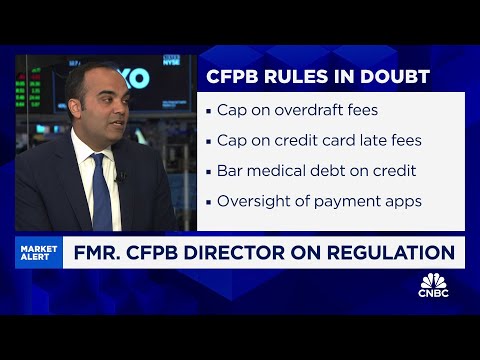
The Consumer Financial Protection Bureau returned $21 billion to defrauded Americans over its 14-year existence. The agency that Elizabeth Warren built now faces major cuts (workforce down to 200 from 1,700, budget halved), though federal judges are blocking dismantling efforts.
On February 12, 2026, the CFPB fired program manager Alexis Goldstein for confronting DOGE operatives one year earlier. She had photographed computer screens and demanded identification from operatives who'd accessed the agency's sensitive data. The firing coincided with Elon Musk's X platform preparing to launch, and consumer advocates estimate the restructuring has cost Americans $19 billion in lost consumer protections.
Questions about this story
Free account needed to ask — your question is kept and asked for you right after sign-up. Answers are public.
No questions yet — be the first to ask.
Key Indicators
$19B
Estimated Consumer Cost
Financial relief consumers would have received under prior enforcement and regulatory policies, according to a February 2026 report from Senator Elizabeth Warren's office.
88%
Proposed Staff Reduction
The CFPB planned to reduce its workforce from 1,700 to approximately 200 employees before courts intervened.
50%
Budget Cut
The One Big Beautiful Bill Act cut the CFPB's funding cap from 12% to 6.5% of Federal Reserve operating expenses—the lowest share in agency history.
<5%
Complaint Resolution Rate
The share of consumer complaints resolved with relief for the consumer, down from roughly 50% under the prior administration.
19 events
Latest: February 12th, 2026 · 8 months ago
Showing 8 of 19
JK to step
Tap a bar to jump to that date
Jump to
February 2026
CFPB Fires Goldstein Over 2025 DOGE Confrontation
LatestPersonnel
The CFPB terminates Alexis Goldstein for confronting DOGE operatives one year earlier. She calls it illegal retaliation for protecting consumer data.
Warren Report: Restructuring Cost $19 Billion
Report
Senator Elizabeth Warren's office releases a report estimating the CFPB changes have cost American consumers $19 billion in lost financial relief.
December 2025
Judge Orders Continued CFPB Funding
Legal
Judge Jackson rules the CFPB must continue requesting funds from the Federal Reserve, rejecting the administration's argument that Fed losses block transfers.
Full Appeals Court to Rehear Case
Legal
The D.C. Circuit grants the CFPB employee union's petition for en banc rehearing of the layoff case.
August 2025
Appeals Court Vacates Injunction
Legal
A divided D.C. Circuit panel vacates Judge Jackson's preliminary injunction, though the union seeks full court rehearing.
July 2025
One Big Beautiful Bill Cuts CFPB Budget
Legislative
President Trump signs legislation cutting the CFPB's funding cap from 12% to 6.5% of Federal Reserve operating expenses—the lowest in agency history.
May 2025
DOGE Operative Kliger Departs
Personnel
Gavin Kliger, the DOGE aide who led CFPB layoff efforts despite conflict-of-interest warnings, leaves the agency when his detail ends.
March 2025
Judge Blocks CFPB Dismantling
Legal
Federal Judge Amy Berman Jackson issues a preliminary injunction blocking termination of 1,483 employees and suspending the reduction in force.
February 2025
CFPB Headquarters Closed
Agency Action
Vought closes the CFPB's Washington headquarters and announces the bureau will decline additional funding from the Federal Reserve.
Vought Orders Work Stoppage
Agency Action
Acting Director Vought orders CFPB employees to cease all supervision, examination, and stakeholder engagement. The agency's X account is deleted.
Vought Named Acting Director, DOGE Gets Full Access
Leadership Change
Russell Vought becomes acting CFPB director and grants DOGE staff access to all agency data systems, including sensitive bank examination records.
DOGE Team Arrives at CFPB
Investigation
Four young DOGE operatives arrive at CFPB headquarters with less than an hour's notice. Alexis Goldstein confronts them, photographing computer screens.
Trump Fires CFPB Director Chopra
Leadership Change
President Trump terminates Rohit Chopra via email, replacing him with Treasury Secretary Scott Bessent as acting director.
January 2025
X Announces Digital Payments Service
Corporate
Elon Musk's X announces XMoney, a digital wallet partnership with Visa—a service that would have fallen under CFPB supervision.
November 2024
CFPB Finalizes Big Tech Payment Rule
Regulatory
The CFPB issues a rule subjecting large digital payment providers—including Apple Pay, Venmo, and future services like X's payment platform—to federal supervision.
May 2024
Supreme Court Upholds CFPB Funding
Legal
The Supreme Court rules 7-2 that the CFPB's funding mechanism through the Federal Reserve is constitutional, rejecting an industry challenge.
November 2017
Trump Installs Mulvaney at CFPB
Leadership Change
After Director Richard Cordray's resignation, President Trump names OMB Director Mick Mulvaney as acting CFPB director, beginning a period of reduced enforcement.
July 2011
CFPB Begins Operations
Agency Action
The Consumer Financial Protection Bureau formally opens, with Richard Cordray later confirmed as its first director.
July 2010
Dodd-Frank Act Creates CFPB
Legislative
President Obama signs the Dodd-Frank Wall Street Reform Act, establishing the Consumer Financial Protection Bureau as a response to the 2008 financial crisis.
Scenarios
1
CFPB Reduced to Skeleton Crew, Enforcement Ends
Possible
Discussed by: Financial industry analysts at American Banker, administration officials quoted in court filings
If the en banc court rules in the administration's favor and Congress does not intervene, the CFPB could be reduced to the five positions required by statute—a 'room with five men and a phone,' as one senior executive described it in court testimony. Enforcement actions would effectively cease, and supervision of financial institutions would end. This would mark the functional elimination of the agency Republicans have opposed since its creation.
Discussed by: Consumer advocacy groups including Protect Borrowers, National Consumer Law Center
The full D.C. Circuit could reinstate the preliminary injunction, blocking mass layoffs and requiring the agency to continue operations. Even so, the 50% budget cut from the One Big Beautiful Bill would force significant reductions. The agency might maintain 500-800 employees—enough for some enforcement but far below pre-2025 capacity. This middle scenario leaves the CFPB weakened but not eliminated.
3
Congress Abolishes CFPB Through Reconciliation
Unlikely
Discussed by: Republican members of the House Financial Services Committee, industry trade groups
Congressional Republicans who have sought to eliminate the CFPB since 2011 could use the budget reconciliation process to abolish the agency entirely, circumventing the 60-vote Senate threshold. This would require unified Republican support and willingness to take the political risk of eliminating consumer protections. Some banking industry voices have cautioned against full elimination, preferring a weakened regulator to regulatory uncertainty.
4
Democratic Administration Restores CFPB in 2029
Uncertain
Discussed by: Senator Elizabeth Warren, consumer advocacy organizations
If Republicans lose the 2028 presidential election, a Democratic administration could rebuild the CFPB—appointing a new director, requesting full statutory funding, and resuming enforcement. However, the four-year gap would leave consumers unprotected, allow financial institutions to establish new practices, and require rebuilding institutional expertise. The precedent of near-elimination might also make the agency vulnerable to future dismantling attempts.
Historical Context
3 moments from history that rhyme with this story — and how they unfolded.
1 of 3
November 2017 - December 2018
Mick Mulvaney's CFPB (2017-2018)
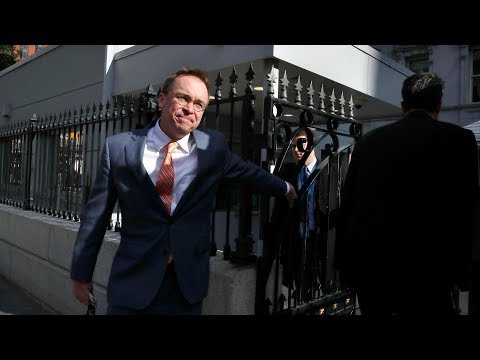
President Trump named budget director Mick Mulvaney as acting CFPB director after Richard Cordray's resignation. Mulvaney, who had called the agency a 'sick, sad joke' as a congressman, immediately froze hiring, suspended rulemaking, and submitted a $0 budget request to the Federal Reserve. In 13 months, he brought zero new enforcement actions, compared to Cordray's average of 2-4 per month.
Then
Enforcement collapsed and pending investigations were dropped, including one against a payday lender who had donated to Mulvaney's campaigns.
Now
The agency survived Trump's first term and resumed active enforcement under Biden-appointed director Rohit Chopra, returning $21 billion to consumers by 2024.
Why this matters now
The current restructuring effort goes far beyond Mulvaney's approach—attempting to eliminate rather than merely weaken the agency, and involving personnel with direct financial conflicts of interest in companies the CFPB regulates.
2 of 3
February 2017 - July 2018
Scott Pruitt and the Environmental Protection Agency (2017-2018)
Scott Pruitt, who had sued the Environmental Protection Agency 14 times as Oklahoma attorney general, became its administrator. He rolled back over 30 regulations, cut the budget by 30%, and dismantled the agency's climate programs. Six of his rollbacks were struck down by courts. He resigned amid ethics scandals.
Then
Environmental enforcement dropped sharply, and staff morale collapsed as career employees faced hostility from leadership.
Now
The EPA recovered under Biden and advanced major climate regulations, though four years of weakened enforcement allowed increased pollution and delayed climate action.
Why this matters now
Both cases show the pattern of appointing agency opponents to lead agencies, but the CFPB effort is more ambitious—attempting functional elimination rather than regulatory rollback, backed by budget cuts Congress did not authorize for the EPA.
3 of 3
1995
Office of Technology Assessment Abolition (1995)
The Republican Congress elected in 1994 abolished the Office of Technology Assessment, a nonpartisan agency that provided Congress with objective analysis of scientific and technological issues. The OTA had 143 staff and a $22 million budget. Speaker Newt Gingrich and his allies viewed it as unnecessary and ideologically suspect.
Then
Congressional staff lost access to independent technical expertise, becoming more dependent on industry lobbyists for information.
Now
The OTA was never restored. Members of Congress have repeatedly introduced bills to recreate it, citing the need for independent analysis of AI, cybersecurity, and other technical policy areas. Some analysts blame OTA's absence for Congress's poor grasp of technology issues.
Why this matters now
The OTA case shows that Congress can successfully eliminate agencies it opposes, and that once closed, agencies rarely return—even when the need for their function persists.