
Pull to refresh
Logo
Chicago issues full building permit for first all-electric geothermal apartment tower

Chicago issues full building permit for first all-electric geothermal apartment tower

Built World Chicago, IL local

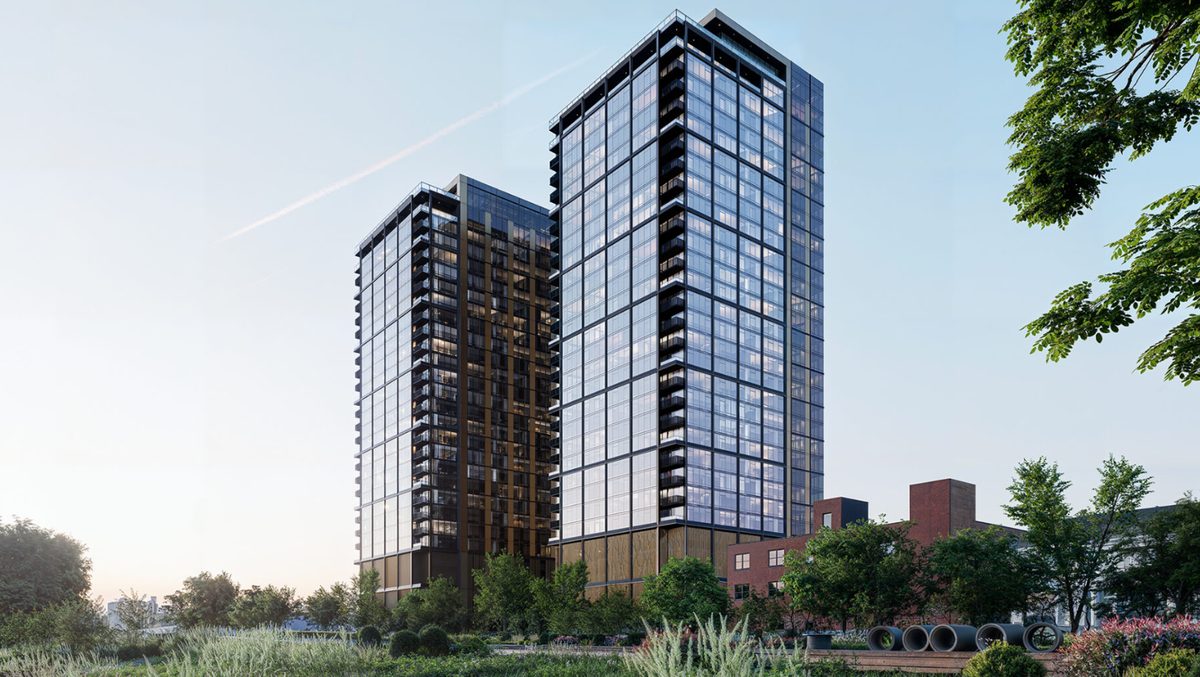
The 383-unit West Loop building is phase one of a two-tower, 724-unit project and the first Chicago high-rise designed to run without gas

Overview

Updated 40 minutes ago

Since 2025, work at 410 N. Elizabeth has been limited to what happens below grade: caissons, foundations, a tower crane. On Nov. 24, the city issued the full building permit that lets the first of two towers rise above its footings.

The 33-story east tower will hold 383 apartments, 77 of them affordable, with a second 31-story tower bringing the project to 724 units and 146 affordable homes. The building is designed to run entirely on electricity, with a geothermal loop owned and operated by Infinite Energy Partners that the developer says cuts energy use by up to 60%.

Why it matters

A 383-unit tower with no gas line is a live test of whether geothermal can carry a Chicago high-rise, and whether other developers copy it.

Last Monday's email for Chicago, IL

Sent Nov 23. It carried:

Get next Monday's: one short email a week. Free. Unsubscribe in one click.

Questions about this story

Free account needed to ask — your question is kept and asked for you right after sign-up. Answers are public.

No questions yet — be the first to ask.

Key Indicators

383
Apartments in the first tower
The 33-story east tower is the phase now permitted for full construction.
77
Affordable units in phase one
Set-asides included in the first tower's 383 apartments.
724
Total apartments across both towers
The figure planned once the east and west towers are both built.
146
Affordable units, both phases
The affordable share across the full two-tower build-out.
60%
Maximum projected energy reduction
The developer's upper estimate for savings from the geothermal system.

Voices

Curated perspectives — historical figures and your fellow readers.

Sign up to generate historical perspectives on this story.

People Involved

Organizations Involved

Timeline

May 2024 November 2026

9 events Latest: Today
Tap a bar to jump to that date
  1. Full building permit issued

    Today Permit

    The city issues the full building permit for the 383-unit east tower.

  2. Replacement crane permit approved

    Permit

    The city approves the second crane permit, clearing holds from planning and housing departments.

  3. Replacement crane permit applied for

    Permit

    A new tower crane permit application is filed after the original disappears from the portal.

  4. Groundbreaking and foundation work

    Construction

    Developers, the local alderman and the planning commissioner mark a start; foundation work begins.

  5. Caisson permit issued

    Permit

    Drilling for the tower's deep foundation supports is authorized.

  6. Owner entity organized in Delaware

    Corporate

    410 N Elizabeth Development LLC is registered, later listed as owner on city building permits.

  7. First tower crane permit issued

    Permit

    A crane is permitted for the 33-story east tower, though no work begins.

  8. Demolition permits issued for the site

    Permit

    Permits are issued to demolish 400 N. Elizabeth and 401 W. Ogden, clearing the block.

  9. Foundation and full building permits first appear

    Permit

    Foundation/superstructure and full building permits are added to the city data portal, then later removed.

Scenarios

1

East tower tops out and opens for residents by 2029

Likely Resolves by End of 2029

Discussed by: Developer and contractor statements, which put the east tower at 20 to 24 months from first shovel to first move-ins

With the full permit in hand, Clark Construction can build the full 33 stories instead of stopping at the foundation. If financing holds and the geothermal loop is commissioned on schedule, the building opens in 2028 or 2029 and becomes the reference case for all-electric Chicago high-rises.

2

West tower waits until the first tower leases up

Possible Resolves by End of 2029

Discussed by: Chicago YIMBY, which reported the 31-story, 341-unit west tower will likely not start until the east tower is occupied

The second phase depends on how fast 383 units absorb at West Loop rents. A full building permit for the west tower, filed after the east tower opens, would confirm the sequencing the developer has described.

3

The full permit is revised or pulled before the tower rises

Unlikely Resolves by End of 2027

Discussed by: Not forecast by the developer; this mirrors the project's own 2024 record, when foundation and full permits appeared and then vanished from the city portal

Between 2024 and 2026 the same site cycled through permits that were issued, removed, and reissued under new dates. A repeat would mean design, cost or financing changes delayed the build despite the November issuance.

Historical Context

2 moments from history that rhyme with this story — and how they unfolded.

2007-2008

Chicago Spire (2007-2008)

Developer Garrett Kelleher won approval for a 150-story, Santiago Calatrava-designed tower at 400 N. Lake Shore Drive and began drilling caissons in 2007. The 2008 credit crisis cut off financing, and work stopped with only a foundation hole on the site.

Then

Construction halted indefinitely and creditors pursued the developer; the site sat as an open hole on the lakefront.

Now

The hole was backfilled in 2015. The site went two decades without a tower, a reminder that a permit and a drilled foundation are not a building.

Why this matters now

410 N. Elizabeth has also been cleared below grade while waiting on paperwork above it. The Spire shows the gap between an approved foundation and a finished tower is where Chicago projects die.

2003

The Solaire, Battery Park City (2003)

The Albanese Organization completed a 27-story, 293-unit residential tower in lower Manhattan designed to use far less energy and water than a conventional high-rise. It was the first residential tower in the United States to earn a Gold rating under the LEED green building system.

Then

The building leased successfully and became a required stop for developers studying whether green high-rise construction could be financed and marketed.

Now

It established the template that later all-electric and geothermal residential towers, including this one, are measured against.

Why this matters now

410 N. Elizabeth is making a similar first-of-its-kind claim for Chicago. Whether it leases and performs will decide how quickly other local developers follow.

Sources

(4)