
Pull to refresh
Logo
Chicago's Missing Middle program breaks ground on Morgan Park three-flats

Chicago's Missing Middle program breaks ground on Morgan Park three-flats

Built World Chicago, IL local

The $1-lot, $150,000-per-unit grant program has advanced more than 370 homes since 2024. The open question is whether buyers show up.

Overview

Updated 15 minutes ago

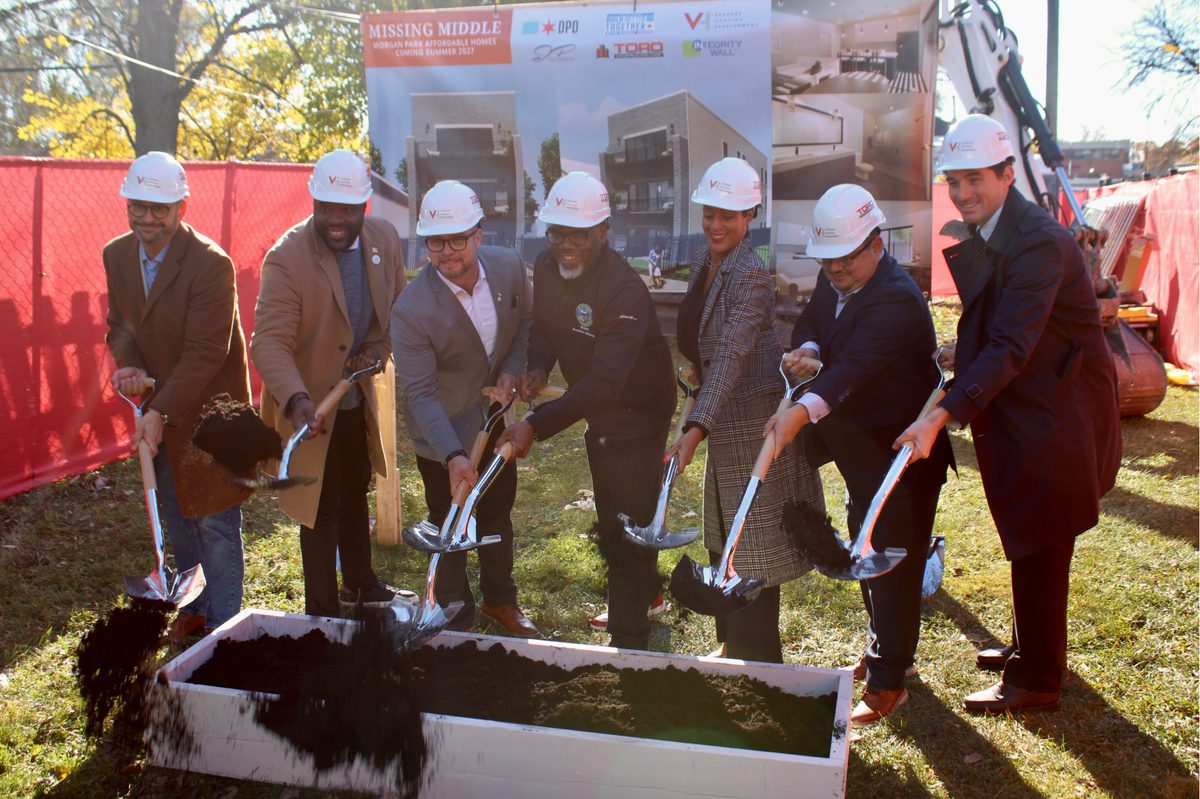
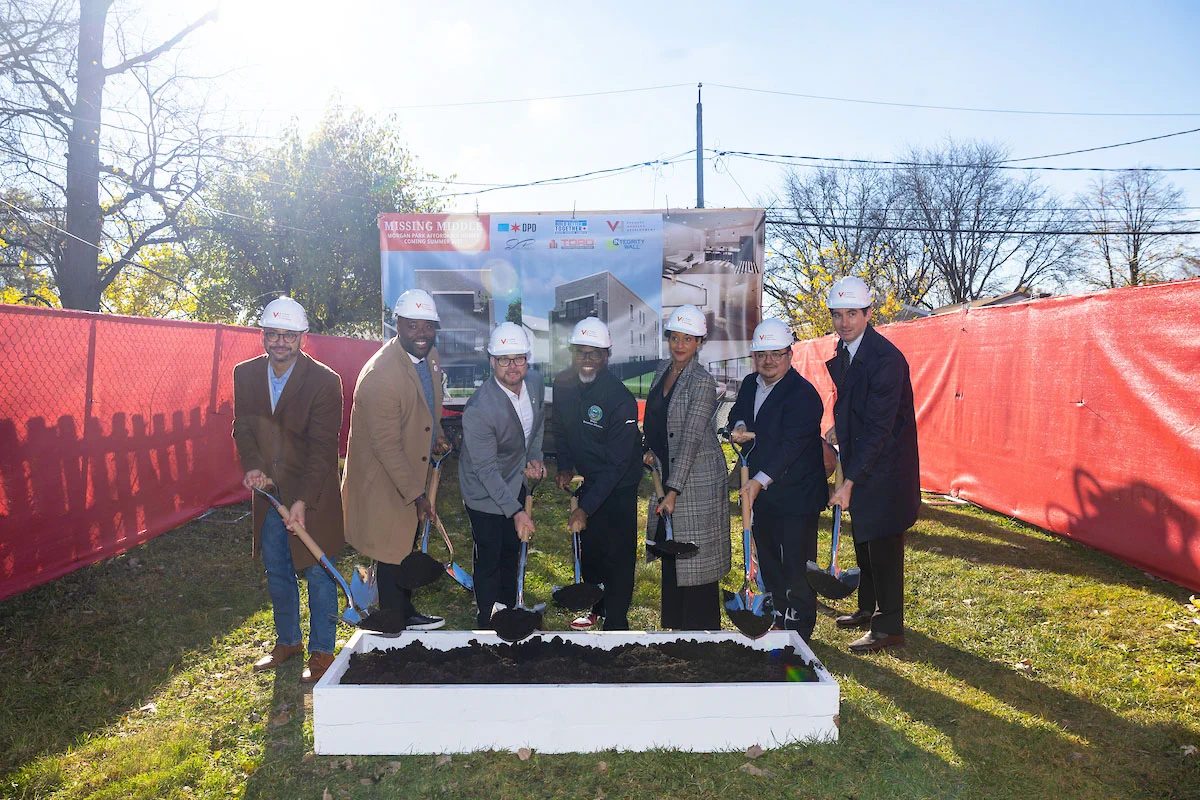
Chicago's Missing Middle program sells city-owned lots to developers for $1 and adds up to $150,000 per unit toward construction. The trade-off: the finished building must be a two- to six-flat, and it must be sold to someone who lives in it. On Nov. 23, the Far South Community Development Corporation broke ground on five three-flats in Morgan Park under that deal.

The program has now advanced more than 370 units across 139 buildings, concentrated in seven South and West Side neighborhoods. The test is not whether subsidized housing can be built there. It is whether for-sale flats, with three-bedroom units capped at $473,267, can find buyers on blocks where new construction has been rare for decades.

Why it matters

If $1 land and $150,000 grants can't make a three-flat pencil out in Morgan Park, few other tools will refill these blocks.

Last Monday's email for Chicago, IL

Sent Nov 23. It carried:

Get next Monday's: one short email a week. Free. Unsubscribe in one click.

Questions about this story

Free account needed to ask — your question is kept and asked for you right after sign-up. Answers are public.

No questions yet — be the first to ask.

Key Indicators

370+
Residential units advanced citywide
Across 139 Missing Middle buildings, as of August 2026.
$1
Price per city-owned lot
Lots are sold in clusters of at least five parcels; builders cannot cherry-pick.
$150K
Maximum construction grant per unit
Paid in stages as builders hit construction milestones, funded by the city's housing bond.
$473K
Price cap on a three-bedroom unit
Set at 140% of area median income. Two-bedroom units are capped at $425,982.
5
Three-flats breaking ground in Morgan Park
Far South CDC's buildings, the subject of the Nov. 23 groundbreaking.

Voices

Curated perspectives — historical figures and your fellow readers.

Sign up to generate historical perspectives on this story.

People Involved

Organizations Involved

Timeline

2024 November 2026

10 events Latest: Yesterday
Tap a bar to jump to that date
  1. Morgan Park three-flats break ground

    Latest Construction

    Far South CDC starts work on five three-flat buildings on vacant South Side lots.

  2. Program passes 370 units

    Program

    The city reports more than 370 residential units across 139 buildings in seven neighborhoods.

  3. Council approves the Morgan Park lot sale

    Policy

    The City Council signs off on selling city-owned parcels to Far South CDC for $1 each.

  4. Third round selected

    Program

    Projects are chosen in McKinley Park, East Garfield Park and West Garfield Park.

  5. First Missing Middle homes break ground

    Construction

    A groundbreaking ceremony marks the start of construction on the North Lawndale cluster.

  6. First construction permits issued

    Construction

    Citizens Building a Better Community pulls the program's first permits, for two-flats in North Lawndale.

  7. Six developers picked for the South Side round

    Program

    The second round covers Chatham, South Chicago and Morgan Park, including the Far South CDC team.

  8. First Missing Middle projects selected

    Program

    The inaugural round of developers is chosen for North Lawndale.

  9. City Council approves the housing bond

    Policy

    The Housing and Economic Development Bond becomes the funding source for Missing Middle construction grants.

  10. North Lawndale chosen as the first cluster

    Program

    The pilot neighborhood on the West Side becomes the template for how lots are released and grants awarded.

Scenarios

1

Morgan Park three-flats sell to owner-occupants

Possible Resolves by Q2 2028

Discussed by: Far South CDC and city planning officials, who describe the program as a repopulation strategy built around homeownership

The buildings are finished and marketed at market rate, with three-bedroom units capped at $473,267 under the program's 140%-of-area-median-income limit. A recorded sale would give the city a working template for the Far South Side. Units that sit unsold would expose the model's weak point: the gap between what a three-flat costs to build and what a buyer on the block will pay.

2

Program passes 600 units citywide

Uncertain Resolves by End of 2027

Discussed by: The Department of Planning and Development, which publishes the running total of units advanced

The city's count includes buildings permitted or under construction, not only finished and sold homes. Reaching 600 depends on rounds three through five converting to permits at the pace North Lawndale set, where new two- to four-flat permits jumped to 27 in the first seven months of 2026 after years of almost none.

3

City opens a sixth round of Missing Middle sites

Possible Resolves by Q2 2027

Discussed by: Housing analysts tracking the program round by round

Round 5 covers Humboldt Park, with a pre-submission webinar in October 2026 and a target construction start in the first quarter of 2027. A sixth round would signal the city intends to keep the pipeline running after the housing bond's grants are committed.

Historical Context

2 moments from history that rhyme with this story — and how they unfolded.

1944-1960

The federal mortgage boom and the single-family suburb (1940s-1950s)

Federal loan guarantees through the Federal Housing Administration and the GI Bill let builders mass-produce houses and let buyers put down very little. Millions of homes went up, overwhelmingly single-family and overwhelmingly in new subdivisions rather than on city blocks.

Then

Homeownership spread fast among white veterans and their families, while older city neighborhoods lost population and investment.

Now

The two- to four-flat, once the standard way American cities added density for sale, became a niche product that few lenders or builders specialized in.

Why this matters now

Missing Middle is an attempt to rebuild a housing type the mortgage system never favored, using city land and grants to close the financing gap.

1992-2010

HOPE VI public housing redevelopment (1992-2010)

The Department of Housing and Urban Development funded cities to demolish distressed public housing towers and replace them with lower-density, mixed-income developments. Chicago was among the largest participants, tearing down high-rises and rebuilding at far lower densities.

Then

Many residents were relocated, and replacement units often arrived years later and in smaller numbers than what was demolished.

Now

Mixed-income redevelopment became the standard approach to troubled public housing, with persistent criticism about net loss of subsidized units and displaced tenants.

Why this matters now

HOPE VI shows the risk in any program that improves a site by shrinking what sits on it. Missing Middle measures success in units advanced, so the count matters as much as the design.

Sources

(4)