Anchor

China approves first AI-assisted Class 1 innovative drug Mprosevir
New CapabilitiesCOVID-19 treatment went from candidate discovery to conditional approval in 3.5 years, about a third of the traditional timeline
2 days ago: NMPA grants conditional approval to MprosevirNew here? Follow stories to track developments over time. Create a free account to get updates when stories you care about change.
Overview
Updated 1 hour agoChina's drug regulator granted conditional approval to Mprosevir, a COVID-19 treatment, on September 2. It is the country's first 'Class 1' innovative drug developed with AI assistance—the highest classification in China's drug registration system, reserved for drugs never marketed domestically or abroad.
Mprosevir took 3.5 years from candidate discovery to clinical trial completion, about a third of the traditional decade-long pipeline. Researchers screened 49 billion compounds in a DNA-encoded library (DEL), with AI narrowing more than 100 candidates to nine molecules within days. It is the first small-molecule drug approved worldwide using DEL technology, a concept proposed 34 years ago.
Why it matters
AI-assisted drug development can compress a decade-long pipeline into years, changing how quickly new medicines reach patients.
Questions about this story
Free account needed to ask — your question is kept and asked for you right after sign-up. Answers are public.
No questions yet — be the first to ask.
Key Indicators
3.5 years
Development time from discovery to trial completion
Traditional small-molecule drug development takes 10+ years on average.
49 billion
Compounds screened in the DEL library
DNA-encoded library screening combined with AI virtual filtering identified candidates in days.
9
Lead candidates after AI screening
AI narrowed over 100 initial candidates; 6 of the 9 showed strong activity in testing.
34 years
Time from DEL concept to first approved drug
The DEL technology concept was first proposed in 1992.
Related Media

Shi Yigong 2023
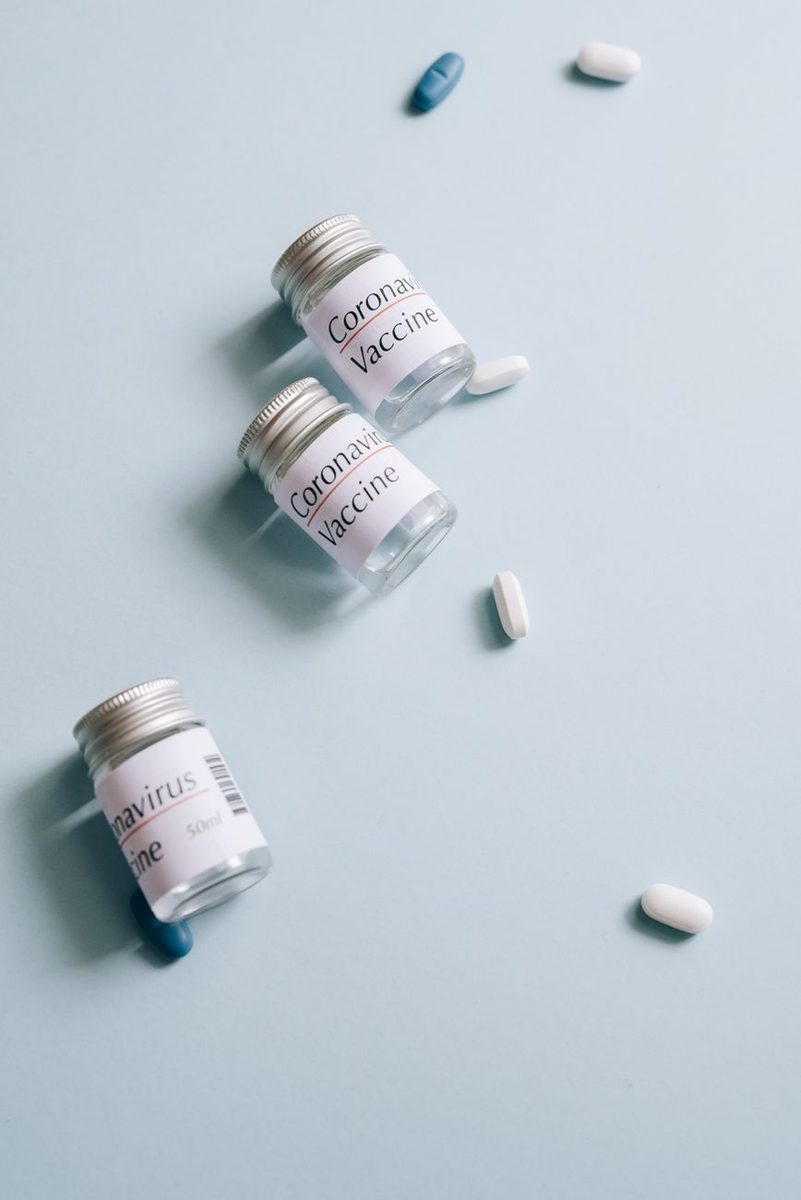
Top view of coronavirus vaccine vials and assorted pills on a blue surface.
738 views
2:28
China Turns To AI For Next Drug Breakthroughs | WION News
WION
1.7K views
5:02
Can AI deliver China's next breakthrough drug?
CNA
2.7K views
1:31
China sets record with 76 innovative drugs approved in 2025
ShanghaiEye魔都眼
Images from Openverse under Creative Commons licenses. Videos from YouTube.
Voices
Curated perspectives — historical figures and your fellow readers.
Play
Exploring all sides of a story is often best achieved with Play.
Most of these play right now — no account needed. Sign up to save scores, keep a streak, and unlock Debate and Predict.
Log in
Sign Up
Higher or Lower
A number from this story, against one from elsewhere in the news — guess which is bigger, then keep the chain going. 5 rounds, 3 strikes; a miss costs a strike and resets your streak.
Example
Anchor
EU tariff revenue
$52B
Big for this kind of number
Mystery
Pentagon AI contract
?
Round 1
Streak: 0
Mystery
?
Keyboard: ↓/L lower · ↑/H higher
0 pts
Best streak: 0 · Rounds: 0
0 points — sign up to put that on the leaderboard.
Now try on this story
Connections
Sixteen names from the news. Find the four hidden groups of four. Four mistakes max.
Loading today's puzzle…
0/4 groups
Mistakes
Sign up to keep a daily streak — a new puzzle lands every day.
Now try on this story
Exit debate?
Your progress in this debate will be lost.
How it works
- 1 Two AI personas square off on this story.
- 2 You predict who'll win each round — correct picks earn XP.
- 3 One crossfire question is yours to fire. Pick it carefully.
Couldn't generate a topic
Select Your Champions
Choose one persona for each side of the debate
DEBATE TOPIC
Choose personas with different perspectives for a more dynamic debate.
SIDE A (PRO)
Select debater for this side:
No debate personas available right now.
SIDE B (CON)
Select debater for this side:
No debate personas available right now.
VS
Get ready to make your prediction...
Round of
Claim
Evidence
Stakes
Crossfire Answer
Closing Statement
Claim
Evidence
Stakes
Crossfire Answer
Closing Statement
Your Crossfire Question
Generating arguments...
Who's Got This Round?
Make your prediction before the referee scores
The referee scores both sides on
Correct predictions earn +20 XP
· Press 1 or 2 to pick
Evidence
40%
Logic
30%
Detail
20%
Style
10%
Round Results
Your Pick
Not this time
(%)
Overall Score
/10
Your Pick
Not this time
(%)
Overall Score
/10
Set the Crossfire
Pick the question both personas must answer in the final round
Crafting crossfire questions...
Choosing a question earns +10 XP crossfire bonus
🏆
Total XP Earned
Cred Change
Predictions
Debate Oracle! You called every round!
Sharp Instincts! You know your debaters!
The Coin Flip Strategist! Perfectly balanced!
The Contrarian! Bold predictions!
Inverse Genius! Try betting the opposite next time!
XP Breakdown
Base completion
+20 XP
Rounds played ( rounds x 5 XP)
+ XP
Correct predictions ( correct x 20 XP)
+ XP
Crossfire bonus
+10 XP
Accuracy
%
Prediction History
Round
You picked:
✓
✗
Now try on this story
Keep debating to level up your credibility and unlock achievements
People Involved
Organizations Involved
National Medical Products Administration (NMPA)
Government regulatory agency
Approving authority for Mprosevir
China's national drug regulator, equivalent to the US Food and Drug Administration.
Westlake University
Private research university
Co-developer of Mprosevir
Private research university in Hangzhou founded by structural biologist Shi Yigong.
Westlake Pharmaceuticals
Pharmaceutical company
Co-developer and commercialization partner
Pharmaceutical company affiliated with the Westlake ecosystem in Hangzhou.
Westlake Laboratory
Research institute
Co-developer of Mprosevir
Research institute in Hangzhou affiliated with Westlake University.
Timeline
January 1992 September 2026
5 events
Latest: 2 days ago
Tap a bar to jump to that date
-
NMPA grants conditional approval to Mprosevir
Latest Regulatory ApprovalChina approves first AI-assisted Class 1 innovative drug for mild-to-moderate COVID-19 in adults.
-
Two-year AI-guided optimization completed
DevelopmentTeam improves potency, pharmacology, and toxicity. Progresses from cell assays through mouse studies toward clinical trials.
-
AI narrows candidates; WLU6937 selected
DiscoveryAI filters 100+ candidates to nine in days; six show strong activity. WLU6937 chosen as lead.
-
Westlake team begins DEL screening campaign
DiscoveryResearchers screen 49 billion compounds in a DEL library targeting the 3CLpro coronavirus protease.
-
DNA-encoded library concept proposed
Scientific ContextSydney Brenner and Richard Lerner introduce the DEL concept, enabling compound screening at massive scale.
Historical Context
3 moments from history that rhyme with this story — and how they unfolded.
January 2020 - December 2021
COVID-19 mRNA vaccines (2020-2021)
Operation Warp Speed and the new mRNA platform compressed vaccine development from the typical 10-15 years to under a year. Pfizer-BioNTech and Moderna moved from sequence to emergency authorization in about 11 months, a process that normally takes a decade.
Then
Billions of doses delivered worldwide within 18 months of the pandemic's start.
Now
Demonstrated that regulatory flexibility plus platform innovation can compress biological product timelines dramatically, reshaping vaccine development norms.
Why this matters now
The same dynamic is at work with Mprosevir: a new discovery platform (DEL plus AI) combined with regulatory adaptation compresses a decade-long process into years.
November 2020 - July 2021
AlphaFold protein structure breakthrough (2020-2021)
DeepMind's AlphaFold solved the 50-year protein folding problem, predicting protein structures with atomic accuracy. In 2021, AlphaFold released structures for nearly all of the 200 million proteins cataloged in science—work that would have taken researchers centuries.
Then
Structural biologists gained instant access to predictions for proteins they had spent years trying to crystallize.
Now
Established that AI can outperform traditional experimental methods in biological discovery, fueling investment in AI-driven drug development.
Why this matters now
Mprosevir builds directly on this precedent: AI applied to biological problems changes what's possible, and what was a research tool in 2021 is now producing approved drugs.
1970s-present
Drug development's 'three tens' rule
The pharmaceutical industry's long-standing benchmark: 10 years of development, $1 billion in investment, and less than 10% probability of success for a new drug. This baseline has held for decades despite advances in chemistry, genomics, and screening technology.
Then
High development costs and failure rates have kept drug prices high and limited innovation to well-capitalized firms.
Now
The rule set expectations for how long patients wait for new treatments and how much risk investors accept.
Why this matters now
Mprosevir challenges the baseline directly—3.5 years versus 10, with AI handling screening and optimization that historically consumed years of medicinal chemistry effort.
Sources
(7)Related Stories
First CLDN18.2 antibody-drug conjugate reaches regulatory review for gastric cancer
New Capabilities
Updated Jun 4
uniQure files Huntington's gene therapy for FDA and UK approval
New Capabilities
Updated 7 hours ago
Tarlatamab rewrites treatment for small-cell lung cancer as approvals spread worldwide
New Capabilities
Updated May 31
AI-designed universal coronavirus vaccine clears first human safety trial
New Capabilities
Updated Jun 6
Hansoh's B7-H3 ADC wins China breakthrough status for esophageal cancer
New Capabilities
Updated May 11
AI transforms drug discovery from years to hours
New Capabilities
Updated Jun 27