
Pull to refresh
Logo
Daily Brief
Following
Why Sign Up
China's electric vehicle industry crosses the profitability threshold after years of cash burn

China's electric vehicle industry crosses the profitability threshold after years of cash burn

Money Moves
By Newzino Staff |

Nio's first-ever quarterly profit signals the maturing economics of an industry that burned through hundreds of billions of yuan

7 days ago: Nio posts first-ever quarterly net profit

Overview

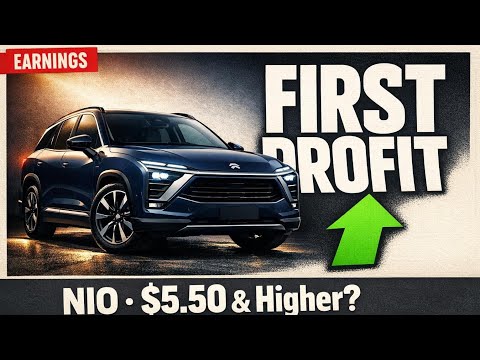
Nio burned through more than 100 billion yuan over a decade, came within weeks of insolvency in 2019, and needed a government rescue to survive. In the fourth quarter of 2025, the Chinese electric vehicle maker posted its first-ever quarterly net profit: 282.7 million yuan, or roughly $40 million, on record deliveries of nearly 125,000 vehicles.

Key Indicators

282.7M
Q4 2025 net profit (yuan)
Nio's first-ever quarterly profit, reversing a 7.11 billion yuan loss from Q4 2024
18.1%
Vehicle gross margin
Up from 13.1% a year earlier, a 500-basis-point improvement driven by scale and higher-margin models
124,807
Q4 vehicle deliveries
Record quarterly deliveries across all three brands, up 71.7% year-over-year
~130
Surviving Chinese EV makers
Down from 487 in 2018, with analysts projecting only about 15 viable by 2030
100B+
Cumulative losses (yuan)
Nio's total net losses from 2016 through early 2025, including 60 billion yuan in research and development

Interactive

Exploring all sides of a story is often best achieved with Play.

Ever wondered what historical figures would say about today's headlines?

Sign up to generate historical perspectives on this story.

Sign Up

Debate Arena

Two rounds, two personas, one winner. You set the crossfire.

People Involved

Organizations Involved

Timeline

  1. Nio posts first-ever quarterly net profit

    Earnings

    Nio reported a net profit of 282.7 million yuan ($40.4 million) for Q4 2025, its first profitable quarter in a decade of operations. Revenue rose 75.9% to 34.65 billion yuan on record deliveries of 124,807 vehicles. Vehicle gross margin reached 18.1%, up from 13.1% a year earlier. Shares surged roughly 15% on the news.

  2. Nio reaches 100 million cumulative battery swaps

    Milestone

    Nio's battery-swap network crossed 100 million total swaps across its 3,815 stations worldwide, validating its bet on swappable batteries as an alternative to conventional fast charging.

  3. Nio issues rare profit alert for Q4

    Financial

    Nio issued a voluntary profit alert, projecting its first-ever quarterly operating profit of 700 million to 1.2 billion yuan for Q4 2025. The announcement was unusual for a company that had never been profitable.

  4. Firefly compact brand enters market

    Product

    Nio launched its third brand, Firefly, targeting the premium compact segment. By December 2025, Firefly had captured 61% of its target market segment and began plans to enter 16 international markets.

  5. Nio launches Onvo mass-market brand

    Product

    Nio introduced Onvo, a family-oriented brand with vehicles priced below its premium Nio lineup. The Onvo L90 became the top-selling large battery-electric SUV in China within months, delivering over 10,000 units monthly.

  6. China's EV price war intensifies

    Market

    BYD and other major manufacturers launched aggressive price cuts, squeezing margins across the industry. Production utilization fell to 49.5% and sixteen EV brands exited the Chinese market during 2024 alone.

  7. Nio stock peaks at $62.84 amid EV euphoria

    Financial

    Nio's share price reached an all-time high of $62.84, giving the company a market capitalization that surpassed BMW and Daimler. The surge was driven by broader investor enthusiasm for electric vehicle companies during a pandemic-era growth stock rally.

  8. Hefei government rescues Nio with 7 billion yuan

    Financial

    The Hefei municipal government invested approximately 7 billion yuan ($787 million) in exchange for a 17% equity stake in Nio's China operations. Analysts at Bernstein characterized the deal as a government bailout that saved the company from insolvency.

  9. Nio stock hits all-time low of $1.32

    Financial

    With stagnant sales, battery fire recalls, executive departures, and the withdrawal of government subsidies for new-energy vehicles, Nio's stock collapsed to $1.32 — an 80% decline from its IPO price. Bankruptcy appeared imminent.

  10. Nio lists on New York Stock Exchange

    Financial

    Nio raised over $1 billion in its initial public offering, listing on the NYSE under the ticker NIO. The IPO valued the company at roughly $6.4 billion despite never having turned a profit.

  11. Nio founded with a fortune and a bet

    Corporate

    Li Bin invested his entire $150 million personal fortune to launch Nio, backed by prominent Chinese tech investors including Tencent's Ma Huateng, JD.com's Liu Qiangdong, and Xiaomi's Lei Jun.

Scenarios

1

Nio achieves full-year profitability in 2026 and cements survivor status

Discussed by: Morgan Stanley (Overweight rating, $7 target), Macquarie (upgraded to Outperform), and Nio management (publicly committed to annual non-GAAP profitability in 2026)

With vehicle margins at 18.1% and rising, management guiding for 40-50% volume growth, and the three-brand strategy producing scale, Nio sustains profitability across 2026. The Firefly brand's European expansion adds higher-margin international revenue. Battery-swap services generate recurring income as the network reaches critical mass. This scenario depends on China's EV price war not intensifying further and on Nio maintaining its delivery trajectory through seasonal demand fluctuations.

2

Renewed price war erases margins and delays annual profitability

Discussed by: Bank of America (Neutral rating), UBS (forecasting domestic EV sales growth halving in 2026), and South China Morning Post analysis of industry margin pressures

BYD or other scale players launch another round of aggressive discounting, compressing vehicle margins back below 15%. Government subsidies for new-energy vehicles expire or shrink further, reducing consumer demand. Nio's Q4 profit turns out to be a seasonal peak rather than a new baseline, and the company reports losses again in the softer Q1-Q2 periods. Nio survives but doesn't reach full-year profitability until 2027.

3

China's EV shakeout claims more victims, consolidating the market around five to six players

Discussed by: Industry consultants cited by CNBC, BYD chief executive Wang Chuanfu (warning up to 100 automakers could fold), and multiple investment banks covering the sector

The number of viable Chinese EV manufacturers continues to decline sharply from roughly 130 today toward the projected 15 survivors. Mid-tier brands like Neta (already in bankruptcy), HiPhi, and others are absorbed or liquidated. Nio, having crossed the profitability threshold, is among the survivors — but faces a market dominated by BYD's cost advantages and must compete for the remaining independent market share alongside Li Auto, XPeng, and Geely's brands.

4

Battery-swap network becomes a standalone revenue engine through licensing and grid services

Discussed by: Nasdaq analysis of Nio's battery-swap monetization potential, and Nio management statements about vehicle-to-grid ambitions

Nio's 3,800-plus battery-swap stations and 100-million-swap milestone attract partnerships with other automakers or energy companies. The battery-as-a-service model, which separates battery cost from vehicle price, gains traction as a financing tool for mass-market Onvo buyers. Vehicle-to-grid services — selling stored battery energy back to the electrical grid — open an entirely new revenue stream. This would transform Nio from a car company into an integrated energy-and-mobility platform.

Historical Context

Tesla's first sustained quarterly profit (2019)

Q3 2018 – Q4 2019

What Happened

Tesla reported its first quarterly profit in Q3 2018 after 15 years of losses, driven by Model 3 production finally reaching 5,000 units per week. The company oscillated between profit and loss for a year before achieving consistent quarterly profitability in the second half of 2019. Tesla posted its first full-year profit in 2020.

Outcome

Short Term

Tesla's stock more than tripled in the months following sustained profitability, and the company was added to the S&P 500 index in December 2020.

Long Term

The profitability milestone proved that electric vehicles could be manufactured at scale without perpetual losses, reshaping investor expectations for the entire EV industry and unlocking hundreds of billions in capital for competitors.

Why It's Relevant Today

Nio's Q4 2025 profit echoes Tesla's 2018-2019 inflection point — a first quarterly profit after years of cash burn, driven by scale reaching a threshold where unit economics turn positive. The key question is the same one Tesla faced: whether it's a one-off or the beginning of sustained earnings.

U.S. automobile industry consolidation (1900s–1930s)

1900 – 1930

What Happened

The early American automobile industry featured more than 250 active manufacturers by 1908. Over three decades of competition, price wars, and technological change, that number collapsed. By the 1930s, three companies — General Motors, Ford, and Chrysler — controlled more than 90% of the market.

Outcome

Short Term

Hundreds of manufacturers went bankrupt or were absorbed. Entire regional economies built around small automakers collapsed.

Long Term

The survivors became among the largest corporations in the world. The consolidation pattern — explosive entry, brutal shakeout, oligopoly — became a template for understanding how capital-intensive industries mature.

Why It's Relevant Today

China's EV sector is following a strikingly similar trajectory: from 487 companies in 2018 to roughly 130 today, with projections of only 15 survivors. Nio's profitability milestone positions it as one of the potential survivors of this consolidation, but the parallel also suggests the shakeout is far from over.

Hefei's venture-capital governance model (2020–present)

2020 – present

What Happened

The Hefei municipal government invested 7 billion yuan to rescue Nio in 2020, one of several high-profile bets that earned the city the nickname 'China's best venture capitalist.' Previous investments in display-panel maker BOE Technology and memory-chip company Changxin Memory Technologies had similarly transformed Hefei into a technology manufacturing hub.

Outcome

Short Term

The Nio investment drew the company's manufacturing operations to Hefei, creating thousands of jobs and anchoring an EV supply chain cluster in the city.

Long Term

The strategy became a template studied by other Chinese cities, though critics note that survivorship bias obscures the local governments whose similar bets failed.

Why It's Relevant Today

Nio's first profit vindicates Hefei's 2020 rescue in ways that were far from guaranteed at the time. Without that municipal investment, Nio would almost certainly have gone bankrupt, and the company's Q4 2025 profit would never have happened.

Sources

(13)