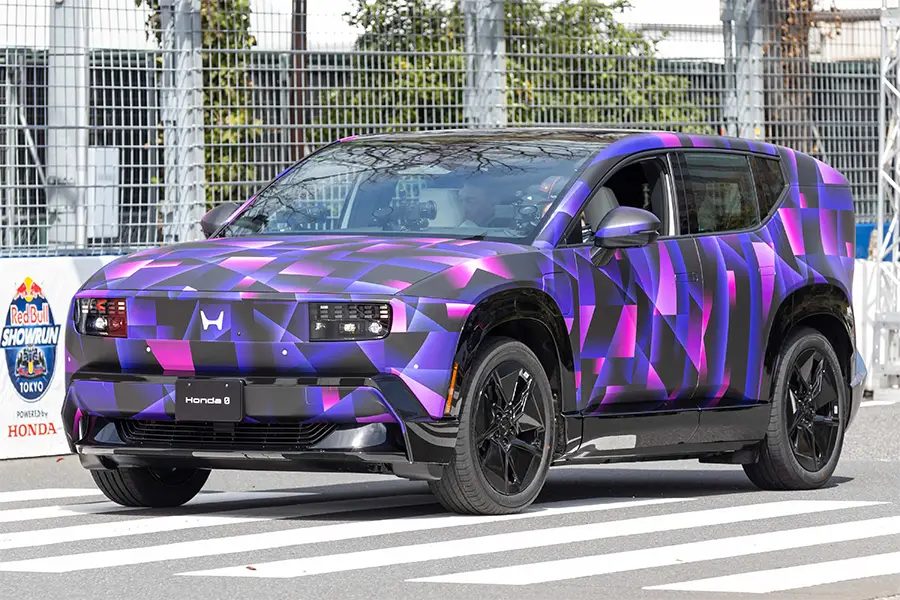
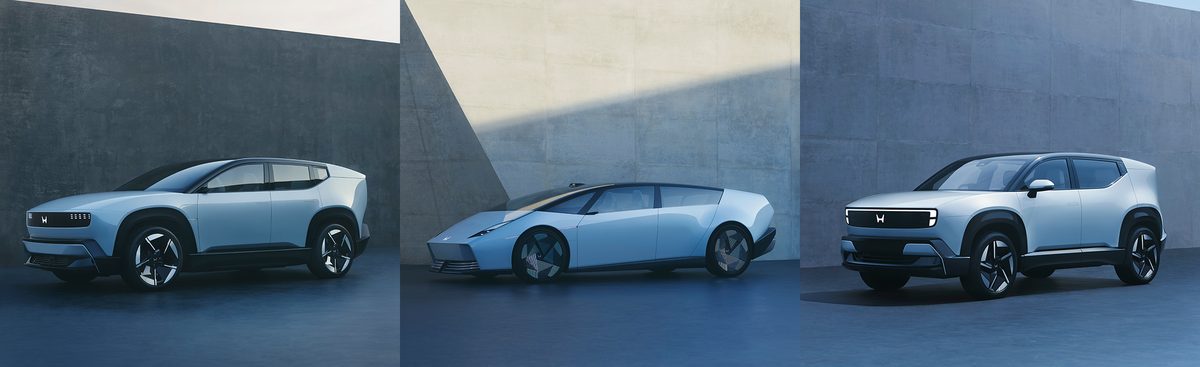
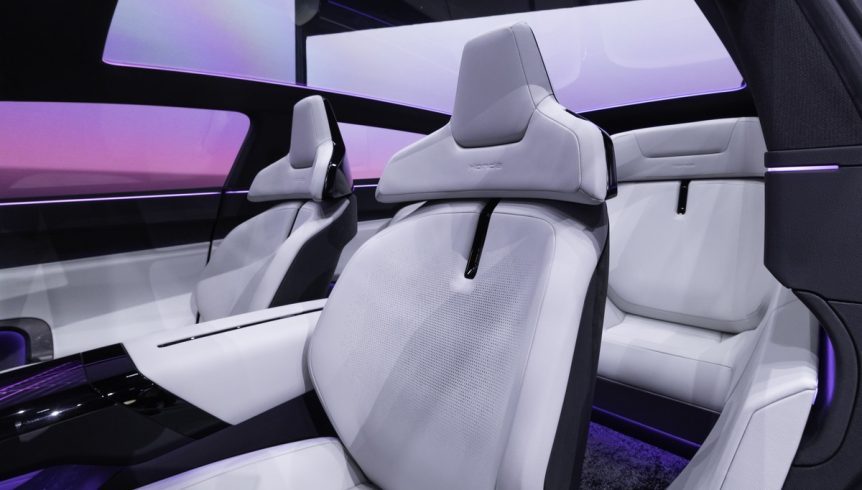
Honda spent four years and more than four billion dollars converting its Ohio manufacturing complex into an electric vehicle hub. On March 12, the company scrapped the three electric vehicles it had planned for those lines: the Honda 0 SUV, the Honda 0 Saloon sedan, and the Acura RSX. It warned that combined current and future losses could reach $15.8 billion. Honda now expects its first annual loss since it went public in 1957, ending nearly seven decades of unbroken profitability. CEO Toshihiro Mibe and Executive Vice President Noriya Kaihara voluntarily forfeited 30% of their compensation for three months, while other executives took 20% cuts.
Honda blamed a collapsing business case: the $7,500 EV tax credit expired in September 2025, the Trump administration rolled back emission standards, and Chinese competitors like BYD sell comparable vehicles at a fraction of Honda's projected cost. The company will redirect investment toward next-generation hybrids — the technology Honda pioneered in 1999 with the original Insight. Honda joins Ford, General Motors, Stellantis, and Volkswagen in a collective automaker retreat that has produced more than $55 billion in EV-related write-downs since late 2025. Sony Honda Mobility canceled its entire AFEELA electric vehicle program on March 25, issuing refunds to reservation holders and citing loss of access to Honda technologies.
Questions about this story
Free account needed to ask — your question is kept and asked for you right after sign-up. Answers are public.
Up to 2.5 trillion yen in restructuring charges, asset write-downs, and equity method losses from canceling three EVs, reassessing China operations, and now Sony Honda Mobility AFEELA cancellation.
69 years
Unbroken profitability streak ending
Honda's first annual loss since going public on the Tokyo Stock Exchange in 1957.
30%
CEO compensation cut
Toshihiro Mibe and EVP Noriya Kaihara voluntarily forfeited 30% of compensation for three months; other executives took 20% cuts.
30%
EV R&D spending cut
Honda slashed its electrification R&D budget from 10 trillion yen ($64 billion) to 7 trillion yen ($48 billion) through 2030.
$55B+
Industry-wide EV write-downs
Combined EV-related losses reported by Ford, Stellantis, GM, Volkswagen, and Honda since late 2025.
4 → 0
North American EV programs canceled
Honda's three 0 Series EVs plus Sony Honda Mobility's AFEELA 1 and second planned model all scrapped before customer deliveries.
Images from Openverse under Creative Commons licenses.
Voices
Curated perspectives — historical figures and your fellow readers.
Sojourner Truth
(1797-1883) ·Abolitionist · politics
Fictional AI pastiche — not real quote.
"They spent four billion dollars building the future, then let politicians and cheap competitors talk them back into yesterday — child, that ain't a pivot, that's a retreat dressed up in Sunday clothes."
0% found this insightful
Andrew Carnegie
(1835-1919) ·Gilded Age · industry
Fictional AI pastiche — not real quote.
"Fifty-five billion dollars in write-downs, and the lesson is the oldest one in industry: a man who abandons a proven technology before a better one is truly ready deserves neither the old nor the new."
0% found this insightful
Ever wondered what historical figures would say about today's headlines?
Sign up to generate historical perspectives on this story.
Click a figure to generate their perspective on this story
Play
Exploring all sides of a story is often best achieved with
Play.
Most of these play right now — no account needed. Sign up to save scores, keep a streak, and unlock Debate and Predict.Log inSign Up
Timeline
Honda cancels North American EV lineup and pivots to hybrids
Order five events from this story, oldest at top. Each in the right slot scores 1 — neighbours within one slot count too.Your previous result — green ✓ for exact slots, yellow ~ for off by one. Cards now in true chronological order.
Loading puzzle…
Actual chronological order
Tap 💡 Free hint to lock the oldest into slot 1 — that leaves just four to order. Type pills are clues.
19 events
Latest: March 25th, 2026 · 5 months ago
Showing 8 of 19
JK to step
Tap a bar to jump to that date
Jump to
March 2026
Sony Honda Mobility kills AFEELA electric vehicle program
LatestCorporate
Sony Honda Mobility Inc. announced the discontinuation of its AFEELA 1 sedan and a second planned electric vehicle, ending the joint venture's product development. The company will issue full refunds to California customers who had reserved the AFEELA 1, citing loss of access to Honda technologies and assets.
Sony Honda Mobility opens Fremont delivery hub despite Honda EV pullback
Corporate
Sony Honda Mobility of America celebrated the grand opening of its AFEELA Studio & Delivery Hub in Fremont, California, signaling continued commitment to Afeela 1 deliveries later in 2026 despite Honda's cancellation of the 0 Series platform.
Honda to discontinue Prologue EV; GM partnership ends
Product
Honda announced it will halt production of the Prologue, the GM-designed EV it had been selling since 2023, as part of its broader EV pullback. The move marks the end of Honda's partnership with General Motors on the vehicle.
Ohio battery plant future clarified; will continue production for non-EV use
Investment
Honda and LG Energy Solution's $3.5 billion Ohio battery plant will continue manufacturing batteries, but for applications other than the canceled 0 Series EVs, addressing questions about stranded capacity.
Honda cancels three North American EVs, warns of up to $15.8 billion in losses
Strategy
Honda scrapped the Honda 0 SUV, Honda 0 Saloon, and Acura RSX — all three EVs planned for its Ohio EV Hub — and slashed EV R&D spending by 30%. The company expects its first annual loss since 1957, with combined current and future restructuring charges potentially reaching 2.5 trillion yen ($15.8 billion). Honda said it will redirect resources to next-generation hybrid vehicles.
CEO Toshihiro Mibe and Executive Vice President Noriya Kaihara voluntarily forfeited 30% of their compensation for three months; other executives took 20% cuts in response to the EV strategy reversal and projected losses.
January 2026
Afeela 1 trial production begins at Honda's Ohio plant
Product
Sony Honda Mobility started trial production of the $89,900 Afeela 1 luxury sedan at Honda's East Liberty plant, with customer deliveries planned for California later in 2026.
December 2025
Honda buys out LG's Ohio battery plant stake for $2.9 billion
Investment
Honda acquired LG Energy Solution's facility assets in the Ohio battery plant through a sale-and-leaseback structure, taking full ownership of the building months before canceling the EVs it was designed to supply.
Trump administration rolls back fuel economy standards
Policy
The National Highway Traffic Safety Administration reset fuel economy requirements to model year 2022 levels, with minimal annual increases — removing a key regulatory driver of automaker EV investment.
September 2025
Federal EV tax credit expires; US EV sales collapse
Market
After a record 12% market share in September as buyers rushed to claim credits, battery-electric vehicle sales fell below 6% in every remaining month of 2025. The full-year US EV market declined for the first time since 2019.
July 2025
Trump signs law ending $7,500 EV tax credit
Policy
The 'One Big Beautiful Bill Act' eliminated the $7,500 new EV tax credit effective September 30, 2025, and the $4,000 used EV credit at the end of 2025 — years ahead of the original 2032 expiration under the Inflation Reduction Act.
May 2025
Acura RSX announced as Honda's first proprietary-platform EV
Product
Acura revealed the RSX nameplate would return as an electric SUV coupe — the first vehicle built on Honda's in-house Zero platform with ASIMO OS — with production planned for late 2026.
February 2025
Honda-Nissan merger talks collapse
Corporate
A proposed merger that would have created the world's third-largest automaker fell apart over governance disputes. Honda wanted Nissan as a subsidiary; Nissan rejected the structure.
January 2025
Honda 0 Saloon and SUV prototypes debut at CES 2025
Product
Honda showcased near-production prototypes of both 0 Series vehicles and announced ASIMO OS, its proprietary vehicle operating system. North American production was confirmed for 2026.
May 2024
Honda pledges $64 billion and 2 million EVs per year by 2030
Strategy
At a business briefing, Honda committed 10 trillion yen in electrification R&D through the decade and set a target of producing more than 2 million EVs annually by 2030.
January 2024
Honda unveils 0 Series EV sub-brand at CES
Product
Honda world-premiered the '0 Series' with Saloon and Space-Hub concepts, built on a proprietary platform with a 'Thin, Light, and Wise' design philosophy. Seven models were planned globally by 2030.
October 2023
Honda and GM abandon $5 billion affordable EV partnership
Strategy
The two companies scrapped plans to co-develop millions of sub-$30,000 EVs, citing changing market conditions. Honda decided to develop its own EV platform instead.
October 2022
Honda announces $4.4 billion Ohio EV Hub
Investment
Honda committed $700 million to retool three existing Ohio plants for EV production and partnered with LG Energy Solution on a $3.5 billion battery manufacturing joint venture in Fayette County, Ohio.
April 2021
Honda commits to 100% EV and fuel-cell sales by 2040
Strategy
New CEO Toshihiro Mibe announced Honda would sell only electric and fuel-cell vehicles globally by 2040, with 40% of sales zero-emission by 2030.
Historical Context
3 moments from history that rhyme with this story — and how they unfolded.
1 of 3
1996-2003
General Motors EV1 cancellation (1996-2003)
In 1996, General Motors began leasing the EV1 — the first purpose-built, mass-produced electric vehicle from a major American automaker — in response to California's 1990 Zero Emission Vehicle mandate. GM produced about 1,100 units. In 2001, California's Air Resources Board weakened the mandate under pressure from automakers and oil industry groups. GM terminated the EV1 program in 2003, recalled every leased vehicle, and crushed them in the Arizona desert despite customer protests.
Then
The cancellation sparked public outrage and inspired the 2006 documentary 'Who Killed the Electric Car?' GM CEO Rick Wagoner later called killing the EV1 his 'worst decision.'
Now
The decade-long gap left the mass EV market to Tesla, which launched the Roadster in 2008. When GM finally returned with the Chevrolet Bolt in 2017, it had ceded the EV leadership position it once held.
Why this matters now
The EV1 story is the closest historical precedent for Honda's situation: a major automaker investing in electric vehicles, then abandoning them after the regulatory incentives that justified the investment were weakened or removed. The key question is whether Honda's retreat, like GM's, will prove to be a costly delay rather than a wise pivot.
2 of 3
2008-2009
US auto industry crisis and restructuring (2008-2009)
The 2008 financial crisis pushed General Motors and Chrysler into bankruptcy, requiring $80 billion in US government bailouts. Ford avoided bankruptcy only by mortgaging nearly all its assets, including the Ford logo, in 2006. Combined losses across the Big Three exceeded $100 billion. Hundreds of thousands of auto workers lost their jobs, and dozens of plants were shuttered across the Midwest.
Then
GM and Chrysler emerged from government-managed bankruptcies within months, shedding brands (Pontiac, Saturn, Hummer, Plymouth), closing plants, and renegotiating labor contracts.
Now
All three companies returned to profitability by 2011-2012. The restructuring made them leaner and more competitive, and the US auto industry went on to post record profits in the mid-2010s.
Why this matters now
The 2008-2009 crisis is the only precedent for the scale of write-downs now hitting the auto industry over EVs. Honda's potential $15.8 billion loss is comparable to what individual automakers absorbed during the financial crisis. The parallel suggests that massive restructuring charges, while painful, do not necessarily signal permanent decline — but recovery requires fundamental strategic change, not just cost-cutting.
3 of 3
September 2015 - present
Volkswagen Dieselgate scandal and forced EV pivot (2015-present)
In September 2015, the Environmental Protection Agency (EPA) revealed that Volkswagen had installed software in 11 million diesel vehicles worldwide to cheat emissions tests. VW had built its entire global strategy around 'clean diesel' technology as an alternative to hybrids and EVs. The scandal destroyed that strategy overnight. VW's then-CEO Martin Winterkorn resigned within a week.
Then
VW paid more than $30 billion in fines, buybacks, and settlements — the largest corporate scandal payout in automotive history. The company's stock lost a third of its value in days.
Now
Forced to abandon diesel, VW launched a massive pivot to electric vehicles, committing over $100 billion to its ID. series and battery factories. By 2025, however, VW was itself scaling back EV production and cutting 50,000 jobs as EV demand underperformed projections.
Why this matters now
Dieselgate illustrates how a technology strategy can be destroyed by regulatory shifts, forcing multi-billion-dollar pivots. VW's experience — pivoting from diesel to EVs, then scaling back EVs — shows that the 'right' powertrain strategy is a moving target, and automakers that bet heavily on any single technology risk enormous write-downs when conditions change.