
Pull to refresh
Logo
China builds out its home-grown Hualong One nuclear fleet

China builds out its home-grown Hualong One nuclear fleet

Built World

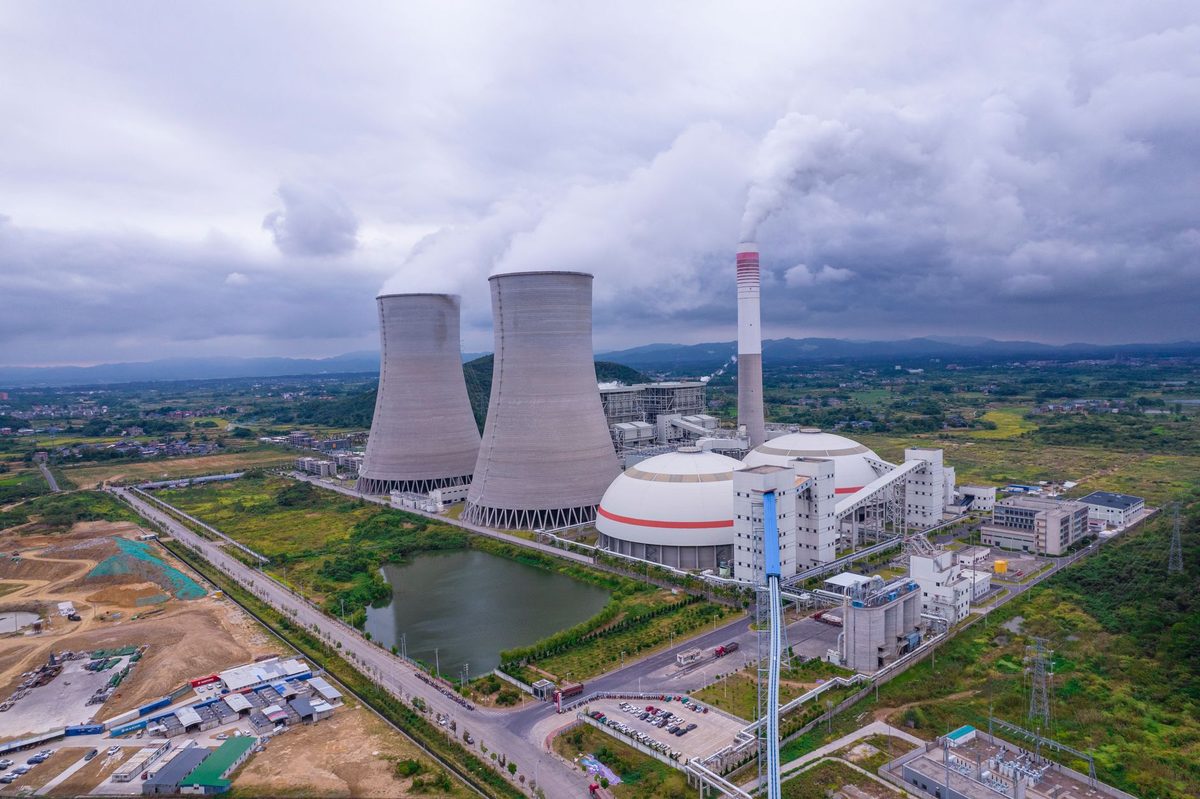
Taipingling Unit 2 in Guangdong is the latest of China's domestically designed third-generation reactors to start supplying power

Yesterday: Taipingling Unit 2 enters commercial operation

Overview

A new 1,116-megawatt reactor in Guangdong Province began sending power to the grid on August 3, 2026. It is the second unit at the Taipingling plant and the first reactor of its type serving the Greater Bay Area, the industrial region linking Guangzhou, Shenzhen, Hong Kong, and Macao.

The reactor uses the Hualong One, a design China built itself rather than licensing from a foreign vendor. That matters because it lets China copy the same reactor across dozens of sites without paying royalties or waiting on outside approvals. The country now runs the world's largest reactor-construction program.

Why it matters

China is adding low-carbon baseload power at a pace no other country matches, using a reactor it owns outright and can build in batches.

Questions about this story

No questions yet — be the first to ask.

Key Indicators

1,116 MW
Reactor net capacity
Enough electricity for a mid-sized city, from a single unit.
168 hours
Continuous demonstration run
The unit ran seven straight days at full output before being declared commercial.
10
Hualong One units operating
Home-grown reactors now supplying power in China and abroad.
41
Hualong One units built or building worldwide
Makes it the most-deployed reactor model now under construction.
110 GW
China's 2030 nuclear capacity target
Roughly double the operating fleet at the end of 2025.

Voices

Curated perspectives — historical figures and your fellow readers.

Ever wondered what historical figures would say about today's headlines?

Sign up to generate historical perspectives on this story.

Play

Exploring all sides of a story is often best achieved with Play.

Most of these play right now — no account needed. Sign up to save scores, keep a streak, and unlock Debate and Predict. Log in Sign Up
Predict 3 ways this could play out. Back the one you believe — contrarian picks score more when a scenario has a resolution date. Log in to play

Organizations Involved

Timeline

January 2021 August 2026

7 events Latest: Yesterday
Tap a bar to jump to that date
  1. Taipingling Unit 2 enters commercial operation

    Latest Milestone

    CGN declares the 1,116-MW reactor commercial after a 168-hour continuous run, completing the plant's first phase and marking the first Hualong One serving the Greater Bay Area.

  2. First grid connection

    Milestone

    Taipingling Unit 2 sends its first electricity to the grid.

  3. First criticality reached

    Milestone

    The reactor sustains its first controlled chain reaction.

  4. Fuel loading completed

    Milestone

    Crews finish loading all 177 fuel assemblies into the reactor core.

  5. Taipingling Unit 2 licensed

    Regulatory

    China's National Nuclear Safety Administration issues the operating license for the unit.

  6. Zhangzhou Unit 2 goes commercial

    Milestone

    Another Hualong One unit enters commercial service, part of a wave of 2026 startups.

  7. World's first Hualong One starts up

    Milestone

    Fuqing Unit 5 enters commercial operation, making China the fourth country to field its own third-generation reactor design.

Historical Context

3 moments from history that rhyme with this story — and how they unfolded.

1974–1990

France's nuclear buildout (1974–1990)

After the 1973 oil shock, France launched the Messmer Plan and built 56 reactors in about 15 years using a small number of standardized designs. State utility EDF and reactor builder Framatome repeated the same models across the country.

Then

France went from oil-dependent to generating most of its electricity from nuclear power within two decades.

Now

Nuclear still supplies around 70% of French electricity, and standardization kept build costs lower than in most Western peers.

Why this matters now

China is running the same playbook: one owned design, repeated at scale, driven by the state. It shows standardization can work when a single builder controls the program.

January 2021

Fuqing Unit 5, first Hualong One (2021)

CNNC brought the world's first Hualong One reactor online at Fuqing, giving China its own third-generation design with full intellectual property rights. It joined the US, France, and Russia as countries fielding home-grown Gen III reactors.

Then

China stopped depending on foreign vendors like Westinghouse and Areva for its newest large reactors.

Now

The design became the backbone of China's domestic program and its main nuclear export product.

Why this matters now

Taipingling Unit 2 is one of many copies of that first reactor. The 2021 milestone is why China can now build the same unit again and again.

2013–2024

US Vogtle expansion (2013–2024)

The United States tried to build two Westinghouse AP1000 reactors at Georgia's Vogtle plant. The project ran years late and roughly doubled in cost, and Westinghouse filed for bankruptcy in 2017 partly because of it.

Then

The two units eventually came online in 2023 and 2024 at a cost far above budget.

Now

The overruns chilled new US reactor orders and became a cautionary tale about first-of-a-kind builds.

Why this matters now

Vogtle shows the cost trap China is trying to avoid. Repeating a standardized design across many sites is meant to keep schedules and budgets under control.

Sources

(7)