

Pull to refresh
Logo
China-Laos power line tops 1 billion kWh in six months

China-Laos power line tops 1 billion kWh in six months

Built World

China's first 500-kilovolt cross-border alternating-current line has expanded two-way power capacity with Laos 30-fold since April

Today: Cumulative flow tops 1 billion kWh

Overview

Updated 56 minutes ago

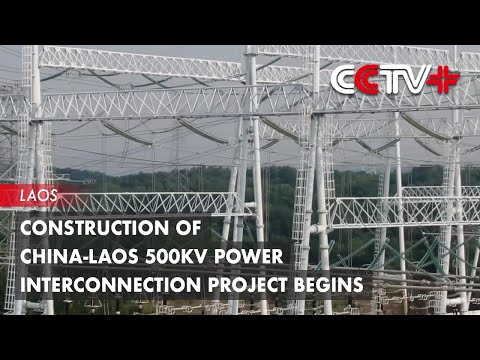
A 500-kilovolt power line between China and Laos has carried more than 1 billion kilowatt-hours since it switched on in April. It is China's first cross-border alternating-current link at that voltage, and it hit the milestone on October 8, six months after commissioning.

The line runs both ways. Exchange capacity between Yunnan and northern Laos jumped from 50 megawatts to 1.5 gigawatts, 30 times the old limit. That enables roughly 3 billion kilowatt-hours of clean power a year, and it is the first time overseas solar and hydropower feed China's grid on a standing basis.

Laos is the wildcard. It has surplus hydropower and new mountain solar, but a small population and weak local demand. The link gives it a big export market and, officials hope, a path to becoming a regional energy hub.

Why it matters

The line lets Lao solar and hydropower reach Chinese cities and Yunnan backstop Laos in dry season — a working template for Mekong power trade.

Questions about this story

Free account needed to ask — your question is kept and asked for you right after sign-up. Answers are public.

No questions yet — be the first to ask.

Key Indicators

1 billion kWh
Cumulative electricity transmitted
Total power moved through the line since commissioning on April 20, 2026.
1.5 GW
Two-way exchange capacity
Up from 50 megawatts under earlier lines, a 30-fold increase.
177.5 km
Transmission line length
145 km in China, 32.5 km in Laos.

Voices

Curated perspectives — historical figures and your fellow readers.

Ever wondered what historical figures would say about today's headlines?

Sign up to generate historical perspectives on this story.

People Involved

Organizations Involved

Timeline

February 2025 October 2026

4 events Latest: Today
Tap a bar to jump to that date
  1. Cumulative flow tops 1 billion kWh

    Today Milestone

    Cumulative transmission exceeds 1 billion kWh, Yunnan Power Grid reports.

  2. Lao hydropower reaches Guangdong

    Trade

    Lao hydropower delivered to the Guangdong-Hong Kong-Macao Greater Bay Area through the line.

  3. Line switches on

    Commissioning

    Line commissioned; first Lao solar exports reach Yunnan, a cross-border renewable first.

  4. Construction starts on 500-kV line

    Infrastructure

    Work begins on the 177.5-km link spanning Yunnan and northern Laos.

Scenarios

1

China-Laos power line doubles milestone by first anniversary

Likely Resolves by Apr 20, 2027

Discussed by: Chinese state media framing sustained growth; CGTN and Xinhua reports emphasize rising cross-border volumes

Expect cumulative throughput to keep climbing past 1 billion kWh at a steady clip. Flood-season hydropower from Laos plus new Oudomxay solar capacity supply the volume. If nothing disrupts operations, cumulative flow should near or pass 2 billion kWh by the April 2027 anniversary.

2

Market-based trading hits 1.5 billion kWh for 2026

Likely Resolves by Jan 31, 2027

Discussed by: Yidaiyilu and China Daily reporting the 1.5-billion estimate; CSG promoting market participation

The 2026 target of 1.5 billion kWh in market-based transactions rests on sustained solar flows into Yunnan plus the August-to-October hydropower run into the Greater Bay Area. Hitting it depends on demand in southern China and on Laos's ability to deliver during the wet season.

3

Grid model expands to a third Mekong country

Possible Resolves by End of 2027

Discussed by: Yidaiyilu commentary on replicating the model across the Lancang-Mekong region; Lao ambitions as a regional hub

Officials on both sides describe the link as a template for the broader Mekong region. A move to extend the pattern would show up as a new cross-border interconnection agreement with Thailand, Cambodia, or Myanmar, or an MoU on green-power integration. No such deal is public yet.

Historical Context

3 moments from history that rhyme with this story — and how they unfolded.

1971–present

Laos–Thailand electricity trade (1971–present)

Laos's first major dam, Nam Ngum 1, began exporting hydropower to Thailand in 1971, launching the country as an electricity seller. Sales to Thailand grew into a main revenue source over the following decades.

Then

Power exports became Laos's largest source of foreign earnings, funding further dam construction.

Now

The 'battery of Southeast Asia' label stuck, but Laos's own grid stayed weak and swung between wet-season glut and dry-season shortage.

Why this matters now

That seasonal imbalance is exactly what the China-Laos line is built to fix — it lets Laos export surplus and import to cover shortfall.

December 2021

China-Laos Railway (2021)

A 1,035-km rail line connecting Kunming, China, to Vientiane, Laos, opened December 3, 2021, as a flagship Belt and Road project. It turned landlocked Laos into a transit link for Southeast Asian freight.

Then

Passenger and freight use climbed after opening, reshaping regional trade routes.

Now

The railway became a template for follow-on regional rail links and a symbol of China-Laos infrastructure cooperation.

Why this matters now

The power line follows the same playbook — flagship cross-border infrastructure under the China-Laos 'shared future' framework, upgrading Laos's role from resource exporter to regional hub.

1997–present

ASEAN Power Grid (1997–present)

ASEAN's Vision 2020 called for a region-wide power grid to interconnect national systems and enable cross-border electricity trade across Southeast Asia. Implementation has stalled, with only bilateral links built.

Then

Most cross-border power in the region still flows over direct bilateral lines.

Now

A true multilateral Southeast Asian power market remains unrealized decades later.

Why this matters now

The Laos-China link operates alongside that stalled vision, and officials present it as a concrete model for standardizing Mekong-region energy trade.

Sources

(8)