
Pull to refresh
Logo
First 500-kilovolt line moved to clear Three Gorges ship-lock route

First 500-kilovolt line moved to clear Three Gorges ship-lock route

Built World

The Sanjiang circuits came back online at 2:47 a.m., the first of 48 transmission lines being shifted so excavators can cut a second channel past the dam

Overview

Updated 1 hour ago

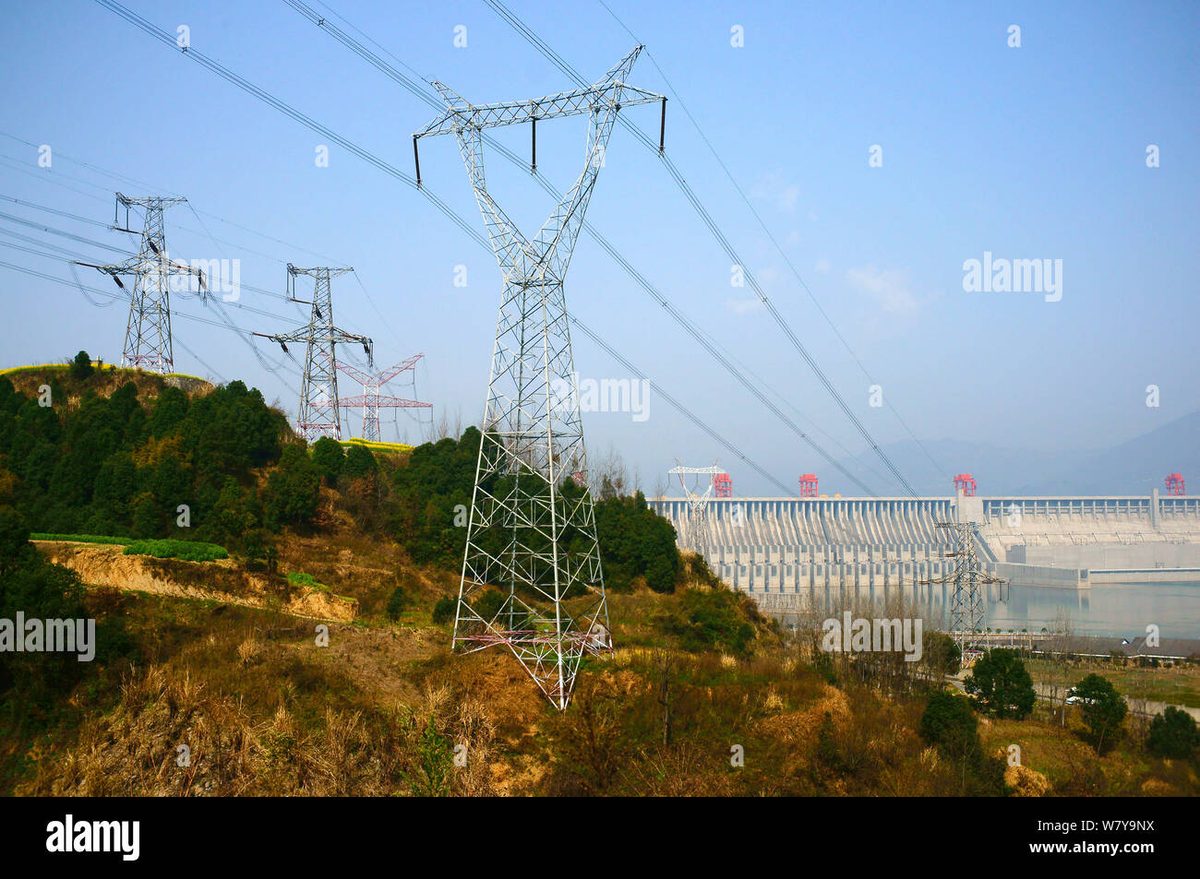
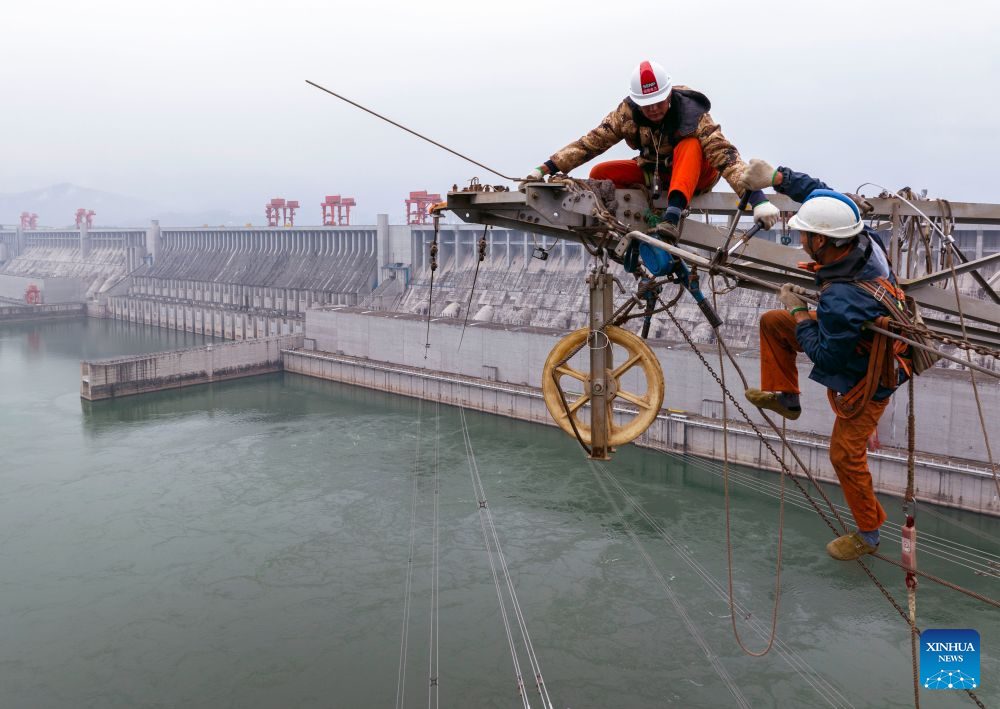
At 2:47 a.m. on November 20, a 500-kilovolt transmission line that had run across a canyon above the Three Gorges Dam was switched back on in a new location. Operators at the Jiangling converter station and the dam's left-bank plant closed the switches at both ends. It is the first high-voltage line moved to clear ground for a second ship channel past the dam.

The Sanjiang circuits carry about a tenth of the power Three Gorges sends out. The corridor as a whole moves more than 300 million kilowatt-hours a day, roughly what 24 million households use. Every line standing in the excavators' path has to be rebuilt on a new alignment before the old towers come down: 48 relocations in all, 20 of them due by the end of 2026.

Why it matters

China is rebuilding the river route past the Three Gorges Dam without switching off a corridor that supplies 24 million households a day.

Questions about this story

Free account needed to ask — your question is kept and asked for you right after sign-up. Answers are public.

No questions yet — be the first to ask.

Key Indicators

48
Transmission lines being relocated
Eight at 500 kilovolts and forty at 220 kilovolts or below, per the June 2026 launch announcement.
300M kWh
Daily clean-power exports the corridor must hold
The floor State Grid Hubei committed to maintain through summer peaks and cold snaps.
24M
Households one day of corridor output can supply
Roughly what 300 million kilowatt-hours covers in daily residential use.
10%
Share of Three Gorges exports on the Sanjiang circuits
The portion of the corridor's output that rode on the line just relocated.
135 km
Length of the Sanjiang line
Runs from the Three Gorges plant to the Jiangling converter station, where power switches to direct current for eastern and southern China.
20
Priority lines due by end-2026
The first batch State Grid Hubei promised to finish before the New Year.

Voices

Curated perspectives — historical figures and your fellow readers.

Sign up to generate historical perspectives on this story.

People Involved

Organizations Involved

Timeline

June 2026 November 2026

6 events Latest: Today
Tap a bar to jump to that date
  1. Sanjiang circuits re-energized on new alignment

    Today Energization

    Switches close at both ends, completing the first 500-kilovolt relocation on the Three Gorges export corridor.

  2. Three Gorges Group says the corridor is clear

    Announcement

    The old Sanjiang corridor no longer blocks the channel, the operator says, opening the footprint for blasting.

  3. Construction finished, crews walk the new line

    Completion of works

    Workers in Taipingxi township run acceptance checks and fit conductor hardware on the rebuilt towers.

  4. First Sanjiang section fully strung

    Construction milestone

    Crews finish the A8–A17 stretch: 3.76 kilometres of line on 10 new towers, the first of three sections done.

  5. Sanjiang rebuild begins; first excavation zone cleared

    Construction

    Work starts on three sections of the Sanjiang line, and blasting finishes in the channel's first dig area.

  6. Relocation programme starts with the waterway

    Programme launch

    State Grid Hubei begins moving 48 lines the day the new channel breaks ground in Yichang, with outages scheduled for October through April.

Scenarios

1

Twenty lines moved by New Year, exports stay above 300 million kWh a day

Likely Resolves by Jan 31, 2027

Discussed by: State Grid Hubei's own schedule, repeated in Xinhua's June and November reporting

The grid operator has committed to finishing the 20 priority relocations by the end of December 2026, using load transfers and temporary bypasses to hold corridor output at 300 million kilowatt-hours a day or more through the winter peak. The Sanjiang job, the hardest of the batch, is already done and re-energized. If the remaining nineteen hold to the same pattern, the December target lands on time.

2

Canyon weather pushes the December batch into 2027

Possible Resolves by Apr 30, 2027

Discussed by: Project engineers cited in Xinhua and Hubei Daily coverage of slope stability and short work windows

The bottleneck is not the grid but the ground: foundations that collapse, high winds in the gorge and a narrow window between October and April. The Sanjiang section needed 10 new towers for under four kilometres of line. A wet or windy late autumn could strand one or two priority lines past the deadline, and the outage window closes as spring demand rises.

3

Remaining 28 lines cleared before the new locks take traffic

Uncertain Resolves by End of 2028

Discussed by: No published schedule for the full 48-line programme; inferred from the phase-one commitment

Only 20 of the 48 lines are scheduled for 2026. The rung of 220-kilovolt and lower lines can be cut over in overnight low-load windows, but the seven remaining 500-kilovolt lines each require the same build-first sequence as Sanjiang. Whether that finishes before the new channel is ready for ships depends on a construction timetable Beijing has not published.

Historical Context

2 moments from history that rhyme with this story — and how they unfolded.

1970–1988

Gezhouba Dam (1970–1988)

China built its first dam across the Yangtze's main channel just downstream of the Three Gorges, at Yichang. It included ship locks to keep river traffic moving past the new barrier.

Then

The dam became the lower Yangtze's first controlled passage point, and its locks set the pace for cargo moving upstream.

Now

By the 1990s the locks were a known constraint, which is part of why the larger Three Gorges project upstream was built with a much bigger lock.

Why this matters now

Every barrier China puts across the Yangtze creates a new capacity limit for shipping. The current project is the second attempt to raise that limit at the Three Gorges.

June 2003

Three Gorges ship lock opens (2003)

The dam's five-stage, two-lane lock began operating as the reservoir filled, replacing the temporary passage used during construction. It was designed to pass about 100 million tonnes of cargo a year.

Then

Cargo volumes climbed quickly as Yangtze shipping grew, and vessels began waiting in queues that could run for days.

Now

Traffic passed the design mark within a decade, and the lock became the recognised bottleneck on the river's main line, which is the stated reason for building a parallel channel.

Why this matters now

The new channel under construction is explicitly aimed at that bottleneck, and the line just moved was sitting in the way of the excavation.

Sources

(7)