

Pull to refresh
Logo
China nears finish of world's first flexible ultra-high-voltage power line

China nears finish of world's first flexible ultra-high-voltage power line

Built World

Inspections done on Fuchun River crossing of the 2,370-km Gansu-Zhejiang direct current project

Today: Inspections completed for Fuchun River crossing section

Overview

Updated 1 hour ago

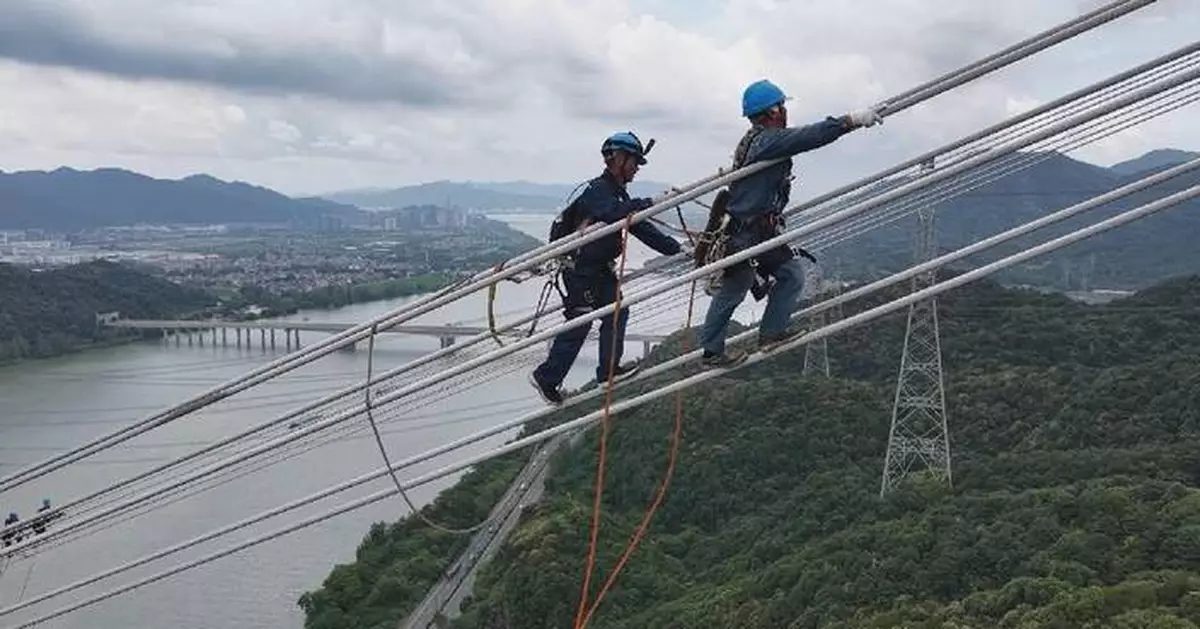
Inspectors wrapped up checks on the Fuchun River crossing of China's Gansu-Zhejiang ultra-high voltage (UHV) power line on September 5. The milestone edges the 2,370-kilometer project closer to commissioning, making it the world's first UHV direct current (UHVDC) link to use flexible DC technology at both the sending and receiving ends.

The line will carry wind and solar power from Gansu's desert plains to Zhejiang's factories and data centers, delivering an estimated 36 billion kilowatt-hours of clean electricity each year. It's part of a national push to add 15 new UHVDC lines by 2030, raising total transmission capacity past 420 gigawatts, and completing a grid that already moves over 70% of China's inter-regional power.

Why it matters

How China's UHV grid expansion balances renewables against coal will shape the world's largest electricity system for decades.

Questions about this story

Free account needed to ask — your question is kept and asked for you right after sign-up. Answers are public.

No questions yet — be the first to ask.

Key Indicators

2,370 km
Line length, Wuwei (Gansu) to Shaoxing (Zhejiang)
Spans six provinces and regions: Gansu, Ningxia, Shaanxi, Henan, Anhui, Zhejiang.
36 billion kWh
Annual clean electricity delivered to Zhejiang
Equivalent to cutting carbon dioxide emissions by 17 million tons per year.
15
New UHVDC lines planned by 2030
Would bring total operating transmission capacity to over 420 GW nationwide.
~20%
Renewable share of electricity on China's UHV lines
Wind and solar share has barely risen since 2021, according to Global Energy Monitor research.

Voices

Curated perspectives — historical figures and your fellow readers.

Ever wondered what historical figures would say about today's headlines?

Sign up to generate historical perspectives on this story.

Play

Exploring all sides of a story is often best achieved with Play.

Most of these play right now — no account needed. Sign up to save scores, keep a streak, and unlock Debate and Predict. Log in Sign Up
Predict 3 ways this could play out. Back the one you believe — contrarian picks score more when a scenario has a resolution date. Log in to play

People Involved

Organizations Involved

Timeline

September 2025 September 2026

4 events Latest: Today
Tap a bar to jump to that date
  1. Inspections completed for Fuchun River crossing section

    Today Quality assurance

    Inspectors sign off on the Fuchun River crossing section, confirming the stringing work meets technical standards ahead of energization.

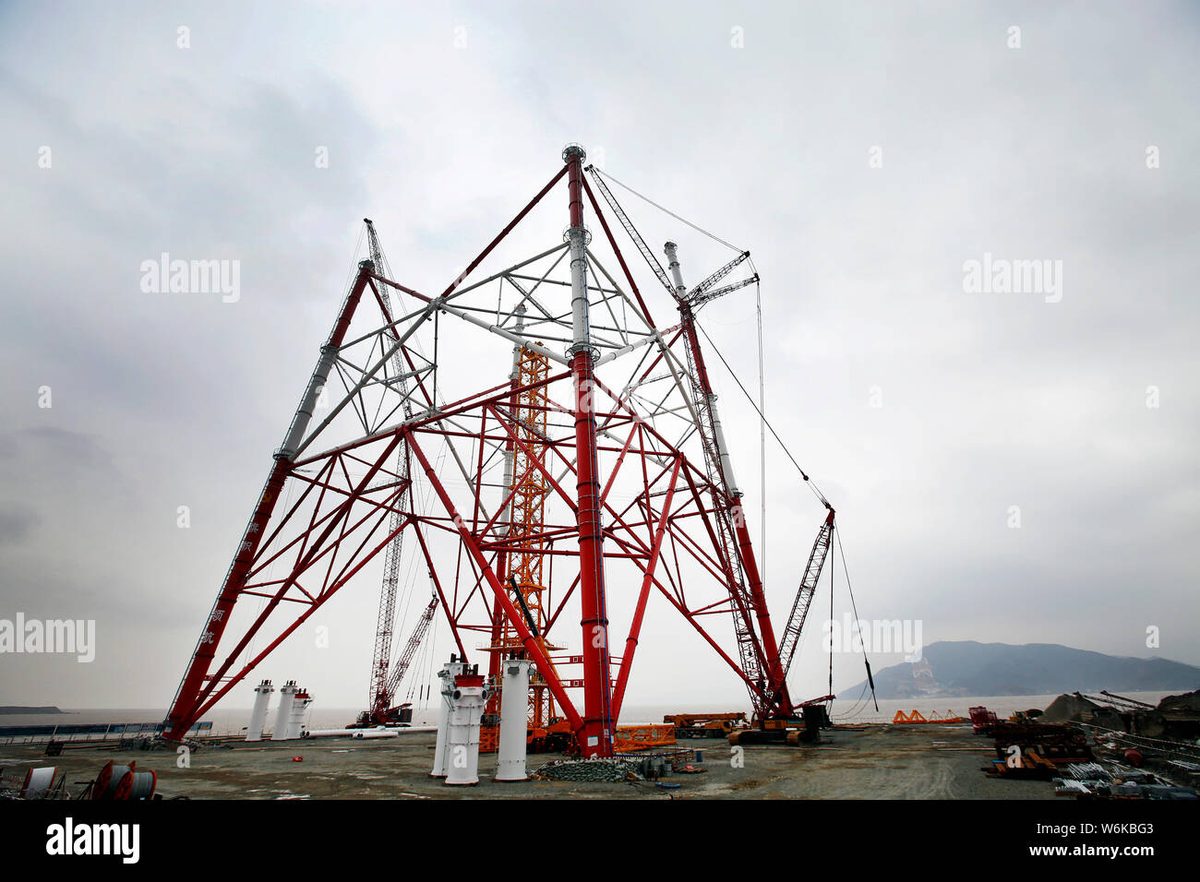
  2. Yangtze River crossing north tower tops out at 196 m

    Construction

    After 69 days of work, the 196-meter north tower of the Yangtze River crossing reaches full height in Wuwei, Anhui, clearing a key obstacle on the route.

  3. State Grid completes Fuchun River crossing stringing

    Construction

    The Fuchun River-crossing stringing operation finishes in Hangzhou, a critical step for carrying the line over the waterway into Zhejiang's industrial core.

  4. Anhui section enters conductor stringing phase

    Construction

    Workers begin stringing conductors for the Gansu-Zhejiang line in Nanling County, Wuhu, moving the 2,370-km corridor into its final assembly stages.

Historical Context

2 moments from history that rhyme with this story — and how they unfolded.

2003-2012

Three Gorges Dam and the original west-to-east grid (2003)

China's Three Gorges hydro project spawned a wave of eastward transmission lines carrying power from Hubei to the Yangtze River Delta and Guangdong. It was the first large-scale institutional test of moving bulk electricity across provincial borders.

Then

Proved long-distance electricity transport could ease eastern shortages and created the institutional template for interprovincial power trading.

Now

The corridor planning and grid architecture UHV lines now rely on grew directly from this era.

Why this matters now

Gansu-Zhejiang follows the same logic—generate where resources are, consume where people are—but swaps hydro for wind and solar, which introduces intermittency that the original baseload model never had to manage.

January 2009

China's first UHV line (2009)

China energized its first UHV transmission line, a 1,000-kilovolt alternating current link from Jindongnan (Shanxi) to Nanyang (Henan) to Jingmen (Hubei). It proved the country could move bulk power hundreds of kilometers at voltages no other utility had deployed commercially.

Then

Established China as the only country operating UHV at commercial scale and launched the national west-to-east transmission strategy.

Now

By end of 2025, China had commissioned 45 UHV lines totaling 52,300 kilometers, carrying over 70% of inter-regional power transmission capacity.

Why this matters now

The Gansu-Zhejiang line inherits this national buildout but adds a structural change: flexible DC technology at both ends, designed to handle the variability of wind and solar rather than steady baseload flow.

Sources

(8)