


Pull to refresh
Logo
Daily Brief
Following
Why Ranks Sign Up
China passes its first law dedicated to the private economy

China passes its first law dedicated to the private economy

Rule Changes

A 78-article statute promises equal treatment for private firms, five years after a regulatory blitz froze the sector

May 20th, 2025: Law takes effect

Overview

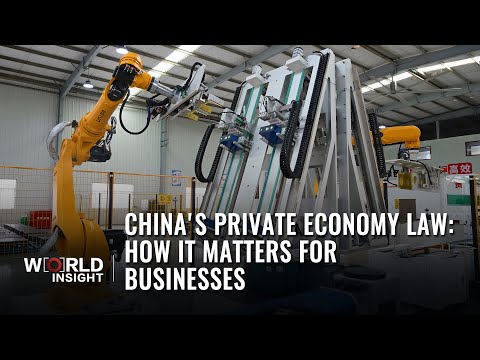
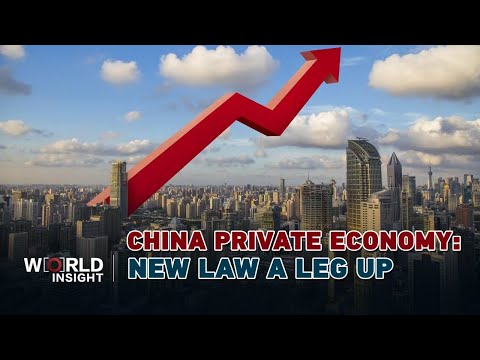
China's private firms build most of its products and hire most of its city workers. On April 30, 2025, they got their first law written specifically to protect them. The Private Economy Promotion Law passed the National People's Congress Standing Committee and took effect May 20.

The timing matters. Five years earlier, Beijing halted Ant Group's record stock listing and fined Alibaba $2.8 billion, freezing private investment. This law tries to convince founders the freeze is over by writing equal treatment into statute.

Why it matters

Private firms make about 60% of China's output and 80% of its urban jobs; whether they trust this law shapes global supply chains and growth.

Questions about this story

No questions yet — be the first to ask.

Key Indicators

78
Articles in the law
Nine chapters covering fair competition, financing, innovation, and rights protection.
~60%
Private share of GDP
Official figures put the private sector above 60% of China's economic output.
80%
Urban employment
Private enterprises provide over 80% of China's urban jobs.
$2.8B
2021 Alibaba fine
The antitrust penalty that came to symbolize the regulatory crackdown this law reverses.

Voices

Curated perspectives — historical figures and your fellow readers.

Ever wondered what historical figures would say about today's headlines?

Sign up to generate historical perspectives on this story.

Play

Exploring all sides of a story is often best achieved with Play.

Log in to play. Track your picks, climb the leaderboards. Log in Sign Up
Predict 3 ways this could play out. Contrarian picks score more — points lock when the scenario resolves. Log in to play
Higher or Lower Two numbers from this story. Guess which is bigger. 5 rounds to set a streak. Log in to play
Connections Sixteen names from the news. Find the four hidden groups of four. Log in to play

People Involved

Organizations Involved

Timeline

October 2020 May 2025

8 events Latest: May 20th, 2025 · 1 year ago
Tap a bar to jump to that date
  1. Law takes effect

    Latest Regulatory

    The statute enters force, requiring equal treatment and a unified market-entry list.

  2. Scholars question enforcement

    Analysis

    Yale's Jamie Horsley argues the law restates policy but adds few accountability tools.

  3. Private Economy Promotion Law passed

    Legislative

    The NPC Standing Committee adopts China's first law dedicated to the private sector.

  4. Xi hosts entrepreneurs

    Statement

    Xi meets Jack Ma and tech founders, signaling a formal end to the crackdown.

  5. First reading of the draft law

    Legislative

    The NPC Standing Committee begins reviewing a foundational law for the private economy.

  6. Ant Group listing halted

    Regulatory

    Regulators suspend Ant Group's record public offering days before trading, opening the crackdown.

  7. Jack Ma criticizes regulators

    Statement

    At Shanghai's Bund Summit, Ma calls China's financial rules outdated, angering officials.

Historical Context

2 moments from history that rhyme with this story — and how they unfolded.

April 2021

Alibaba antitrust fine (2021)

China's market regulator fined Alibaba 18.2 billion yuan, about $2.8 billion, for forcing merchants to sell exclusively on its platform. It followed the November 2020 halt of Ant Group's stock listing. The two actions opened a broad clampdown on tech platforms.

Then

Tech valuations fell and Jack Ma withdrew from public life. Private firms pulled back on hiring and investment.

Now

Years of regulatory uncertainty followed, with founders unsure where the lines were. That uncertainty is what the 2025 law tries to undo.

Why this matters now

The fine is the event the new law is written against. Its shadow explains why Beijing needed a statute to rebuild trust.

March 2004

Constitutional protection of private property (2004)

China amended its constitution to state that citizens' lawful private property is inviolable. It was the first time private property won explicit constitutional protection since the founding of the People's Republic.

Then

Entrepreneurs welcomed the language as reassurance that private wealth was legitimate.

Now

Enforcement lagged the text, and property disputes with local governments persisted for years. The gap between promise and practice became a recurring theme.

Why this matters now

It shows China's pattern of writing rights into law while enforcement trails behind, the exact concern critics raise about the 2025 statute.

Sources

(9)