
Pull to refresh
Logo
Daily Brief
Following
Why
China unveils 15th Five-Year Plan as economy pivots from growth targets to tech self-reliance

China unveils 15th Five-Year Plan as economy pivots from growth targets to tech self-reliance

Rule Changes
By Newzino Staff |

The 2026 Two Sessions mark the formal launch of Beijing's 2026-2030 blueprint, prioritizing semiconductor and AI independence over GDP speed

Tomorrow: NPC opens; Premier to deliver Government Work Report

Overview

China adopted five-year economic planning from the Soviet Union in 1953. Seventy-three years and fourteen plans later, the 15th Five-Year Plan now being unveiled at Beijing's annual Two Sessions represents what analysts call the clearest break from the growth-first model that powered China's rise since Deng Xiaoping's reforms in the 1980s. Under Xi Jinping, the plan elevates technological self-reliance and economic security to equal standing with prosperity itself, with $70 billion earmarked for semiconductor incentives alone.

Key Indicators

5.0%
2025 GDP growth (actual)
China's economy grew 5.0 percent in 2025, meeting the government's target, though quarterly growth slowed from 5.4 percent in Q1 to 4.5 percent in Q4.
~4.5-5%
Expected 2026 GDP target
Premier Li Qiang is expected to lower the growth target from 'around 5 percent' to a range of 4.5 to 5 percent, signaling the shift toward quality over speed.
$70B
Semiconductor incentives in 15th Plan
The five-year plan earmarks an estimated $70 billion in incentives for domestic chip production, calling for 'extraordinary measures' to achieve breakthroughs.
10
Consecutive quarters of deflation
China has experienced ten straight quarters of falling prices, a condition historically unprecedented alongside sustained GDP growth.
140.2T yuan
2025 GDP (nominal)
China's gross domestic product reached 140.2 trillion yuan (approximately $19.6 trillion) in 2025, surpassing the 140 trillion yuan threshold for the first time.

Interactive

Exploring all sides of a story is often best achieved with Play.

Ever wondered what historical figures would say about today's headlines?

Sign up to generate historical perspectives on this story.

Sign Up

Debate Arena

Two rounds, two personas, one winner. You set the crossfire.

People Involved

Xi Jinping
Xi Jinping
General Secretary of the Chinese Communist Party; President of China (Overseeing the strategic direction of the 15th Five-Year Plan)
Li Qiang
Li Qiang
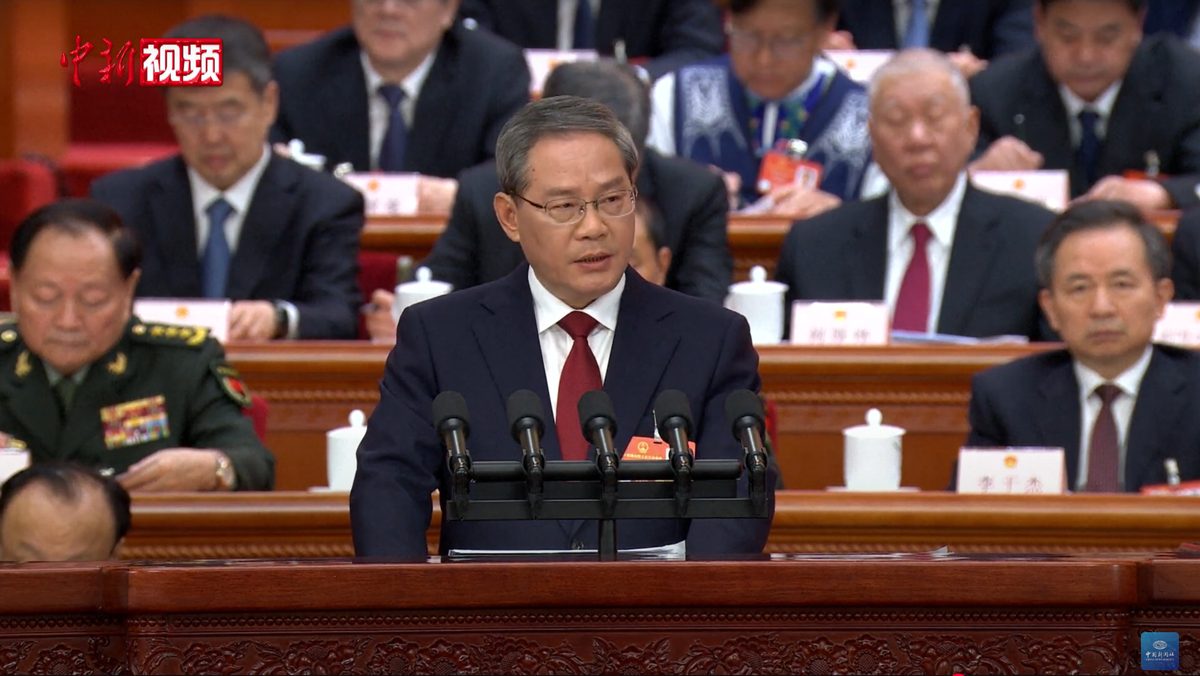
Premier of China; Second-ranking member of the Politburo Standing Committee (Set to deliver Government Work Report and unveil annual targets on March 5)
Zhao Leji
Zhao Leji
Chairman of the National People's Congress Standing Committee; Third-ranking Politburo Standing Committee member (Presiding over the NPC session that will formally approve the 15th Five-Year Plan)
Wang Huning
Wang Huning
Chairman of the Chinese People's Political Consultative Conference (CPPCC) (Opened the CPPCC annual session on March 4, 2026)

Organizations Involved

National People's Congress (NPC)
Legislature
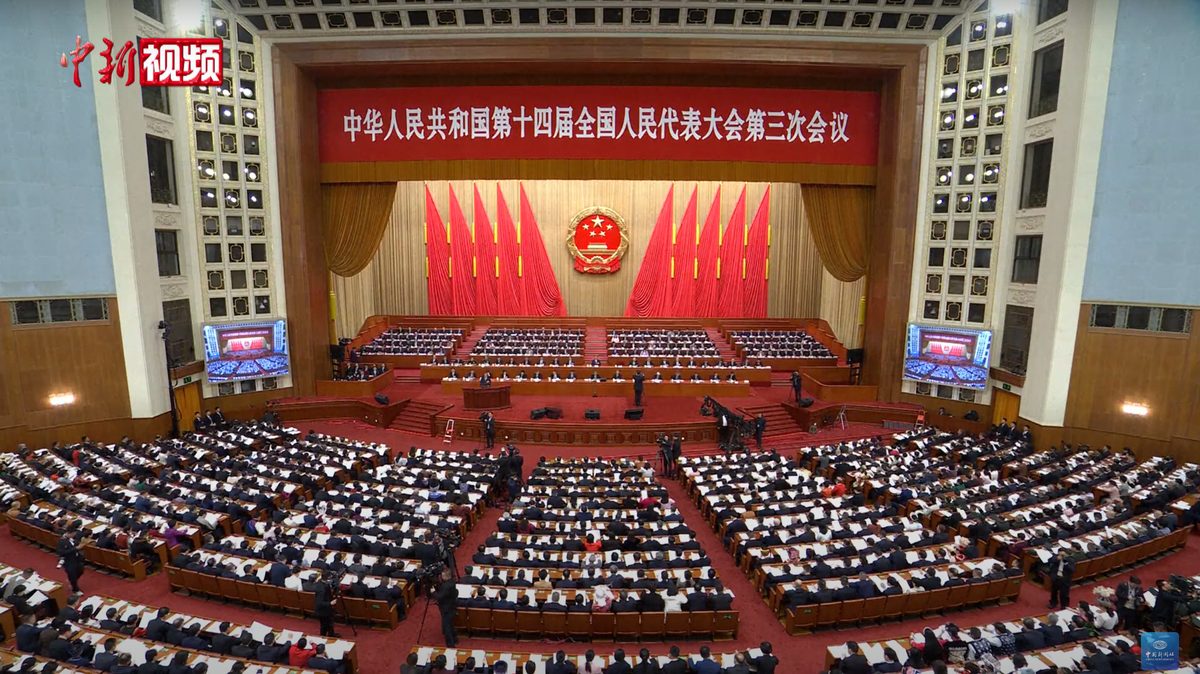
Status: 14th NPC opening annual session on March 5, 2026

China's highest state organ of power, with nearly 3,000 deputies who formally approve legislation, national budgets, and development plans.

Chinese People's Political Consultative Conference (CPPCC)
Political Advisory Body
Status: 14th CPPCC opened annual session on March 4, 2026

A political advisory body with over 2,000 members representing diverse sectors, the CPPCC advises on national policy but holds no legislative power.

State Council of China
Executive Branch / Cabinet
Status: Preparing the Government Work Report and 15th Five-Year Plan for NPC approval

China's chief administrative authority, responsible for drafting economic plans, setting fiscal policy, and implementing Communist Party directives through government ministries.

Timeline

  1. NPC opens; Premier to deliver Government Work Report

    Political

    The National People's Congress opens its annual session. Premier Li Qiang is expected to deliver the Government Work Report setting the 2026 GDP target and formally presenting the 15th Five-Year Plan.

  2. CPPCC opens annual session, beginning the Two Sessions

    Political

    The Chinese People's Political Consultative Conference opened its annual session in Beijing, marking the start of the Two Sessions, China's most important annual political meetings.

  3. CPPCC Standing Committee concludes preparatory session

    Procedural

    The CPPCC Standing Committee closed its preparatory session, with Wang Huning emphasizing the advisory body's role in supporting the new Five-Year Plan's launch.

  4. NPC Standing Committee sets session agenda

    Procedural

    Zhao Leji presided over the 21st session of the NPC Standing Committee, outlining the annual session's legislative agenda, including approval of the 15th Five-Year Plan and a draft environmental code.

  5. 2025 GDP confirmed at 5.0 percent growth

    Economic

    China's National Bureau of Statistics confirmed full-year 2025 GDP growth of 5.0 percent, meeting the government's target, though quarterly momentum slowed throughout the year.

  6. China slashes import tariffs on 935 items

    Economic

    Beijing's 2026 tariff adjustment plan took effect, reducing import duties on 935 items, particularly inputs for high-tech manufacturing, healthcare, and green energy, reflecting Five-Year Plan priorities.

  7. Xi pledges 'more proactive macro policies' for 2026

    Statement

    In a year-end address, Xi Jinping signaled a shift toward more active fiscal and monetary support heading into the first year of the new Five-Year Plan.

  8. Central Committee approves Five-Year Plan recommendations

    Policy

    The Fifth Plenum of the 20th Central Committee approved key recommendations for the 15th Five-Year Plan, outlining priorities including technological self-reliance, green growth, and economic security.

  9. Xi chairs Politburo session on new Five-Year Plan

    Policy

    Xi Jinping chaired a Politburo meeting emphasizing the need for 'sound planning for economic and social development in 2026-2030,' formally launching the drafting process for the 15th Five-Year Plan.

Scenarios

1

Tech pivot gains traction, consumption recovers modestly

Discussed by: Goldman Sachs, Asia Society, International Monetary Fund

Beijing successfully channels investment into semiconductors, AI, and advanced manufacturing while modest consumption stimulus and property-sector stabilization prevent a hard landing. GDP growth settles in the 4.5 to 4.8 percent range through 2027, with deflation gradually easing as targeted fiscal spending reaches households. This path depends on high-tech investment generating enough employment and wealth effects to offset the property drag, and on the trade environment remaining manageable despite elevated tariffs.

2

Property drag deepens, deflation persists despite tech spending

Discussed by: Rhodium Group, Nomura, UBS

The property sector's decline continues beyond 2027 with no bottom in sight, dragging household wealth perceptions and consumption further down. High-tech investment creates jobs primarily in advanced manufacturing, which absorbs fewer workers than construction and real estate services did. Deflation enters its third year, discouraging private investment. The government faces pressure to deploy broad-based stimulus it has so far resisted, potentially inflating local government debt further.

3

Trade war escalation forces accelerated decoupling

Discussed by: Peterson Institute for International Economics, Chatham House, CSIS

A renewed escalation in United States tariffs or expanded technology export controls pushes China to accelerate its self-reliance timeline, redirecting even more resources toward domestic chip production and supply chain localization. Export growth, which helped sustain the economy in 2024-2025, slows sharply. This scenario would test whether the Five-Year Plan's technology bets can compensate for lost trade revenue within the plan period, potentially requiring the growth target to be lowered further or abandoned altogether.

4

Plan delivers breakthrough in advanced chip production

Discussed by: Tom's Hardware, Nature, Semiconductor Industry Association analysts

China's 'extraordinary measures' for semiconductor self-reliance produce meaningful results by 2028-2029, narrowing the gap with leading-edge producers. This would represent a strategic milestone, reducing China's vulnerability to export controls and potentially reshaping global semiconductor supply chains. However, achieving cutting-edge chip manufacturing requires not just funding but breakthroughs in lithography, materials, and design software, areas where China remains significantly behind established producers.

Historical Context

China's 3rd Five-Year Plan and the 'Third Front' (1966-1970)

1966-1970

What Happened

Facing perceived military threats from both the United States and the Soviet Union, Mao Zedong directed China's 3rd Five-Year Plan to prioritize national security over economic efficiency. The 'Third Front' program relocated entire industries to remote inland provinces at enormous cost, diverting resources from consumer welfare to strategic resilience.

Outcome

Short Term

Industrial capacity was dispersed across China's interior, creating redundancy at the expense of productivity and living standards.

Long Term

Many Third Front projects proved economically unviable and were eventually shuttered, but the episode established the precedent that security concerns can override growth objectives in Chinese planning.

Why It's Relevant Today

The 15th Five-Year Plan's elevation of 'economic security' alongside prosperity echoes this historical pattern of security-driven resource allocation, though the current version is far more sophisticated, targeting semiconductors and AI rather than relocating steel mills to mountain caves.

Japan's MITI-led industrial policy (1960s-1980s)

1960s-1980s

What Happened

Japan's Ministry of International Trade and Industry (MITI) directed investment toward strategic industries including semiconductors, automobiles, and electronics, using subsidies, trade protection, and government-coordinated research to build globally competitive firms. At its peak, Japan controlled over 50 percent of the global semiconductor market.

Outcome

Short Term

Japan became the world's second-largest economy and a dominant force in electronics and automotive manufacturing.

Long Term

After the asset bubble burst in 1991, Japan entered decades of stagnation. Government-directed investment proved better at catching up than at innovating at the frontier, and the semiconductor industry eventually lost ground to South Korean and Taiwanese competitors.

Why It's Relevant Today

China's state-directed technology investment faces a similar question: can top-down industrial policy achieve frontier innovation, or is it better suited to narrowing gaps? Japan's experience also parallels China's current property-and-deflation challenge.

South Korea's Five-Year Economic Development Plans (1962-1996)

1962-1996

What Happened

Under Park Chung-hee and successors, South Korea executed seven five-year plans that channeled credit and subsidies toward export-oriented heavy industry, shipbuilding, and eventually semiconductors and electronics. The government picked winners, directed banks to lend to favored conglomerates (chaebol), and gradually climbed the technology ladder.

Outcome

Short Term

South Korea transformed from one of the world's poorest countries into an industrialized economy within a generation, with GDP per capita rising from $82 in 1960 to over $10,000 by 1995.

Long Term

Overinvestment in heavy industry and overreliance on debt-financed conglomerates contributed to the 1997 Asian financial crisis, forcing painful restructuring. South Korea ultimately succeeded in building world-class semiconductor and electronics firms.

Why It's Relevant Today

South Korea's plans offer both an encouraging precedent for state-led technology catching-up and a cautionary tale about overinvestment and debt accumulation, two risks that directly mirror China's current situation.

Sources

(16)