

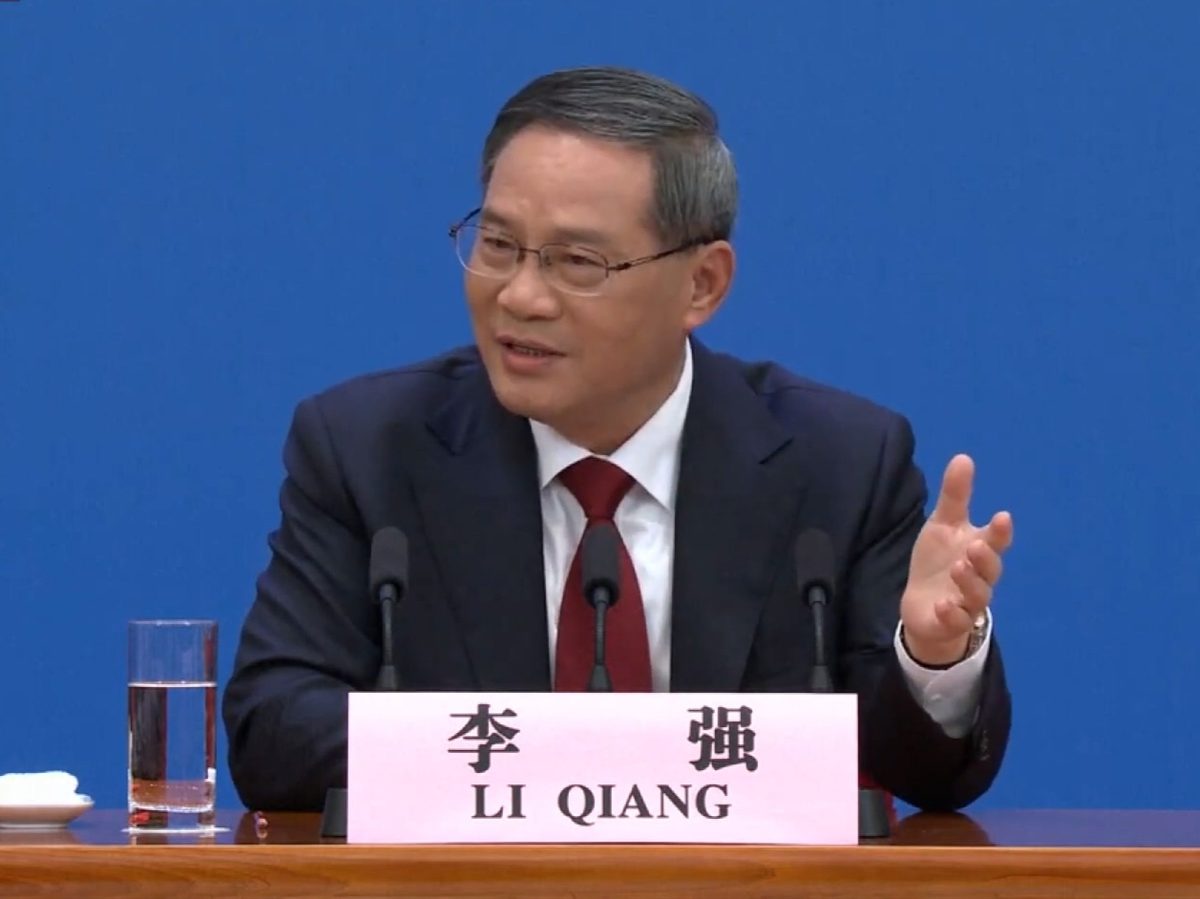
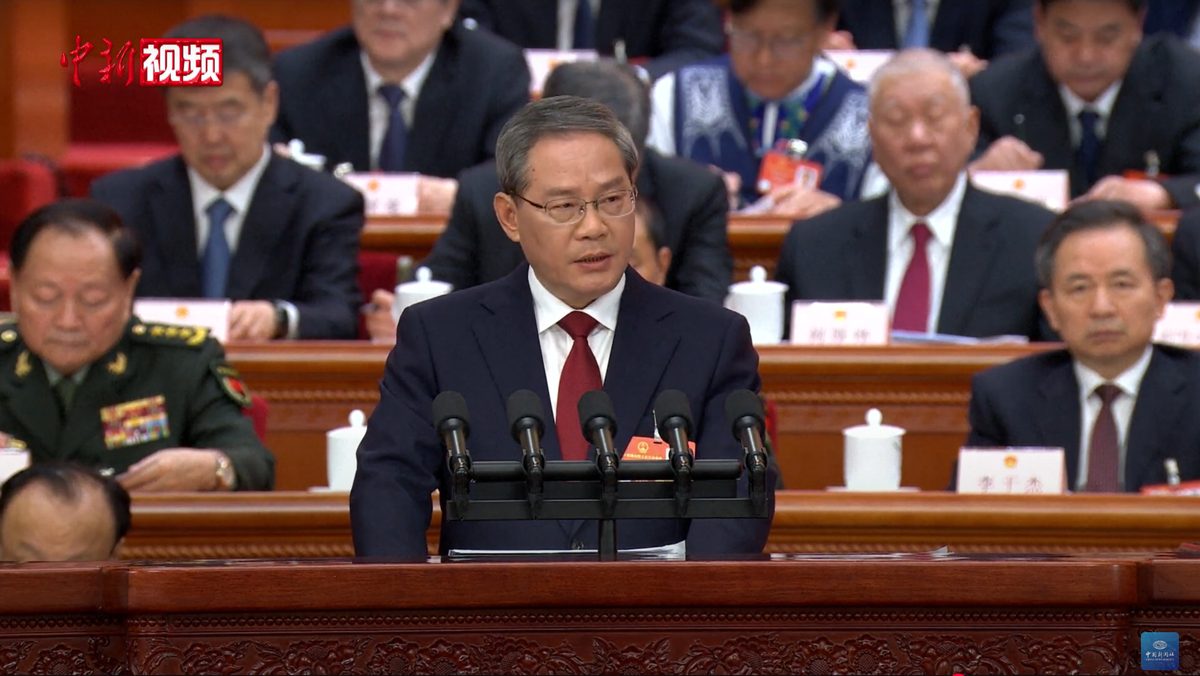
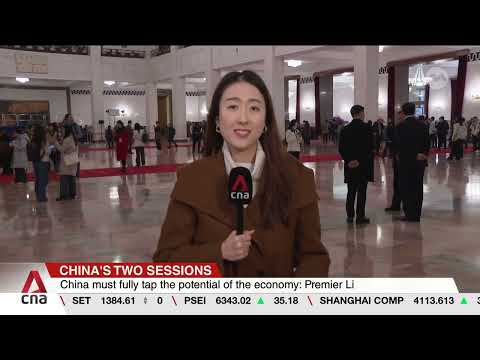
For three decades, China's annual growth target was a formality — the economy nearly always blew past it. On March 5, Premier Li Qiang set the 2026 target at 4.5% to 5%, the lowest figure Beijing has published since it began the practice in the early 1990s. The downgrade from the previous three years' 'around 5%' signals that China's leadership now expects structurally slower expansion for the foreseeable future.
The target lands amid a convergence of pressures that the old playbook — infrastructure spending, cheap credit, export surges — can no longer fully offset. A property downturn now in its fifth year has erased household wealth and cratered local government revenue. Consumer prices have barely risen for two years, with factory-gate deflation stretching into its fourth. And a trade war with the United States, though partially defused by a 2025 truce, has cut American purchases of Chinese goods by more than a quarter. The 15th Five Year Plan, now under deliberation, promises a pivot toward domestic consumption and technological self-reliance — but translating that ambition into household spending remains China's central economic challenge.
China's central bank, which controls interest rates, bank reserve requirements, and lending policy — and in 2024 introduced unprecedented tools to directly support the stock market.
Timeline
China sets record-low GDP target of 4.5–5%
Policy
Premier Li Qiang announced the lowest growth target since the early 1990s at the opening of the National People's Congress, alongside a ~4% budget deficit, a 7% defense spending increase, and the formal start of deliberations on the 15th Five Year Plan.
US Supreme Court strikes down IEEPA-based China tariffs
Legal
The Court invalidated tariffs the Trump administration had imposed on Chinese imports under the International Emergency Economic Powers Act, narrowing the legal basis for unilateral trade actions.
Communist Party plenum adopts 15th Five Year Plan framework
Policy
The Fourth Plenum of the 20th Central Committee endorsed recommendations for the 2026–2030 plan, prioritizing technological self-reliance, domestic consumption, and emerging industries including quantum computing and artificial intelligence.
US and China agree to tariff truce
Trade
Both sides stepped back from peak tariffs. The U.S. reduced rates on Chinese goods to 30% and China cut its tariffs on American products to 10%, with the agreement later extended through November 2026.
US-China tariffs peak at 145% and 125% respectively
Trade
After weeks of tit-for-tat increases, U.S. tariffs on Chinese goods reached 145% and Chinese tariffs on American goods hit 125%, effectively halting bilateral trade in many categories.
Trump imposes 10% tariffs on all Chinese imports
Trade
The United States placed a baseline 10% tariff on all goods imported from China, beginning a rapid escalation that would see rates climb to 145% within months.
Beijing announces 10 trillion yuan local debt swap
Fiscal
The government launched a three-year program to convert off-budget 'hidden' local government debt into lower-cost on-budget obligations, addressing a key fiscal risk but not the structural causes of over-borrowing.
PBOC launches largest stimulus package in years
Policy
Governor Pan Gongsheng announced sweeping measures: a 0.5 percentage point cut to the reserve requirement ratio releasing 1 trillion yuan, mortgage rate reductions, and new facilities providing over 800 billion yuan to support equity markets. Chinese stocks surged 24% within days.
Country Garden defaults on offshore bonds
Economic
Country Garden Holdings, once China's largest private developer by sales, defaulted for the first time after warning of losses between 45 and 55 billion yuan for the first half of 2023.
Evergrande files for U.S. bankruptcy protection
Legal
China Evergrande Group filed for Chapter 15 bankruptcy protection in New York, marking a grim milestone in the deepening property crisis. It later delisted from the Hong Kong stock exchange.
Beijing sets 'around 5%' growth target for 2023
Policy
Li Qiang's first Government Work Report established the 'around 5%' target that would hold for three consecutive years, seen as realistic given the low base from COVID lockdowns.
Beijing abruptly lifts zero-COVID restrictions
Policy
China dismantled its stringent pandemic controls after nearly three years, leading to a wave of infections but reopening the economy. Full-year 2022 GDP growth came in at roughly 3%, well below target.
Evergrande misses bond payments, triggering property crisis
Economic
China Evergrande Group, then the world's most indebted property developer with over $300 billion in liabilities, began missing payments to bondholders, setting off a chain reaction across China's real estate sector.
Scenarios
1
China engineers a managed slowdown, growth settles near 4%
Discussed by: UBS, Goldman Sachs, and the International Monetary Fund in their 2026 outlooks
Beijing accepts structurally lower growth while gradually shifting the economy toward consumption and services. The property sector stabilizes at a permanently smaller share of GDP. Fiscal transfers and social spending slowly lift household income, but the transition takes years and growth drifts toward 3–4% by the end of the decade. This path avoids crisis but requires sustained political willingness to tolerate slower headline numbers.
2
Major consumer stimulus unlocks a spending recovery
Discussed by: The International Monetary Fund in a February 2026 analysis and several Chinese policy advisors
Beijing pivots decisively from investment-led stimulus to direct household support — cash transfers, expanded social safety nets, pension and healthcare reforms that reduce precautionary saving. Consumer spending rises as a share of GDP, absorbing some of the capacity now aimed at exports. This would represent the rebalancing economists have urged for over a decade but would require a fundamental shift in how Beijing allocates fiscal resources.
3
Deflation entrenches and China enters a prolonged stagnation
Discussed by: Rhodium Group, Carnegie Endowment for International Peace, and analysts drawing Japan comparisons
Weak demand, falling prices, and a collapsing property sector feed on each other in a deflationary loop. Consumers delay spending because they expect prices to fall further; businesses cut investment because margins shrink. Local governments, still burdened by debt, cannot spend their way out. Growth falls below 3% in real terms, and nominal GDP barely rises. Independent estimates — like Rhodium Group's assessment that 2024 real growth was closer to 2.4–2.8% — suggest this dynamic may already be underway beneath official statistics.
4
Renewed trade war pushes growth below the target floor
Discussed by: The Peterson Institute for International Economics and the Tax Foundation
The US-China tariff truce, set to expire in November 2026, collapses. Tariffs return to or exceed the 145% peak of April 2025. Chinese exports — which helped offset domestic weakness — decline sharply. Combined with continued property sector drag, growth falls below 4.5%, forcing Beijing into emergency stimulus that deepens fiscal imbalances.
Historical Context
Japan's Lost Decades (1991–present)
1991–present
What Happened
Japan's asset bubble — inflated by speculative real estate and stock market lending — burst in 1991. The Nikkei 225 stock index fell roughly 80% from its peak. Property values in major cities dropped by as much as 70% over the following decade. The Bank of Japan cut interest rates to near zero, but deflation persisted for over 15 years.
Outcome
Short Term
GDP growth averaged just 0.7% per year through 2003, compared with 4.6% in the prior four decades. Corporate and household balance sheets took years to repair.
Long Term
Japan entered a cycle of low growth, aging demographics, and massive public debt now exceeding 260% of GDP. It took until 2024 for the central bank to raise interest rates above zero again.
Why It's Relevant Today
China's combination of a property bust, persistent deflation, weak consumer demand, and an aging population parallels Japan's 1990s conditions. The key difference is that China's per-capita income is roughly one-quarter of Japan's at the time of its crisis, giving Beijing less of a wealth buffer — but also more room for catch-up growth if structural reforms succeed.
South Korea's 1997–98 financial crisis and economic rebalancing
1997–1999
What Happened
South Korea's economy, built on export-oriented industrial conglomerates called chaebol, crashed during the Asian Financial Crisis. GDP contracted 5.5% in 1998. The government accepted a $58 billion International Monetary Fund bailout — then the largest ever — and was forced to restructure its banking system and open its economy to foreign investment.
Outcome
Short Term
Unemployment tripled to nearly 7%. Several major chaebol, including Daewoo, collapsed or were broken up. Millions of Koreans donated personal gold to help repay the national debt.
Long Term
South Korea emerged with a more diversified, innovation-driven economy. It repaid the IMF loan ahead of schedule and became a global leader in semiconductors, electronics, and cultural exports within a decade.
Why It's Relevant Today
South Korea's crisis forced a wrenching but ultimately successful pivot from an investment-heavy, export-dependent growth model to one with stronger domestic institutions and more diverse economic drivers — the same transition China is now attempting voluntarily and gradually, without the forcing function of an acute financial crisis.
China's own 2015 stock market crash and policy response
June–August 2015
What Happened
China's Shanghai Composite Index lost roughly a third of its value over three weeks in June–July 2015, wiping out an estimated $5 trillion in market capitalization. Beijing responded with extraordinary interventions: suspending trading in over half of listed stocks, banning major shareholders from selling, deploying state funds to buy equities, and devaluing the yuan.
Outcome
Short Term
The interventions stabilized markets but drew criticism for heavy-handedness. Capital outflows accelerated, and foreign exchange reserves fell by roughly $500 billion over the following year.
Long Term
The episode reinforced Beijing's willingness to intervene aggressively in markets but also exposed the limits of state control over investor sentiment. It prompted tighter capital controls and a gradual shift in official language from targeting high growth toward 'high-quality development.'
Why It's Relevant Today
The 2015 crash foreshadowed today's challenge: Beijing's tools for propping up asset prices are powerful but insufficient to address underlying structural weaknesses. The current property downturn is a slower-moving version of the same tension between market forces and state control.