


Pull to refresh
Logo
COMAC flies its 19-seat electric commuter plane with a crew aboard

COMAC flies its 19-seat electric commuter plane with a crew aboard

New Capabilities

Two pilots and a flight-test engineer spent 16 minutes aloft in the CE-25A, which still needs a type certificate before it can carry passengers.

Overview

Updated 10 hours ago

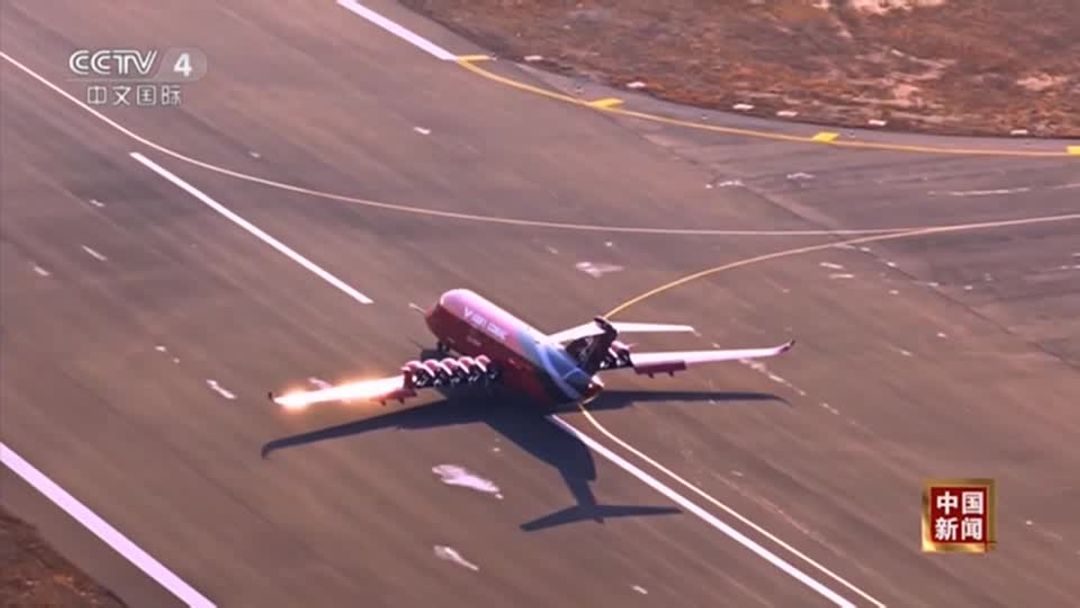
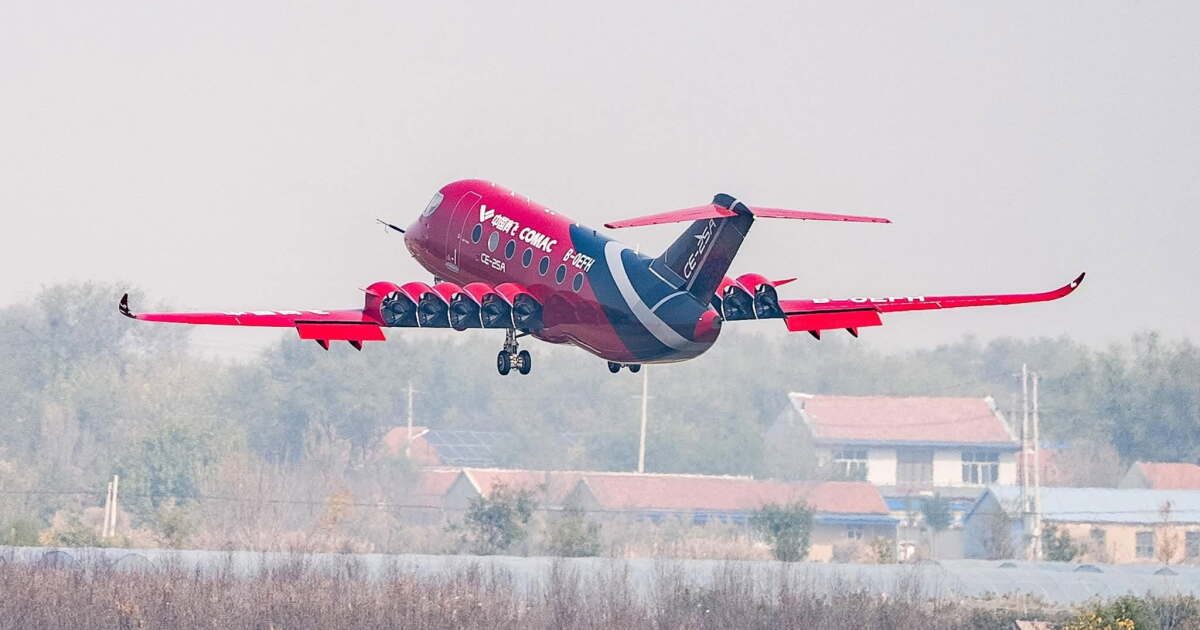
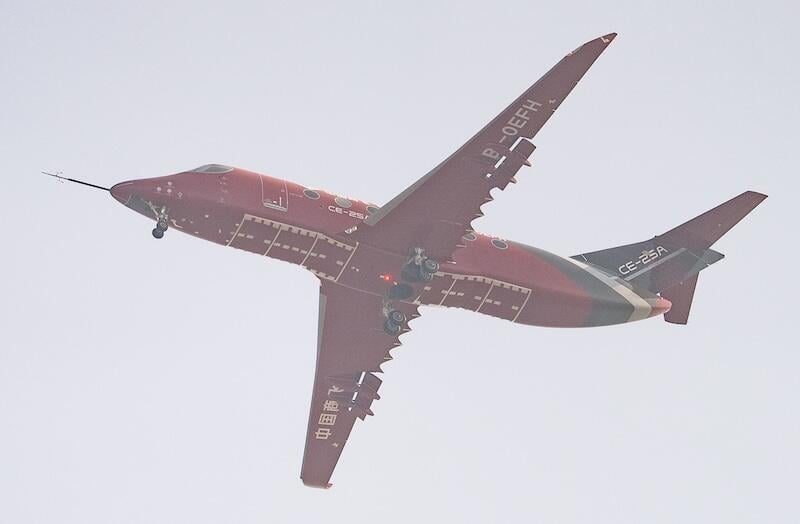
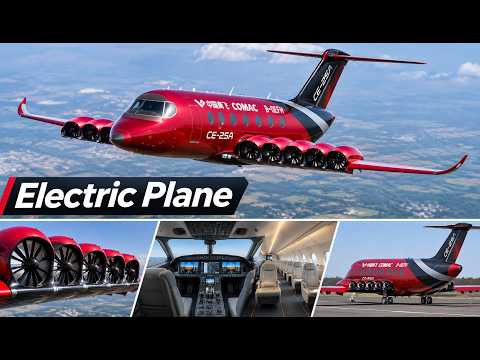
On Nov. 14, a 10-tonne aircraft with ten electric fans mounted on its wings took off from Binzhou in Shandong province with two pilots and a flight-test engineer aboard. It covered 60.4 km in 16 minutes and 38 seconds: the first crewed flight of COMAC's CE-25A, a 19-seat commuter plane designed to fly 400 km on batteries.

The flight is a small step. The aircraft had already flown 19 times with nobody aboard since February. What it changes is the paperwork: China's aviation regulator has accepted COMAC's application for a type certificate, opening a safety review that no battery-electric airliner of this size has finished anywhere.

Why it matters

Short regional flights could someday run on batteries instead of jet fuel, but only if a 19-seat electric airliner can be certified first.

Questions about this story

Free account needed to ask — your question is kept and asked for you right after sign-up. Answers are public.

No questions yet — be the first to ask.

Key Indicators

19
Passengers the CE-25A is designed to carry
A commuter-aircraft layout aimed at intercity routes, not mainline service.
400 km
Stated range on a full charge
COMAC's published figure; the longest crewed flight so far covered 60.4 km.
60.4 km
Distance flown on the first crewed test
About 15% of the aircraft's claimed range.
10
Electric ducted fans
Five per wing, replacing the propellers a turboprop commuter would use.
10 tonnes
Maximum takeoff weight
Roughly 22,000 lb, above the 19,000-lb ceiling for the lighter certification category usually applied to 19-seaters.
19
Uncrewed flights before the crewed one
Autonomous test flights flown between February and November 2026.
500 Wh/kg
CATL's claimed cell-level energy density
The figure for its 'condensed' battery; neither CATL nor COMAC has confirmed what cells the CE-25A carries.

Voices

Curated perspectives — historical figures and your fellow readers.

Sign up to generate historical perspectives on this story.

Organizations Involved

Timeline

July 2023 November 2026

5 events Latest: 6 days ago
Tap a bar to jump to that date
  1. CE-25A carries a crew for the first time

    Latest Flight Test

    Two pilots and a flight-test engineer fly 60.4 km over Binzhou in 16 minutes and 38 seconds. COMAC reports all systems normal.

  2. CAAC accepts the type-certificate application

    Regulatory

    The regulator opens an airworthiness review under CCAR-25. COMAC has not said when it expects a decision.

  3. First full-size photographs of the CE-25A appear

    Flight Test

    Public images emerge after a long quiet stretch, prompting questions about the program's status.

  4. CE-25A flies without anyone aboard

    Flight Test

    The aircraft completes its first uncrewed autonomous flight, the start of a test campaign that reaches 19 flights.

  5. COMAC, CATL and a university form an electric-aircraft venture

    Business

    The joint venture registers CNY 600 million in capital. CATL unveils a condensed battery claiming up to 500 Wh/kg at cell level.

Scenarios

1

CAAC certifies the CE-25A by mid-2029

Possible Resolves by Q2 2029

Discussed by: Aviation Week and The Indian Express both stress that accepting an application starts a review rather than granting approval

A type certificate would let COMAC move from demonstrator flights to building aircraft for airlines. The obstacle is that CCAR-25 was written for turbine airliners, and battery weight pushes a 19-seater into that heavier category. A certificate by mid-2029 would be fast by the standards of any new airliner.

2

COMAC flies the CE-25A more than 350 km on one charge

Uncertain Resolves by End of 2027

Discussed by: Electrek and IDTechEx question whether the battery mass can support the stated 400 km range

The crewed flight covered 60.4 km, a fraction of the advertised figure. A demonstration flight approaching the full 400 km would show the battery pack performs near its design target, which is the open technical question in the program.

3

A Chinese airline sells tickets for a CE-25A flight

Unlikely Resolves by End of 2030

Discussed by: Electrek notes COMAC has given no date for commercial service

Commercial service needs a type certificate, production aircraft and an operator willing to fly them. The aircraft's 400 km range limits it to short intercity hops, so the first route would likely be a thin regional link rather than a trunk route.

Historical Context

2 moments from history that rhyme with this story — and how they unfolded.

September 2022

Eviation Alice first flight (2022)

Eviation flew Alice, a nine-seat all-electric commuter design, in Washington state, presenting it as the first flight of a practical zero-emission airliner.

Then

The flight was widely covered as proof that a fully battery-powered commuter aircraft could get airborne.

Now

The company laid off most of its staff in early 2025, and no Alice has entered service.

Why this matters now

Shows that a first flight is the beginning of a long, expensive certification effort, not the end of one.

August 2026

Heart Aerospace X1 first flight (2026)

Heart flew its X1 demonstrator in Plattsburgh, New York, for 27 minutes. The aircraft weighs more than 11.3 tonnes with a 106-foot wingspan, and the company calls it the largest battery-electric aircraft flown.

Then

The FAA issued a special airworthiness certificate in July 2026, allowing test flights.

Now

Heart's production ES-30 is planned as a hybrid with reserve turbogenerators, targeting service in 2031.

Why this matters now

The nearest Western comparison, and a yardstick for how far either program is from carrying passengers.

Sources

(9)