
Pull to refresh
Logo
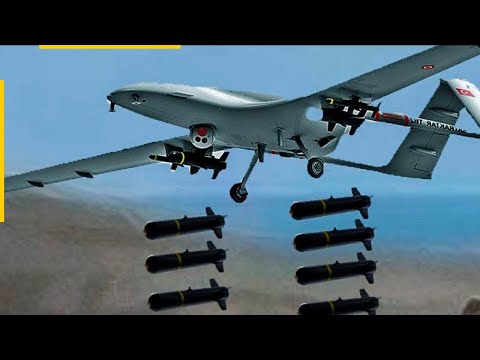
Bayraktar TB2 launches FPV kamikaze drones from its wings in test

Bayraktar TB2 launches FPV kamikaze drones from its wings in test

New Capabilities

Baykar turns its long-endurance TB2 into a mothership for short-range attack drones

Overview

Updated Yesterday

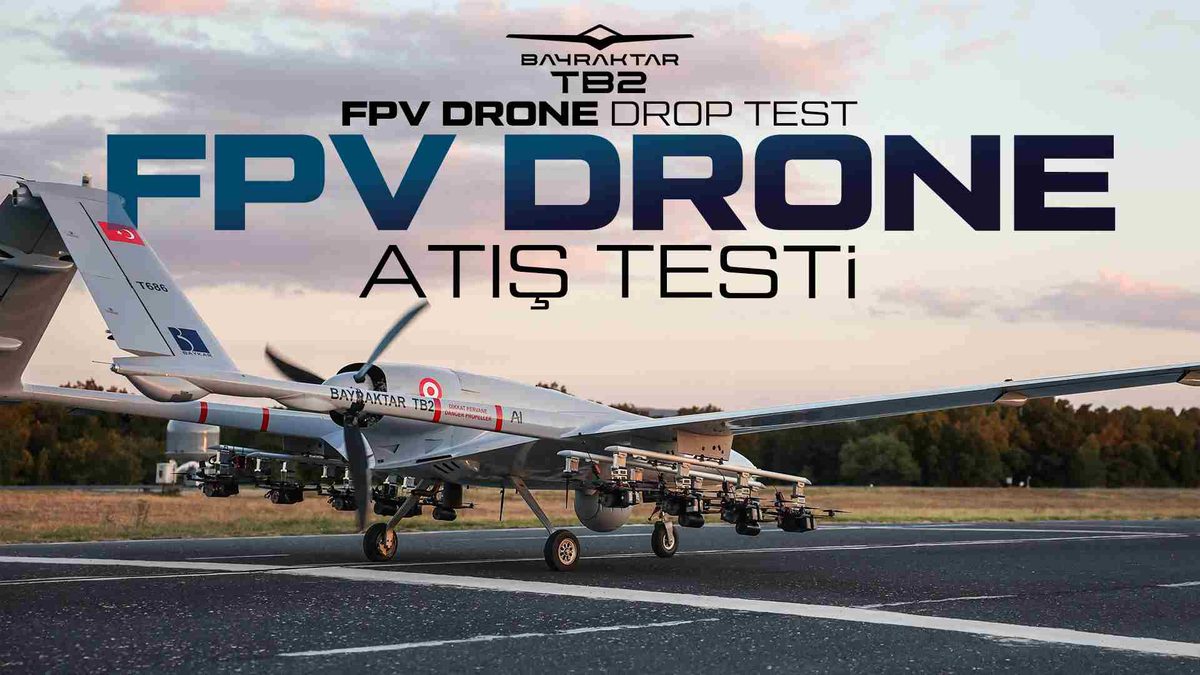
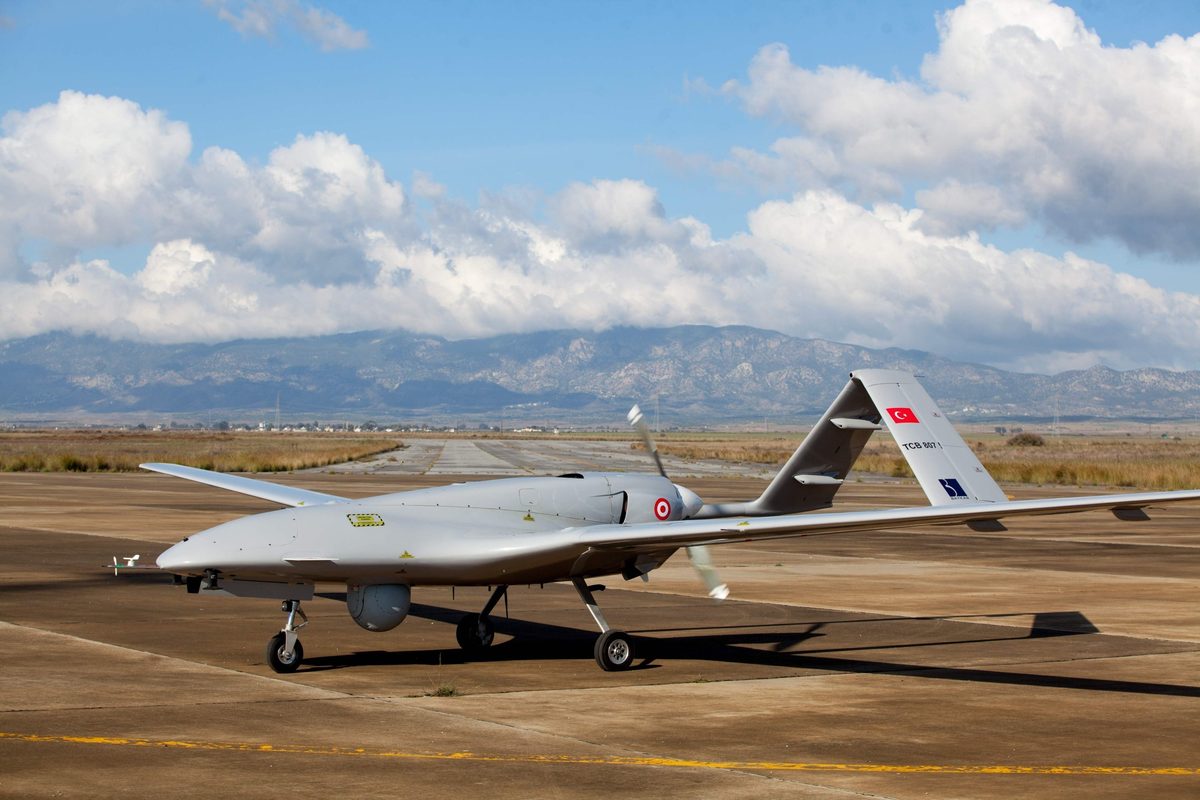
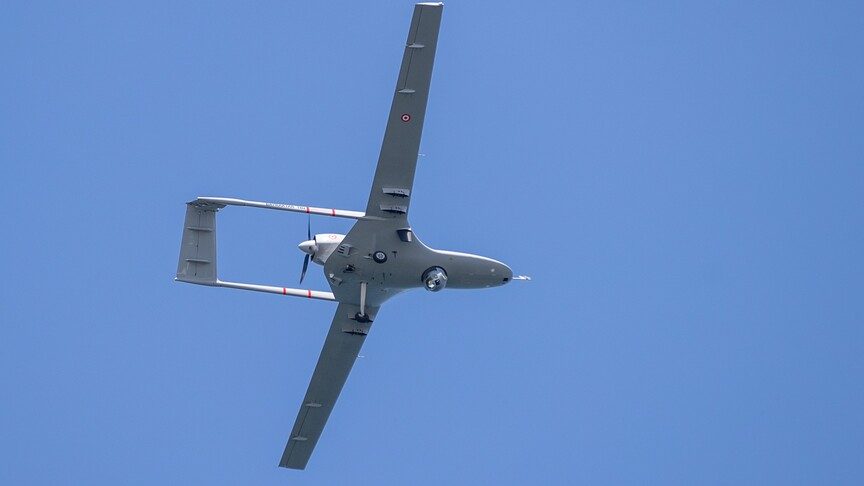
A Bayraktar TB2 took off from a test center in northwestern Türkiye on November 4 carrying 16 small kamikaze drones under its wings. It released two of them over the range, and ground operators steered both into targets through a radio link relayed by the TB2 itself.

The pairing joins a drone with more than 18 hours of flight time to quadcopters that carry a warhead for about 12 minutes. If it works in combat, small attack drones could hit targets far beyond the roughly 15-kilometer range that normally limits their operators.

Why it matters

Pairing FPV drones with a long-endurance aircraft could extend their reach well past 15 kilometers, changing how armies use cheap attack drones.

Questions about this story

Free account needed to ask — your question is kept and asked for you right after sign-up. Answers are public.

No questions yet — be the first to ask.

Key Indicators

16
FPV drones carried
Mounted eight under each wing on racks adapted for in-flight release.
2
Drones released in the test
Both struck designated targets, according to Baykar.
18+
TB2 flight endurance (hours)
Compared with about 12 minutes for a Skydagger FPV carrying a warhead.
~15 km
Typical FPV control range
The limit the TB2 relay is meant to extend.
12 min
Skydagger endurance with warhead
Its unarmed 36-minute flight time drops once it carries a payload.

Voices

Curated perspectives — historical figures and your fellow readers.

Sign up to generate historical perspectives on this story.

People Involved

Organizations Involved

Timeline

2014 November 2026

5 events Latest: Yesterday
Tap a bar to jump to that date
  1. TB2 releases two of 16 FPV drones

    Latest Test

    A TB2 carrying 16 Skydagger drones releases two and relays their control link to ground operators, who strike targets.

  2. Baykar tests FPV launch from Kalkan

    Test

    Baykar releases a Skydagger FPV from its vertical-takeoff Bayraktar Kalkan drone.

  3. FPV motherships appear in Ukraine war

    Military

    Russian carrier systems are documented, and Ukraine uses Dovbush drones to release FPVs.

  4. TB2 gets armed

    Military

    The platform adds strike missions, moving beyond surveillance.

  5. TB2 enters Turkish service

    Military

    The Bayraktar TB2 joins the Turkish Armed Forces as a reconnaissance drone.

Scenarios

1

Turkey orders an operational TB2-FPV unit

Possible Resolves by Nov 4, 2027

Discussed by: Baykar and Turkish defense procurement outlets

The test leads to an operational configuration. Baykar or Turkey's defense procurement agency announces a production order or a fielded unit using TB2s to carry and release FPV drones. Triggered by a formal procurement decision or a service announcement.

2

Baykar exports the TB2-FPV capability

Possible Resolves by Q2 2028

Discussed by: Defense trade press covering Turkish drone exports

A foreign buyer contracts for TB2s set up to carry FPV drones. The deal would signal that the concept has moved past a demonstration and into the export catalog.

3

Jamming and control limits keep the concept experimental

Uncertain Resolves by Nov 4, 2027

Discussed by: Defense analysts raising open questions about electronic warfare

The test does not show FPV control under jamming or simultaneous management of many drones. If follow-on tests do not address those gaps, the capability stays a demonstration.

Historical Context

3 moments from history that rhyme with this story — and how they unfolded.

September 2024

FPV motherships in the Russia-Ukraine war (2024)

Both sides in the Russia-Ukraine war began moving small FPV attack drones closer to their targets by carrying them on larger drones. Russian carrier systems were documented in September 2024, and Ukraine used Dovbush drones to release FPVs.

Then

The approach let operators shorten the distance their short-range control links had to cover.

Now

Carrier drones became a recognized workaround for the range limits of cheap attack drones.

Why this matters now

Baykar's test applies the same idea to a larger, longer-endurance platform rather than a purpose-built carrier.

November 2025

Bayraktar Kalkan FPV launch test (2025)

Baykar tested releasing a Skydagger FPV drone from its vertical-takeoff Bayraktar Kalkan drone. It was the company's first public step toward air-launching small attack drones.

Then

The trial showed a Baykar platform could carry and release an FPV.

Now

It set up the November 2026 TB2 test, which added a longer-endurance aircraft and a communications relay role.

Why this matters now

The TB2 test extends Baykar's earlier work from a smaller vertical-takeoff platform to its flagship fixed-wing drone.

2014-2015

TB2 enters service and is armed (2014-2015)

The Bayraktar TB2 joined the Turkish Armed Forces in 2014 as a reconnaissance drone. It was first armed in 2015, adding strike missions.

Then

Turkey gained a domestically built drone that could both observe and attack.

Now

The TB2 became the base platform Baykar keeps upgrading with new roles, including the mothership test.

Why this matters now

The test is the latest adaptation of a 12-year-old airframe, showing how existing drones are being repurposed as battlefields change.

Sources

(5)