


Pull to refresh
Logo
China begins second Three Gorges ship lock to ease Yangtze congestion

China begins second Three Gorges ship lock to ease Yangtze congestion

Built World

A 77.2 billion yuan, nine-year build aims to nearly double freight capacity at the dam by the mid-2030s

Overview

Updated 53 minutes ago

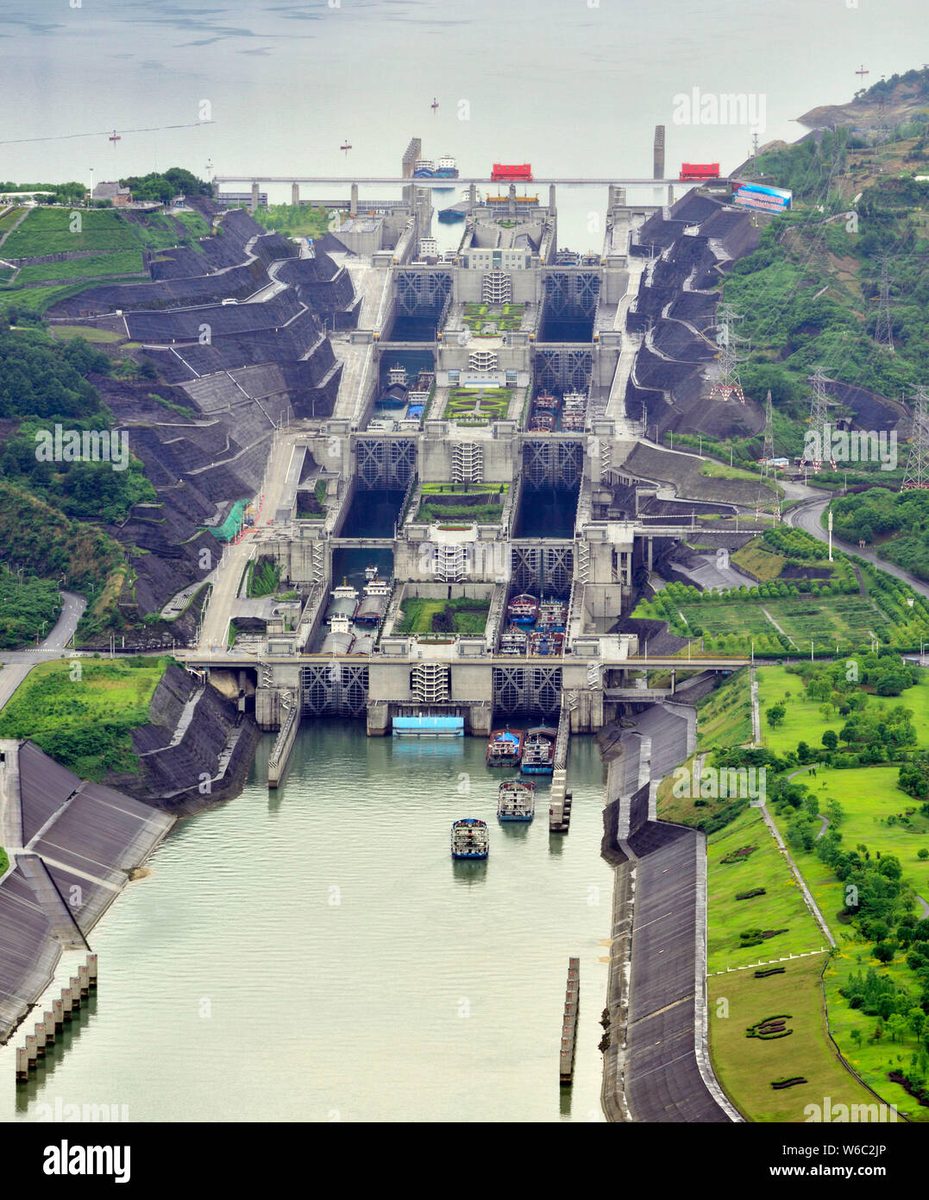
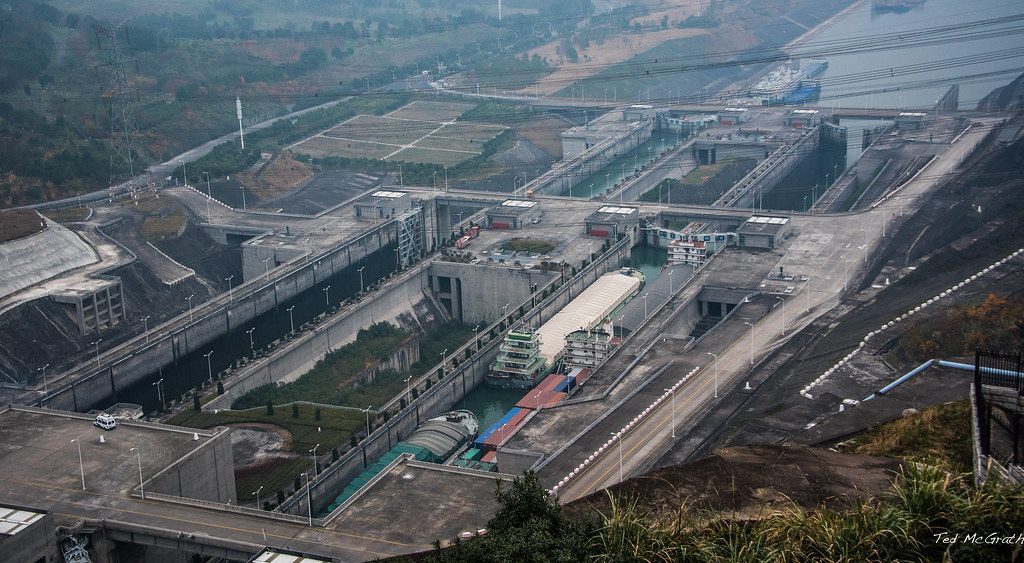
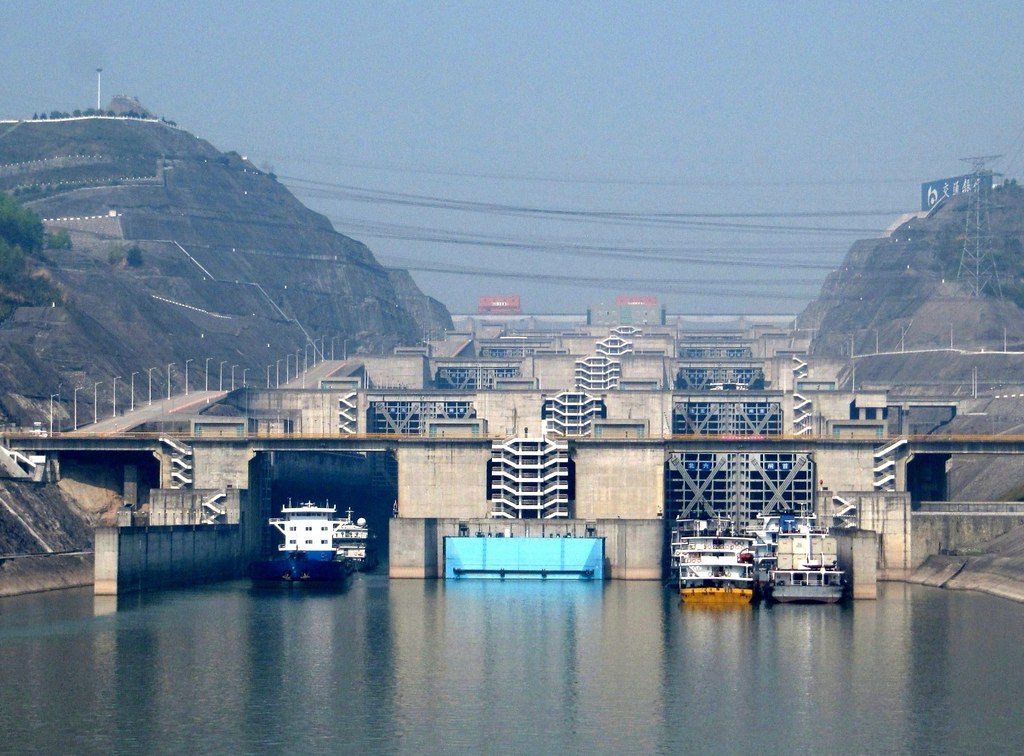
The Three Gorges ship lock was built to move 100 million tonnes of cargo a year by 2030. It passed that mark in 2011, 19 years early. In 2025, 173 million tonnes went through, and vessels queue for days to use a lock running at 160% to 170% of its design capacity.

On June 8, 2026, construction began on a second lock system beside the first. The five-tier, dual-track channel is cut into the north bank at a cost of 77.2 billion yuan ($11.3 billion). Planners expect it to lift the hub's annual capacity to 336 million tonnes.

Why it matters

The Yangtze belt moves 85% of its iron ore and foreign trade on this river. The new lock decides whether that traffic grows or stalls.

Questions about this story

Free account needed to ask — your question is kept and asked for you right after sign-up. Answers are public.

No questions yet — be the first to ask.

Key Indicators

$11.3B
Project cost
Static investment estimate of 77.2 billion yuan for the new lock and the Gezhouba upgrade.
336M tonnes
Planned annual capacity
Throughput the Three Gorges hub is meant to handle once the new lock opens.
173M tonnes
2025 throughput
Cargo that passed the hub last year, against a design capacity of 100 million tonnes.
100M tonnes
Original design capacity
The target the existing lock was expected to reach around 2030.
6,680 m
Length of new lock and approach channels
Each chamber is 280 metres long and 40 metres wide at the base.

Voices

Curated perspectives — historical figures and your fellow readers.

Sign up to generate historical perspectives on this story.

People Involved

Organizations Involved

Timeline

2003 November 2026

7 events Latest: Today
Tap a bar to jump to that date
  1. Work confirmed underway on the Yangtze bypass

    Today Report

    Beijing Post reported that construction had started on the $11 billion project to bypass Three Gorges congestion.

  2. Detailed schedule published

    Announcement

    State media reported a 112-month lock schedule, 95 months at Gezhouba, and 160 million cubic metres of excavation.

  3. Construction begins at Yichang

    Infrastructure

    Ding Xuexiang launched the 77.2 billion yuan project: a new five-tier lock at Three Gorges and an expansion at Gezhouba.

  4. Annual throughput reaches 173 million tonnes

    Milestone

    The locks ran at 160% to 170% of design capacity, with vessels waiting days to transit.

  5. Yangtze River Protection Law takes effect

    Regulation

    The law imposed stricter rules on development along the river, including protections for aquatic species.

  6. Lock throughput passes 100 million tonnes

    Milestone

    The five-tier lock exceeded its 2030 design target 19 years early.

  7. Three Gorges reservoir fills

    Infrastructure

    Impoundment raised water levels above 130 shoals, turning the Yichang–Chongqing stretch into a Class I channel for vessels up to 5,000 tonnes.

Scenarios

1

New Three Gorges lock opens for commercial traffic by 2035

Likely Resolves by End of 2035

Discussed by: China Three Gorges Corporation and Xinhua, citing the 112-month schedule published at the June 2026 start

The published schedule runs 112 months including 12 months of preparation, which puts completion in late 2035. Meeting it requires the north-bank excavation, five lock chambers and approach channels to stay in sequence. China has built large locks on schedule before, but not at this chamber size.

2

Cost overrun pushes the project past 100 billion yuan

Possible Resolves by End of 2032

Discussed by: Gao Peng, deputy chief engineer of China Three Gorges Corporation, who described a 2 billion yuan design change before construction began

The 77.2 billion yuan figure is a static estimate made before construction. The redesign to protect Chinese sturgeon spawning grounds already added 2 billion yuan. A 30% overrun would put the total above 100 billion.

3

Freight demand outgrows the expanded lock

Uncertain Resolves by End of 2040

Discussed by: Chinese Academy of Engineering academicians Zhang Chaoran and Hu Ya'an, who documented the first lock's forecast miss

The first lock was expected to hit 100 million tonnes in 2030 and did so in 2011. If traffic keeps compounding at the pace of the past 15 years, the new 336 million tonne ceiling could be reached well before the lock's design life ends.

Historical Context

3 moments from history that rhyme with this story — and how they unfolded.

2007–2016

Panama Canal expansion (2007–2016)

Panama began building a third set of locks in 2007 to let New Panamax ships through a canal opened in 1914. Disputes over concrete and faulty lock gates pushed the opening two years past the original 2014 target.

Then

The new locks opened on June 26, 2016, roughly doubling canal capacity.

Now

Larger container ships shifted routes toward the canal, but a 2023–24 drought later cut daily transits.

Why this matters now

A parallel lock built to relieve a hard bottleneck, with a schedule that slipped and a payoff that depended on demand forecasts holding.

2014–2015

Suez Canal expansion (2014–2015)

Egypt dug a 35-kilometre parallel channel and widened existing sections, opening it in August 2015 to allow two-way traffic along part of the route.

Then

Transit times fell and the canal could handle more ships per day.

Now

Traffic growth lagged the government's projections, and the 2021 grounding of the Ever Given showed how a single incident can close the route.

Why this matters now

Adding capacity does not create demand. The same risk applies to a second Yangtze lock.

2003

Three Gorges ship lock (2003)

The original five-tier lock opened with a design capacity of 100 million tonnes a year, a figure planners expected traffic to reach around 2030.

Then

Throughput hit the design figure in 2011.

Now

By 2025 the lock carried 173 million tonnes, and the forecast error became the case for a second channel.

Why this matters now

The project now under construction exists because the first forecast was wrong by 19 years.

Sources

(6)