

Pull to refresh
Logo
Ethiopia signs contract for second phase of Ogaden LNG project

Ethiopia signs contract for second phase of Ogaden LNG project

Built World

Chinese firms GCL and Jurong will build expanded liquefaction capacity at the Calub gas field, aiming for international export markets.

Today: Construction Review reports the signing

Overview

Updated 1 hour ago

Ethiopia signed a contract on October 16, 2026, to build the second phase of its Ogaden liquefied natural gas (LNG) project. Chinese firms GCL Group and Jurong Group will construct and operate expanded gas liquefaction facilities at the Calub gas field in the Somali Region.

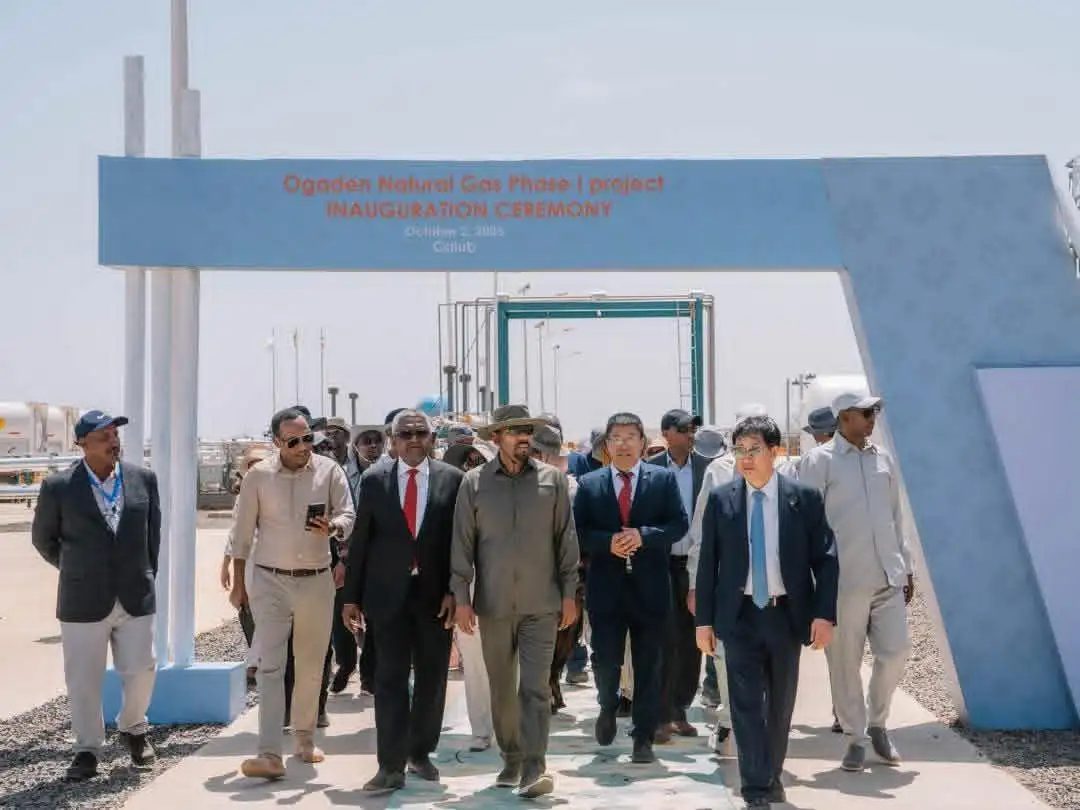
The first phase, commissioned in October 2025, produces about 50,000 tons of LNG annually for domestic industrial users. The second phase aims to expand production and reach international export markets—a first for Ethiopia, though no export route has been confirmed.

Why it matters

If the second phase reaches export markets, Ethiopia becomes an LNG exporter for the first time—a major shift for a landlocked country.

Questions about this story

Free account needed to ask — your question is kept and asked for you right after sign-up. Answers are public.

No questions yet — be the first to ask.

Key Indicators

50,000 tons/year
First-phase LNG production capacity
The initial modular plant produces about 50,000 tons of LNG annually for domestic industrial users.
200,000 m³/day
First-phase daily gas processing
The first phase processes 200,000 cubic meters of natural gas daily.
1.33 billion liters/year
Second-phase capacity target
Phase 2 is expected to add 1.33 billion liters per year to national gas production, per Ethiopian officials.
$4.2 billion
Dangote gas supply agreement
GCL and Dangote signed a 25-year, $4.2 billion gas supply deal in March 2026 for a urea fertilizer complex in Gode.

Voices

Curated perspectives — historical figures and your fellow readers.

Ever wondered what historical figures would say about today's headlines?

Sign up to generate historical perspectives on this story.

People Involved

Organizations Involved

Timeline

2013 October 2026

9 events Latest: Today
Tap a bar to jump to that date
  1. Construction Review reports the signing

    Today Report

    Construction Review publishes its report on the second-phase contract, noting the contract value and completion date were not disclosed.

  2. Second-phase contract signed

    Agreement

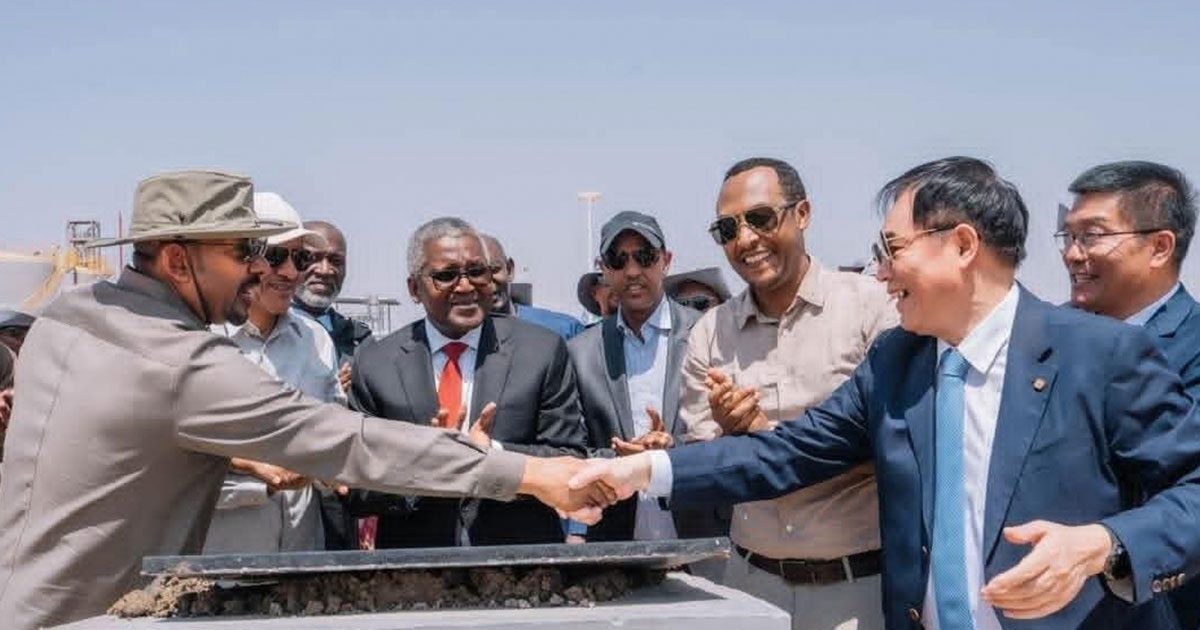
    GCL Energy Investment and Jurong Group sign the LNG construction and entrusted processing contract at the Ministry of Mines.

  3. GCL and Jurong sign strategic framework

    Agreement

    GCL and Jurong sign a strategic cooperation framework for LNG development in Ethiopia.

  4. GCL and Dangote sign gas supply deal

    Agreement

    GCL and Dangote sign a reported $4.2 billion, 25-year gas supply agreement for a urea fertilizer complex in Gode.

  5. First phase commissioned, second phase launched

    Launch

    Prime Minister Abiy Ahmed commissions the first phase and breaks ground on the second phase, gas power, and oil refining projects.

  6. Ogaden LNG project breaks ground

    Construction

    Project breaks ground at Calub camp in the Somali Region, using modular skid-mounted technology.

  7. Ethiopia reverses termination

    Regulatory

    Ethiopia reverses the September 2022 termination, restoring Poly-GCL's production-sharing agreements.

  8. Ethiopia terminates Poly-GCL contracts

    Regulatory

    Ethiopia terminates Poly-GCL's contracts following disputes over capital registration, outstanding fees, and development delays.

  9. Poly-GCL begins Ogaden Basin operations

    Agreement

    Poly-GCL begins operations in the Ogaden Basin under production-sharing agreements covering the Calub and Hilala fields.

Scenarios

1

GCL begins construction on Ogaden LNG second phase

Likely Resolves by Q2 2027

Discussed by: Ethiopian Ministry of Mines, which called for construction of the first module to begin as soon as possible

The Ministry of Mines has urged GCL and Jurong to start building the first module of the second phase immediately. If construction begins and progresses, the project moves from initial production toward larger-scale processing and commercialization, with the second phase expected to add 1.33 billion liters per year to national gas production.

2

Ethiopia confirms export route for Ogaden LNG

Possible Resolves by End of 2027

Discussed by: allAfrica and Construction Review, which note no export route has been publicly confirmed

Ethiopia is landlocked. Earlier proposals to transport gas to Djibouti for export have not resulted in a confirmed route. If a route is confirmed, the second phase gains a path to international markets. Without one, the project's export ambitions remain uncertain.

3

Ogaden LNG second phase stalls over financing

Possible Resolves by Q2 2027

Discussed by: Construction Review, which notes the contract value, additional capacity, and completion date were not disclosed

The contract does not disclose its value, the additional LNG production capacity, or a completion date. If financing and logistics arrangements fail to materialize, the second phase could stall, as earlier Ogaden development efforts did between 2022 and 2024.

Historical Context

2 moments from history that rhyme with this story — and how they unfolded.

2019-2021

Mozambique LNG (2019-2021)

Total's $20 billion Mozambique LNG project in the Cabo Delgado province was halted in 2021 after an insurgency forced the company to declare force majeure. The project had been one of Africa's largest energy investments.

Then

Construction stopped, and Total evacuated staff from the site. The project remained suspended for years.

Now

The halt showed how security, financing, and logistics risks can stall large African LNG developments for extended periods.

Why this matters now

Ogaden faces similar risks—financing is undisclosed, and the Somali Region has a history of instability. The project's success depends on security and reliable logistics.

2000-2003

Chad-Cameroon Pipeline (2003)

The Chad-Cameroon pipeline, completed in 2003, carried oil from landlocked Chad through Cameroon to the Atlantic coast. It was one of the first major energy export projects for a landlocked African country.

Then

The pipeline brought oil revenue to Chad but faced disputes over revenue sharing and environmental concerns.

Now

It demonstrated that landlocked African countries can export energy through neighbors, but only with complex cross-border agreements.

Why this matters now

Ethiopia faces a similar challenge: as a landlocked country, it must secure a route through Djibouti or another neighbor to export LNG from the Ogaden Basin.

Sources

(10)