

Pull to refresh
Logo
China opens Pinglu Canal, giving landlocked southwest a direct route to sea trade

China opens Pinglu Canal, giving landlocked southwest a direct route to sea trade

Built World

134-kilometer waterway links Nanning to Beibu Gulf, cutting ocean-bound shipping distance by 560 kilometers

Today: Pinglu Canal opens to navigation

Overview

Updated 2 hours ago

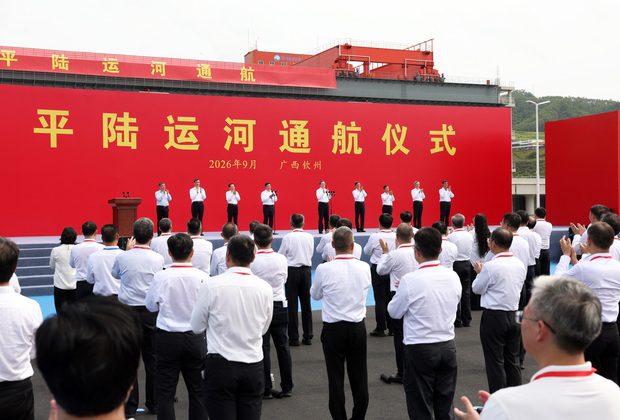
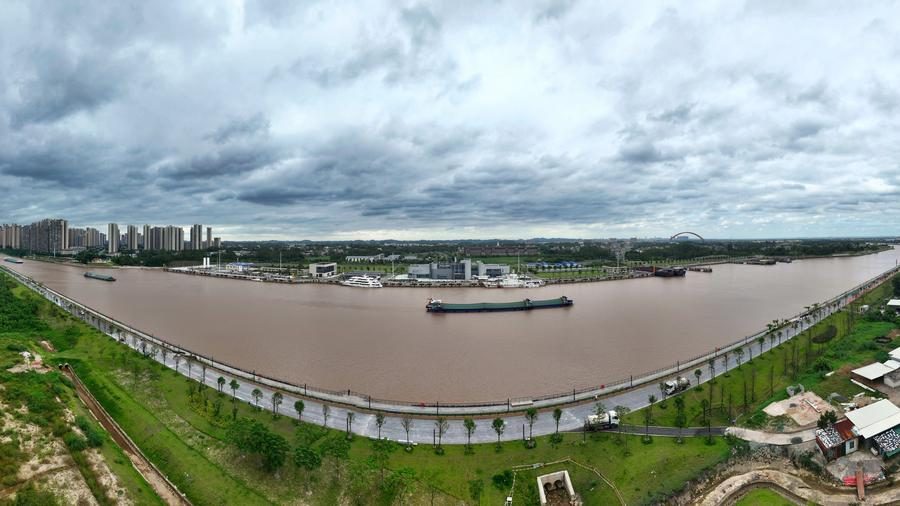
China opened the Pinglu Canal on September 16, giving its landlocked southwest a direct river-to-sea route for the first time. The 134.2-kilometer waterway links Nanning, capital of Guangxi, to the Beibu Gulf, cutting the ocean-bound journey by more than 560 kilometers compared with traditional routes through Guangdong ports.

Built at a cost of 72.7 billion yuan ($10.75 billion), the canal is the first river-to-sea waterway planned at the national level since 1949. It carries vessels up to 5,000 tonnes and serves factories across Guangxi, Yunnan, Guizhou, Sichuan, and Chongqing, connecting them to Southeast Asian markets.

Association of Southeast Asian Nations (ASEAN) took more than $1 trillion in Chinese goods last year and is China's largest trading partner. The canal is expected to cut logistics costs on the corridor by 18 to 30 percent, saving more than 5 billion yuan in transportation costs each year.

Why it matters

Logistics costs on the southwest-to-sea corridor fall 18 to 30 percent, shifting how and where China ships goods to its largest trading partner, ASEAN.

Questions about this story

Free account needed to ask — your question is kept and asked for you right after sign-up. Answers are public.

No questions yet — be the first to ask.

Key Indicators

134.2 km
Canal length
Runs from Nanning to the Beibu Gulf port of Qinzhou.
$10.75B
Construction cost
72.7 billion yuan invested in the four-year project.
560 km
Shipping distance saved
Compared with traditional routes through Guangdong ports.
18–30%
Projected logistics cost reduction
Expected savings on the southwest-to-sea corridor.
5,000 tonnes
Maximum vessel size
Design capacity for vessels using the canal.
$744.41B
China–ASEAN trade, Jan–Jul 2026
Up 24.7% year over year; 21.8% of China's total foreign trade in the period.

Voices

Curated perspectives — historical figures and your fellow readers.

Ever wondered what historical figures would say about today's headlines?

Sign up to generate historical perspectives on this story.

People Involved

Organizations Involved

Timeline

August 2022 January 2027

4 events Latest: Today
Tap a bar to jump to that date
  1. Toll collection begins

    Upcoming Policy

    A fee of 1 yuan ($0.14) per tonne of vessel capacity applies at each gate, in effect until September 2031.

  2. Free passage period ends

    Upcoming Policy

    Commercial vessels pass through the three navigation hubs free of charge until this date.

  3. Pinglu Canal opens to navigation

    Today Opening

    Vice Premier Ding Xuexiang announces the canal open. First cargo vessels depart for Yangpu Port in Hainan.

  4. Pinglu Canal construction begins

    Construction

    China approves and starts building the 134.2-kilometer canal connecting Nanning to the Beibu Gulf.

Scenarios

1

Pinglu Canal reaches high cargo utilization within three years

Likely Resolves by Q1 2028

Discussed by: Guangxi regional officials and Pinglu Canal Group executives

Cargo volumes grow steadily as shippers shift from rail and Guangdong port routes. Direct commercial sailings to Can Tho in southern Vietnam begin as scheduled. The projected 18 to 30 percent logistics cost savings materialize, and Beibu Gulf Port container volumes continue their upward trajectory, pushing annual throughput beyond the 10.06 million TEUs recorded in 2025.

2

Canal traffic underwhelms as tolls and rail competition bite

Possible Resolves by Q1 2028

Discussed by: Logistics analysts monitoring southwest China freight patterns

Some shippers continue using the existing rail network or Guangdong port routes, citing the canal's toll structure (1 yuan per tonne per gate from January 2027) and lock transit times. Cargo volumes fall short of projections in the first full year of tolled operation, and the anticipated industrial clustering in Nanning and Qinzhou is slower than expected.

3

Canal spurs industrial relocation and corridor-wide integration

Uncertain Resolves by End of 2028

Discussed by: People's Daily, regional economic developers

Battery materials, high-end paper, and chemical industries cluster in Nanning, while petroleum coke and coal tar pitch arrive via canal at Qinzhou. Yunnan completes Funing Port and Guizhou finishes the Huangtong-Baise Railway, extending the corridor inland. Regional planners describe the canal as the backbone of a multimodal transport system integrating river, rail, and sea.

Historical Context

3 moments from history that rhyme with this story — and how they unfolded.

1859–1869

Suez Canal (1869)

The 193-kilometer Suez Canal linked the Mediterranean to the Red Sea, cutting the Europe-to-Asia voyage by roughly 7,000 kilometers. It took a decade and an estimated 1.5 million workers to build.

Then

Shipping between London and Bombay fell from months to weeks, transforming trade patterns.

Now

The canal became one of the world's most important trade chokepoints, carrying about 12% of global trade today.

Why this matters now

Like Suez, the Pinglu Canal is a shortcut that redraws trade geography, connecting interior producers to maritime markets with less distance and lower cost.

1994–2012

Three Gorges Dam navigation completion (2012)

China completed the world's largest hydroelectric dam on the Yangtze, including five-tier ship locks that raised vessels 113 meters. The project required resettlement of over 1.3 million people.

Then

River shipping capacity on the Yangtze expanded dramatically, with cargo tonnage through the locks growing for years.

Now

The dam demonstrated China's capacity to execute massive river infrastructure with complex engineering and significant human displacement.

Why this matters now

The Pinglu Canal mirrors the Three Gorges pattern: national-level river engineering, population resettlement (11,228 people in Guangxi), and navigation infrastructure built to reshape regional logistics.

2007–2016

Panama Canal Expansion (2016)

Panama spent $5.25 billion on a third set of locks to handle post-Panamax container ships, doubling the canal's capacity. The project took nine years and faced cost overruns and construction disputes.

Then

Larger vessels began transiting the canal, and U.S. Gulf and East Coast ports expanded to handle the new traffic.

Now

The expansion shifted container shipping patterns, making some routes viable that were previously uneconomical.

Why this matters now

Both canals represent infrastructure bets on future trade growth — Panama expanded for larger ships, while the Pinglu Canal opens a new river-to-sea corridor for one of the world's busiest bilateral trade relationships.

Sources

(10)