Anchor

Nickel oxide surface structure unlocks methane conversion with 10x less metal
New CapabilitiesAn atomic motif that forms during reaction outperforms the metallic nickel long assumed to drive methane-to-syngas catalysis
Today: Nature Catalysis study on nickel oxide active motif draws attentionNew here? Follow stories to track developments over time. Create a free account to get updates when stories you care about change.
Overview
Updated 1 hour agoMethane-to-syngas catalysts have carried 8 to 10 weight percent nickel for decades, because metallic nickel was thought to be the active ingredient. Researchers at the Chinese Academy of Sciences found that a specific atomic pattern on nickel oxide, not metallic nickel, does the real work.
The pattern, called [Ni1O1Ni4], assembles itself mid-reaction. A catalyst with 0.8 weight percent nickel converted 92 percent of methane at 650°C, matching one with ten times the metal. Cheaper industrial catalysts are now within reach.
Why it matters
Nickel is the workhorse metal in methane-to-syngas catalysts; cutting loadings tenfold could lower costs for fuels and chemicals.
Questions about this story
Free account needed to ask — your question is kept and asked for you right after sign-up. Answers are public.
No questions yet — be the first to ask.
Key Indicators
0.8 wt%
Nickel loading in new catalyst
One tenth the nickel of the 8 wt% conventional benchmark catalyst.
92%
Methane conversion
CH4 converted at 650°C over the 0.8 wt% Ni/Al2O3 catalyst.
87%
Syngas selectivity
Combined CO and H2 selectivity, with a stable H2/CO ratio near 2.0.
12.5 kcal/mol
C-H activation barrier
Barrier on the [Ni1O1Ni4] motif, versus 38.5 on plain NiO(100) and 15.7 on metallic Ni(111).
Related Media
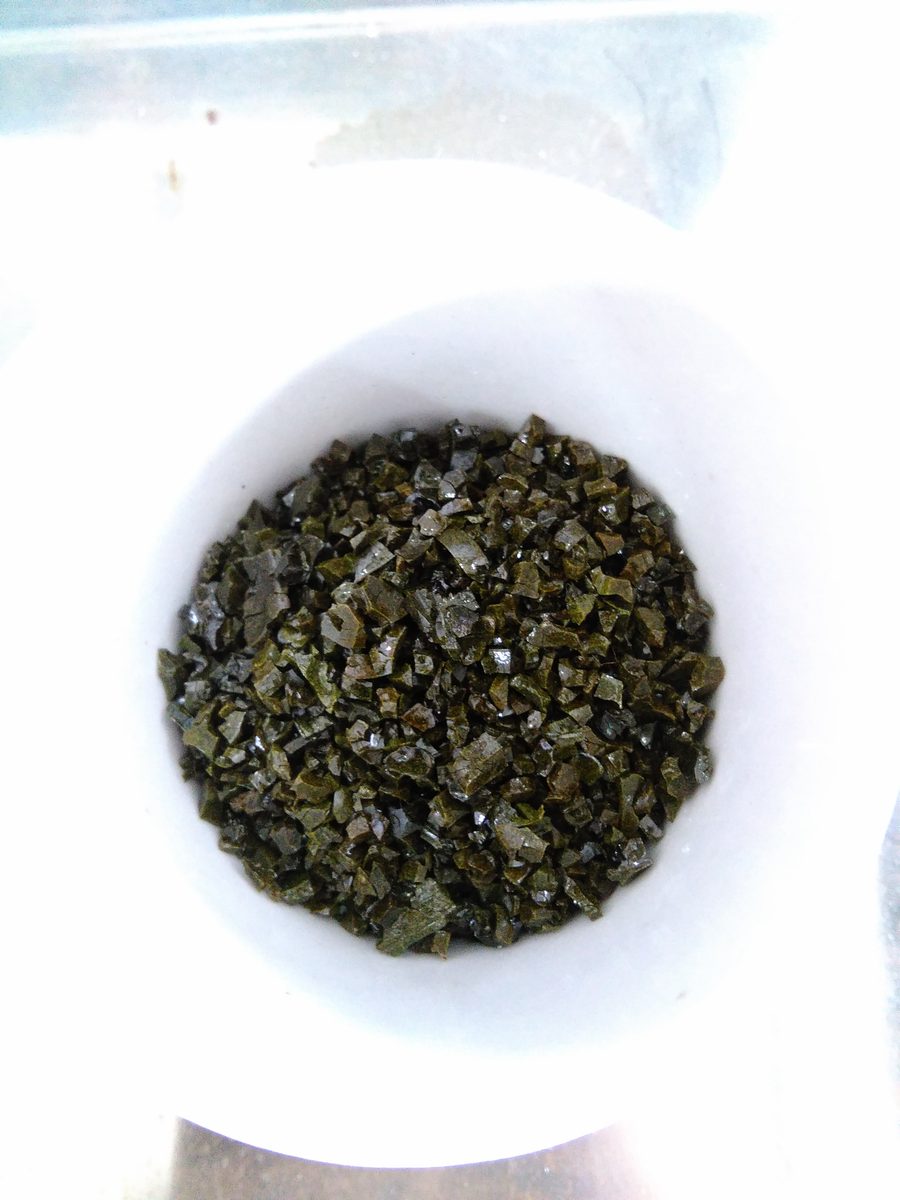
File:Nickel(II) oxide catalyst.jpg - Wikimedia Commons
77 views
2:40
Development of a Methane Oxidation Catalyst System for Gas ...
Kanadevia Group Channel
181 views
1:02
Methane reacts with steam at 1273 K in the presence of nickel ...
Chem Media

140 views
3:50
The Most Important Methane Reaction You Never Heard Of
greenmanbucket
Images from Openverse under Creative Commons licenses. Videos from YouTube.
Voices
Curated perspectives — historical figures and your fellow readers.
Play
Exploring all sides of a story is often best achieved with Play.
Most of these play right now — no account needed. Sign up to save scores, keep a streak, and unlock Debate and Predict.
Log in
Sign Up
Higher or Lower
A number from this story, against one from elsewhere in the news — guess which is bigger, then keep the chain going. 5 rounds, 3 strikes; a miss costs a strike and resets your streak.
Example
Anchor
EU tariff revenue
$52B
Big for this kind of number
Mystery
Pentagon AI contract
?
Round 1
Streak: 0
Mystery
?
Keyboard: ↓/L lower · ↑/H higher
0 pts
Best streak: 0 · Rounds: 0
0 points — sign up to put that on the leaderboard.
Now try on this story
Connections
Sixteen names from the news. Find the four hidden groups of four. Four mistakes max.
Loading today's puzzle…
0/4 groups
Mistakes
Sign up to keep a daily streak — a new puzzle lands every day.
Now try on this story
Exit debate?
Your progress in this debate will be lost.
How it works
- 1 Two AI personas square off on this story.
- 2 You predict who'll win each round — correct picks earn XP.
- 3 One crossfire question is yours to fire. Pick it carefully.
Couldn't generate a topic
Select Your Champions
Choose one persona for each side of the debate
DEBATE TOPIC
Choose personas with different perspectives for a more dynamic debate.
SIDE A (PRO)
Select debater for this side:
No debate personas available right now.
SIDE B (CON)
Select debater for this side:
No debate personas available right now.
VS
Get ready to make your prediction...
Round of
Claim
Evidence
Stakes
Crossfire Answer
Closing Statement
Claim
Evidence
Stakes
Crossfire Answer
Closing Statement
Your Crossfire Question
Generating arguments...
Who's Got This Round?
Make your prediction before the referee scores
The referee scores both sides on
Correct predictions earn +20 XP
· Press 1 or 2 to pick
Evidence
40%
Logic
30%
Detail
20%
Style
10%
Round Results
Your Pick
Not this time
(%)
Overall Score
/10
Your Pick
Not this time
(%)
Overall Score
/10
Set the Crossfire
Pick the question both personas must answer in the final round
Crafting crossfire questions...
Choosing a question earns +10 XP crossfire bonus
🏆
Total XP Earned
Cred Change
Predictions
Debate Oracle! You called every round!
Sharp Instincts! You know your debaters!
The Coin Flip Strategist! Perfectly balanced!
The Contrarian! Bold predictions!
Inverse Genius! Try betting the opposite next time!
XP Breakdown
Base completion
+20 XP
Rounds played ( rounds x 5 XP)
+ XP
Correct predictions ( correct x 20 XP)
+ XP
Crossfire bonus
+10 XP
Accuracy
%
Prediction History
Round
You picked:
✓
✗
Now try on this story
Keep debating to level up your credibility and unlock achievements
People Involved
Tao Zhang
Professor and study co-leader, Dalian Institute of Chemical Physics
Co-led the research
AW
Aiqin Wang
Professor, study co-leader, Dalian Institute of Chemical Physics
Co-led the research
Xiaoyan Liu
Professor, study co-leader, Dalian Institute of Chemical Physics
Co-led the research
Graham J. Hutchings
Professor, Cardiff University, study co-author
Contributed to the study
Organizations Involved
Dalian Institute of Chemical Physics
Research institute
Led the study
A Chinese Academy of Sciences institute focused on catalysis, energy, and chemical engineering.
Xi'an Jiaotong University
University
Contributed density functional theory calculations
A Chinese research university whose group, led by Tao Yang, ran the DFT calculations.
Cardiff University
University
Contributed expertise
UK university whose catalysis institute, led by Graham Hutchings, contributed to the study.
Timeline
2 events
Latest: Today
-
Nature Catalysis study on nickel oxide active motif draws attention
Today PublicationScienceDaily and other outlets report the [Ni1O1Ni4] active-site discovery and its 10x nickel reduction.
-
Chinese Academy of Sciences flags low-nickel catalyst finding
StatementCAS publicizes the DICP-led POM study, emphasizing in situ generation of the active motif.
Historical Context
3 moments from history that rhyme with this story — and how they unfolded.
1954
Mars-van Krevelen mechanism (1954)
Chemists Mars and van Krevelen proposed that in oxidation reactions, lattice oxygen from the metal oxide is consumed and then replenished by gas-phase oxygen. The metal oxide surface, not just the metal, participates directly in the reaction.
Then
The mechanism explained many oxidation catalysis results that metallic-only models could not.
Now
It became a foundational concept in oxidation catalysis and showed that oxide surface sites can be the true active centers.
Why this matters now
The [Ni1O1Ni4] motif sits on a NiO surface with an oxygen atom bridging four nickel atoms, echoing the Mars-van Krevelen idea that oxide lattice sites participate in C-H activation.
1987
Gold nanoparticle catalysis (1987)
Japanese chemist Masatake Haruta discovered that gold nanoparticles under 5 nanometers catalyze carbon monoxide oxidation at room temperature. Gold had long been assumed inert. Graham Hutchings, a co-author on this study, independently predicted gold's activity for acetylene hydrochlorination in the same era.
Then
A new research field opened around supported gold nanoparticles and their size-dependent activity.
Now
Gold catalysis became a standard example of how particle size and surface structure, not bulk identity, control catalytic behavior.
Why this matters now
Both findings invert a long-held assumption: catalytic activity emerges from specific atomic structures, not from the metal's bulk form. Hutchings connects the two stories directly.
2011
Single-atom catalysis (2011)
Tao Zhang's group at DICP proposed the concept of single-atom catalysis, showing that isolated metal atoms on oxide supports can outperform bulk metal particles. The idea reshaped how researchers design heterogeneous catalysts.
Then
Single-atom catalysts became a major research trend across oxidation, hydrogenation, and electrochemistry.
Now
The concept established that sparse, well-defined active sites can rival or beat metal-rich catalysts, a principle this study extends to dynamically reconstructed surfaces.
Why this matters now
This POM study comes from the same DICP catalysis lineage and argues that a reconstructed atomic motif, not the metal-rich phase, drives the reaction.
Sources
(3)Related Stories
Low-cost catalysts and tandem solar cells expand clean energy options
New Capabilities
Updated May 27
Hong Kong team unveils corrosion-resistant steel for seawater hydrogen
New Capabilities
Updated Aug 11
Advances in carbon capture and conversion technology
New Capabilities
Updated May 26
Solar-powered electrolyzer makes hydrogen for under $2 a kilogram
New Capabilities
Updated Aug 21
AI-driven autonomous labs transform materials discovery
New Capabilities
Updated May 26
Chinese researchers achieve 700 Wh/kg lithium battery using fluorinated hydrocarbon electrolyte
New Capabilities
Updated May 30