


Pull to refresh
Logo
Daily Brief
Following
Why
Four decades of tracking human happiness

Four decades of tracking human happiness

New Capabilities
By Newzino Staff |

The World Values Survey's 40-year effort to measure whether humanity is getting happier—and why economists still disagree

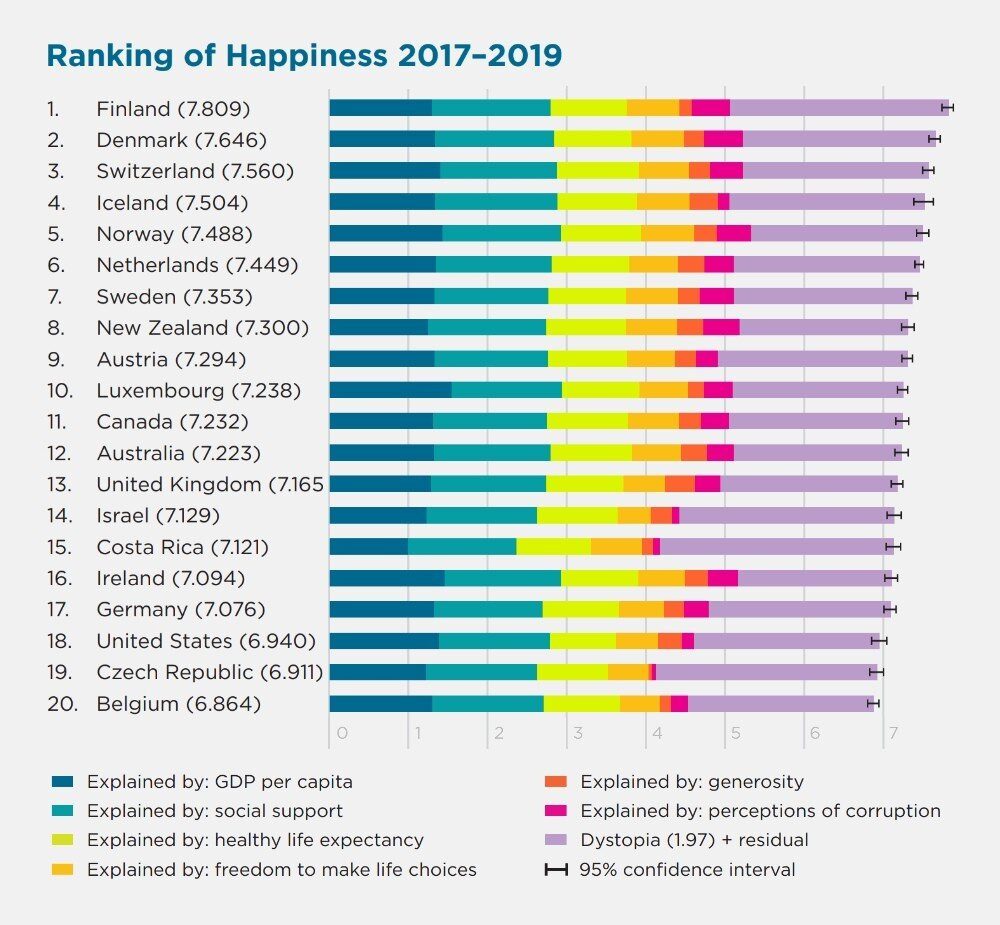
March 20th, 2024: US Falls Out of Top 20 Happiest Countries

Overview

Since 1981, the World Values Survey has asked people in over 100 countries a simple question: Are you happy? The answer, according to data spanning four decades and six survey waves, is increasingly yes—happiness rose in 45 of 52 countries with long-term data between 1981 and 2007, with India, Ireland, Mexico, Puerto Rico, and South Korea showing the steepest gains.

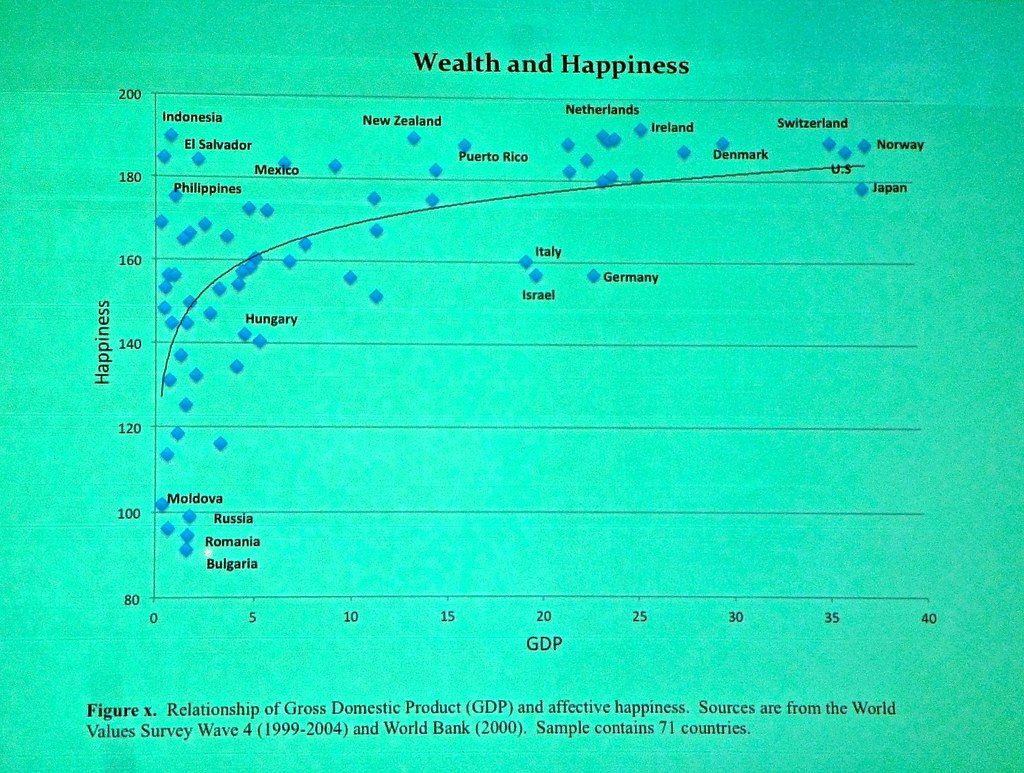
But the finding remains contested. The Easterlin paradox—the observation that while richer people are happier, richer countries don't get happier over time—has sparked a 50-year debate among economists. Recent data adds a complication: since roughly 2013, happiness among young people has collapsed in wealthy nations, erasing the gains of previous decades for an entire generation.

Key Indicators

45 of 52
Countries with rising happiness
Countries showing increased happiness in WVS data from 1981-2007
7 points
Average increase in 'very happy'
Percentage point rise in respondents reporting they were 'very happy' across surveyed nations
100+
Countries surveyed
Nations included in the World Values Survey, covering 90% of world population
62nd
US youth happiness rank
American under-30s rank 62nd out of 143 countries in 2024, while over-60s rank 10th

Interactive

Exploring all sides of a story is often best achieved with Play.

Ever wondered what historical figures would say about today's headlines?

Sign up to generate historical perspectives on this story.

Sign Up

Debate Arena

Two rounds, two personas, one winner. You set the crossfire.

People Involved

Ronald F. Inglehart
Ronald F. Inglehart
Founder, World Values Survey (Died May 8, 2021)
Richard Easterlin
Richard Easterlin
Economist, University of Southern California (Professor Emeritus)
Betsey Stevenson
Betsey Stevenson
Economist, University of Michigan (Professor of Public Policy and Economics)
Justin Wolfers
Justin Wolfers
Economist, University of Michigan (Professor of Public Policy and Economics)

Organizations Involved

World Values Survey
World Values Survey
International Research Network
Status: Active, conducting Wave 8 (2024-2026)

Global research project exploring people's values and beliefs through representative national surveys conducted every five years.

World Happiness Report
Annual Research Publication
Status: Active, published annually since 2012

Annual ranking of countries by happiness levels using Gallup World Poll data, released each March on the UN's International Day of Happiness.

Timeline

  1. US Falls Out of Top 20 Happiest Countries

    Research

    The World Happiness Report shows the US dropping to 23rd place, driven by collapsed wellbeing among under-30s, who rank 62nd globally while American over-60s rank 10th.

  2. World Values Survey Findings Show 40-Year Happiness Rise

    Research

    Analysis of six WVS waves (1981-2022) confirms self-reported happiness has risen globally as countries became freer and richer, with economic development, democratization, and social tolerance driving gains.

  3. WVS Wave 7 Completes

    Research

    The seventh wave of the World Values Survey closes after surveying 64 countries and over 80,000 respondents—delayed one year by COVID-19.

  4. Ronald Inglehart Dies at 86

    Milestone

    The founder of the World Values Survey dies after directing the project for four decades and authoring over 400 peer-reviewed articles.

  5. Inglehart Named Most-Cited Political Scientist

    Recognition

    Ronald Inglehart is named the most-cited scholar in political science; his book Cultural Evolution synthesizes 40 years of WVS findings linking freedom, tolerance, and happiness.

  6. First World Happiness Report Published

    Research

    The inaugural World Happiness Report is released, establishing annual country rankings based on Gallup polling data.

  7. UN Adopts Happiness Resolution

    Policy

    The UN General Assembly adopts 'Happiness: towards a holistic approach to development,' recognizing that GDP does not adequately reflect human wellbeing.

  8. University of Michigan Study: 45 of 52 Countries Getting Happier

    Research

    Ronald Inglehart publishes findings that happiness rose in 45 of 52 countries with long-term WVS data (1981-2007), with India, Ireland, Mexico, and South Korea showing steepest gains.

  9. Bhutan Constitutionalizes GNH

    Policy

    Bhutan's new constitution mandates the pursuit of Gross National Happiness as a government responsibility, institutionalizing the first alternative to GDP.

  10. Stevenson and Wolfers Challenge Easterlin Paradox

    Research

    Economists Betsey Stevenson and Justin Wolfers publish research finding a clear positive link between GDP and happiness, with no satiation point—contradicting the Easterlin paradox.

  11. World Values Survey Launches

    Research

    Ronald Inglehart founds the World Values Survey, beginning systematic cross-national measurement of subjective wellbeing across 22 countries.

  12. Easterlin Publishes Income-Happiness Paradox

    Research

    Richard Easterlin's paper 'Does Economic Growth Improve the Human Lot?' identifies the paradox that richer individuals are happier, but economic growth doesn't raise national happiness over time.

  13. Bhutan Coins 'Gross National Happiness'

    Conceptual

    King Jigme Singye Wangchuck declares that 'Gross National Happiness is more important than Gross Domestic Product,' establishing an alternative framework for measuring national progress.

Scenarios

1

Youth Mental Health Crisis Reverses Long-Term Gains

Discussed by: World Happiness Report, NBER, CDC researchers, Jonathan Haidt

The collapse in youth wellbeing since 2013—linked to smartphone adoption, social media, and economic insecurity—could erase the happiness gains documented by the WVS. If under-30 unhappiness persists as this cohort ages, it may permanently lower national happiness averages in wealthy countries.

2

Economic Development Continues Lifting Global Happiness

Discussed by: Stevenson and Wolfers, Our World in Data, WVS researchers

If the pattern documented from 1981-2007 holds, continued economic growth in developing nations—particularly in Africa and South Asia—will raise global average happiness even as wealthy nations stagnate. This would support the Stevenson-Wolfers view that absolute income matters.

3

Easterlin Paradox Vindicated as Rich Nations Plateau

Discussed by: Easterlin and O'Connor, LSE researchers, Oxford Wellbeing Research Centre

Long-term data may confirm that wealthy nations have hit a happiness ceiling where further GDP growth yields no wellbeing gains. This would validate the Easterlin paradox and shift policy focus toward redistribution and non-material factors rather than growth.

4

Governments Adopt Wellbeing Metrics Alongside GDP

Discussed by: OECD, UK Office for National Statistics, New Zealand Treasury, UAE

Following Bhutan's example, more governments integrate happiness metrics into official statistics and policy evaluation. The UK, UAE, and several cities already collect wellbeing data; broader adoption could shift how policy success is measured.

Historical Context

Bhutan's Gross National Happiness Experiment (1972-present)

1972-present

What Happened

Bhutan's King Jigme Singye Wangchuck declared that Gross National Happiness mattered more than GDP, making the Himalayan kingdom the first nation to formally prioritize wellbeing over economic output. The country developed a 33-indicator GNH Index covering psychological wellbeing, health, education, governance, ecology, and living standards.

Outcome

Short Term

Bhutan remained one of the world's poorest countries while developing its alternative measurement framework, drawing skepticism from economists.

Long Term

The concept influenced the UN's 2011 happiness resolution and inspired the World Happiness Report. By 2023, Bhutan's GNH Index reached 0.781—but research found weak correlation between GNH and GDP, with 41% of the richest Bhutanese still 'not-yet-happy.'

Why It's Relevant Today

Bhutan's experiment provided the conceptual foundation for treating happiness as a measurable policy outcome, directly influencing how the WVS findings are now applied to governance.

Cantril's Self-Anchoring Scale (1965)

1965

What Happened

Princeton researcher Hadley Cantril developed the 'Cantril Ladder'—a 0-10 scale asking respondents to rate their lives from worst to best possible. Working with Lloyd Free through the Institute for International Social Research, he collected cross-national happiness data decades before the WVS.

Outcome

Short Term

The Cantril Ladder became the standard instrument for measuring life satisfaction, enabling systematic cross-country comparison.

Long Term

The scale remains the primary metric used by the Gallup World Poll and the World Happiness Report, directly enabling the research that the WVS and later studies built upon.

Why It's Relevant Today

The measurement tools developed by Cantril made the WVS's 40-year tracking project technically possible. Without standardized scales, comparing happiness across time and cultures would be impossible.

The Great Depression and Happiness Measurement Origins (1930s)

1930s

What Happened

As behaviorist psychology dominated academia, researchers began using self-ratings of happiness as early as 1930 to study what factors—marriage, education, work—correlated with wellbeing. This empirical approach emerged alongside growing doubts about whether economic metrics alone captured human flourishing.

Outcome

Short Term

Early happiness research established that self-reported wellbeing could be studied scientifically, though behaviorism limited theoretical development.

Long Term

These methods laid groundwork for mid-century advances by Maslow, Bradburn, and eventually Easterlin's 1974 breakthrough linking economics and happiness measurement.

Why It's Relevant Today

The 1930s research established that subjective happiness could be measured—a prerequisite for the WVS's entire enterprise. The same economic crisis that prompted GDP's invention also sparked interest in what GDP couldn't capture.

12 Sources: