
Pull to refresh
Logo
Scientists identify claudin-4 as receptor for colon cancer-linked bacterial toxin

Scientists identify claudin-4 as receptor for colon cancer-linked bacterial toxin

New Capabilities

A Johns Hopkins-led team found the docking point for the B. fragilis toxin and built a decoy that protected mice from colon damage

Overview

Updated 53 minutes ago

In 2009, researchers showed that a toxin made by Bacteroides fragilis causes colon tumors in mice. For nearly two decades, no one knew which protein on the surface of colon cells the toxin grabbed to do it.

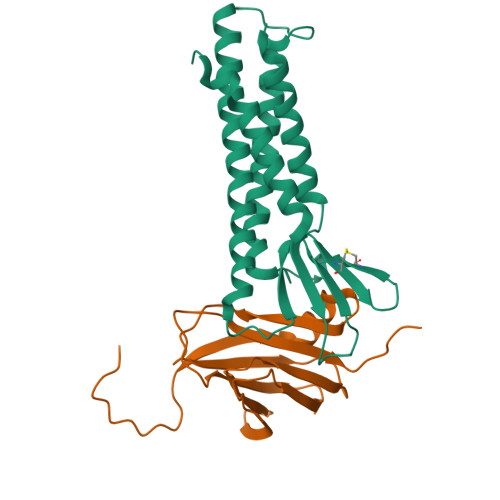
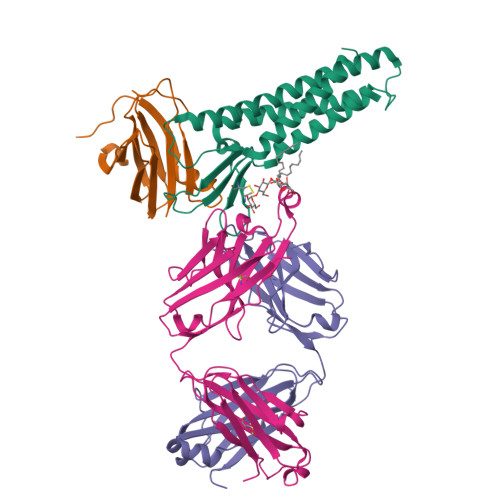
A Johns Hopkins-led team has identified that protein as claudin-4. The team also built a soluble version of claudin-4 that soaked up the toxin and protected mice from colon damage, according to findings published in Nature.

Why it matters

A decoy that absorbs a cancer-linked bacterial toxin protected mice from colon damage, opening a possible prevention route for toxin-producing B. fragilis.

Questions about this story

Free account needed to ask — your question is kept and asked for you right after sign-up. Answers are public.

No questions yet — be the first to ask.

Key Indicators

20%
Healthy people carrying B. fragilis
Share of healthy people whose intestines carry the bacterium, per ScienceDaily; not all strains produce the toxin.
20-fold
BFT resistance in claudin-4 knockout cells
Colon cancer cells lacking claudin-4 were 20 times less sensitive to toxin-driven E-cadherin cleavage.
~500-fold
BFT resistance in double knockout cells
Removing claudin-3 as well as claudin-4 raised resistance about 500-fold, showing partial compensation.
1
Toxin driving tumor promotion
Enterotoxigenic B. fragilis drives colon tumor formation through a single toxin, BFT.

Voices

Curated perspectives — historical figures and your fellow readers.

Sign up to generate historical perspectives on this story.

People Involved

Organizations Involved

Timeline

2009 October 2026

3 events Latest: Today
  1. Claudin-4 identified as BFT receptor

    Today Research

    A genome-wide CRISPR screen finds claudin-4 as the docking protein for B. fragilis toxin.

  2. Decoy protects mice from toxin damage

    Today Research

    Soluble claudin-4 blocks BFT and reduces colon tissue damage in mice.

  3. BFT linked to colon tumors

    Research

    Cynthia Sears and colleagues show enterotoxigenic B. fragilis promotes colon tumors in mice.

Scenarios

1

Claudin-4 decoy begins human safety testing

Possible Resolves by Q2 2029

Discussed by: Johns Hopkins Medicine and outside commentators quoted by ScienceDaily and Newsweek

The decoy protected mice from BFT-induced tissue damage. Moving to humans requires an investigational new drug application and a Phase 1 trial. If the preclinical results hold, a first-in-human study would test safety rather than cancer prevention.

2

Atomic structure of BFT bound to claudin-4 solved

Possible Resolves by End of 2028

Discussed by: Johns Hopkins Medicine and ScienceDaily, which note AlphaFold could not resolve the interaction

Researchers have not captured the experimental three-dimensional structure of the toxin-receptor pair. Cryo-electron microscopy or crystallography could reveal how BFT docks and where E-cadherin is cleaved, giving drug designers a precise target.

3

Long-term study shows decoy reduces colon tumors

Uncertain Resolves by End of 2029

Discussed by: ScienceDaily and Newsweek, which note the mouse work showed tissue protection but not cancer prevention

Protection against acute colon damage is not the same as preventing tumors. A longer carcinogenesis study in ETBF-colonized mice could test whether the decoy lowers tumor incidence, not just inflammation and cell shedding.

Historical Context

2 moments from history that rhyme with this story — and how they unfolded.

1982–1994

Helicobacter pylori and gastric cancer (1982–1994)

Barry Marshall and Robin Warren cultured H. pylori from human stomachs and linked it to gastritis and ulcers. In 1994 the International Agency for Research on Cancer classified the bacterium as a Group 1 carcinogen.

Then

Antibiotic treatment for ulcers became standard, and eradication programs later reduced gastric cancer incidence in some regions.

Now

Established that a treatable bacterial infection can cause cancer, making infection control a prevention strategy.

Why this matters now

ETBF researchers are testing the same proposition: whether blocking a bacterial factor lowers cancer risk.

1983–2006

HPV vaccines and cervical cancer (1983–2006)

Harald zur Hausen linked certain human papillomavirus types to cervical cancer in the 1980s. A vaccine against the cancer-causing types reached approval in 2006.

Then

Vaccination programs reduced HPV infections and precancerous lesions in vaccinated cohorts.

Now

Showed that identifying a cancer-causing agent can yield a preventive tool years before cancer develops.

Why this matters now

The claudin-4 decoy aims at the same goal: interrupting a cancer-linked agent before it damages tissue.

Sources

(7)