
Pull to refresh
Logo
E-cadherin, the cell 'glue,' also helps cells engulf dead neighbors

E-cadherin, the cell 'glue,' also helps cells engulf dead neighbors

New Capabilities

Study in zebrafish and mouse embryos shows the barrier protein doubles as a cleanup mechanism

Yesterday: Study published in Nature Communications

Overview

Updated 2 hours ago

A protein known for decades as the molecular glue holding tissues together has a second job. E-cadherin also helps epithelial cells swallow and remove their dead neighbors, a study in Nature Communications reports.

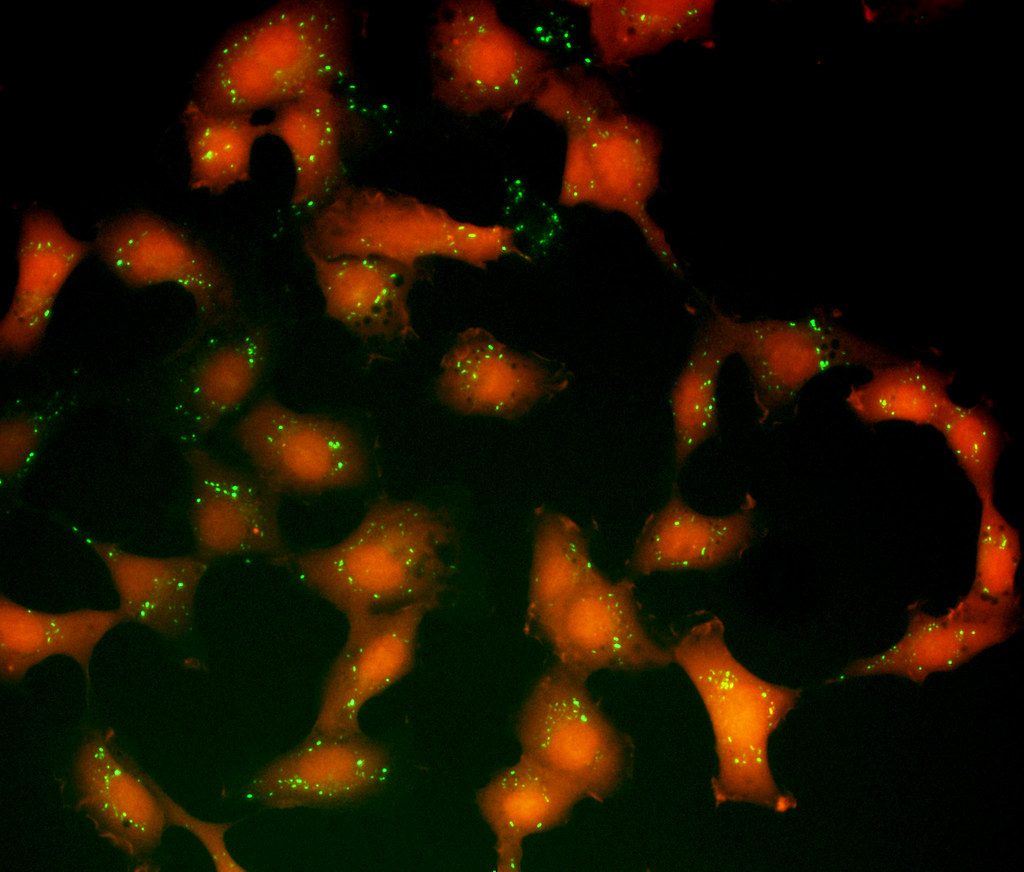
Live imaging of zebrafish and mouse embryos shows how. Cells stretch their lower surfaces around dying cells while their upper surfaces stay put, keeping the tissue barrier sealed. Two partner proteins do the mechanical work: one transmits force to the engulfed cell, the other brakes the cell's contractile machinery so it doesn't seize up.

The stakes are medical. Dead cells that aren't cleared can rupture and drive chronic inflammation, so understanding the cleanup mechanism could point to new treatments.

Why it matters

If E-cadherin's cleanup role holds in adult tissue, it could explain how uncleared dead cells trigger chronic inflammation.

Questions about this story

Free account needed to ask — your question is kept and asked for you right after sign-up. Answers are public.

No questions yet — be the first to ask.

Key Indicators

~80% → ~10%
Dead-cell clearance efficiency in zebrafish
Fell from about 80% in controls to about 10% when E-cadherin was knocked down, per the preprint.
4
Proteins in the E-cadherin complex
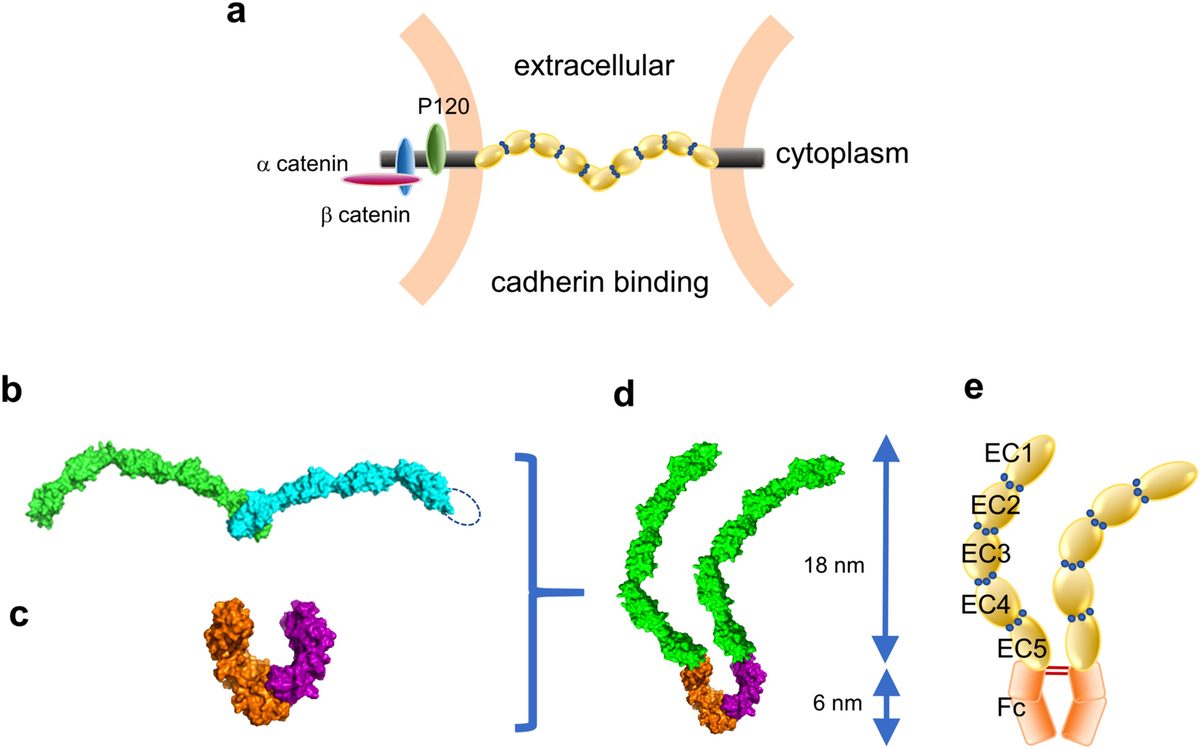
E-cadherin plus three partner proteins that connect cells and transmit force.
2
Vertebrate species tested
Zebrafish and mouse embryos both showed the same mechanism.

Voices

Curated perspectives — historical figures and your fellow readers.

Ever wondered what historical figures would say about today's headlines?

Sign up to generate historical perspectives on this story.

People Involved

Organizations Involved

Timeline

December 2025 October 2026

2 events Latest: Yesterday
  1. Study published in Nature Communications

    Latest Publication

    ScienceDaily reports E-cadherin helps epithelial cells engulf dead cells while keeping barriers sealed.

  2. Preprint posted on bioRxiv

    Research

    Team shares early results showing E-cadherin knockdown cuts clearance from ~80% to ~10% in zebrafish.

Scenarios

1

Adult tissues confirm E-cadherin cleanup role

Possible Resolves by End of 2028

Discussed by: The study authors, who note adult epithelial tissues in the retina, colon, airways, and mammary gland already remove dying cells

Follow-up studies test whether the mechanism operates in adult animals. The authors say E-cadherin's structure is highly conserved and it appears throughout epithelial tissues, making it a strong candidate for a broadly used cleanup mechanism.

2

Clearance failure tied to chronic inflammation

Possible Resolves by End of 2028

Discussed by: The study authors, who note uncleared dead cells can rupture and release contents that drive inflammation

A follow-up study links impaired E-cadherin-mediated clearance to inflammation in a disease model. This would give the mechanism direct medical relevance for inflammatory conditions.

3

Mechanism does not translate to human tissue

Unlikely Resolves by End of 2028

Discussed by: The study authors, who state it is unknown whether the mechanism works in any human tissue

Tests in human cells or adult tissues find E-cadherin is not required for apoptotic cell clearance, limiting the finding to embryonic development in fish and mice.

Historical Context

2 moments from history that rhyme with this story — and how they unfolded.

1882

Metchnikoff discovers phagocytosis (1882)

Élie Metchnikoff observed starfish larvae cells engulfing foreign particles and later showed white blood cells swallow bacteria. He proposed that cells actively eat invaders and debris, a process he named phagocytosis.

Then

Metchnikoff's work founded the field of cellular immunity and won the 1908 Nobel Prize in Physiology or Medicine.

Now

Phagocytosis became a core concept in immunology and cell biology.

Why this matters now

Today's finding extends the idea of cells eating debris to a specific molecular mechanism, showing how epithelial cells physically engulf dead neighbors.

1980s

Cadherins identified as cell adhesion molecules (1980s)

Masatoshi Takeichi and colleagues identified cadherins as the calcium-dependent proteins that bind cells together, establishing them as the 'glue' of tissues.

Then

Cadherins became a major research field in developmental biology and cancer.

Now

E-cadherin is now known to be central to epithelial barrier function and is often lost in metastatic cancers.

Why this matters now

The same protein characterized as adhesion glue in the 1980s is now shown to have a second, mechanical role in clearing dead cells.

Sources

(3)