




Pull to refresh
Logo
Lancet retracts the codeine case report that shaped breastfeeding warnings

Lancet retracts the codeine case report that shaped breastfeeding warnings

Rule Changes

A hospital investigation found the 2006 paper omitted toxicology data, including codeine in the infant's stomach

Overview

Updated 4 hours ago

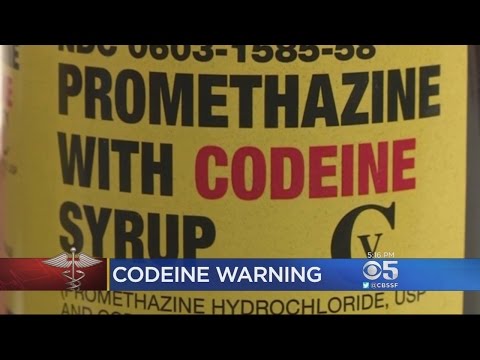
In August 2006, The Lancet published a case report saying a 13-day-old boy died of morphine poisoning carried to him through his mother's breast milk. The mother, the authors wrote, was a CYP2D6 ultrarapid metabolizer who converted codeine to morphine faster than usual. The journal has now retracted the paper, in its Nov. 21, 2026 issue.

An investigation by the Research Integrity Office at The Hospital for Sick Children in Toronto found the authors left out toxicology results: the infant's blood codeine and acetaminophen concentrations, and codeine identified in his stomach contents. The Lancet called the omission falsification. Codeine sitting in a newborn's stomach is difficult to explain through milk alone.

Why it matters

A 20-year-old infant safety warning rested on one case report. The report is retracted; the warning may not change.

Questions about this story

Free account needed to ask — your question is kept and asked for you right after sign-up. Answers are public.

No questions yet — be the first to ask.

Key Indicators

70 ng/mL
Morphine in the infant's blood
Postmortem level reported in 2006; breastfed infants of mothers on codeine typically show 0–2.2 ng/mL.
87 ng/mL
Morphine in stored breast milk
The paper's figure; typical milk levels after repeated maternal codeine doses are 1.9–20.5 ng/mL.
2
Companion papers retracted in 2020
Canadian Pharmacists Journal and Canadian Family Physician withdrew follow-up reports of the same case.
20 years
Publication to retraction
The case report appeared in August 2006 and was retracted in November 2026.

Voices

Curated perspectives — historical figures and your fellow readers.

Sign up to generate historical perspectives on this story.

People Involved

Organizations Involved

Timeline

August 2006 November 2026

9 events Latest: 4 days ago
Tap a bar to jump to that date
  1. Retraction runs in The Lancet's Nov. 21 issue

    Upcoming Retraction

    Investigation finds omitted toxicology data amounted to falsification; ethics claims unexamined.

  2. Review reopens the plausibility question

    Latest Research

    Clinical Pharmacology and Therapeutics paper challenges assumptions behind the implausibility model.

  3. Lancet issues Expression of Concern

    Statement

    Alerts readers and refers the allegations to SickKids' Research Integrity Office.

  4. New falsification allegations reach The Lancet

    Allegation

    Letter raises toxicology falsification, authorship and ethics concerns, renewing the retraction call.

  5. Two Canadian journals retract follow-up reports

    Retraction

    Canadian Pharmacists Journal and Canadian Family Physician withdraw papers restating the case.

  6. Juurlink and Zipursky call the death implausible

    Research

    Their review argues milk morphine levels could not produce the infant's blood concentration.

  7. Readers challenge the case in print

    Criticism

    Bateman and colleagues question the interpretation; Ferner asks whether the drug caused death.

  8. Lancet publishes the case report

    Publication

    Koren and colleagues attribute a 13-day-old's morphine death to his mother's breast milk.

Scenarios

1

Regulators keep codeine breastfeeding warnings in place

Likely Resolves by Q2 2027

Discussed by: Reporting from Springer Publishing and Daily Nurse notes FDA labeling has not changed

The retraction removes the case report from the evidence base but does not require regulators to act. Codeine is still not recommended during breastfeeding in the United States and Britain, and the underlying concern about CYP2D6 ultrarapid metabolizers is supported by other pharmacokinetic work. If no agency revisits its labeling, the practical advice to clinicians stays as it was before the retraction.

2

SickKids review widens to Koren's other publications

Possible Resolves by End of 2027

Discussed by: Retraction Watch coverage of related Canadian journal actions

The 2026 investigation looked only at the 2006 case report, and its scope stopped short of the authorship and ethics allegations. A finding of falsification by a named author often prompts journals and institutions to audit that author's other work. A wider review would test whether other papers face the same fate as the two Canadian reports already withdrawn in 2020.

3

National medicines advisers rewrite codeine breastfeeding guidance

Possible Resolves by End of 2027

Discussed by: UK Specialist Pharmacy Service guidance, which already flags questions about the fatality

Some advisory bodies wrote their codeine guidance around this case and have already begun distancing from it. Britain's Specialist Pharmacy Service page now says re-examination has questioned whether breast milk caused the death, while keeping the recommendation against codeine. A formal update citing the retraction would change how the advice is justified, not necessarily what it tells mothers to do.

Historical Context

3 moments from history that rhyme with this story — and how they unfolded.

February 1998 – February 2010

Wakefield MMR paper published and retracted (1998–2010)

The Lancet published a paper by Andrew Wakefield and colleagues linking the measles, mumps and rubella vaccine to bowel disease and autism in 12 children. Vaccination rates fell in Britain. Twelve years of scrutiny of the underlying records and the authors' conduct followed.

Then

The Lancet partially retracted the paper in 2004 and fully retracted it in February 2010; the UK General Medical Council struck Wakefield off the medical register later that year.

Now

The retraction did not restore vaccination rates quickly, and the paper's claims persist in some communities more than 15 years later.

Why this matters now

Shows how a single small paper can drive years of clinical guidance, and how slowly retraction follows when the original authors dispute the finding.

May 2005 – January 2006

Hwang Woo-suk stem cell papers retracted (2005–2006)

Science published two papers from South Korean researcher Hwang Woo-suk claiming to have derived stem cell lines from cloned human embryos. Within months, co-authors and outside scientists reported that the data could not be reproduced.

Then

Seoul National University's investigation found the data fabricated; Science retracted both papers in early 2006, roughly eight months after publication.

Now

The case became a template for institutional research-integrity investigations and for distinguishing fabrication from disputed interpretation.

Why this matters now

The contrast is timing: outright fabrication produced retraction in months, while a disputed interpretation took 20 years. Here, the eventual finding was falsification by omission, not invented data.

May 2020 – June 2020

Lancet retracts Surgisphere hydroxychloroquine study (2020)

A Lancet observational study using a private database from a company called Surgisphere suggested hydroxychloroquine increased deaths in COVID-19 patients, prompting the World Health Organization to pause trials. Independent auditors could not verify the underlying data.

Then

The paper was retracted 13 days after publication; the World Health Organization resumed its trials.

Now

Journals tightened requirements for authors to show that datasets exist and can be shared with reviewers.

Why this matters now

Illustrates what finally moves a journal: a verifiable problem with the data, not accumulating expert doubt about the conclusion.

Sources

(9)