
Pull to refresh
Logo
Daily Brief
Following
Why Ranks Sign Up
First commercial nuclear-powered satellite reaches orbit

First commercial nuclear-powered satellite reaches orbit

New Capabilities

A Florida company's tritium battery becomes the first private nuclear power source cleared to fly

Yesterday: BOHR reaches orbit

Overview

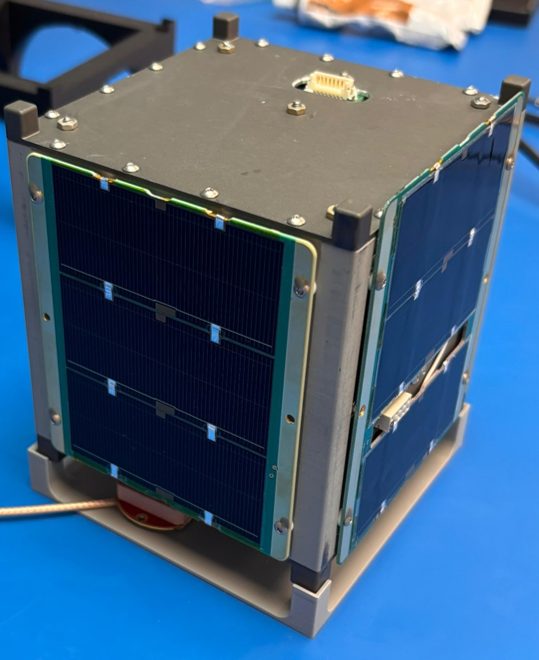
For decades, only governments could fly nuclear power in space. On July 7, 2026, a cubesat built by a small Florida company changed that.

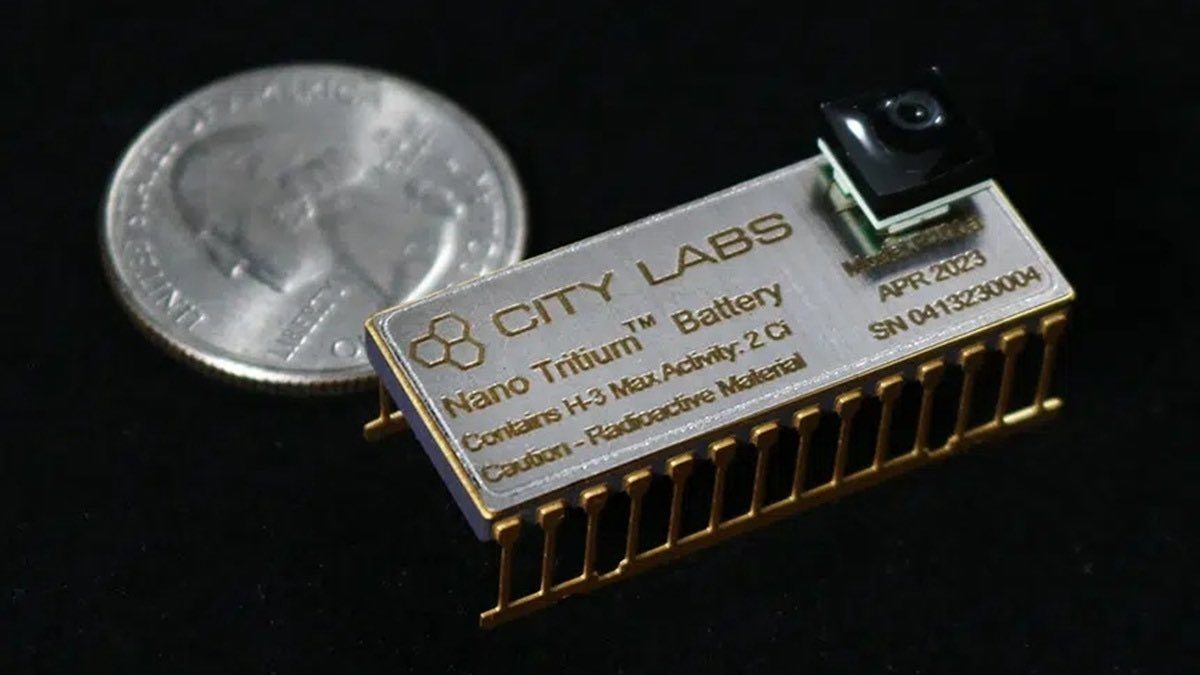
The satellite, called BOHR, carries a battery that runs on decaying tritium. It makes electricity without sunlight, which is the whole point: spacecraft could now work in places the sun never reaches, like the shadowed craters at the Moon's poles.

Why it matters

Machines that make their own power in permanent darkness could survive the two-week lunar night and run for years in deep space where solar panels fail.

Questions about this story

No questions yet — be the first to ask.

Key Indicators

1st
Commercial nuclear satellite
BOHR is the first privately built satellite to carry a nuclear power source to orbit.
81
Payloads on Transporter-17
SpaceX's rideshare flight carried BOHR alongside dozens of other satellites.
~20 yrs
Tritium half-life horizon
Tritium decays slowly, letting these batteries trickle power for roughly two decades.
2005
Year City Labs founded
The company spent 21 years building tritium batteries before this flight.

Voices

Curated perspectives — historical figures and your fellow readers.

Ever wondered what historical figures would say about today's headlines?

Sign up to generate historical perspectives on this story.

Play

Exploring all sides of a story is often best achieved with Play.

Log in to play. Track your picks, climb the leaderboards. Log in Sign Up
Predict 3 ways this could play out. Contrarian picks score more — points lock when the scenario resolves. Log in to play
Higher or Lower Two numbers from this story. Guess which is bigger. 5 rounds to set a streak. Log in to play
Connections Sixteen names from the news. Find the four hidden groups of four. Log in to play

People Involved

Organizations Involved

Timeline

January 2005 July 2026

4 events Latest: Yesterday
Tap a bar to jump to that date
  1. BOHR reaches orbit

    Latest Launch

    SpaceX's Transporter-17 lifts off from Vandenberg Space Force Base carrying BOHR and 80 other payloads. It is the first commercial nuclear-powered satellite in orbit.

  2. FAA clears the mission

    Regulatory

    BOHR becomes the first commercial nuclear payload authorized through the FAA's launch approval pathway.

  3. First NRC license and Air Force contract

    Milestone

    City Labs wins a general license from the Nuclear Regulatory Commission and a nearly $1 million Air Force Research Laboratory contract.

  4. City Labs founded

    Origin

    Peter Cabauy and Denset Serralta start City Labs inside Florida International University's incubator to build tritium batteries.

Historical Context

3 moments from history that rhyme with this story — and how they unfolded.

August–September 1977

Voyager RTGs launch (1977)

NASA launched Voyager 1 and 2, each powered by radioisotope thermoelectric generators that turn heat from decaying plutonium-238 into electricity. Solar panels are useless that far from the Sun, so the probes carried their own nuclear heat source.

Then

Both spacecraft powered instruments through flybys of Jupiter, Saturn, and beyond.

Now

Nearly 50 years later, their generators still feed a trickle of power in interstellar space, proving nuclear sources can outlast any battery or solar array.

Why this matters now

Voyager showed why deep space needs nuclear power. BOHR tries to bring that capability to small, privately built satellites.

November 2017–March 2018

Kilopower reactor test (2018)

NASA and the Department of Energy tested Kilopower, a small fission reactor built to power future Moon and Mars bases. The KRUSTY experiment ran the reactor through a full simulated mission.

Then

The test confirmed a compact reactor could deliver steady kilowatts of electricity.

Now

It kept government interest in space fission alive but stayed a research program, not a product for sale.

Why this matters now

Kilopower is the government, reactor-scale approach. City Labs takes the opposite tack: tiny, decay-powered, and commercial rather than a full reactor.

May 2012

SpaceX first commercial resupply flight (2012)

SpaceX's Dragon capsule became the first commercial spacecraft to dock with the International Space Station, a job that had belonged only to national space agencies.

Then

NASA began routing cargo through private companies under fixed-price contracts.

Now

Commercial firms took over launch and resupply work once reserved for governments, cutting costs and multiplying flight rates.

Why this matters now

That shift moved routine spaceflight from governments to companies. BOHR marks the same handoff for space nuclear power, one capability at a time.

Sources

(4)