
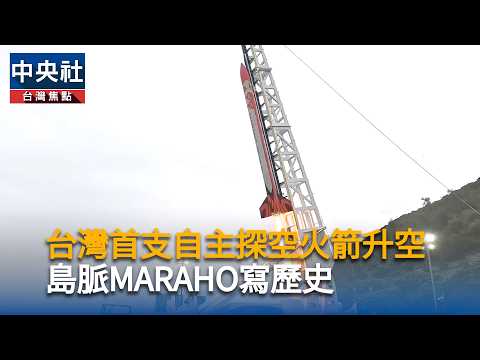

Taiwan launches first homegrown sounding rocket in maiden test flight
New CapabilitiesMaraho rocket verifies propulsion, communications, and recovery systems as part of Taiwan's push for orbital launch capability by 2034
August 22nd, 2026: Maraho completes maiden test flightNew here? Follow stories to track developments over time. Create a free account to get updates when stories you care about change.
Overview
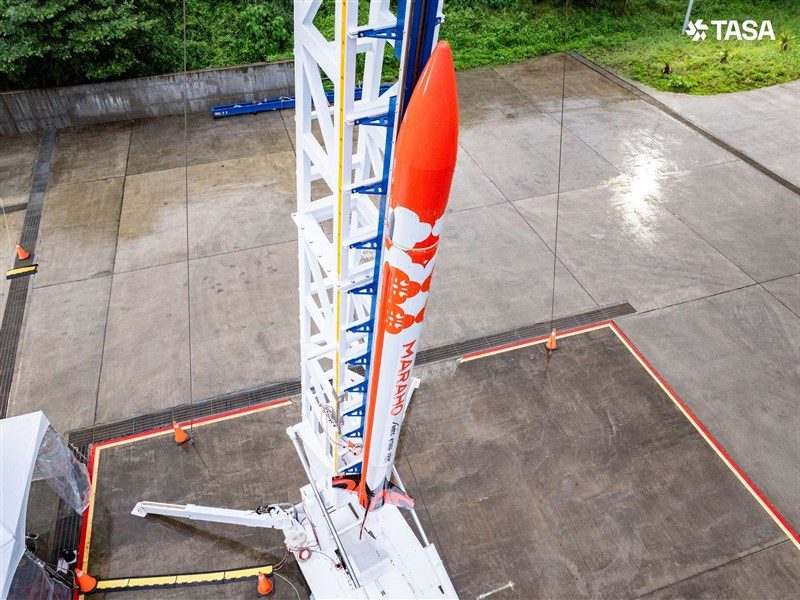
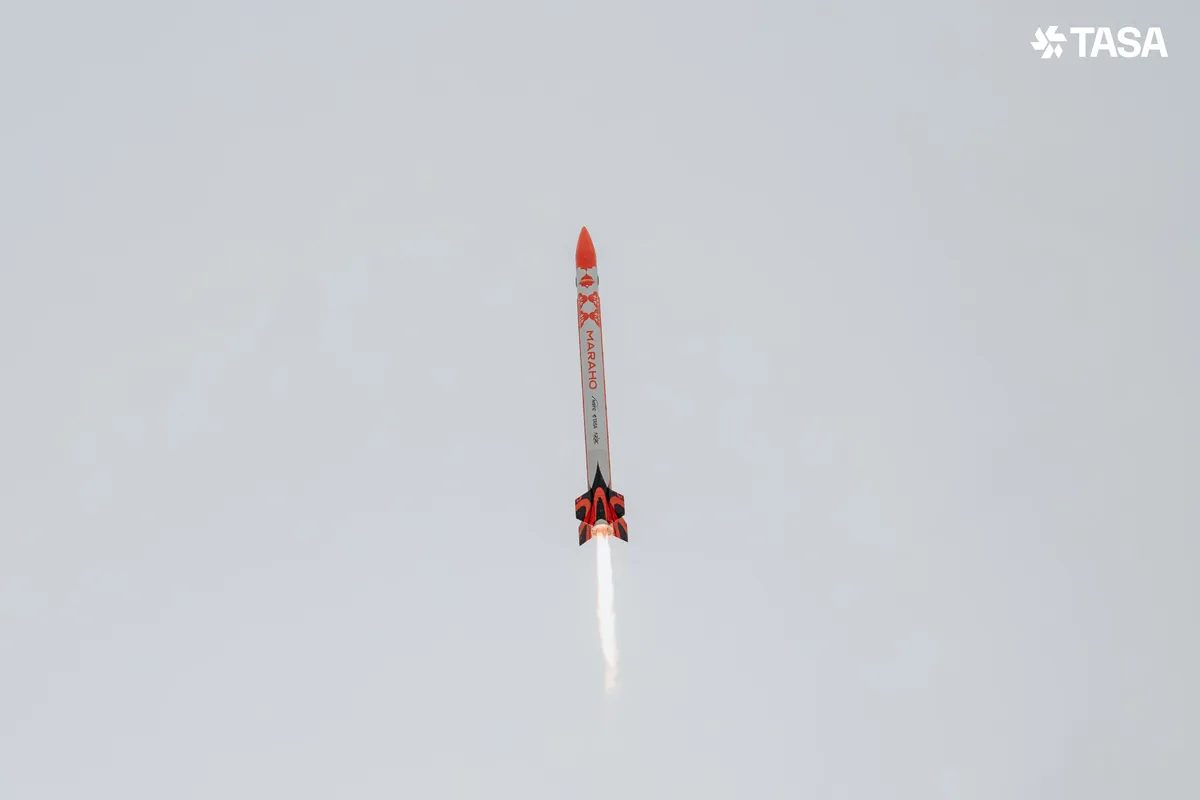
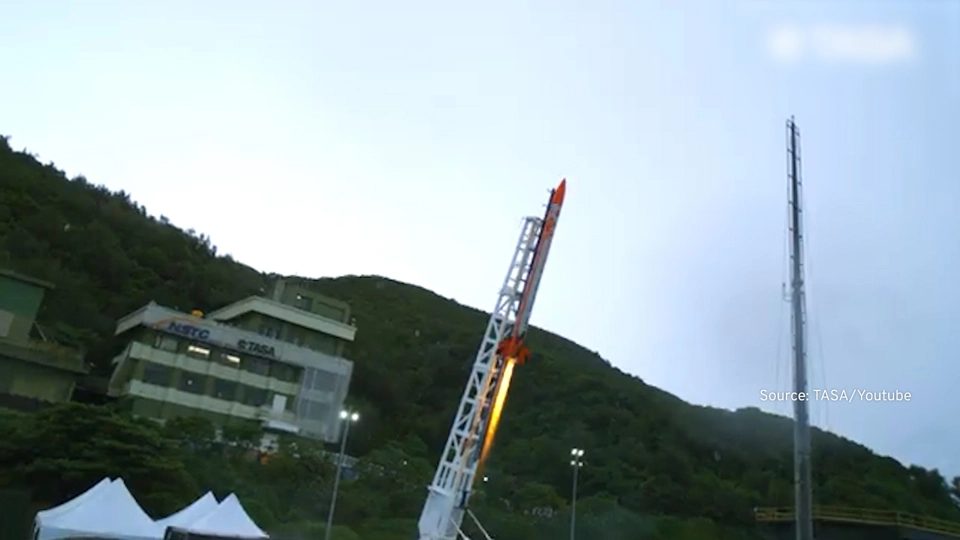
Updated Aug 23Taiwan launched its first domestically developed sounding rocket on August 22, a step toward building indigenous satellite launch capability. The Maraho rocket climbed 8.1 kilometers in 49 seconds, reached Mach 1.2, and flew 432 seconds before parachuting into the sea.
The test verified propulsion, flight control, and real-time communications between rocket and ground stations. Taiwan's space agency started its orbital launch vehicle program in 2023, aiming to put a 200-kilogram satellite into low-Earth orbit by 2034.
Why it matters
If Taiwan reaches orbit, it stops depending on SpaceX and other foreign launchers for its satellites, gaining control over its own launch schedule.
Questions about this story
Free account needed to ask — your question is kept and asked for you right after sign-up. Answers are public.
No questions yet — be the first to ask.
Key Indicators
Voices
Curated perspectives — historical figures and your fellow readers.
Play
Exploring all sides of a story is often best achieved with Play.
Higher or Lower
A number from this story, against one from elsewhere in the news — guess which is bigger, then keep the chain going. 5 rounds, 3 strikes; a miss costs a strike and resets your streak.
Keyboard: ↓/L lower · ↑/H higher
0 points — sign up to put that on the leaderboard.
Connections
Sixteen names from the news. Find the four hidden groups of four. Four mistakes max.
Sign up to keep a daily streak — a new puzzle lands every day.
Exit debate?
Your progress in this debate will be lost.
- 1 Two AI personas square off on this story.
- 2 You predict who'll win each round — correct picks earn XP.
- 3 One crossfire question is yours to fire. Pick it carefully.
Couldn't generate a topic
Select Your Champions
Choose one persona for each side of the debate
DEBATE TOPIC
Choose personas with different perspectives for a more dynamic debate.
Select debater for this side:
No debate personas available right now.
Select debater for this side:
No debate personas available right now.
Who's Got This Round?
Make your prediction before the referee scores
The referee scores both sides on
Round Results
Set the Crossfire
Pick the question both personas must answer in the final round
Debate Oracle! You called every round!
Sharp Instincts! You know your debaters!
The Coin Flip Strategist! Perfectly balanced!
The Contrarian! Bold predictions!
Inverse Genius! Try betting the opposite next time!
XP Breakdown
Prediction History
People Involved
Organizations Involved
Taiwan's national space agency, responsible for satellites and the new orbital launch vehicle program.
Taiwan's top science policy body, which provides guidance and funding for the space program.
Timeline
2023 August 2026
-
Maraho completes maiden test flight
Latest LaunchMaraho reaches 8.1 km, Mach 1.2, and 432-second flight; verifies propulsion and real-time telemetry.
-
Third-phase space plan approved
FundingExecutive Yuan approves plan funding rocket research center in Tainan and national launch site.
-
Orbital rocket engine switches to liquid fuel
Design ChangeTASA abandons hybrid fuel for its orbital rocket, adopting liquid fuel to meet the 200 kg payload target.
-
TASA starts orbital launch vehicle program
Program LaunchTASA initiates a program to develop indigenous rocket launch capability, targeting 2034.
Historical Context
2 moments from history that rhyme with this story — and how they unfolded.
Japan's Lambda-4S (1966–1970)
Japan's Institute of Space and Astronautical Science developed the solid-fuel Lambda-4S rocket to launch its first satellite. The first four launch attempts between 1966 and 1969 failed. The fifth attempt in February 1970 put Japan's Ohsumi satellite into orbit.
Japan became the fourth nation to launch its own satellite.
The experience built the foundations for Japan's later orbital rocket programs, including the H-II series.
Demonstrates the multi-attempt, years-long path from small research rockets to orbital capability, with repeated failures as a normal part of development.
South Korea's Nuri rocket (2021–2022)
South Korea built the KSLV-II Nuri, a fully indigenous three-stage liquid-fuel rocket. The first launch attempt in October 2021 failed when the third stage shut down early, leaving the dummy satellite short of orbit. The second attempt in June 2022 succeeded, placing a test satellite in orbit.
South Korea became the seventh nation with indigenous orbital launch capability.
The program showed that a failed first attempt doesn't doom a launch program when the engineering baseline is sound.
Taiwan's program follows a similar pattern of incremental flight tests with real flight data, and may face a comparable early failure before success.
