
Pull to refresh
Logo
Daily Brief
Following
Why Ranks Sign Up
First US commercial robot launches to repair satellites in orbit

First US commercial robot launches to repair satellites in orbit

New Capabilities

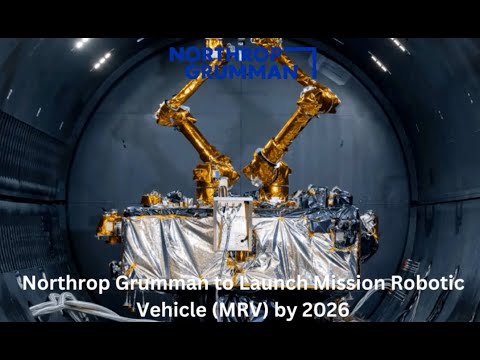
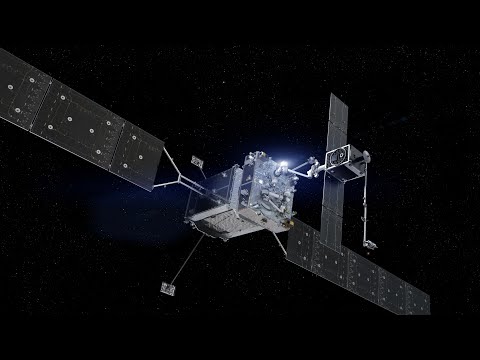
Northrop Grumman's Mission Robotic Vehicle carries DARPA-built arms to fix and refuel aging satellites 22,000 miles up

Yesterday: Robot-armed servicer launches

Overview

A communications satellite in geostationary orbit runs on a fixed tank of fuel. When the tank nears empty, the satellite gets nudged into a graveyard orbit and switched off, even if its electronics still work. On July 21, a SpaceX Falcon 9 launched a robot designed to change that.

Northrop Grumman's Mission Robotic Vehicle is the first US commercial spacecraft with robotic arms built to service other satellites already in orbit. It carries three propulsion pods it will bolt onto aging satellites owned by Optus and SES, adding years of life to hardware that would otherwise be retired.

Why it matters

A working satellite costs hundreds of millions to build and launch. A robot that refuels or repairs it in orbit changes the math for every operator.

Questions about this story

No questions yet — be the first to ask.

Key Indicators

22,000 mi
Servicing altitude
Geostationary orbit, where the target satellites circle Earth.
Up to 8 yrs
Life added per satellite
Extra operating time each attached pod can provide.
3
Pods on this launch
Mission Extension Pods bound for client satellites.
10 yrs
Robot's planned lifespan
How long the servicer is designed to move job to job in orbit.
2020
First commercial docking
Year Northrop Grumman's earlier vehicle first attached to a live satellite.

Voices

Curated perspectives — historical figures and your fellow readers.

Ever wondered what historical figures would say about today's headlines?

Sign up to generate historical perspectives on this story.

Play

Exploring all sides of a story is often best achieved with Play.

Log in to play. Track your picks, climb the leaderboards. Log in Sign Up
Predict 3 ways this could play out. Contrarian picks score more — points lock when the scenario resolves. Log in to play
Higher or Lower Two numbers from this story. Guess which is bigger. 5 rounds to set a streak. Log in to play
Connections Sixteen names from the news. Find the four hidden groups of four. Log in to play

People Involved

Organizations Involved

Timeline

October 2019 July 2026

5 events Latest: Yesterday
Tap a bar to jump to that date
  1. Robot-armed servicer launches

    Latest Launch

    A Falcon 9 lifts the Mission Robotic Vehicle and three pods from Cape Canaveral. It is the first US commercial spacecraft with robotic arms built to service satellites in orbit.

  2. Optus orders a pod

    Contract

    Optus becomes the first commercial operator to book the new pod-based service for its D3 satellite.

  3. Second docking proves it repeats

    Milestone

    MEV-2 docks with Intelsat 10-02, showing the service works more than once.

  4. Two commercial satellites dock in orbit

    Milestone

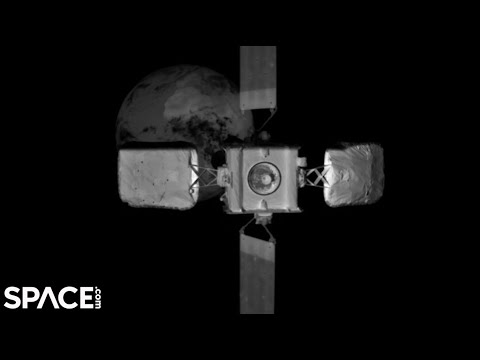
    MEV-1 attaches to Intelsat 901, the first commercial in-orbit docking. It restores the satellite to service for five more years.

  5. First servicing vehicle launches

    Launch

    Northrop Grumman's MEV-1 lifts off to chase down a fuel-starved Intelsat satellite.

Historical Context

2 moments from history that rhyme with this story — and how they unfolded.

February 2020

First commercial in-orbit docking (2020)

Northrop Grumman's MEV-1 caught up with Intelsat 901, a communications satellite low on fuel, and docked with it 22,000 miles above Earth. It was the first time two commercial satellites joined in orbit. The vehicle then took over steering and propulsion.

Then

Intelsat 901 returned to service for another five years instead of being retired.

Now

It proved a paying market existed for keeping satellites alive past their fuel limits.

Why this matters now

That mission docked one vehicle to one satellite. The new robot aims to service many satellites with reusable arms and pods, a step up in ambition.

December 1993 to May 2009

Hubble Space Telescope servicing missions (1993-2009)

NASA sent Space Shuttle crews to repair and upgrade the Hubble telescope five times. Astronauts replaced its flawed optics, gyroscopes, and instruments by hand during spacewalks. Each mission was costly and risked human lives.

Then

Hubble went from a blurry embarrassment to one of the most productive telescopes ever built.

Now

It showed that servicing a satellite in orbit works, but only crewed missions could do it.

Why this matters now

The MRV tries to do the repair-and-upgrade job with robots instead of astronauts, removing the cost and danger of sending people.

Sources

(6)